
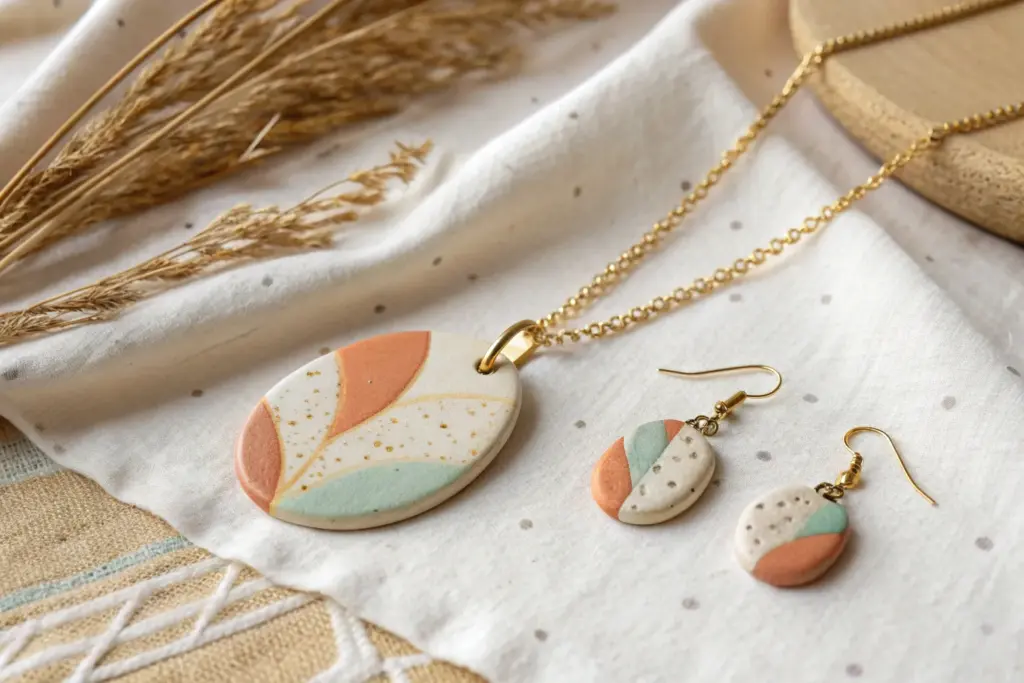
I love how polymer clay jewelry can look super polished without needing fancy tools or years of experience. Here are my go-to polymer clay jewelry ideas—starting with the classics everyone makes first, then moving into the fun, slightly unexpected designs that always get compliments.
Classic Polymer Clay Arch Dangle Earrings
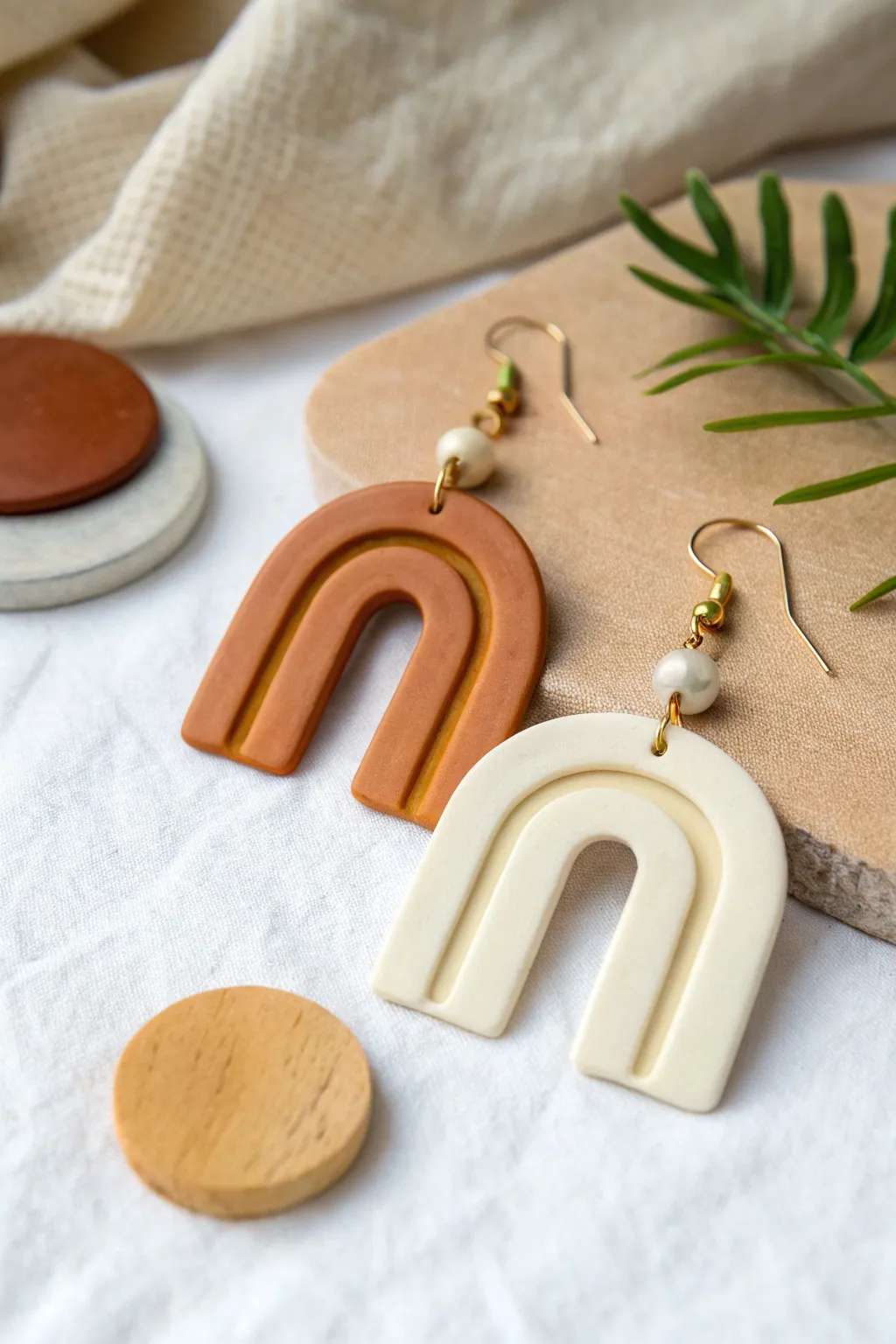
Embrace minimalist elegance with these earthy, arch-shaped dangle earrings featuring a sophisticated recessed detail. The smooth matte finish combined with classic pearls and gold hardware creates a timeless accessory perfect for everyday wear.
Step-by-Step Guide
Materials
- Polymer clay in terracotta/rust and cream/white
- Acrylic rolling pin
- Pasta machine (optional but helpful)
- Arch-shaped clay cutters (specifically a nested set or one large and one smaller)
- X-acto knife or clay blade
- Glass or ceramic tile (for baking)
- Small pearl beads (approx. 6-8mm)
- Gold ball-head pins or eye pins
- Gold ear wires (fishhook style)
- Gold jewelry wire (20 or 22 gauge) for connecting
- Round nose pliers
- Flat nose pliers
- Wire cutters
- Hand drill or pin vibe with small bit
- Fine-grit sandpaper (400-1000 grit)
Step 1: Prepping and Shaping the Clay
-
Condition the Clay:
Begin by working the terracotta and cream clay separately in your hands until they are soft and pliable. If the clay feels too stiff, keep kneading; warm hands help the process. -
Roll Out Sheets:
Roll your clay into an even slab about 3mm to 4mm thick. I prefer to use a pasta machine on a medium setting for perfect consistency, but an acrylic roller with depth guides works just as well. -
Cut the Main Shape:
Place your large arch cutter onto the clay slab. Press down firmly and evenly to cut the exterior shape. Gently wiggle the cutter to release the clay, or leave it in place if you are cutting directly on your baking tile. -
Create the Recessed Detail:
This style features a ‘channel’ or recessed arch. To achieve this look without cutting all the way through, take a smaller arch cutter that nests inside your shape. Press it gently into the clay, sinking only about halfway down. -
Remove the Excess:
If you don’t have a specific stamp for this, you can carefully cut the inner arch outline with a blade and use a small loop tool to scoop out a layer of clay to create that depth, smoothing the bottom of the recessed area with a clay shaper. -
Refine the Edges:
Before baking, use your finger or a silicone tool dipped in a little cornstarch or baby oil to gently smooth any rough edges or fingerprints on the surface.
Smooth Surface Secret
Before baking, wipe the clay surface gently with a Q-tip dipped in acetone or rubbing alcohol. This removes lint, dust, and fingerprints instantly.
Step 2: Baking and Finishing
-
Bake:
Transfer your tile to a conventional oven. Bake according to your brand’s specific instructions (usually 275°F/135°C for 30-45 minutes). Longer baking times generally result in stronger pieces. -
Cool Down:
Allow the pieces to cool completely inside the oven or on a wire rack. Polymer clay is still slightly soft when hot and hardens as it cools. -
Sand and Buff:
Once cool, use fine-grit sandpaper to smooth out the outer edges. For a matte look like the photo, you can lightly buff the front surface with very fine sandpaper or denim fabric. -
Drill Holes:
Using a hand drill or pin vise, carefull drill a small hole at the very top center of each arch. Ensure you aren’t too close to the edge to prevent cracking.
Uneven Impressions?
If your recessed arch depth looks uneven, place a piece of plastic wrap over the clay before pressing your inner cutter. This softens the edge and evens out pressure.
Step 3: Assembly
-
Prepare the Pearl Connector:
Take a head pin (or a piece of wire) and slide on a pearl bead. If using wire, create a small loop at the bottom first using your round nose pliers. -
Create Top Loop:
Trim the wire above the pearl to about 1cm. Use your round nose pliers to bend the wire to a 90-degree angle, then roll it back to form a neat top loop. -
Connect to Arch:
Open the loop at the bottom of your pearl connector (or use a jump ring if your pearl is on a separate pin). Thread it through the hole in your clay arch and close it securely. -
Attach Ear Wire:
Finally, open the small loop on your fishhook ear wire. Slide the top loop of your pearl connector onto it. -
Secure Everything:
Use flat nose pliers to close the ear wire loop. Give the earring a gentle shake test to make sure all connections are tight and the movement is fluid.
Pair these neutral beauties with a simple linen shirt to let their texture really shine

Simple Polymer Clay Round Stud Earrings With Texture
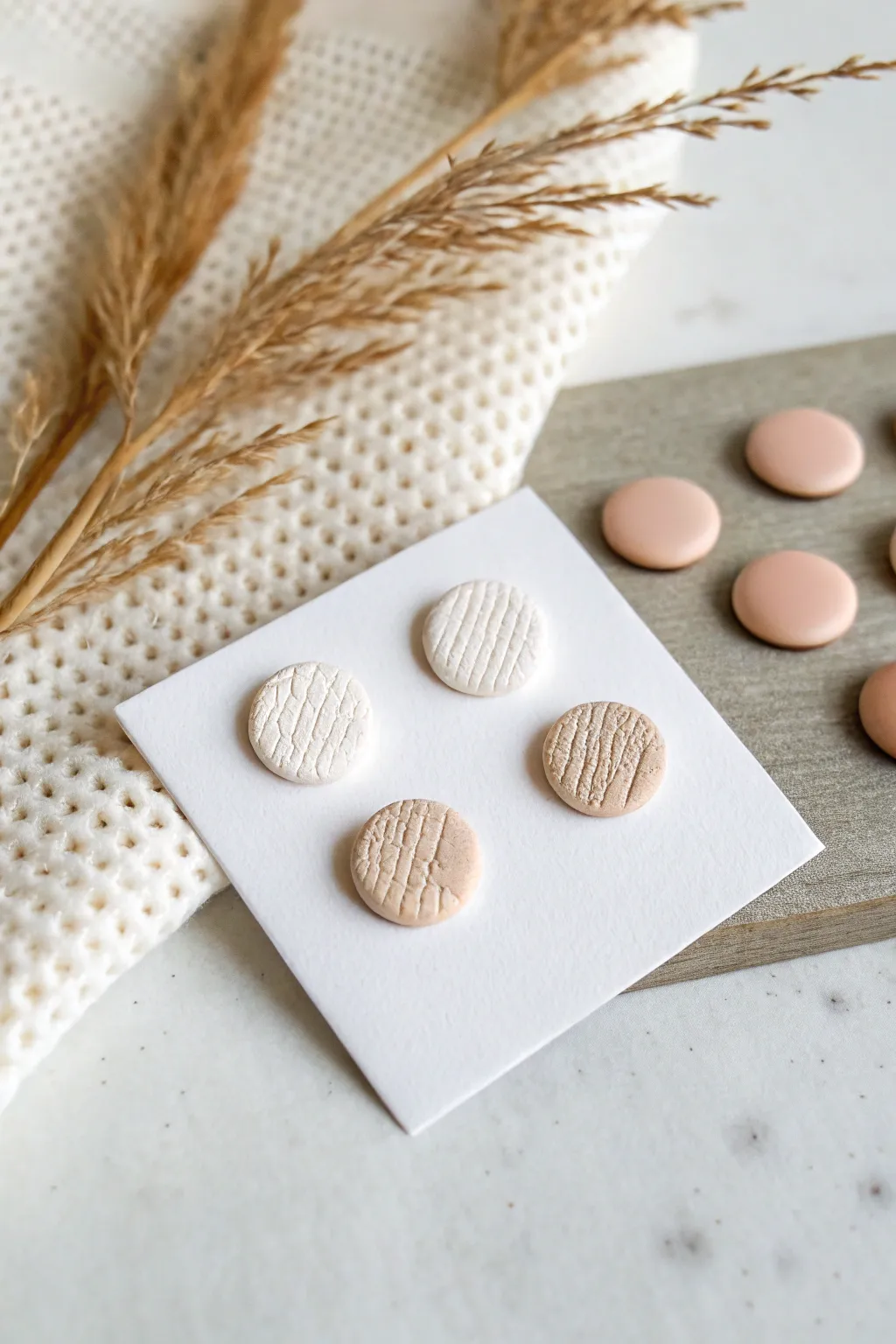
These understated round studs feature a delicate, organic texture reminiscent of woven fabric or natural bark. Using a simple texturing technique and subtle color palette, you’ll create elegant earrings perfect for everyday wear.
Detailed Instructions
Materials
- Polymer clay in White
- Polymer clay in Beige or Tan
- Small round clay cutter (approx. 10-12mm)
- Texture sheet, coarse fabric, or stiff bristle brush for texturing
- Acrylic rolling pin or pasta machine
- Earring posts and backs (surgical steel or gold-plated)
- Strong jewelry glue (like E6000) or liquid clay
- Ceramic tile or baking sheet
- Parchment paper
- Fine grit sandpaper (optional)
Step 1: Preparation and Conditioning
-
Condition the clay:
Begin by taking a small amount of white polymer clay and kneading it in your hands until it becomes soft and pliable. Repeat this process separately with your beige or tan clay. -
Color mixing (optional):
If your beige is too dark, mix in a tiny bit of white to soften the tone. You want a very gentle, earthy contrast between the two colors. -
Roll out the slab:
Using your acrylic rolling pin or a pasta machine on a medium setting, roll out the conditioned clay into a flat, even slab about 3mm thick. Do this for both colors.
Clean Cuts Pro-Tip
Place a piece of plastic wrap over the textured clay before cutting. This creates a beautifully domed, rounded edge on your cutout shapes without any sharp corners.
Step 2: Texturing and Cutting
-
Apply texture:
Place your chosen texturing tool over the clay slab. For the look in the image, a piece of coarse linen, a textured rolling pin, or even gently dragging a stiff brush bristles across the surface works well to create those linear, organic grooves. -
Imprint firmly:
Press down firmly and evenly on your texturing material to ensure the pattern transfers deeply enough to be visible after baking, but not so deep that it distorts the slab. -
Cut the shapes:
Position your small round cutter over a textured area of the clay. Press straight down firmly to cut out your circle. Avoid wiggling the cutter too much to keep the edges clean. -
Release the shape:
Lift the cutter. If the clay stays inside, gently poke it out from the top. If it stays on the table, use a tissue blade to carefully lift it. -
Repeat the process:
Cut two circles from the white textured clay and two from the beige textured clay to make two matching pairs. -
Smooth the edges:
Before baking, lightly tap the edges of your clay circles with your finger to soften any sharp ridges left by the cutter. This saves sanding time later.
Sticky Cutter Fix
If your clay keeps getting stuck inside the small cutter, dip the cutter into a bit of cornstarch or water before pressing it into the clay to act as a release agent.
Step 3: Baking and Assembly
-
Prepare for baking:
Place your clay circles on a ceramic tile or a baking sheet lined with parchment paper. Ensure they are laying perfectly flat. -
Bake the pieces:
Bake according to your brand of polymer clay instructions (usually around 275°F or 130°C) for 30 minutes. I always recommend using an oven thermometer to ensure the temperature is accurate. -
Cool down:
Once baking is complete, remove the tray from the oven and let the clay pieces cool completely before handling them. -
Mix adhesive:
Squeeze a tiny dot of strong jewelry glue onto the back of an earring post. Alternatively, if you prefer embedded studs, you would have attached the posts with liquid clay before baking, but glue works perfectly here. -
Attach posts:
Press the glued post firmly onto the center of the back of each clay circle. Ensure the pad of the post is flush against the clay. -
Cure the glue:
Let the glue dry undisturbed for at least 24 hours to achieve maximum bond strength. -
Final inspection:
Check the edges one last time. If there are any rough spots, you can gently buff them away with fine-grit sandpaper now that the clay is hard.
Enjoy styling these versatile, neutral studs with your favorite daily outfits
Marbled Polymer Clay Slab Earrings
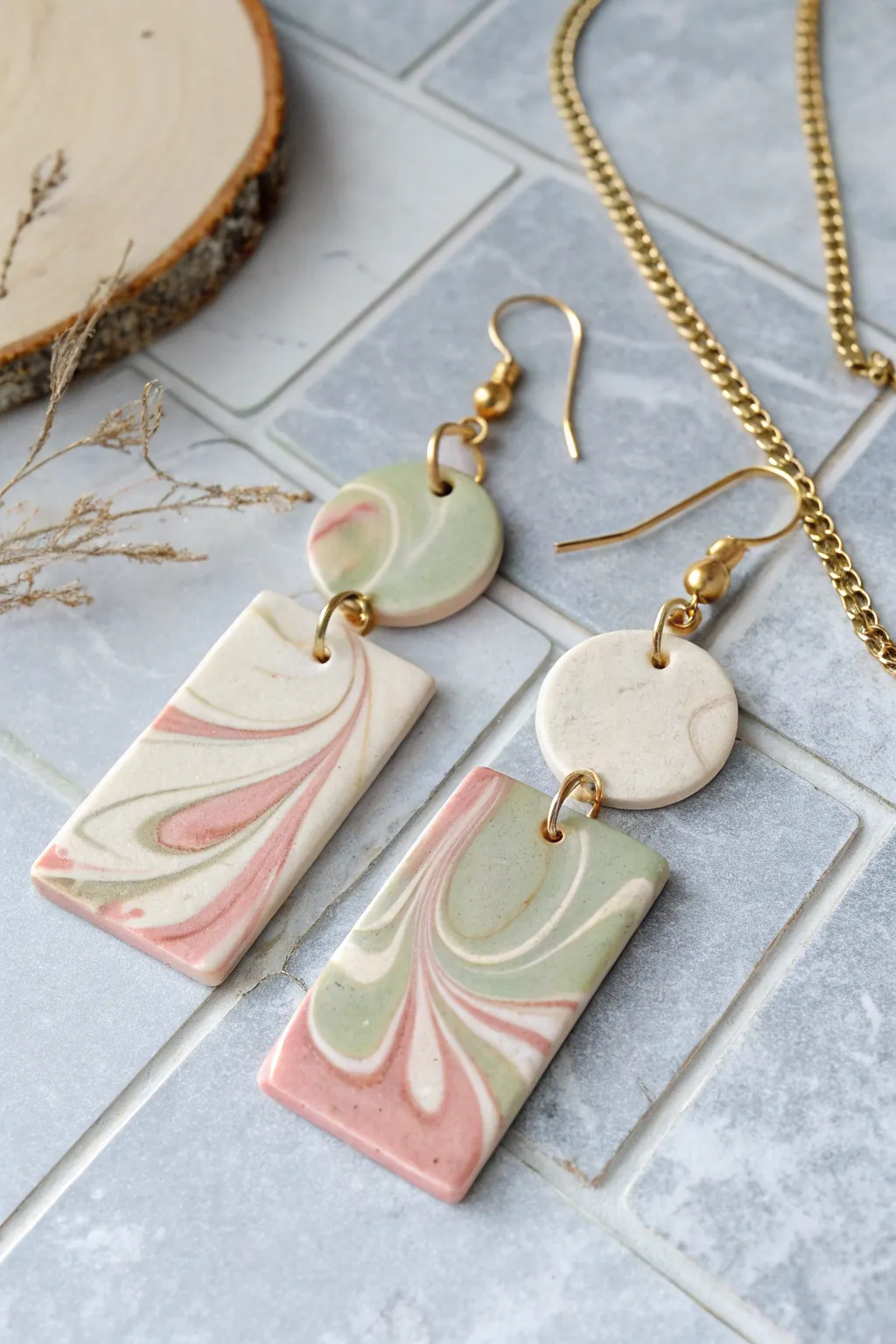
These elegant earrings combine muted tones of sage, dusty rose, and cream in a mesmerizing fluid pattern. The marbling technique creates a sophisticated, organic slab that feels both modern and timeless, perfect for everyday wear.
Step-by-Step Guide
Materials
- Polymer clay in olive green
- Polymer clay in dusty pink
- Polymer clay in white or cream
- Acrylic rolling pin or pasta machine
- Clay slicer blade
- Circle clay cutter (approx. 1 cm)
- Rectangle clay cutter (approx. 2.5 cm x 1.5 cm)
- Hand drill or pin vibe
- Raw clay texture sponge (optional)
- Small needle tool
- Gold earring hooks (french hook style)
- Gold jump rings (approx. 6mm)
- Jewelry pliers
- Sandpaper (400 to 1000 grit)
- Baking tile or parchment paper
Step 1: Preparing the Marble Slab
-
Condition the clay:
Begin by conditioning all three clay colors separately. knead each color in your hands until it becomes soft, pliable, and warm, ensuring there are no air bubbles trapped inside. -
Roll out ropes:
Roll each color into a long snake or rope shape. Aim for the white rope to be slightly thicker than the colored ones if you want that to be the dominant background shade, or keep them equal for a balanced mix. -
Combine the ropes:
Twist the three ropes together into one large, striped log. Fold the log in half and twist it again. Repeat this folding and twisting process 2-3 times to begin blending the colors without muddying them. -
Create the slab:
Roll the twisted clay into a ball, then flatten it slightly with your palm. Use an acrylic rolling pin to roll it out into a slab about 3mm thick. For a more fluid look, you can gently stretch the slab with your fingers. -
Check the pattern:
Inspect your slab. If you have areas that look too plain, use your blade to slice off a section and lay it back down in a different direction, then roll flat again to incorporate it seamlessly.
Sticky Mess?
If your clay is sticking to cutters or the table, chill the rolled slab in the fridge for 10 minutes before cutting shapes. It firms up the clay for cleaner edges.
Step 2: Cutting and Baking
-
Cut the shapes:
Position your rectangle cutter over the section of the slab with the most pleasing swirl pattern and press down firmly. Cut two rectangles. Next, use the circle cutter to cut two round connector pieces from a coordinating area. -
Smooth the edges:
Before baking, gently run your finger along the edges of the cut shapes to soften any sharp corners left by the cutters. I like to use a tiny bit of cornstarch on my finger to prevent sticking. -
Add holes:
Using a needle tool, poke a hole near the top center of each rectangle and near the bottom center of each circle. For the circles, you also need a hole at the top to attach the hook. Ensure the holes are large enough for your jump rings. -
Bake the clay:
Place your clay pieces on a ceramic tile or a baking sheet lined with parchment paper. Bake according to the manufacturer’s instructions for your specific brand of clay—usually around 275°F (135°C) for 30 minutes.
Add a Glossy Finish
Apply a thin layer of UV resin or polymer clay gloss glaze after baking. This makes the colors pop and adds a high-shine, ceramic-like quality to the jewelry.
Step 3: Assembly and Finishing
-
Sand and buff:
Once fully cooled, wet sand the edges and back of your pieces using fine-grit sandpaper (start with 400 and move to 1000). This removes any lint or fingerprints and gives the piece a professional matte finish. -
Open the jump rings:
Using two pairs of pliers, twist a jump ring open sideways (never pull it apart). Slide it through the top hole of a rectangular piece and the bottom hole of a circular piece. -
Close the connection:
Twist the jump ring closed so the ends meet flush. The rectangle should now dangle freely from the circle. -
Attach the hooks:
Open the small loop at the bottom of your earring hook using your pliers. Slide it through the top hole of the circle piece. -
Final check:
Close the earring hook loop securely. Hold the earring up to ensure all parts face forward correctly, then repeat the assembly process for the second earring.
Wear your new sophisticated swirl earrings with pride, knowing no two pairs will ever look exactly the same
Gradient Polymer Clay Teardrop Earrings With Blends
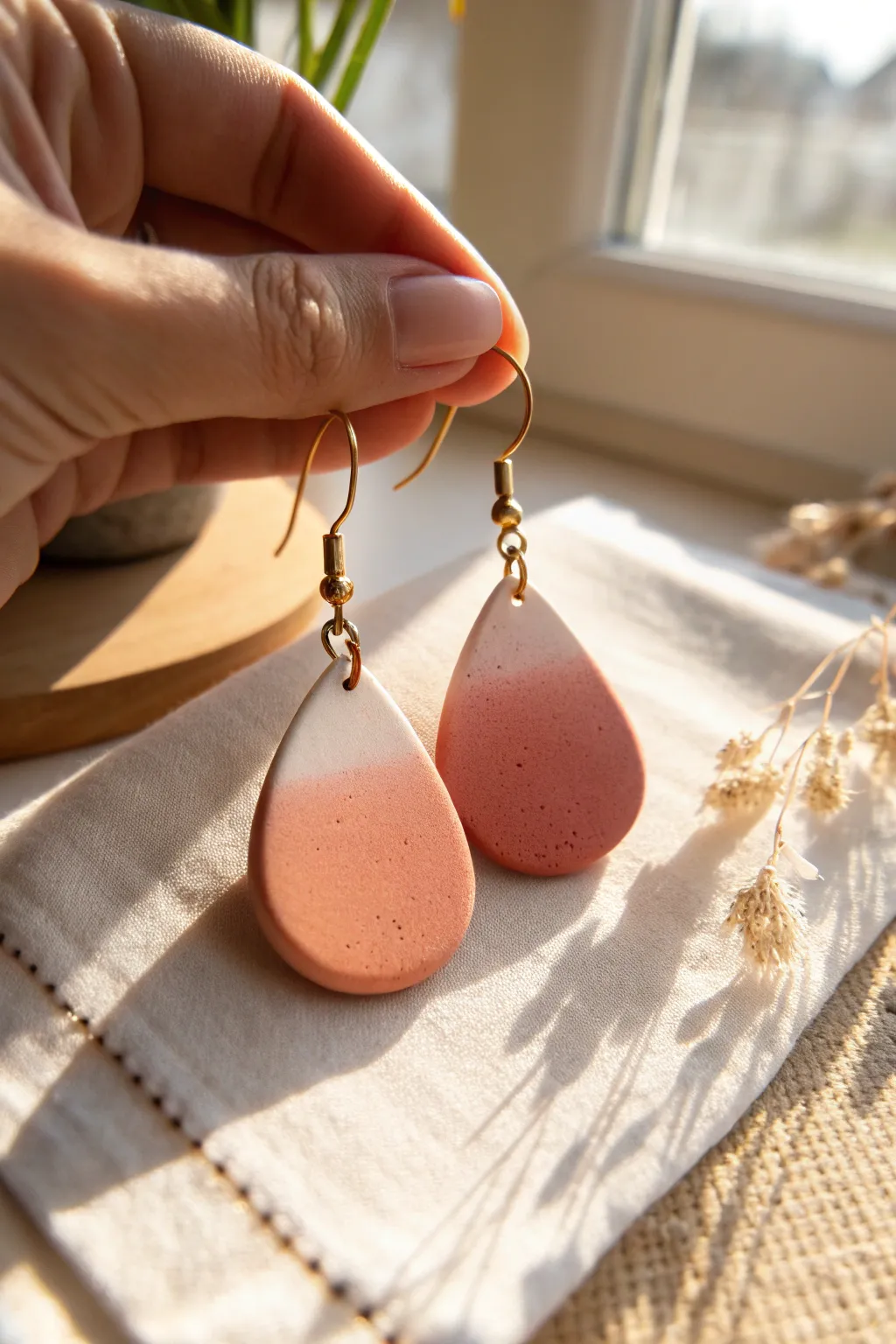
These elegant earrings feature a soft, seamless transition from creamy white to a warm dusty pink, accented with subtle speckling for an organic feel. The teardrop shape is classic and versatile, making this a perfect project for mastering the Skinner blend technique.
Step-by-Step
Materials
- Polymer clay (White)
- Polymer clay (Dusty Pink or Terracotta)
- Liquid polymer clay or bake and bond (optional)
- Acrylic rolling pin or pasta machine
- Teardrop clay cutters (medium size)
- Tissue blade
- Coarse black pepper or brown embossing powder (for speckles)
- Hand drill or pin vibe
- Jump rings (Gold)
- French hook ear wires (Gold)
- Jewelry pliers
- Fine grit sandpaper (400-1000 grit)
- Ceramic tile or glass work surface
Step 1: Creating the Speckled Blend
-
Condition the white clay:
Begin by thoroughly conditioning a block of white polymer clay until it is soft and pliable. Roll it into a square sheet about 3-4mm thick. -
Add texture:
Sprinkle a tiny amount of ground black pepper or brown embossing powder over the white sheet. Fold the clay over and roll it again to distribute the specks evenly throughout the white clay. Keep the speckling subtle. -
Condition the pink clay:
Condition your dusty pink or rounded terracotta clay separately. Form a square sheet of the same thickness and size as your white sheet. -
Prepare for the blend:
Cut both square sheets diagonally into triangles. Place one white triangle and one pink triangle together to form a rectangle or square, matching the diagonal cut line. -
Start the blend:
Pass the two-color sheet through your pasta machine (or use a roller) with the fold line perpendicular to the rollers. Fold the sheet in half, bringing the bottom pink edge up to the top pink edge (essentially folding color onto same color). -
Repeat the process:
Continue passing the folded sheet through the machine, always folding bottom to top, color-to-color. Repeat this 15-20 times until you see a smooth gradient transition in the middle.
Sticky Situation?
If your clay sticks to the cutter, dip the cutter in cornstarch or water before pressing down. This acts as a release agent and keeps your shapes crisp.
Step 2: Cutting and Baking
-
Final sheet formation:
Once the blend is smooth, roll the clay out to your final desired thickness, usually around 3mm. Make sure the gradient runs vertically. -
Position the cutter:
Take your teardrop cutter and position it over the gradient sheet. I like to aim for more pink at the bottom and just a touch of white at the very tip, as seen in the photo. -
Cut the shapes:
Press down firmly with the cutter. Cut two teardrop shapes. If you have enough clay left, you can cut a second pair or save the scraps for bead making. -
Smooth the edges:
Gently gently run your finger along the edges of the raw clay shapes to smooth out any harsh lines or burrs left by the cutter. -
Bake:
Place the shapes on a ceramic tile or a baking sheet lined with parchment paper. Bake according to the manufacturer’s instructions for your specific brand of clay (usually 275°F/130°C for 30 minutes). -
Cool down:
Allow the pieces to cool completely inside the oven or on a cooling rack before handling them further.
Step 3: Finishing and Assembly
-
Sand the edges:
Using fine-grit sandpaper wet with a little water, gently buff the edges and backed of the cured pieces to ensure they are perfectly smooth. -
Drill holes:
Use a small hand drill or pin vise to create a hole at the very top (the white end) of each teardrop. Drilling slowly prevents cracking. -
Open the jump rings:
Grab two gold jump rings. Use two pairs of pliers to twist them open laterally—never pull them apart outward, as this weakens the metal. -
Attach the hook:
Loop the open jump ring through the drilled hole in the clay teardrop, then thread the loop of the French hook ear wire onto the jump ring. -
Close the rings:
Twist the jump ring back into a closed position with your pliers, ensuring the gap is tight so the earring doesn’t slip off. -
Final check:
Wipe the earrings down with a soft cloth to remove any sanding dust or fingerprints.
Sanding Secret
Buff your baked pieces with denim or rough canvas vigorously after sanding. This brings back a gentle, natural sheen without needing any glaze.
Enjoy styling these warm gradient earrings with your favorite outfit for a sophisticated touch

The Complete Guide to Pottery Troubleshooting
Uncover the most common ceramic mistakes—from cracking clay to failed glazes—and learn how to fix them fast.
Faux Stone Polymer Clay Agate Slice Pendants
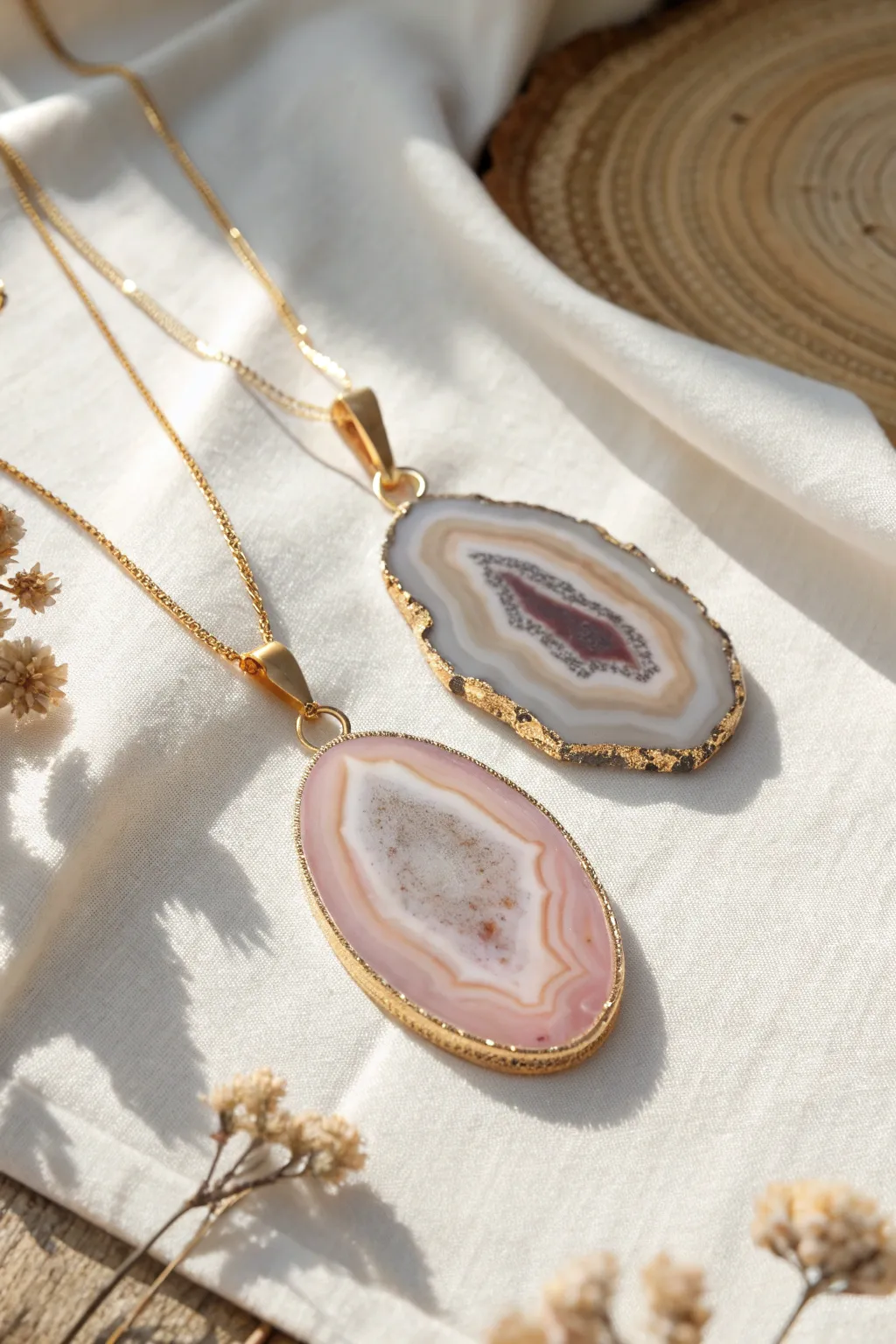
Capture the organic elegance of natural geodes with these stunning faux agate slice pendants. Using translucent polymer clay and clever tinting techniques, you’ll create depth and crystalline structures that look incredibly realistic.
Step-by-Step Guide
Materials
- Translucent polymer clay (high quality like Cernit or Premo)
- Opaque white polymer clay
- Alcohol inks (brown, pink, purple, or desired agate colors)
- Liquid polymer clay (translucent)
- Gold leaf or gold gilding paint
- UV resin or gloss varnish
- Fine glitter or embossing powder (white/clear)
- Tissue blade or craft knife
- Acrylic roller
- Needle tool
- Jump rings and necklace chains
Step 1: Creating the Agate Cane
-
Prepare the translucent base:
Begin by conditioning a large block of translucent polymer clay. Divide it into four or five smaller portions of varying sizes. -
Tint the clay:
Leave one portion pure translucent. Tint the others with tiny drops of alcohol ink to create a gradient of your chosen color (e.g., pale pink to deep rose). Add a very prominent opaque white portion as well, which will create the signature agate banding. -
Form the center:
Take a small log of the darkest translucent shade and roll it in a bit of fine glitter or embossing powder to mimic the crystalline center of a geode. I like to twist this log slightly to make it look organic. -
Wrap the layers:
Flatten your other clay colors into sheets. Wrap the center log with these sheets in random order, alternating between translucent shades and thin opaque white layers. -
Shape the cane:
Compress the large log you’ve created. Gently squeeze and shape it from a round log into a slightly irregular teardrop or oval shape, depending on the final pendant look you want.
Cloudy Result?
If your agate looks muddy, you likely used too much opaque clay. The ratio should be 80% translucent to 20% opaque for realistic depth.
Step 2: Slicing and Texturing
-
Slice the cane:
Using a sharp tissue blade, cut slices from your cane approximately 3mm to 4mm thick. Don’t worry if the edges are a bit rough; that adds to the natural stone effect. -
Create the rough edge:
Use a needle tool or a crumpled piece of aluminum foil to texture the outer rim of each slice. This mimics the rough crust found on real agate nods. -
Enhance translucency:
To make the center look more crystalline, apply a thin layer of liquid translucent clay to the very middle and sprinkle a tiny bit more glitter into it. -
Bake the pieces:
Place your slices on a ceramic tile or cardstock. Bake according to your clay manufacturer’s instructions. Usually, this is around 275°F (130°C) for 30 minutes. Let them cool completely. -
Quench for clarity:
Immediately after removing from the oven, plunge the hot pieces into a bowl of ice water. This ‘shocking’ technique significantly improves the clarity of translucent clay.
Layering Hack
Place extremely thin strips of gold leaf between your clay layers before rolling the cane. It creates subtle metallic veins inside the ‘stone’.
Step 3: Finishing Touches
-
Gild the edges:
Once dry, paint the rough textured edges with liquid gold gilding or gold leaf paint. This electroplated look is what elevates the piece from simple clay to jewelry. -
Drill the hole:
Use a small hand drill or rotary tool to carefully drill a hole at the top of your pendant for the jump ring. -
Resin coating:
Apply a coat of UV resin to the front and back of the pendant. Cure under a UV lamp for a few minutes. This glass-like finish is crucial for making the translucent layers pop. -
Assembly:
Open a gold jump ring using two pairs of pliers. Insert it through the drilled hole and attach your pendant bail. -
Final connection:
Thread your delicate gold chain through the bail to complete your luxurious faux stone necklace.
Wear your new geode jewelry with pride knowing you sculpted nature’s beauty by hand
Polymer Clay Earrings With Metallic Leaf Accents
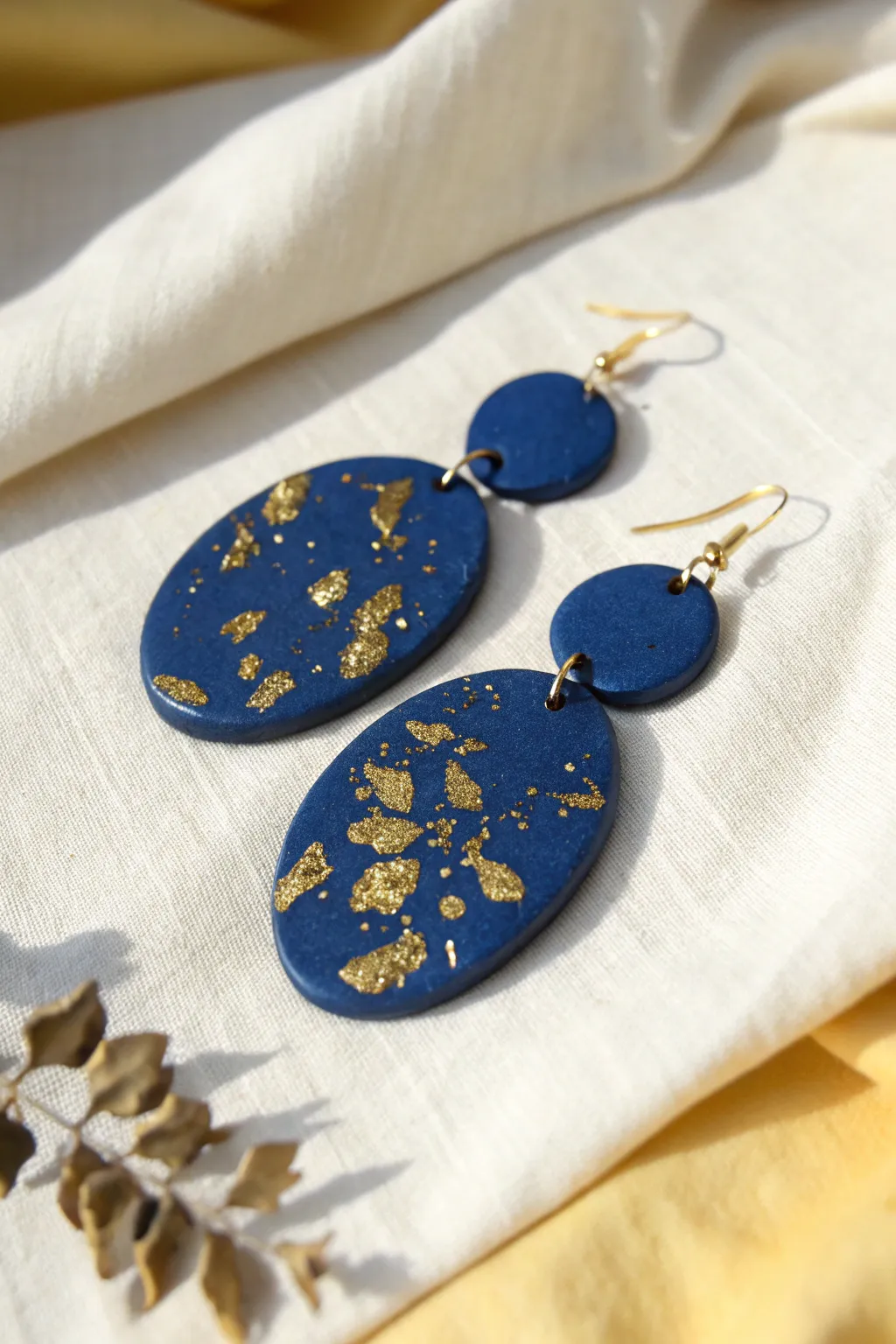
Achieve a sophisticated galaxy-inspired look with these deep navy polymer clay earrings scattered with gold metal foil flecks. The combination of simple geometric shapes and luxurious metallic texture creates an accessory that feels both modern and timeless.
Step-by-Step Tutorial
Materials
- Navy blue polymer clay
- Gold metallic leaf flake sheets (or gold foil flakes)
- Acrylic rolling pin
- Clay cutters: 1cm circle and 3cm-4cm oval
- Small gold jump rings
- Gold earring hooks (French hooks)
- Needle tool or small clay awl
- Jewelry pliers (round nose and flat nose)
- Parchment paper or ceramic tile for baking
- Glossy polymer clay glaze (optional)
- Soft paintbrush
Step 1: Clay Preparation
-
Condition the base:
Begin by taking a chunk of navy blue polymer clay and working it in your hands. Knead, roll, and fold it until it is completely soft and pliable, which prevents cracking later. -
Roll out the slab:
Place the conditioned clay on your work surface. Use your acrylic rolling pin to roll it into a smooth, even slab that is approximately 3mm thick. -
Prepare the foil:
Take a sheet of gold metallic leaf. If you are using full sheets, gently tear off small, irregular flakes. If using pre-flaked foil, pour a small amount onto a separate surface.
Foil Flake Trick
Use a soft, fluffy makeup brush to pick up and place the delicate gold leaf. It prevents the foil from sticking to your fingers and tearing prematurely.
Step 2: Applying the Foil
-
Scatter the gold:
Gently pick up pieces of the gold foil with tweezers or your fingertip and place them randomly onto the blue clay slab. -
Vary the density:
Aim for an organic distribution. Cluster some flakes together for larger brilliant patches, and let tiny specks scatter in the empty spaces, just like stars in a night sky. -
Embed the leaf:
Once you are happy with the arrangement, take your acrylic rolling pin again. Very gently roll over the slab one more time to press the foil flat into the clay so it becomes flush with the surface.
Sticky Cutters?
If the clay gets stuck inside your cutters, dip the cutting edge into cornstarch or water before pressing into the clay. This acts as a release agent.
Step 3: Cutting and Shaping
-
Cut the tops:
Position your small circle cutter over a section of clay that has little to no foil. Press down firmly to cut two circles; these will serve as the solid-colored top studs. -
Cut the drops:
Position your oval cutter over the most heavily foiled areas of the slab to capture the best texture. Press down to cut two matching ovals. -
Smooth the edges:
Carefully lift away the excess scrap clay. Gently run your finger along the edges of your cut shapes to smooth out any rough spots or burrs left by the cutters. -
Pierce the holes:
Use a needle tool to create a small hole at the very bottom of each circle stud and the very top of each oval drop. Ensure the hole is large enough for your jump rings.
Step 4: Baking and Assembly
-
Bake the pieces:
Transfer your clay shapes onto a parchment-lined baking sheet or ceramic tile. Bake according to the specific temperature and time directions on your package of polymer clay (usually around 275°F/135°C). -
Cool down:
Remove the pieces from the oven and allow them to cool completely before handling them, as warm clay is still fragile. -
Optional glazing:
I like to add a thin layer of glossy glaze over the foil parts here to really make the gold pop and protect it from tarnishing, though matte is beautiful too. -
Open the jump rings:
Using two pairs of pliers, twist a gold jump ring open laterally (side-to-side, not pulling apart). -
Connect the shapes:
Slide the jump ring through the bottom hole of the circle stud and the top hole of the oval drop, then twist the ring closed securely. -
Attach the hooks:
Open the small loop at the bottom of your earring hook. Slide it through the top of the hole you previously made (or use a second jump ring if needed for orientation) on the circle stud. -
Final check:
Close the earring hook loop securely. Double-check all connections to ensure nothing is loose before wearing.
Wear your new golden-flecked creations with pride and enjoy the subtle sparkle they add to your outfit




What Really Happens Inside the Kiln
Learn how time and temperature work together inside the kiln to transform clay into durable ceramic.
Botanical Imprint Polymer Clay Leaf Earrings
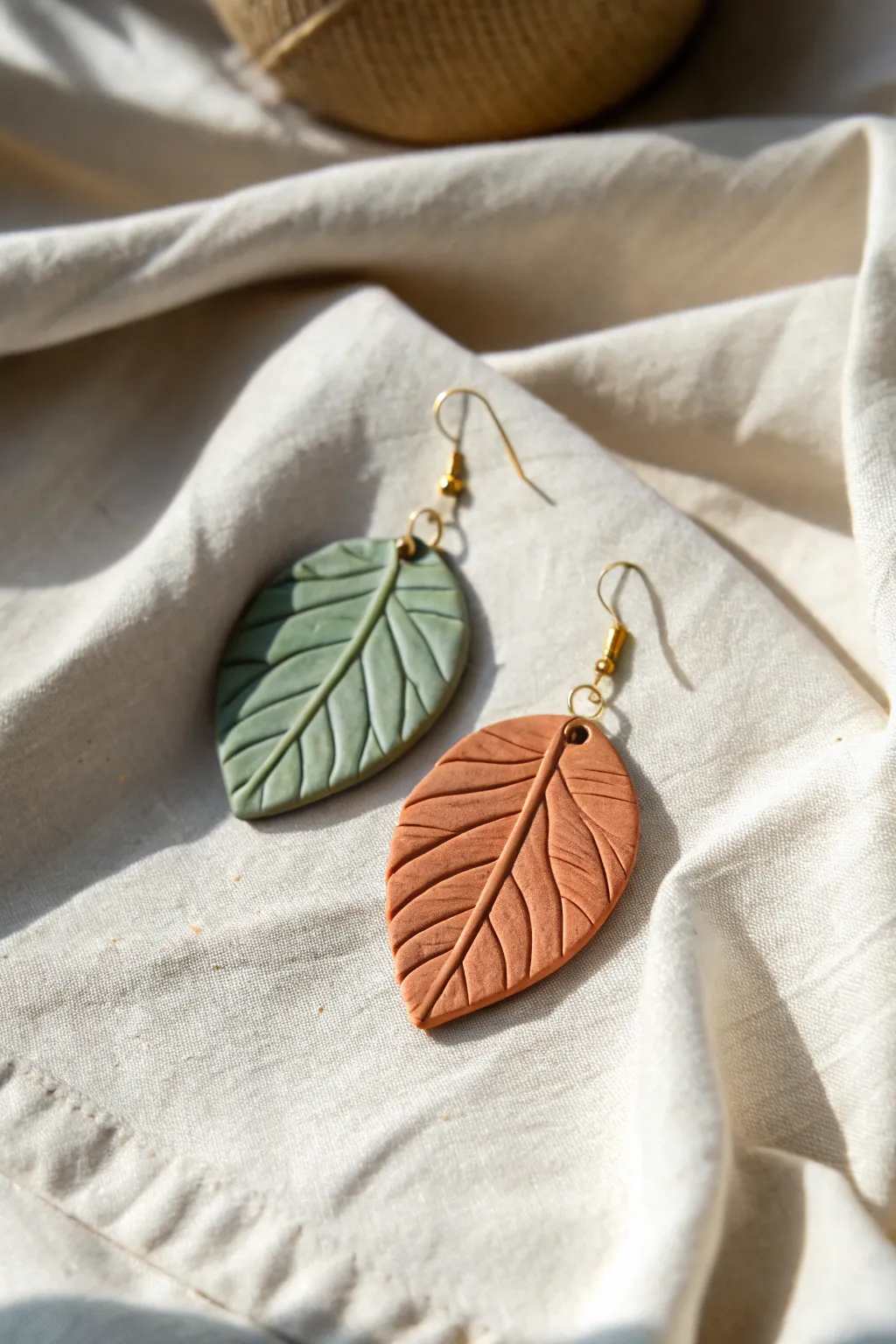
Capture the delicate beauty of nature with these textured polymer clay earrings. Using real leaves or stamps to create intricate vein details, this project results in a stunning, organic accessory perfect for any season.
Detailed Instructions
Materials
- Polymer clay in sage green and terracotta (or rust)
- Acrylic rolling pin or pasta machine
- Real leaves with prominent veins (like mint, rose, or hydrangea) or a texture stamp
- Leaf-shaped clay cutter (medium size)
- Detail needle tool or toothpick
- Small round cutter or piercing tool (for holes)
- Parchment paper or ceramic tile
- Oven for baking
- 2 Gold-tone fishhook ear wires
- 4 Gold-tone jump rings (6mm)
- Jewelry pliers (chain nose and round nose)
- Fine grit sandpaper (optional)
Step 1: Preparing the Clay Canvas
-
Condition the clay:
Begin by warming the sage green clay in your hands, kneading it until it becomes soft and pliable. Repeat this process separately with the terracotta clay to prevent color transfer. -
Roll out slabs:
Using your acrylic roller or pasta machine on a medium setting (approx. 3mm thick), roll out both colors into smooth, even slabs on a piece of parchment paper. -
Inspect for bubbles:
Check the surface for any trapped air bubbles. If you see one, gently pierce it with a needle tool and smooth the area with your finger.
Natural Release Helper
If using real leaves, lightly dust the vein side with cornstarch before pressing into the clay. This acts as a release agent and ensures no plant matter gets stuck in your design.
Step 2: creating the Texture
-
Position the texture:
Place your chosen leaf (vein side down) or texture stamp onto the clay slab. I usually like to mist the leaf lightly with water first to prevent sticking. -
Imprint the design:
Gently roll over the leaf or stamp with your acrylic roller. Apply firm, even pressure to ensure the deep veins transfer clearly into the clay, but don’t press so hard that you distort the slab too much. -
Reveal the pattern:
Carefully peel back the leaf or lift the stamp to reveal the organic imprint left behind. -
Enhance details:
If any lines look faint, retrace them gently with a lubricated needle tool to deepen the central vein or side branching veins.
Make It Antique
For a rustic look, rub a little brown acrylic paint into the veins after baking, then wipe the raised surface clean with a damp cloth. This highlights the texture beautifully.
Step 3: Cutting and Baking
-
Align the cutter:
Position your leaf-shaped cutter over the textured area. Try to center the main vein of the imprint so it runs vertically through the shape for a realistic look. -
Cut the shapes:
Press the cutter straight down firmly. Give it a tiny wiggle to ensure a clean separation, then lift it away. Remove the excess clay from around the cutout. -
Pierce the holes:
Use a small round cutter or a piercing tool to create a hole at the very top stem area of each leaf. Ensure the hole is not too close to the edge to prevent breaking later. -
Smooth the edges:
Dip your finger in a little cornstarch or water and gently run it along the cut edges to smooth out any sharpness or burrs before baking. -
Bake the pieces:
Transfer the parchment paper with your leaves onto a baking sheet. Bake according to your specific clay brand’s package instructions (usually around 275°F/130°C for 30 minutes). -
Cool down:
Allow the pieces to cool completely inside the oven with the door cracked, or remove them and let them rest on a flat surface until room temperature.
Step 4: Assembly
-
Open the jump rings:
Using two pairs of pliers, grip a jump ring on either side of the opening. Twist one hand away from you and the other toward you to open the ring laterally—never pull it apart. -
Attach to clay:
Slide the open jump ring through the hole you created in the baked clay leaf. -
Add the hardware:
Before closing the ring, loop the fishhook ear wire onto the jump ring. Make sure the hook is facing the correct direction so the textured side of the leaf will face forward. -
Close and secure:
Twist the jump ring back into its closed position using the pliers, ensuring the two ends meet perfectly flush. -
Final check:
Wipe the surface gently with a soft cloth to remove any fingerprints and ensure your botanical imprint is looking its best.
Wear your new botanical creations with pride or gift them to a nature-loving friend
Mini Polymer Clay Bead Stretch Bracelets
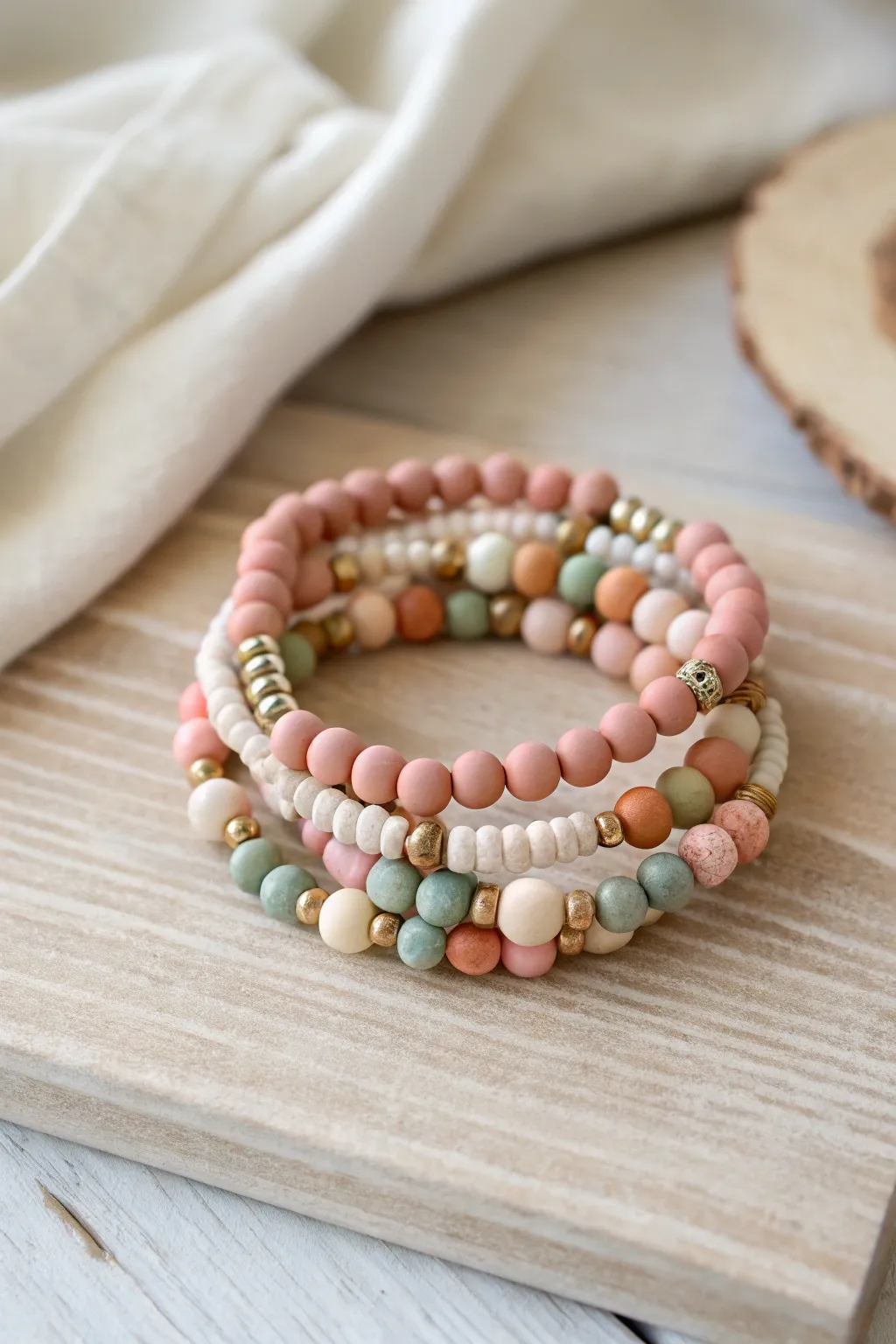
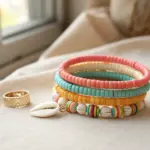
Embrace a soft, earthy palette with this set of stackable stretch bracelets, featuring tiny handmade heishi and round beads. These delicate strands combine muted coral, sage green, and cream tones with touches of gold for a sophisticated bohemian look.
Step-by-Step
Materials
- Polymer clay in muted coral/terracotta
- Polymer clay in soft sage green
- Polymer clay in warm beige or white
- Gold accent beads (seed beads or spacers)
- Caneworking tools (acrylic roller, tissue blade)
- Bead pins or toothpicks
- 0.7mm elastic stretch cord
- Super glue or jewelry cement
Step 1: Creating Custom Colors
-
Conditioning the clay:
Begin by thoroughly conditioning your polymer clay blocks. This warms the material, making it pliable and preventing cracking later on. You want the clay soft enough to roll smoothly without crumbling. -
Mixing the coral shade:
To achieve that muted terracotta coral seen in the image, mix a standard orange clay with a pinch of brown and a generous amount of white. Keep blending until the marble effect disappears completely. -
Mixing the sage green:
For the sage tone, take a basic green and tone it down significantly with white and a tiny speck of black or grey. This desaturates the brightness for that organic, dusty feel. -
Preparing the beige:
Knead your white or beige clay. If you want a speckled effect like some natural stones have, you can mix in a tiny pinch of ground black pepper or dried vanilla bean specks.
Uneven Heishi Slices?
If your disc beads are squishing into ovals while cutting, your clay is too warm. Refrigerate the clay snake for 15 mins, or let the clay leach on paper to stiffen it.
Step 2: Forming the Beads
-
Rolling round beads:
Pinch off small, uniform amounts of your coral and sage clay. Roll these between your palms to create smooth spheres about 4-5mm in diameter. I find using a small circle cutter helps measure equal amounts of clay first. -
Piercing the round beads:
Gently hold a sphere and slowly twist a bead pin or toothpick through the center to create the hole. Rotate the bead as you pierce to keep it from flattening. -
Creating heishi tubes:
To make the flat disc beads (heishi style), roll a snake of beige clay until it’s an even cylinder, roughly the thickness of a pencil. -
Slicing the discs:
I like to pop the snake in the fridge for 10 minutes to firm it up. Once chilled, use your tissue blade to slice thin, even discs straight down through the cylinder. -
Making spacers:
Use a specialized bead piercer to punch holes through the center of your flat discs. Be gentle so you don’t distort their circular shape. -
Texturing (Optional):
For the textured white beads seen in the middle bracelet, take a few round beige beads and gently roll them over a piece of sandpaper or a texturing tool before piercing. -
Baking:
Arrange all your pierced beads on a tile or parchment-lined baking sheet. Follow your clay manufacturer’s temperature instructions carefully, usually baking for 30 minutes to ensure durability. -
Cooling:
Allow the beads to cool completely in the oven with the door cracked open. This gradual cooling helps prevent thermal shock and cracking.
Step 3: Assembly
-
Measuring the cord:
Cut a length of elastic cord about 10-12 inches long. Prepare three separate strands if you are recreating the full stack shown. -
Pre-stretching:
Give your elastic a few firm tugs before stringing. This ‘pre-stretches’ the material so your bracelet won’t sag after the first time you wear it. -
Designing Strand 1: The Coral Block:
String your solid coral round beads for the majority of the first bracelet. Interject small sections of gold spacers or a single sage bead to break up the color. -
Designing Strand 2: The Mix:
For the middle bracelet, create a pattern. Alternate groups of white heishi beads with single round coral beads and gold accents. -
Designing Strand 3: Earth Tones:
Combine your sage green round beads with beige rounds and gold spacers. Try clustering the gold beads in groups of three for visual interest. -
Tying the knots:
Once strung, bring the ends of the elastic together. Tie a surgeon’s knot (right over left twice, then left over right) and pull tight. -
Securing the knot:
Apply a tiny dab of jewelry glue to the knot. Let it dry completely before trimming the excess tail of the cord. -
Hiding the join:
If possible, gently tug the knot inside the hole of a neighboring bead to hide it for a seamless finish.
Pro Tip: Cornstarch Polish
Before baking, lightly toss your raw beads in a baggie with cornstarch. This removes fingerprints and prevents a shiny ‘plastic’ look after baking.
Now you have a stunning set of custom-colored bracelets ready to mix, match, or gift to a friend

TRACK YOUR CERAMIC JOURNEY
Capture glaze tests, firing details, and creative progress—all in one simple printable. Make your projects easier to repeat and improve.
Lentil Bead Polymer Clay Necklace Set
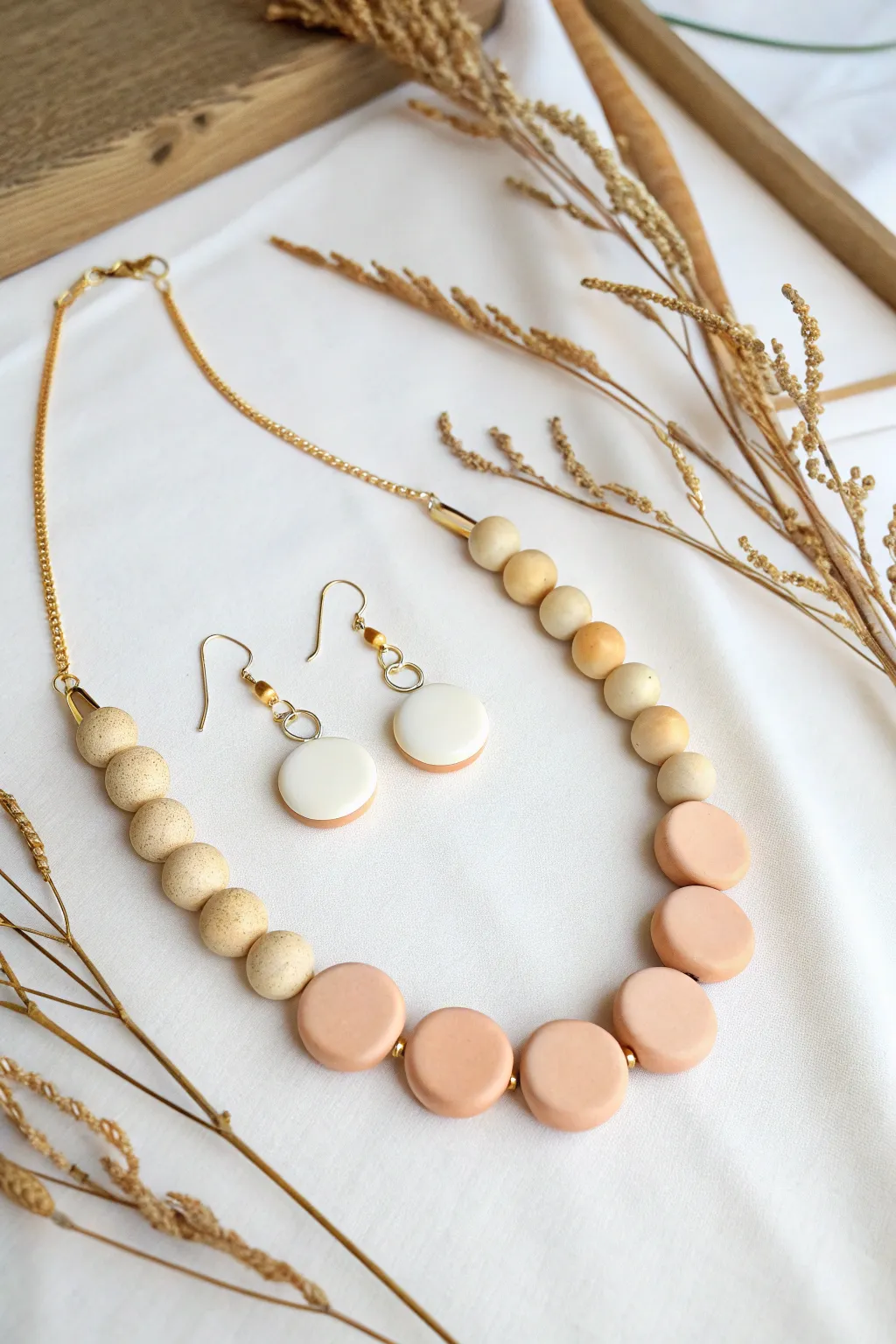
This elegant polymer clay set balances earthy textures with soft, warm geometric shapes. By combining classic round beads with modern lentil forms, you’ll create a sophisticated accessory perfect for airy linen outfits or cozy autumn layers.
Step-by-Step Guide
Materials
- Polymer clay (white, beige/fawn, peach/terracotta)
- Black pepper or embossing powder (for speckling)
- Acrylic roller or pasta machine
- Circle cutters (small and medium sizes)
- Bead piercing pins or toothpicks
- Gold chain
- Gold jump rings (various sizes)
- Earring hooks
- Gold tube connectors or crimp ends
- Small gold space beads
- Gloss varnish (optional)
- Round nose pliers
- Jewelry wire or eye pins
Step 1: Creating the Speckled Clay
-
Condition the base:
Begin by conditioning your beige or fawn-colored clay until it is soft and pliable. You want a neutral, sandy tone for the upper beads. -
Add the speckles:
Sprinkle a small pinch of ground black pepper or coarse embossing powder onto the flattened clay. Fold the clay over and roll it through your pasta machine or by hand to distribute the specks evenly without muddying the color.
Swirl Smoothly
When making lentil beads with an acrylic block, use very light pressure and keep the block parallel to your palm. Too much pressure will flatten the bead back into a pancake.
Step 2: Forming the Round Beads
-
Measure the clay:
Roll your speckled clay into a thick log. Cut equal segments to ensure your beads will be uniform in size; you will need about 12-14 segments for the necklace strands. -
Roll spheres:
Roll each segment between your palms to create perfectly smooth spheres. Getting these as round as possible now saves sanding time later. -
Create the gradient:
For accurate replication, ensure about half the beads are slightly smaller (for the top near the chain) and get progressively larger as they approach the center section. -
Pierce the holes:
Gently pierce each sphere with a bead pin or toothpick. I like to rotate the pin while pushing through to prevent the exit hole from distorting.
Level Up: Texture
Before baking the peach lentil beads, gently press a piece of coarse sandpaper or a toothbrush against the surface to give them a stone-like texture that matches the speckled beads.
Step 3: Making the Lentil Beads
-
Mix the peach tone:
Condition your peach or terracotta clay. Aim for a soft, warm pastel shade that contrasts gently with the speckled beige. -
Cut the circles:
Roll the peach clay into a thick sheet (approx 4-5mm). Use a medium circle cutter to punch out 5 discs for the necklace focal point. -
Shape the lentils:
Place a clay circle in the palm of your hand. Using a clear acrylic block or flat tool, gently swirl over the top of the clay in a circular motion. The pressure forms the flat disc into a puffed, lentil shape. -
Pierce horizontally:
Carefully pierce holes through the side profile of these lentil beads. Ensure the hole goes straight through the center so they hang evenly. -
Make earring components:
Repeat the lentil process with white clay to make two smaller lentil beads for the earrings. Pierce these vertically from top to bottom.
Step 4: Baking and Assembly
-
Bake:
Arrange all beads on a tile or baking sheet lined with paper. Bake according to your brand’s specific temperature instructions, usually for about 30-45 minutes to ensure durability. -
Sand and finish:
Once cool, lightly wet-sand any fingerprints or rough spots. You can leave them matte for a natural look or apply a thin glaze for shine. -
Stringing the necklace:
String your beads onto jewelry wire. Start with the small speckled beads, transition to the larger speckled ones, then string the 5 peach lentil beads in the center with tiny gold spacer beads between them. -
Attach the chain:
Secure the ends of your beaded section with crimp beads and gold tube connectors. Attach lengths of gold chain to these connectors to finish the necklace length. -
Assemble earrings:
Insert a headpin or eye pin through the white lentil beads. Create a loop at the top using round nose pliers. -
Final touches:
Attach a small gold ring component and the earring hook to your white beads to complete the dangling design.
Wear your handmade set with pride, knowing you’ve mastered the art of mixing bead shapes
Minimal Polymer Clay Bar Necklace With Stamped Patterns
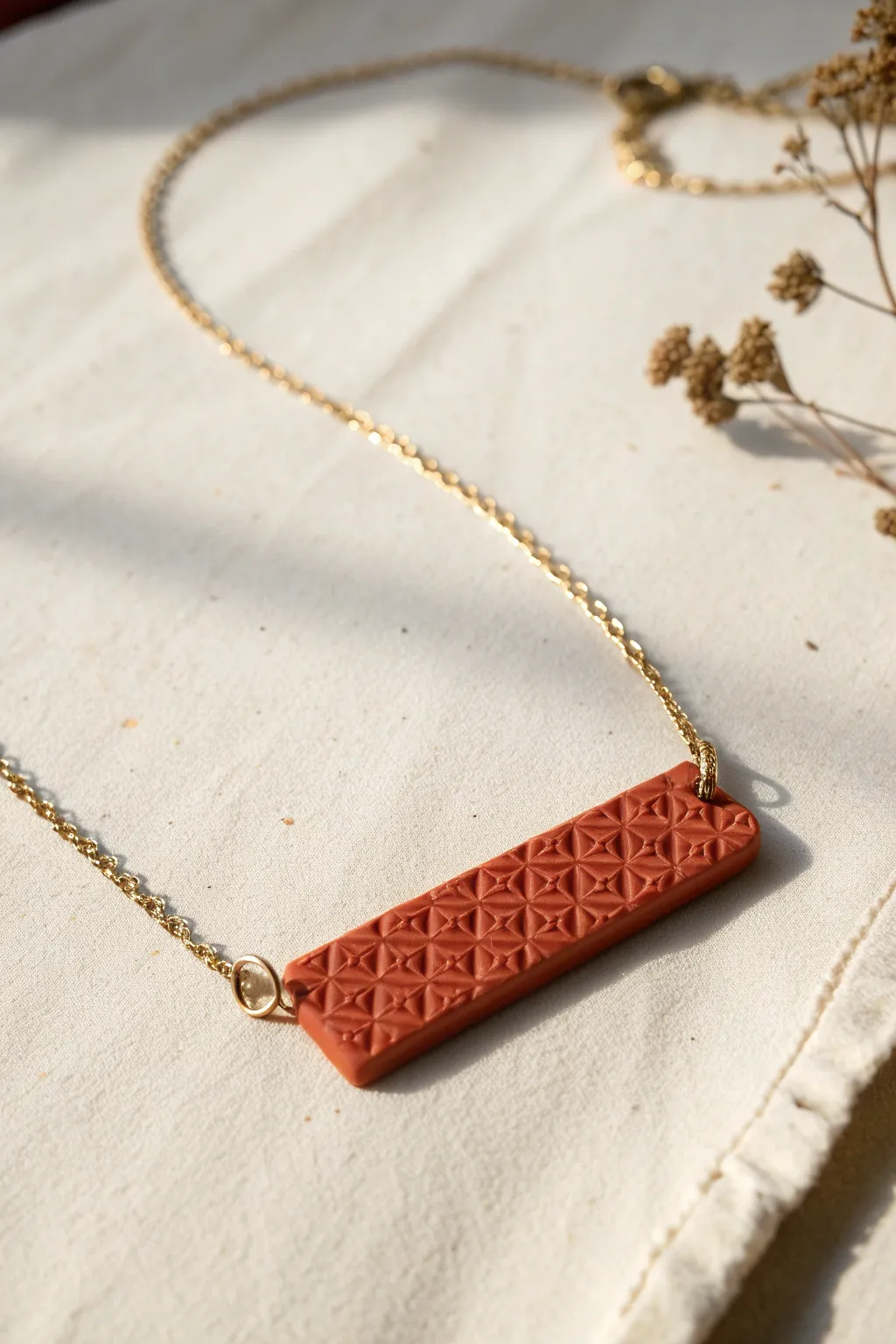
This understated necklace combines the earthy warmth of terracotta-colored clay with a refined geometric texture. It results in a modern, minimalist bar pendant that feels both organic and polished, perfect for everyday wear.
How-To Guide
Materials
- Terracotta or rust-colored polymer clay
- Texture sheet or rubber stamp with a small geometric repeating pattern
- Acrylic rolling pin or clay machine
- Flexible tissue blade/slicer
- Ruler
- Two large jump rings (gold finish)
- Gold finish chain necklace and clasp
- Jewelry pliers (flat nose and round nose)
- Hand drill or needle tool
- Baking sheet and cardstock
- Wet/dry sandpaper (optional)
- Cornstarch or water spritzer (as release agent)
Step 1: Preparation & Texturing
-
Condition the Clay:
Begin by thoroughly kneading your terracotta polymer clay until it is soft, pliable, and free of any air bubbles. If the clay feels too stiff, the warmth of your hands will help loosen it up. -
Roll to Thickness:
Roll the clay out into an even sheet, aiming for a thickness of about 3mm to 4mm. It needs to be thick enough to hold the imprint without becoming flimsy. -
Prepare the Stamp:
Before pressing your texture sheet or stamp into the clay, lightly dust the clay surface with cornstarch or mist it with water. This prevents the rubber or plastic from sticking and ruining the pattern. -
Apply the Texture:
Place your texture sheet or stamp firmly over the clay slab. Press down evenly with your fingers or roll over the back of the texture sheet with your acrylic roller to transfer the geometric design deeply and crisply. -
Reveal the Pattern:
Carefully peel back the texture sheet to reveal the embossed design. Check to make sure the impression is deep and consistent across the area you plan to cut.
Stamp Release
If your clay is very sticky, placing a layer of cling wrap between the clay and the stamp creates a soft, pillowed texture and guarantees zero mess.
Step 2: Shaping & Baking
-
Measure the Bar:
Using a ruler, decide on the dimensions of your bar pendant. A standard size for this style is roughly 5cm long by 1.5cm wide, but you can adjust this to your preference. -
First Long Cut:
Place your flexible tissue blade along a straight line of the pattern grid to ensure symmetry. Press straight down to make your first long cut. -
Complete the Rectangle:
Make perpendicular cuts to define the width and length, ensuring your blade cuts sharply without dragging, which can distort the corners. You want a perfect rectangle. -
Refine Edges:
Gently smooth the cut edges with your fingertip to remove any sharp burrs, but be careful not to squish the rectangular shape. -
Create Connection Points:
Use a needle tool to pierce a hole through the thickness of the bar at the top two corners (drilling sideways from left to right would be too difficult here, so we pierce front-to-back near the ends). Alternatively, you can wait to drill after baking for cleaner holes. -
Bake:
Transfer the pendant to a baking sheet lined with cardstock to prevent shiny spots. Bake according to your clay manufacturer’s instructions—usually around 275°F (135°C) for 30-45 minutes.
Antique Finish
After baking, rub brown or black acrylic paint into the crevices and wipe the surface clean. This highlights the geometric pattern beautifully.
Step 3: Finishing & Assembly
-
Cool and Drill:
Allow the piece to cool completely. If you didn’t pierce holes earlier, use a small hand drill to carefully create holes in the upper corners large enough for your jump rings. -
Sanding (Optional):
If there are any rough spots on the edges, lightly sand them with fine-grit wet/dry sandpaper under running water for a smooth, professional finish. -
Open Jump Rings:
Using two pairs of pliers, twist open your large gold jump rings. Remember to twist the ends away from each other sideways, rather than pulling them apart, to maintain the circle shape. -
Attach to Pendant:
Thread an open jump ring through one of the holes in your clay bar. Before closing it, determine where the chain will sit. -
Connect the Chain:
Cut your gold chain to the desired length. Attach one end of the chain into the open jump ring securely attached to the pendant, then close the jump ring tightly. -
Repeat Connection:
Repeat the process on the other side of the pendant with the second jump ring and the other end of the chain. -
Add Clasp:
Find the center point of your chain at the back, cut it, and attach your clasp components using smaller jump rings to finish the necklace.
You how have a sophisticated, custom-textured piece that pairs effortlessly with any outfit
Mokume Gane Polymer Clay Statement Pendant
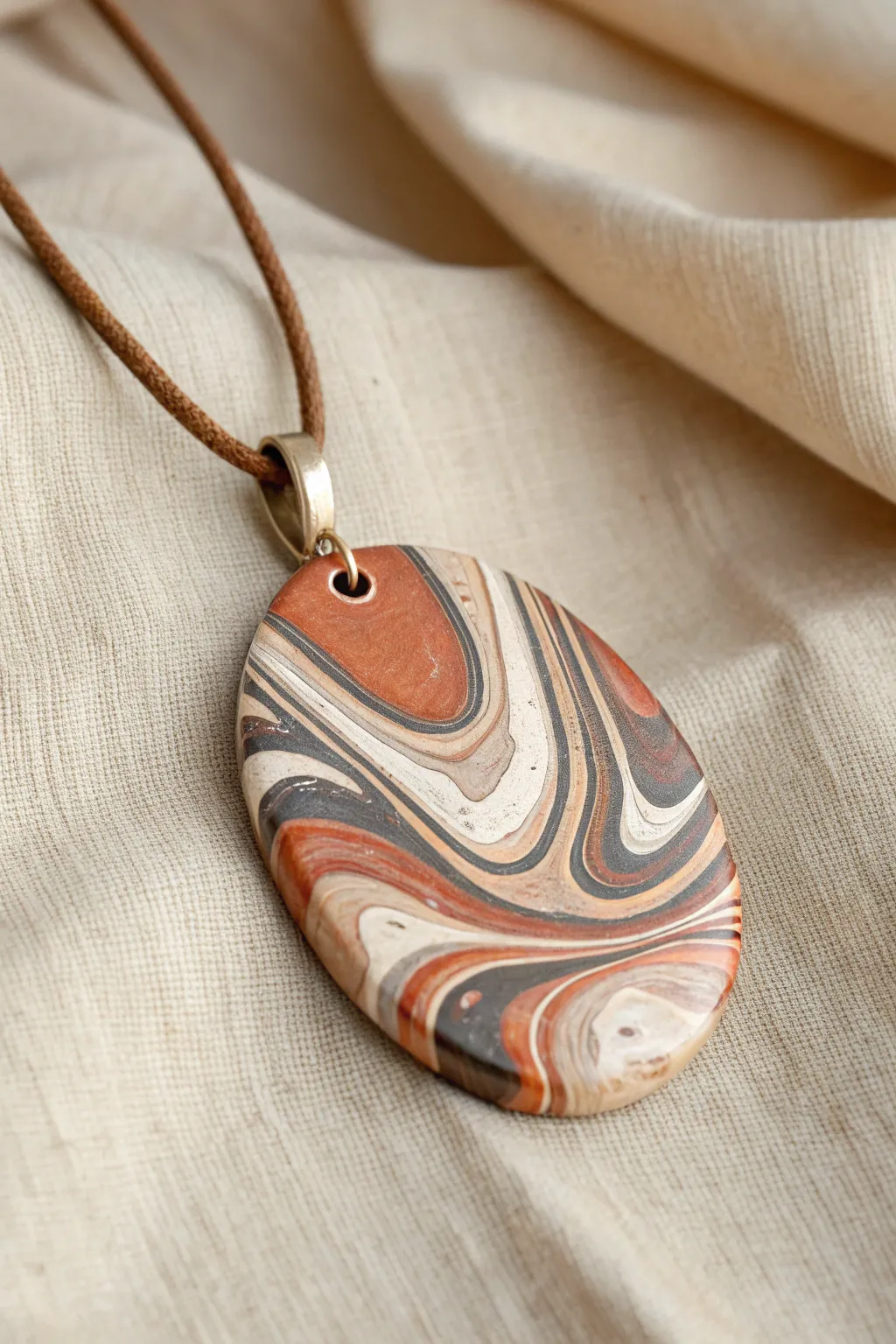
This stunning statement pendant mimics the ancient Japanese metalworking technique of Mokume Gane, but with accessible polymer clay. The swirling layers of rust, cocoa, black, and cream create a mesmerizing, organic wood-grain effect that looks complex but is surprisingly achievable.
Step-by-Step Tutorial
Materials
- Polymer clay (rust orange, dark brown/black, beige, translucent, white, and gold/bronze metallic)
- Metal leaf (gold or copper)
- Pasta machine or acrylic roller
- Tissue blade (rigid and flexible)
- Texture tools (star cutters, small circle cutters, needle tool)
- Oval shape cutter (approx. 2-3 inches)
- Sandpaper (grits 400 to 1000)
- Buffing wheel or denim cloth
- Metal pinch bail
- Hand drill or pin vibe
- Brown suede or leather cord
Step 1: Creating the Mokume Gane Stack
-
Condition the Clay:
Begin by thoroughly conditioning each color of clay until specific and pliable. Roll each color out into a sheet of the same thickness, roughly on the medium setting of your pasta machine. -
Apply Metal Leaf:
Take your sheet of translucent or dark brown clay and carefully apply a layer of gold or copper metal leaf to the surface. Burnish it down gently with your finger so it adheres completely without flaking off too much. -
Stack the Layers:
Stack your clay sheets on top of one another. Alternate high-contrast colors like the rust orange next to the black or cream to ensure the pattern pops later. Include the metal-leafed layer somewhere in the middle. -
Compress the Block:
Cut the stack in half and place one half on top of the other to double the height. Gently compress the block with your acrylic roller to remove air bubbles and adhere the layers together. -
Thin the Stack:
Use your acrylic roller to flatten the block slightly. Then, run it through the pasta machine on a thick setting to elongate it, being careful not to distort the layers too much. -
Impress the Texture:
This is the crucial step. Take your texture tools—small cutters, needle tools, or blunt ends of paintbrushes—and press them deeply into the clay stack. Don’t go all the way through, but push down about two-thirds of the way. -
Seal the Holes:
Once you have a landscape of holes and divots, gently compress the block from the sides to close up the holes. Smooth the top surface lightly with your roller until it is relatively flat again.
Smudged Pattern?
If slices look muddy, your blade might be dull or the clay too warm. Chill the block in the fridge for 15 mins before slicing for crisp, clean patterns.
Step 2: Slicing and Shaping
-
Shave the Pattern:
Using your sharpest, flexible tissue blade, carefully slice very thin horizontal layers off the top of the block. As you slice, the distorted layers beneath will reveal the mesmerizing bullseye and woodgrain-like patterns seen in the photo. -
Prepare the Base:
Prepare a separate backing sheet of clay (scrap clay works well here) rolled to a medium thickness. Lay your varied Mokume Gane slices onto this backing sheet, placing them side-by-side to cover an area larger than your final pendant. -
Smooth the Veneer:
Cover the veneer with a piece of parchment paper or deli sheet and burnish with a curved tool or card. This smoothes the seams between your slices so the surface feels like one continuous piece. -
Cut the Pendant:
Position your large oval cutter over the most interesting section of the pattern. Press down firmly to cut your shape. I like to lift the cutter and clay together to avoid warping the oval. -
Drill the Hole:
Use a small circle cutter or a straw to punch a hole near the top edge for the bail. Alternatively, you can wait to drill this after baking for a cleaner edge. -
Refine Edges:
Gently smooth the cut edges with your fingertip to remove any stray clay crumbs or shark-fin edges. A clean finish now saves sanding time later. -
Bake:
Bake the piece according to the manufacturer’s instructions for your specific brand of clay, usually around 275°F (130°C) for 45-60 minutes. Tent with foil to prevent scorching the lighter colors.
Level Up: Resin Finish
For a glass-like finish instead of a soft sheen, apply a thin layer of UV resin to the surface and cure under a UV lamp for high-gloss impact.
Step 3: Finishing Touches
-
Sand the Surface:
Once cooled, wet sand the pendant starting with 400 grit and working up to 1000 grit or higher. This reveals the true depth of the mica and metal leaf layers. -
Buff to Shine:
Vigorously rub the pendant with a piece of heavy denim or use a buffing wheel on a rotary tool to create a soft, natural sheen. -
Attach Hardware:
Insert the prongs of the metal pinch bail into the hole you created. Squeeze the bail gently with pliers to secure it against the clay. -
Add the Cord:
Thread your brown suede or leather cord through the bail loop to complete the earthy, natural look.
Wear your beautiful organic stone-look pendant with pride
Crackle-Effect Polymer Clay Link Necklace
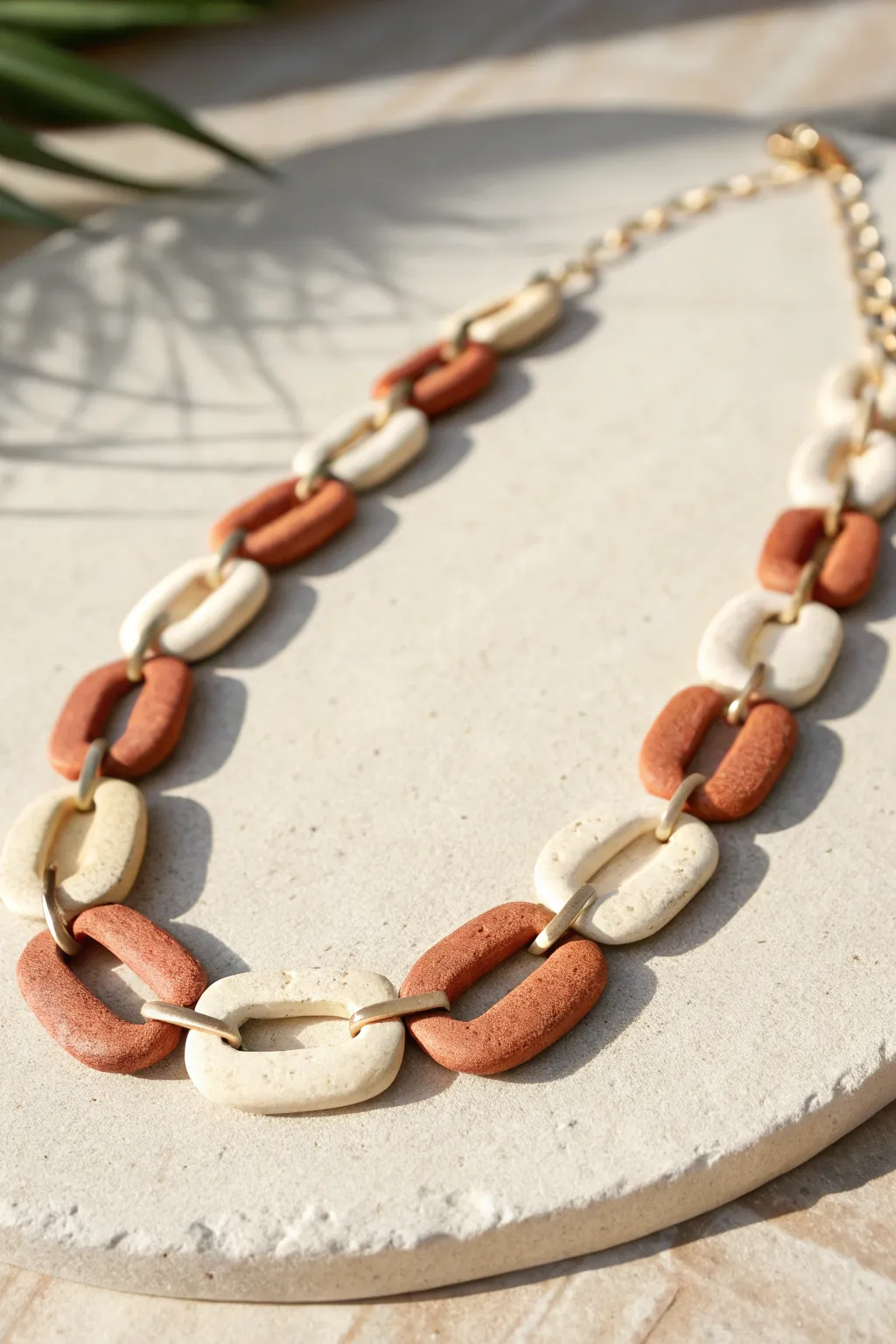
Embrace earthy elegance with this stunning statement necklace that mimics the look of raw ceramic or stone. The alternating rust and cream links feature a subtle textured finish, connected by delicate gold hardware for a piece that feels both organic and modern.
How-To Guide
Materials
- Polymer clay (Terracotta or Rust color)
- Polymer clay (Cream or Beige color)
- Acrylic paint (white or light beige for crackle/texture)
- Sea sponge or stiff bristle brush
- Oval clay cutter (approx. 1 inch long)
- Small round cutter (for inner hole)
- Jump rings (gold, approx. 6mm-8mm)
- Jewelry chain (gold)
- Lobster clasp and jump rings for closure
- Jewelry pliers (flat nose and round nose)
- Rolling pin or pasta machine
- Baking sheet and parchment paper
- Fine grit sandpaper (optional)
Step 1: Creating the Clay Links
-
Condition the clay:
Start by thoroughly conditioning your terracotta polymer clay until it is soft and pliable. Do the same separately for your cream-colored clay to prevent color transfer. -
Roll out slabs:
Roll each color of clay into a sheet approximately 3mm to 4mm thick. You want the links to be sturdy but not too heavy. -
Add texture:
Before cutting, take a sea sponge or a stiff toothbrush and gently press it all over the surface of your clay sheets. This creates that organic, stone-like pitting seen in the photo. -
Cut the outer shapes:
Use your oval cutter to punch out an equal number of shapes from both clay colors. For the necklace shown, you’ll need about 6-8 of each color, depending on your desired length. -
Cut the centers:
To turn these ovals into links, use a smaller cutter (or freehand with a craft knife) to remove the center of each oval, leaving a rim about 4mm wide. -
Refine the edges:
Gently smooth the cut edges with your fingertip to remove any sharp burrs. I find a tiny drop of baby oil on my finger helps smooth it perfectly without leaving fingerprints. -
Create the crackle effect (Optional):
For extra depth, lightly dab a tiny amount of white acrylic paint onto the textured surface and wipe it off immediately with a paper towel, leaving pigment only in the deeper textures. -
Bake the pieces:
Arrange your clay links on a parchment-lined baking sheet. Bake according to the manufacturer’s instructions (usually 275°F/135°C for 15-30 minutes). -
Cool and finish:
Let the pieces cool completely. If any edges are still rough, lightly sand them with fine-grit sandpaper for a professional finish.
Sticky Situation?
If your clay sticks to the cutters, dip the cutter into cornstarch or water before pressing it into the clay. This acts as a release agent for clean cuts.
Step 2: Assembly
-
Open jump rings:
Using two pairs of pliers, twist your gold jump rings open laterally (side-to-side, never pull apart) to preserve their shape. -
Connect two links:
Slide one terracotta link and one cream link onto an open jump ring. Close the ring securely so the gap is flush. -
Build the pattern:
Continue this process, connecting the links with jump rings in an alternating color pattern (Rust – Cream – Rust – Cream) until you have a single long chain of clay links. -
Prepare the chain:
Cut your gold jewelry chain into two equal lengths, approximately 3-4 inches each, depending on how low you want the necklace to hang. -
Attach chains to clay:
Use a jump ring to attach one length of gold chain to the clay link at the far left end. Repeat on the far right end with the second chain. -
Add the clasp:
Attach a lobster clasp to the free end of one chain using a small jump ring. -
Finish the closure:
Attach a slightly larger jump ring to the free end of the other chain to act as the catch for the clasp. -
Final check:
Lay the necklace flat to ensure all links are facing the correct way and check that all jump rings are tightly closed to prevent snagging.
Level Up: Stone Look
Mix black pepper or dried used coffee grounds into the cream clay before rolling. This adds distinct speckles that mimic real granite or sandstone.
Now you have a sophisticated, handcrafted accessory ready to elevate any outfit
Tiny Sculpted Polymer Clay Mushroom Charm Earrings
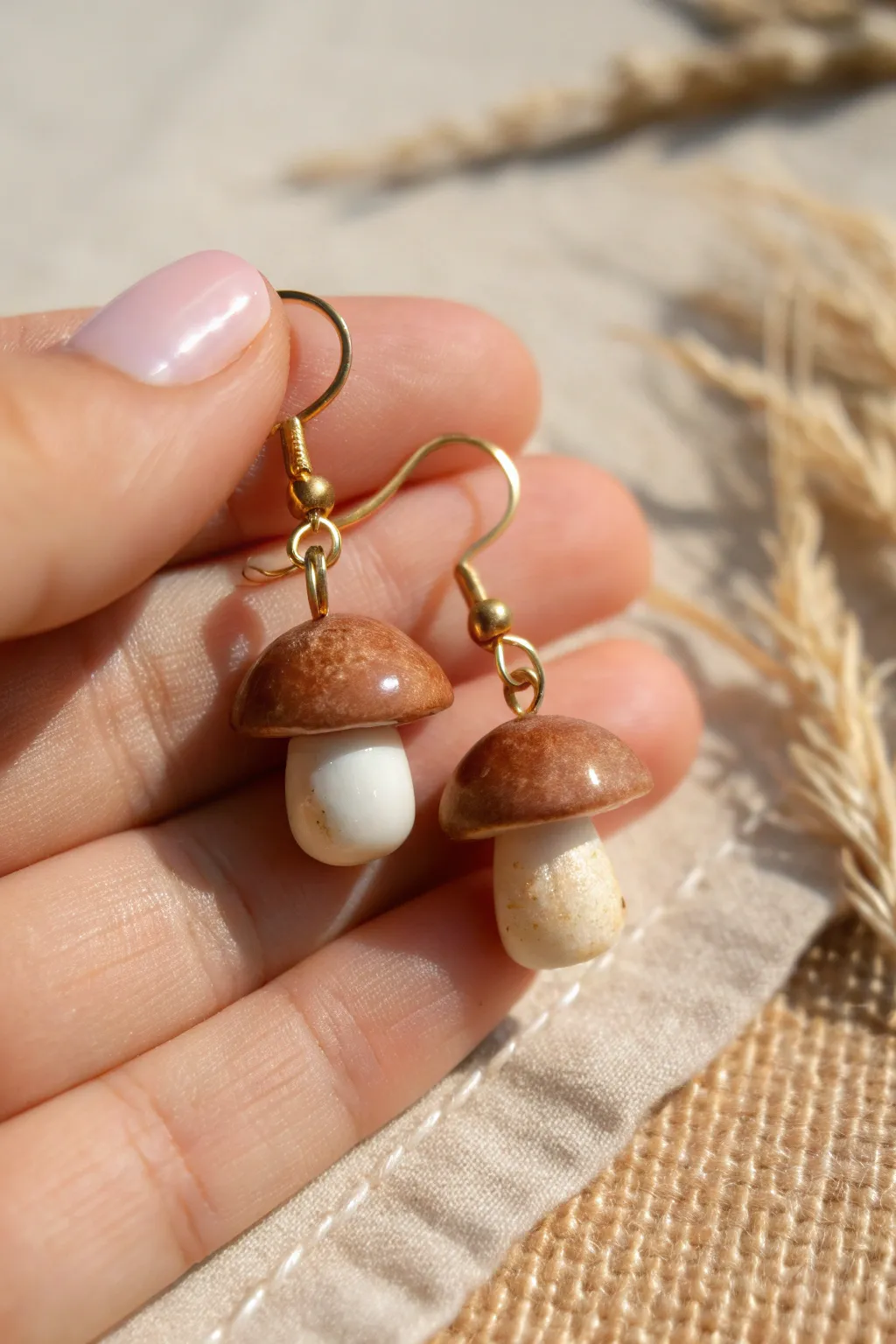
Embrace the cottagecore aesthetic with these charmingly realistic mushroom earrings. These petite sculpted charms feature a glossy, toasted-brown cap and a textured stem that mimics the organic imperfections found in nature.
Step-by-Step Tutorial
Materials
- White or translucent polymer clay
- Brown polymer clay (burnt umber or chocolate shade)
- Soft pastel chalks in ochre, brown, and burnt sienna
- Liquid polymer clay (translucent)
- Glaze or UV resin (gloss)
- Small paintbrush
- Gold-tone eye pins
- Gold-tone fishhook ear wires
- Needle tool or toothpick
- Sandpaper or a rough toothbrush for texturing
- Craft blade
- Oven for baking
Step 1: Sculpting the Stems
-
Prepare the base clay:
Start by conditioning a small amount of white polymer clay. To give it a more natural, organic look, I like to mix in a tiny pinch of translucent clay. This prevents the white from looking too stark and opaque. -
Form the stalks:
Roll two small logs of the white mixture, approximately 1-1.5 cm long. Make them slightly thicker at the bottom (the bulb) and tapering very gently toward the top where the cap will sit. -
Add texture:
Using a rough toothbrush or a crumbled piece of sandpaper, gently tap the surface of the clay stalks. You don’t want deep gouges, just a subtle pitting to mimic the skin of a real mushroom stem. -
Apply shading:
Scrape a small amount of ochre and light brown soft pastel chalk into a fine powder. Dip a dry brush into the powder and lightly dust the bottom of the bulbs and random spots on the stem to create a muddy, earthy effect. -
Insert the hardware:
Trim your gold eye pins to size (about 1cm long). Dip the end into a little liquid polymer clay for a secure bond, then push an eye pin straight down into the top center of each stem.
Sticky Situation?
If your clay gets too soft and fingerprints are showing, pop the sculpted pieces in the fridge for 10 minutes before the final smoothing.
Step 2: Creating the Caps
-
Shape the clay:
Condition your brown polymer clay. Roll two balls that are slightly wider than your stems. Flatten the bottom of each ball against your work surface, keeping the top rounded and domed. -
Refine the form:
Gently press looking for a semi-sphere shape. Smooth out any fingerprints. The edges should be rounded, not sharp. -
Texture the underside:
Flip the caps over. Using your needle tool, gently texture the flat underside near where the stem will attach to give it a bit of grip and realism, though this part will be mostly hidden. -
Attach cap to stem:
Apply a drop of liquid polymer clay to the top of the white stem (around the eye pin). Thread the brown cap onto the eye pin, sliding it down until it sits snugly on the stem. -
Secure the top:
Ideally, the eye of the pin should just poke through the top of the cap. If the pin is buried, gently press the clay down around it, or use pliers to pull the pin up slightly. Smooth the clay around the pin exit point. -
Add cap details:
For extra realism, you can lightly dust the very top center of the cap with a darker brown pastel, or leave it solid for a clean look.
Go Magical
Turn these into fantasy toadstools by using red clay for the caps and adding tiny white clay dots before baking for a classic Fly Agaric look.
Step 3: Baking and Assembly
-
Bake the pieces:
Place your mushrooms upright on a baking tile or in a bed of cornstarch to prevent flat spots. Bake according to your clay manufacturer’s instructions (usually 275°F/135°C for 15-30 minutes). -
Cool down:
Let the mushrooms cool completely inside the oven or on a wire rack. Polymer clay is fragile when hot, so patience is key here. -
Glaze the caps:
Once cool, apply a coat of gloss glaze or UV resin specifically to the brown cap. Be careful not to get glaze on the white stem; the contrast between the shiny cap and matte stem makes them look believable. -
Cure the finish:
Let the glaze dry or cure the UV resin under a UV lamp until hard and non-tacky. -
Attach ear wires:
Using jewelry pliers, open the loop on your fishhook ear wires. Slide the mushroom charm’s eye pin onto the loop. -
Close the loop:
Gently twist the ear wire loop closed with your pliers, ensuring there are no gaps for the charm to slip out.
Wear these woodland treasures with pride and enjoy the subtle nod to nature
Hollow Dome Polymer Clay Bubble Earrings
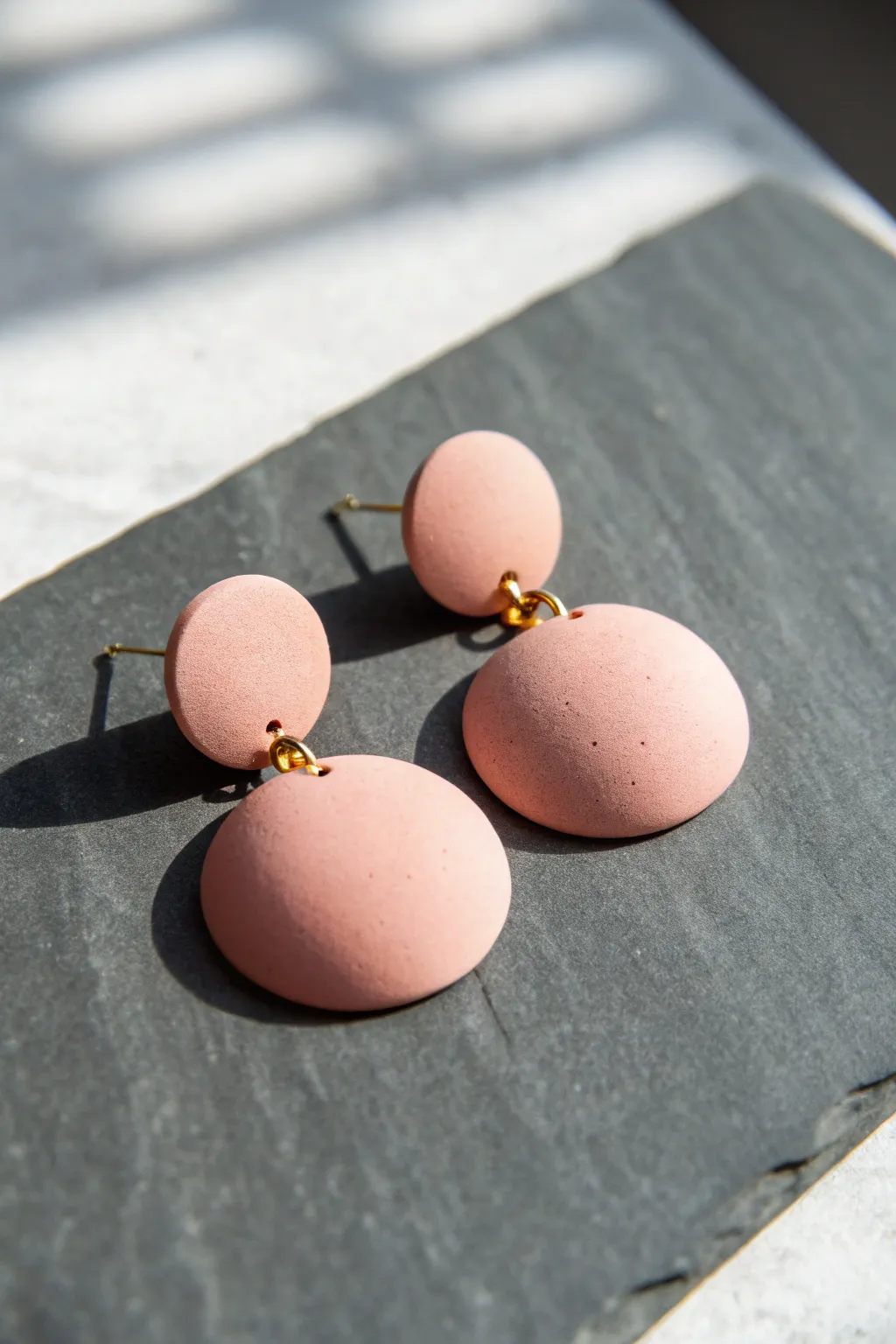
Create a striking minimalist statement with these sophisticated hollow dome earrings. Their soft terracotta pink hue and unique bubble shape offer a modern, architectural look that feels surprisingly lightweight to wear.
Detailed Instructions
Materials
- Polymer clay (muted pink or terracotta)
- Acrylic roller
- Circle cutters (multiple sizes: small for stud, large for dome)
- Hollow bead maker or metal dome mold
- Bubble wrap or texturing sponge (optional)
- Needle tool or piercing pin
- Gold jump rings (6mm or 7mm)
- Earring posts and backs
- Superglue or liquid clay
- Oven for baking
- Fine-grit sandpaper (400-800 grit)
Step 1: Creating the Domes
-
Condition the Clay:
Begin by thoroughly conditioning your pink polymer clay in your hands until it becomes soft, pliable, and free of cracks. -
Roll Out a Sheet:
Use your acrylic roller to flatten the clay into an even sheet. For the domes, aim for a medium thickness—thin enough to be lightweight but thick enough to hold the dome shape without collapsing. -
Cut the Base Circles:
Using your larger circle cutter, punch out two circles. These will become the hollow domes that serve as the main feature of the earring. -
Form the Domes:
Gently place each clay circle over your metal dome mold or hollow bead maker. Carefully smooth the clay down over the curve with your fingertips so it hugs the shape perfectly without trapping air bubbles. -
Refine the Edges:
If the clay stretches unevenly at the bottom edge, use a craft knife or your needle tool to trim it flush with the mold, ensuring a clean, straight edge. -
Add Texture (Optional):
For a stone-like finish similar to the photo, you can gently tap the surface with a piece of sandpaper or a textured sponge before baking. This removes fingerprints and adds a matte, organic feel. -
Create Connection Holes:
While the clay is still on the mold, use a needle tool to pierce a small hole near the top edge of each dome. Ensure the hole is large enough for your jump rings.
Step 2: Making the Studs
-
Cut the Top Circles:
Roll out a slightly thicker sheet of clay for the top stud pieces. Use a smaller circle cutter to punch out two identical discs. -
Smooth the Edges:
Gently rub the edges of the small circles with your fingertip to round them off slightly, removing any sharp cut lines for a professional finish. -
Pierce the Studs:
Use your needle tool to create a hole near the bottom edge of each small circle. Make sure this hole aligns nicely with the center so the earring hangs straight. -
Double Check Alignment:
Briefly hold the small circle above the dome to visualize how they will hang. I like to double-check that my holes aren’t too close to the edge to prevent tearing.
Secret Texturing Tool
For a realistic stone texture like the photo, gently roll a ball of aluminum foil over the raw clay before cutting your shapes. It creates perfect organic pockmarks.
Step 3: Baking and Assembly
-
Bake the Pieces:
Place your clay pieces on a tile or baking sheet. Bake according to your brand of polymer clay instructions (usually 275°F or 130°C for 15-30 minutes). Leave the domes on the metal mold while baking to retain their shape. -
Cool and Sand:
Allow the pieces to cool completely before removing the domes from the mold. If there are any rough spots, gently wet-sand the edges with fine-grit sandpaper. -
Attach Earring Posts:
Turn the small circles over. Apply a dab of superglue or liquid clay to the flat pad of an earring post and press it onto the center-back of the small circle. If using liquid clay, you will need to re-bake briefly to set the bond. -
Secure the Bond:
For extra durability, you can place a tiny piece of raw clay over the earring post pad (sandwiching it) and re-bake. This ensures the post never pops off. -
Connect with Jump Rings:
Use two pairs of pliers to twist open a gold jump ring. Thread it through the hole of the dome and the hole of the stud piece. -
Close the Rings:
Twist the jump ring closed securely, ensuring there is no gap where the clay pieces could slip out. -
Final Polish:
Give the earrings a final wipe with a soft cloth to remove any sanding dust or residue, revealing that beautiful matte finish.
Make It Terrazzo
Mix tiny shavings of white, black, and gold clay into your base color before rolling it out for a trendy terrazzo effect instead of a solid color.
Wear your new architectural earrings with pride and enjoy the lightweight feel of the hollow design
Layered Cutout Polymer Clay Shadowbox Earrings
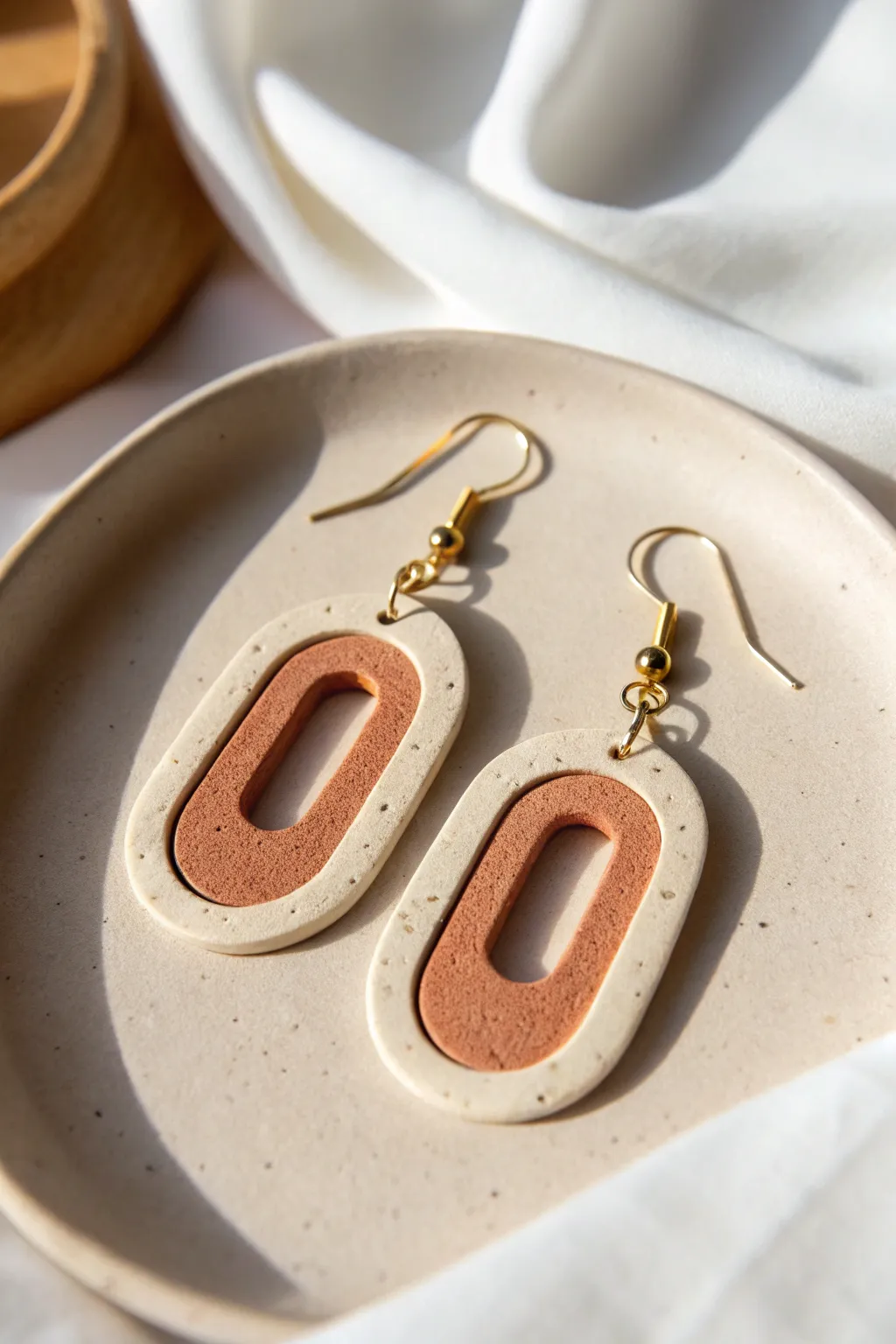
These simple yet elegant earrings feature a clever nested design where warm terracotta tones are framed by a speckled cream border. The shadowbox effect creates depth without adding bulk, resulting in a lightweight statement piece perfect for everyday wear.
Step-by-Step Tutorial
Materials
- Polymer clay in speckled cream/granite
- Polymer clay in terracotta or brick red
- Oval clay cutters (two sizes: approximately 1.5 inch and 1 inch tall)
- Small round cutter or piercing tool (for jump ring holes)
- Acrylic rolling pin
- Depth guides or playing cards
- Ceramic tile or baking surface
- Tissue blade
- Sandpaper (400-1000 grit) or a Dremel tool
- Gold-plated earring hooks
- Gold jump rings (6mm)
- Jewelry pliers (flat nose and round nose)
- Liquid polymer clay or superglue (optional for fusing layers)
Step 1: Conditioning and Shaping
-
Prepare the clay:
Begin by conditioning your speckled cream clay and the terracotta clay separately. Knead them in your hands until they are soft, pliable, and free of air bubbles. -
Roll the base slabs:
Roll out both colors of clay to an even thickness. I prefer a thickness of about 3mm so the earrings are sturdy but not too heavy. Use depth guides or stacks of playing cards to ensure the slab is perfectly level. -
Cut the outer frames:
Take your largest oval cutter and press firmly into the speckled cream slab to cut two shapes. Leave the clay inside the cutter for a moment to help lift it cleanly. -
Cut the inner windows:
Using the smaller oval cutter, center it precisely over one of the cream ovals you just made. Press down to remove the center, creating a thick oval ring. Repeat for the second earring. -
Cut the terracotta inserts:
Now, use that same smaller oval cutter on the terracotta slab to cut two solid oval shapes. These will become the inner sections of your design. -
Create the inner negative space:
To match the open look of the inspo image, use an even smaller oval cutter (or freehand cut with a scalpel) to remove the center of your terracotta ovals, leaving a smaller terracotta ring.
Step 2: Assembly and Baking
-
Nest the pieces:
On your baking tile, carefully place the large cream ring. Gently lift the terracotta ring and place it inside the cream ring. There should be a small gap or a flush fit depending on your cutters. -
Fuse the seams:
If your pieces are touching, gently smooth the back seam with a sculpting tool to bond them. If there is a gap (floating effect), apply a thin line of liquid polymer clay on the edges where they meet to bridge them. -
Add connection holes:
Using a small piercing tool or a drinking straw, punch a hole at the very top center of the cream frame. Ensure the hole is roughly 2-3mm from the edge to prevent tearing. -
Final smoothing:
Check for fingerprints or lint. Dip your finger in a tiny bit of acetone or cornstarch and lightly buff the surface to smooth out any imperfections before baking. -
Bake the clay:
Bake the pieces on your ceramic tile according to the manufacturer’s instructions for your specific brand of clay—usually around 275°F (135°C) for 30–45 minutes. -
Cool down:
Let the pieces cool completely in the oven with the door slightly ajar. This gradual cooling helps prevent brittleness.
Fixing Wonky Shapes
If your ovals distort while transferring them to the tile, bake them directly on the surface you cut them on, or refrigerate the clay for 10 mins before lifting.
Step 3: Finishing Touches
-
Sand the edges:
Once cool, use fine-grit sandpaper to specific smooth the outer and inner edges. You can dip the sandpaper in water to keep dust down. -
Buff surface:
If you want a matte finish like the image, a quick buff with denim fabric creates a lovely soft sheen without making it glossy. -
Open the jump rings:
Using two pairs of pliers, twist a gold jump ring open laterally (front to back, never pull apart). -
Attach the hardware:
Slide the open jump ring through the hole in the clay piece, then loop the earring hook onto the jump ring. -
Close the loop:
Twist the jump ring back into place until the ends meet perfectly flush. Give it a tiny pinch to secure it. -
Final check:
Hold the earrings up to ensure the fronts are facing forward and the movement is fluid. Your speckled shadowbox earrings are ready.
Clean Edges Trick
Before cutting your shapes, lay a sheet of plastic cling wrap over the clay. Press the cutter through the plastic for instantly rounded, professional-looking edges.
Enjoy styling these versatile geometric dangles with your favorite outfits for an instant pop of modern art style