
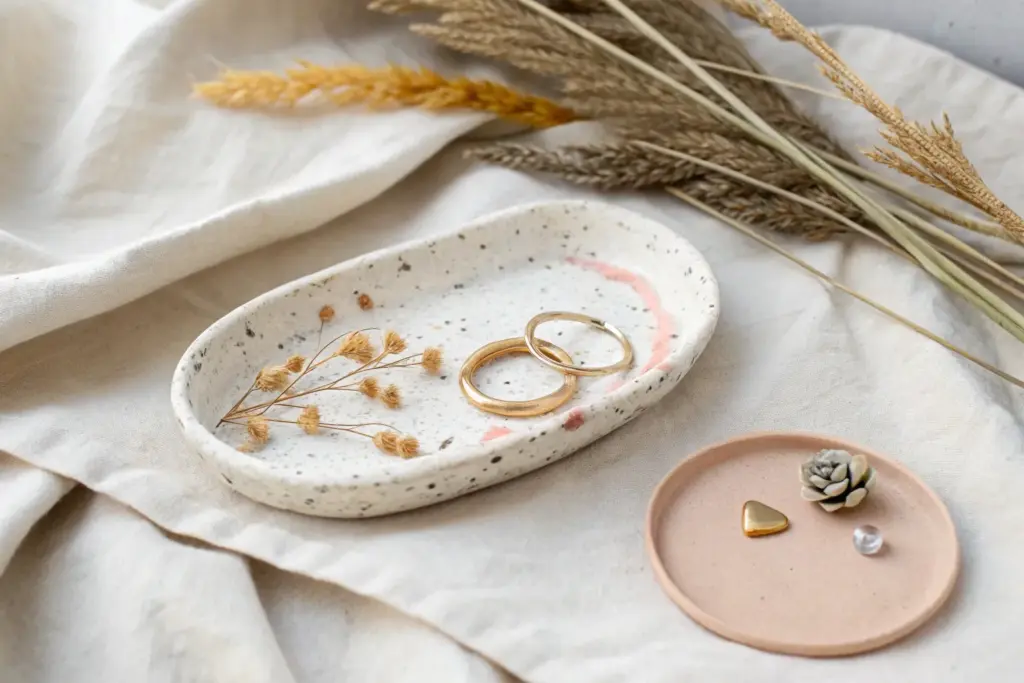
Whenever I need a quick creative win, I grab air-dry clay—it’s beginner-friendly, forgiving, and you can make something cute in one sitting. Here are my favorite DIY air clay ideas that look polished without needing a kiln or fancy tools.
Classic Air-Dry Clay Trinket Dish
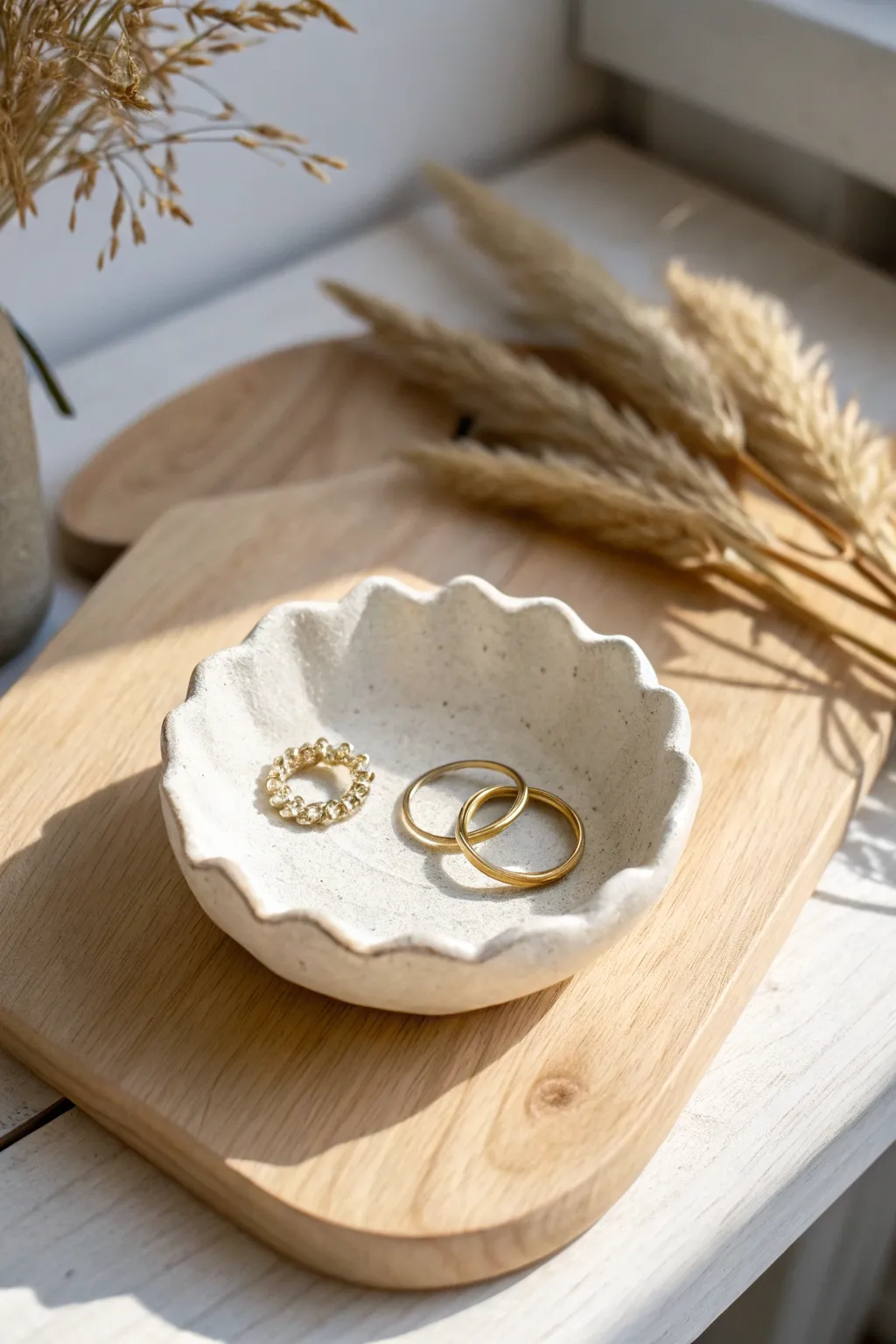
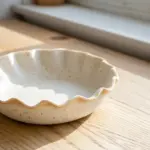
This charming, organically shaped trinket dish brings a touch of handcrafted elegance to any bedside table or vanity. With its gentle scalloped edges and subtle speckled texture, it perfectly mimics the look of high-end ceramic stoneware without needing a kiln.
Step-by-Step
Materials
- White air-dry clay
- Rolling pin or smooth glass jar
- Small bowl (approx. 4-5 inches diameter) for molding
- Craft knife or clay needle tool
- Sponge
- Water
- Fine-grit sandpaper (220-400 grit)
- Black pepper or dried coffee grounds (for speckled effect)
- Acrylic rolling pin or parchment paper
- Matte sealant or varnish
Step 1: Preparation & Shaping
-
Prepare the clay:
Start with a ball of white air-dry clay roughly the size of a tennis ball. Knead it in your hands until it is pliable and warm to prevent cracking later. -
Add the speckles:
To achieve that stoneware look, flatten the ball slightly and sprinkle a small pinch of cracked black pepper or dried coffee grounds onto the surface. Fold the clay over and knead again until the specks are evenly distributed throughout the batch. -
Roll it out:
Place the clay on a sheet of parchment paper or a clean surface. Roll it out to an even thickness of about 1/4 inch (6mm). Rotate the clay as you roll to ensure a uniform circle. -
Cut the rough circle:
Place your guide bowl upside down onto the clay. Use a needle tool or craft knife to trace lightly around it, cutting out a perfect circle. Remove the excess clay scraps. -
Smooth the edges:
Dip your finger in a little water and run it along the cut edge of the clay circle to smooth out any sharpness or roughness from the cut. -
Create the wave:
Clean your cutting tool. Now, cut gentle, shallow arcs out of the perimeter of the circle to create the scalloped pattern. Aim for flowing curves rather than sharp points to match the photo’s organic feel. -
Refine the scallops:
Use a damp sponge to smooth each scalloped edge perfectly round. The water helps bind the clay particles, making the edge look professionally finished.
Stone Effect Secret
Use cracked pepper for speckles instead of paint splattering. It gets embedded inside the clay body, creating a true faux-ceramic stoneware texture that looks natural.
Step 2: Forming & Drying
-
Position the mold:
Take your molding bowl and place it upside down on your workspace. Cover it with a layer of cling film or plastic wrap to prevent the clay from sticking to it during the drying process. -
Drape the clay:
Gently lift your clay circle and drape it over the bottom of the upside-down bowl. Let gravity pull the sides down naturally. I like to gently press the center to ensure a flat base. -
Accentuate the shape:
While it is draped, use your fingers to gently push the indentations of the scallops slightly inward, emphasizing the flower-like shape. -
Partial drying:
Allow the clay to dry in this position for about 2-4 hours, just until it is firm enough to hold its shape but still slightly damp. -
Flip and finish drying:
Carefully remove the semi-dry dish from the mold. Flip it right-side up and place it on a wire rack. This allows air to circulate underneath, ensuring the bottom dries completely. -
Full cure time:
Let the piece dry undisturbed for at least 24-48 hours. The color will turn a brighter white as moisture evaporates.
Step 3: Finishing Touches
-
Sand imperfections:
Once fully bone-dry, take your fine-grit sandpaper and gently buff away any remaining rough spots on the rim or the base. Use a light touch to avoid scratching the surface. -
Wipe clean:
Use a very slightly damp cloth or a dry soft brush to remove all sanding dust from the dish. -
Seal the piece:
Apply a coat of matte varnish or sealant. This protects the clay from moisture and gives it that soft, stone-like finish shown in the image while locking in those decorative specks.
Gilded Edge Upgrade
Once the sealant is dry, use a fine detail brush and liquid gold leaf to paint just the very rim of the scallops for a luxurious, jewelry-store aesthetic.
Now you have a beautiful, custom receptacle ready to organize your favorite rings and accessories
Simple Ring Holder Cone
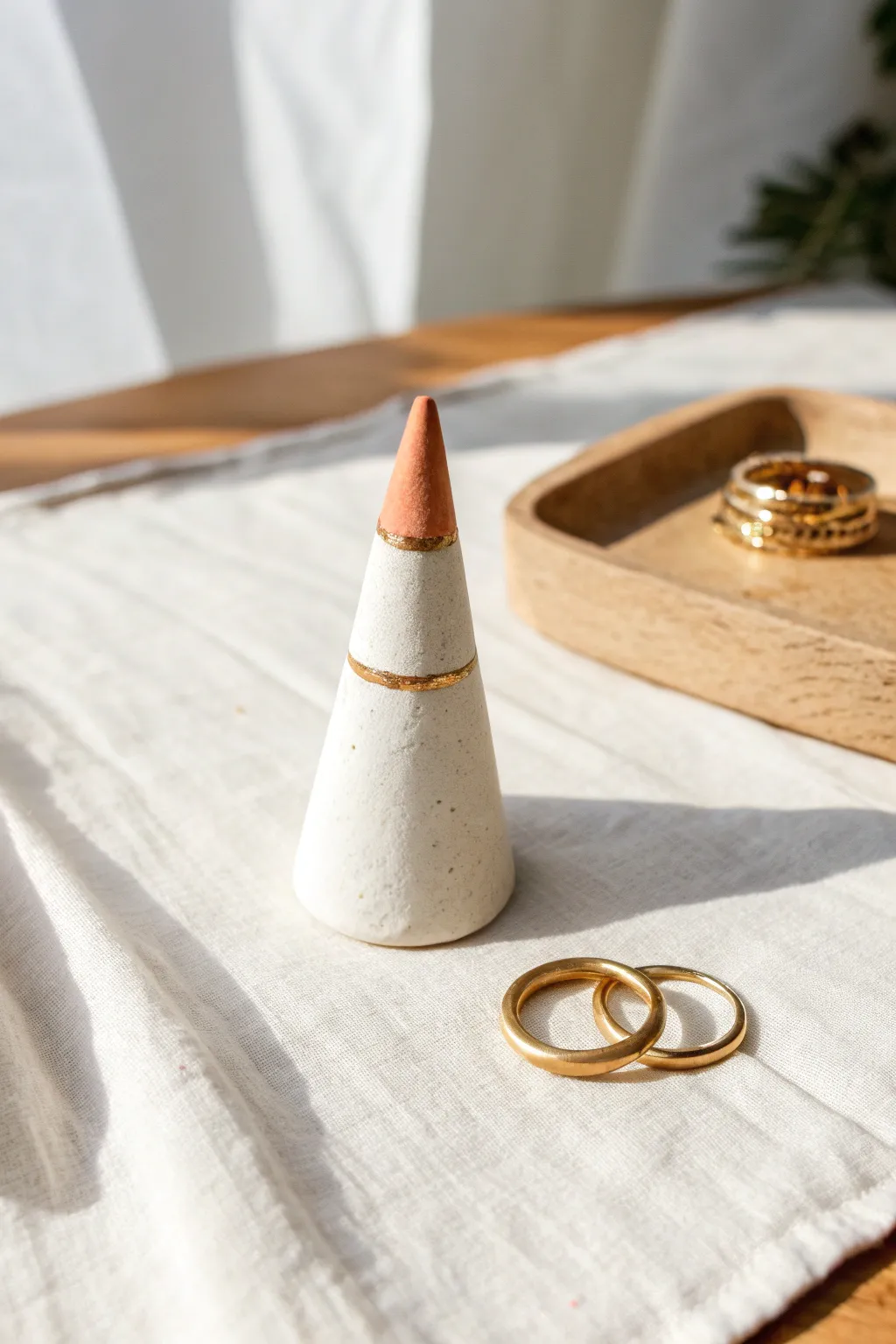
This elegant cone-shaped ring holder combines speckled textures with chic metallic accents for a look that feels both earthy and high-end. It is a deceptively simple project that serves as a beautiful display for your favorite jewelry pieces.
Step-by-Step Guide
Materials
- White or speckled air-dry clay
- Rolling pin
- Sharp crafting knife or clay blade
- Small bowl of water
- Fine-grit sandpaper (around 400 grit)
- Terracotta or burnt orange acrylic paint
- Gold leaf liquid or gold gilding paint
- Fine detail paintbrush
- Painter’s tape or washi tape
- Matte varnish or sealant
Step 1: Shaping the Cone
-
Prepare the Clay:
Start with a chunk of air-dry clay roughly the size of a golf ball. Knead it in your hands for a minute to warm it up and ensure it’s pliable and free of air bubbles. -
Form the Initial Shape:
Roll the clay ball between your palms to smooth out lines, then begin focusing pressure on one side to taper it into a thick carrot shape. -
Refine the Point:
To get that sharp, geometric cone look, roll the tapered clay back and forth on your work surface. Keep your hand at an angle, applying more pressure at the top and less at the base. -
Flatten the Base:
Once you have a general cone shape, tap the wide end firnly against your table to create a completely flat bottom. Stand it up to check that it sits perfectly vertical without leaning. -
Smooth the Surface:
Dip your finger in a little water and run it over the clay to smooth out fingerprints or tiny cracks. You want the surface to be as sleek as possible before drying. -
Dry Completely:
Set your cone aside in a safe, dry place for at least 24 to 48 hours. I prefer to rotate it once or twice during the drying process so the base dries evenly.
Step 2: Refining and Decorating
-
Sand for Perfection:
Once the clay is bone dry, take your fine-grit sandpaper and gently sand the entire surface. Focus on the tip to make it sharp and the base to ensure the edges are crisp. -
Dust Clean:
Wipe the cone down with a slightly damp tack cloth or paper towel to remove all the sanding dust. A clean surface is crucial for crisp paint lines. -
Tape Section One:
Apply a strip of painter’s tape horizontally around the cone, about an inch down from the tip. Press the edges of the tape down firmly to prevent paint bleed. -
Paint the Tip:
Using the terracotta or burnt orange acrylic paint, fill in the exposed top section of the cone. You may need two thin coats for full opacity. -
Remove Tape:
Carefully peel back the tape while the paint is still slightly tacky to ensure a clean line. Let this section dry completely. -
Add Gold Accents:
Dip your fine detail brush into the gold liquid leaf. Carefully hand-paint a thin band right over the border where the orange paint meets the white clay. -
Paint Second Band:
Paint a second thin gold band around the middle of the cone, roughly an inch below the first one. For a steadier hand, try resting your pinky finger on the table while you rotate the cone. -
Seal the piece:
Finish by applying a coat of matte varnish over the entire piece to protect the clay from moisture and prevent the gold leaf from tarnishing over time.
Smooth Moves
To get an ultra-smooth finish without sanding too much later, try burnishing the slightly damp clay with the back of a spoon before setting it aside to dry.
Mix It Up
Create a marbled stone effect by incompletely mixing a tiny drop of black or grey paint into your white clay before you start rolling the cone shape.
Now you have a stylish spot to keep your rings safe and organized
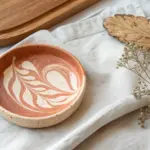

Wavy Edge Catchall Bowl
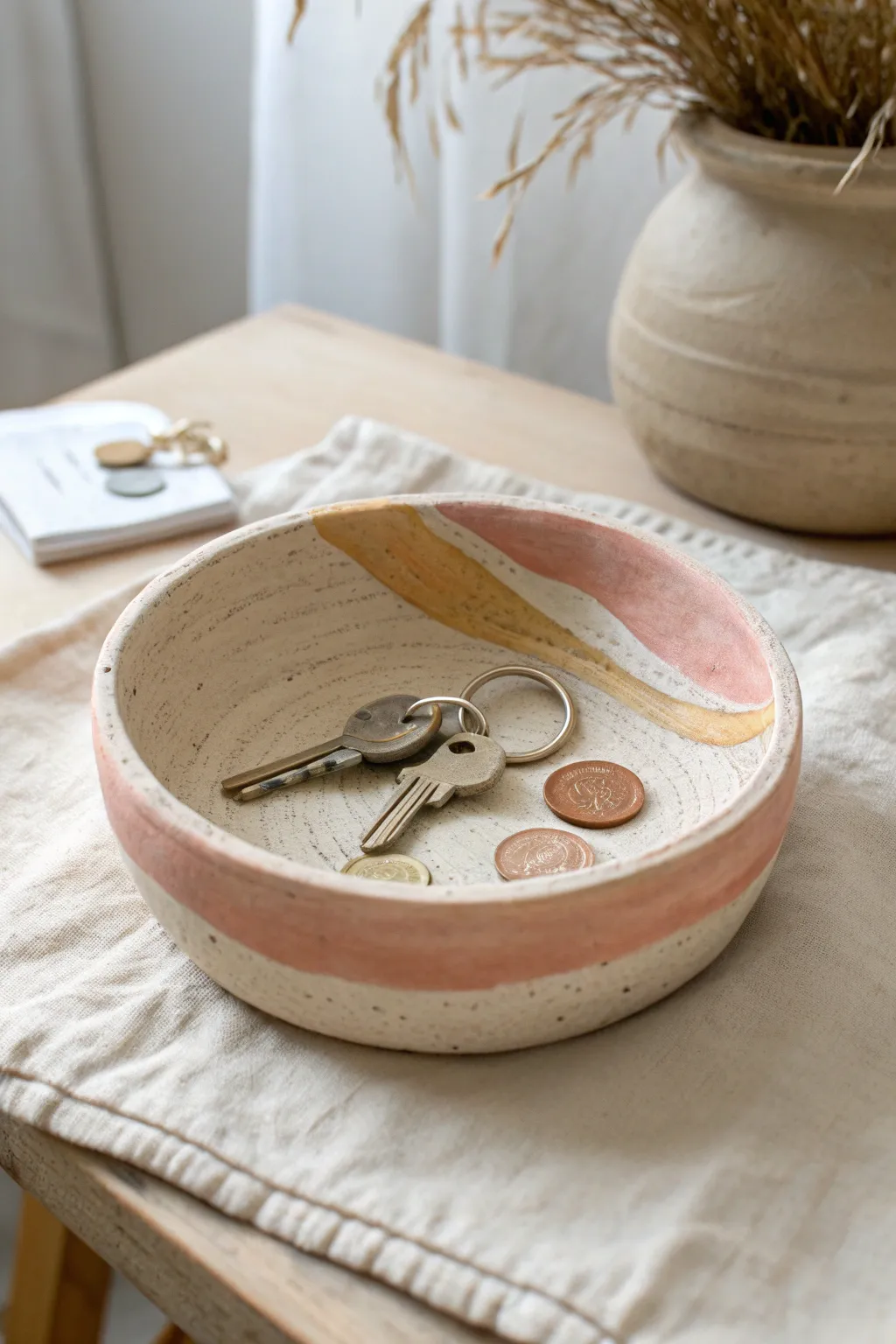
This charming catchall features a rustic, handmade shape and soft, painted accents that mimic the look of expensive ceramic glazes. With its simple two-tone design and speckled texture, it’s the perfect spot to toss your keys and loose change at the end of the day.
Step-by-Step
Materials
- White air-dry clay
- Rolling pin
- Bowl to use as a mold (smooth interior)
- Craft knife or clay cutter
- Sponge
- Small bowl of water
- Sandpaper (medium and fine grit)
- Acrylic paints (terracotta pink, mustard yellow, and black)
- Old toothbrush
- Paintbrushes (flat and detail)
- Matte or satin varnish/sealant
Step 1: Shaping the Bowl
-
Prepare the Clay:
Cut off a generous chunk of air-dry clay and knead it in your hands for a minute to warm it up and remove any large air bubbles. This makes it more pliable and easier to roll out. -
Roll out the Slab:
Using a rolling pin, flatten the clay into an even slab about 1/4 inch thick. Rotate the clay frequently as you roll to ensure it doesn’t stick to your work surface. -
Drape Construction:
Select a kitchen bowl with a shape you like to use as a slump mold. Carefully lift your clay slab and gently drape it inside the bowl, pressing it softly against the sides to take the shape. -
Trim the Excess:
Take your craft knife and trim away the excess clay at the rim of the bowl. Don’t worry about being perfectly straight; the organic, slightly wavy edge is part of the charm here. -
Smooth the Edges:
Dip your finger or a small sponge into water and run it along the cut rim to round off the sharp edges. Smooth out any fingerprints on the interior surface as well. -
Create the Base:
If the bottom is too rounded to sit flat, gently press down on the center interior of the bowl to flatten the bottom slightly, or add a small coil foot to the underside if you prefer. -
Let it Dry:
Allow the clay to dry inside the mold for at-least 24 hours until it is leather hard. Once it holds its shape, you can carefully pop it out of the mold to let the underside dry completely.
Clean Slumping
Line your mold bowl with a layer of plastic wrap or a nylon stocking before inserting the clay. This stops the clay from sticking and makes removal effortless.
Step 2: Refining and Painting
-
Sand for Smoothness:
Once the bowl is bone dry, take your medium grit sandpaper to smooth out any major bumps. Follow up with fine grit sandpaper for a silky finish. Wipe away all dust with a slightly damp cloth. -
Mix the Speckle:
Dilute a small amount of black acrylic paint with water until it is very runny and ink-like. -
Apply the Splatter:
Dip an old toothbrush into the watery black paint. Run your thumb across the bristles to flick tiny specks of paint all over the interior and exterior of the bowl to create a faux-stone effect. Let this dry fully. -
Outline the Colors:
Visualize a wavy, abstract shape that runs from the inside of the bowl over the rim to the outside. You can sketch this lightly with a pencil if you wish. -
Paint the Pink Block:
Using the terracotta pink acrylic, fill in the larger abstract section. Paint broadly across the interior curve and bring the color right over the lip to the exterior band. -
Add the Yellow Accent:
Next to the pink section, paint a thinner swoosh of mustard yellow. Allow the edges of the colors to touch for a cohesive look, maintaining that organic, painterly feel. -
Refine the Paint:
Apply a second coat to your colored sections if the clay is showing through too much. I like to keep the edges slightly soft rather than perfectly sharp tape lines. -
Seal the Project:
Once all paint is completely dry, apply a coat of matte or satin varnish to the entire piece. This protects the paint and gives the clay a more finished, ceramic appearance.
Gilded Touch
Swap the mustard yellow paint for metallic gold leaf or liquid gold gilding paint. Apply it as the final step before sealing to add a touch of luxury.
Place this stylish bowl on your entryway table and enjoy having a designated spot for your daily essentials
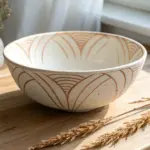
Pressed Botanical Coasters
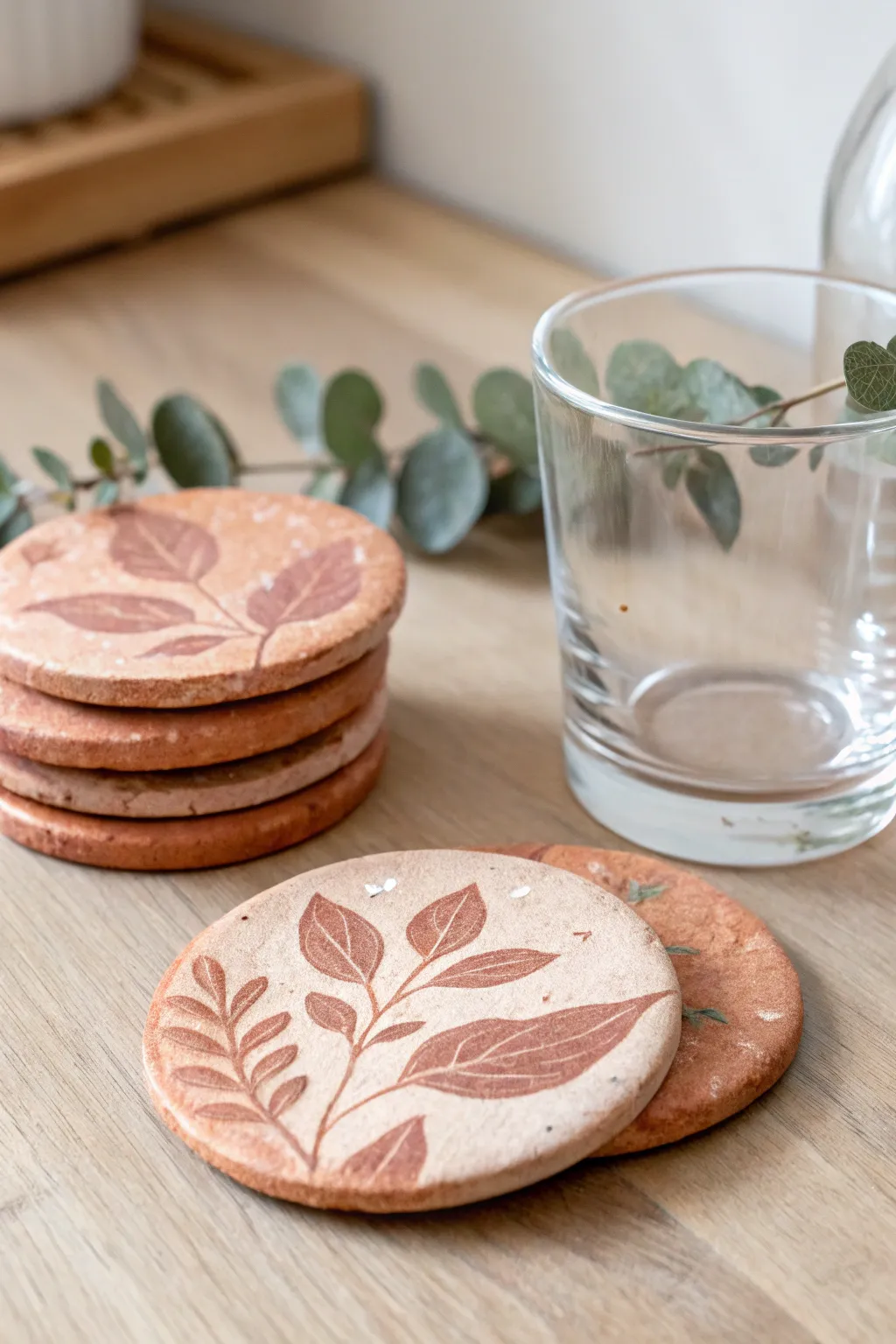
Bring a touch of nature indoors with these earthy, imprinted coasters made from terra cotta air-dry clay. Using real foliage creates delicate, fossil-like impressions that highlight the organic beauty of your favorite plants.
How-To Guide
Materials
- Terra cotta air-dry clay
- Rolling pin or smooth glass jar
- Circle cutter (cookie cutter or large jar lid/glass)
- Fresh or pressed botanical stems (ferns, eucalyptus, etc.)
- Parchment paper or canvas mat
- Small bowl of water
- Fine-grit sandpaper (once dry)
- Matte spray sealant or Mod Podge
- White acrylic paint (optional for wash)
- Soft brush or paper towel
Step 1: Preparation & Rolling
-
Surface Prep:
Lay down a sheet of parchment paper or a canvas mat to prevent the clay from sticking to your work surface. This also makes moving the wet clay much easier later. -
Portioning Clay:
Grab a handful of terra cotta air-dry clay and knead it briefly in your hands to warm it up and make it pliable. Form it into a smooth ball about the size of a tennis ball. -
Rolling Out:
Place the clay ball on your surface and begin rolling it out. Aim for an even thickness of about 1/4 inch (6mm). If you go too thin, the coasters might crack as they dry. -
Smoothing:
Check the surface for any air bubbles or cracks. Dip your finger in a little water and gently smooth them out until the slab looks perfect.
Clean Impressions
If your rolling pin is sticking to the fresh leaves, place a piece of parchment paper over the botanical before rolling to create a barrier.
Step 2: Imprinting & Cutting
-
Arranging Botanicals:
Select your botanical cutting. Place the leaf or stem vein-side down onto the clay slab. The vein side usually has more texture, which translates to a clearer print. -
Pressing the Design:
Use your rolling pin to gently roll over the plant material. Apply firm, even pressure to embed the leaves into the clay without thinning the slab too much. -
The Reveal:
Carefully find the stem or edge of the leaf and slowly peel it away from the clay. I love this part—it’s like revealing a tiny fossil. -
Cutting the Shape:
Position your circle cutter over the imprinted design to frame it nicely. Press straight down firmly to cut the coaster shape. -
Removing Excess:
Peel away the excess clay from around your circle. You can ball this up and reuse it for the next coaster immediately. -
Smoothing Edges:
Dip your finger in water again and run it gently around the cut rim of the coaster to soften the sharp edge left by the cutter.
Level Up: Color Contrast
Try using white air-dry clay and painting the impressed leaf grooves with gold or dark green paint for a modern, high-contrast aesthetic.
Step 3: Finishing Touches
-
Drying Process:
Move the coasters (still on their parchment paper if possible) to a flat area to dry. Let them air dry for 24-48 hours. Flip them over halfway through to ensure even drying and prevent curling. -
Sanding:
Once fully cured and hard, check the edges. If there are any rough spots, use fine-grit sandpaper to smooth them down gently. -
Enhancing the Print (Optional):
To mimic the look in the photo, create a very watery wash of white acrylic paint. Brush it into the grooves of the leaf impression. -
Wiping Back:
Immediately wipe the surface with a damp paper towel or sponge. The white paint will stay stuck in the deep leaf grooves while the surface returns to the terra cotta color, making the design pop. -
Sealing:
Apply a coat of matte spray sealant or clear varnish. This protects the clay from moisture, which is crucial for coasters.
Enjoy your beautiful, handmade coasters for your next coffee break or gift them as a stunning botanical set

What Really Happens Inside the Kiln
Learn how time and temperature work together inside the kiln to transform clay into durable ceramic.
Beaded Rim Mini Dishes
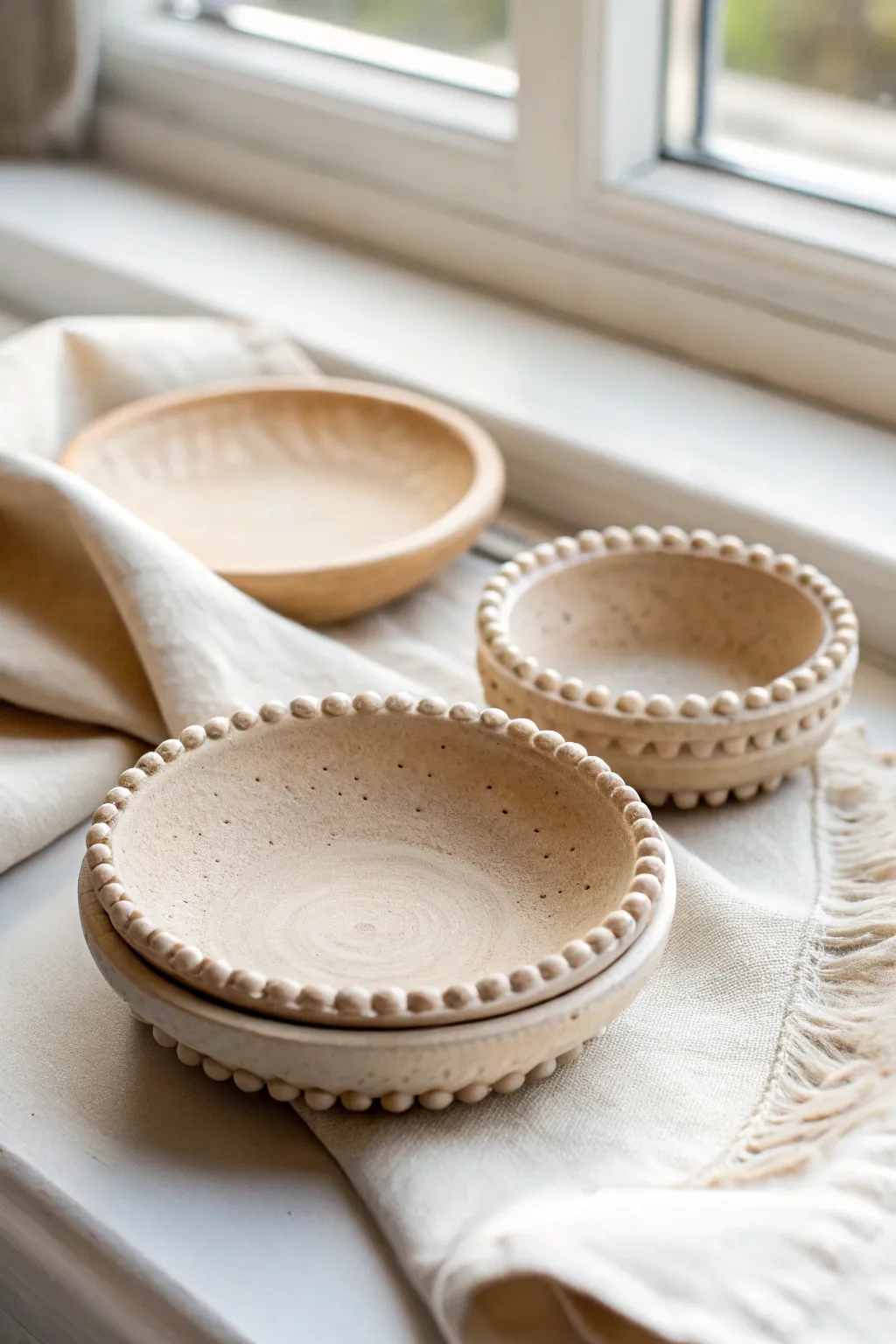
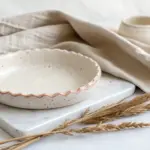
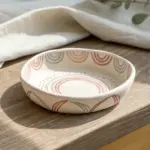
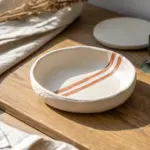
Create these charming, textured mini dishes that blend minimalist design with a touch of bohemian flair. The natural, stone-like finish and delicate beaded rims make them perfect for holding jewelry or simply styling a shelf.
Step-by-Step Tutorial
Materials
- Air-dry clay (white or natural)
- Acrylic paint (beige/tan and dark brown)
- Fine-grit sandpaper
- Rolling pin
- Small bowl or cup (as a mold)
- Clay knife or craft knife
- Old toothbrush
- Small sponge
- Water
- Matte varnish or sealant
Step 1: Shaping the Base
-
Roll the clay:
Start by conditioning a ball of clay in your hands until it is pliable. Roll it out on a flat surface to an even thickness of about 1/4 inch. -
Cut the circles:
Place your chosen bowl or a large circle cutter onto the clay. Use a craft knife to trace around it, creating a perfect clay disc. -
Form the bowl shape:
Gently lift the clay disc and drape it *inside* a small bowl to create a concave shape. Press gently to ensure it takes hold, but don’t smooth it out too much as we want a slightly handmade look. -
Smooth the edges:
Dip your finger in a little water and run it along the cut rim of the clay to smooth out any sharp or jagged edges left by the knife.
Cracks while Drying?
If you see hairline cracks, mix a tiny bit of fresh clay with water to make a paste (slip). Fill the cracks, smooth with a damp finger, and let re-dry.
Step 2: Adding the Beaded Rim
-
Roll tiny spheres:
Pinch off very small pieces of clay and roll them between your fingers to create tiny spheres. You will need roughly 30-40 beads depending on the size of your bowl. -
Prepare for attachment:
Score the top rim of your clay bowl lightly with a knife or needle tool. Do the same to the bottom of each tiny bead. -
Attach the beads:
Apply a tiny dab of water or clay slip to the scored area. Press each bead firmly onto the rim, placing them side-by-side until the entire circumference is covered. -
Secure the join:
Using a small modeling tool or the back of a paintbrush, gently blend the bottom of each bead into the rim slightly on the hidden side to ensure they don’t pop off later. -
Optional texture:
For the dish with beads located lower on the side (like the bottom bowl in the stack), attach a row of beads halfway down the exterior wall instead of on the top rim. -
Add surface holes:
To recreate get the look of the top bowl in the stack, use a needle tool to poke small, random pinholes inside the bowl for extra texture. -
Dry partially:
Let the bowls sit in their molds for about 24 hours. Once stiff enough to hold their shape, remove them from the molds. -
Complete drying:
Place the demolded bowls on a wire rack to dry completely. This usually takes another 24-48 hours depending on humidity. Flip them occasionally.
Level Up: Stone Effects
Mix baking soda into your beige acrylic paint before applying. This creates a gritty, authentic stone-like texture that looks high-end.
Step 3: Painting and Finishing
-
Sand imperfections:
Once bone dry, take your fine-grit sandpaper and gently smooth any rough patches on the main body of the bowl. Be very careful around the delicate beads. -
Base coat:
Paint the entire bowl with a beige or warm tan acrylic paint. I usually apply two thin coats for opaque coverage. -
Create the speckle mix:
Mix a small amount of dark brown paint with water until it is quite runny and fluid. -
Apply speckles:
Dip an old toothbrush into the watery brown paint. Hold it over the bowl and flick the bristles with your thumb to spray fine speckles across the surface. -
Seal the work:
Allow the paint to dry fully, then apply a coat of matte varnish. This brings out the color and protects the clay from moisture.
Now you have a set of custom textured bowls ready to display your favorite trinkets
Bubble-Texture Clay Coasters
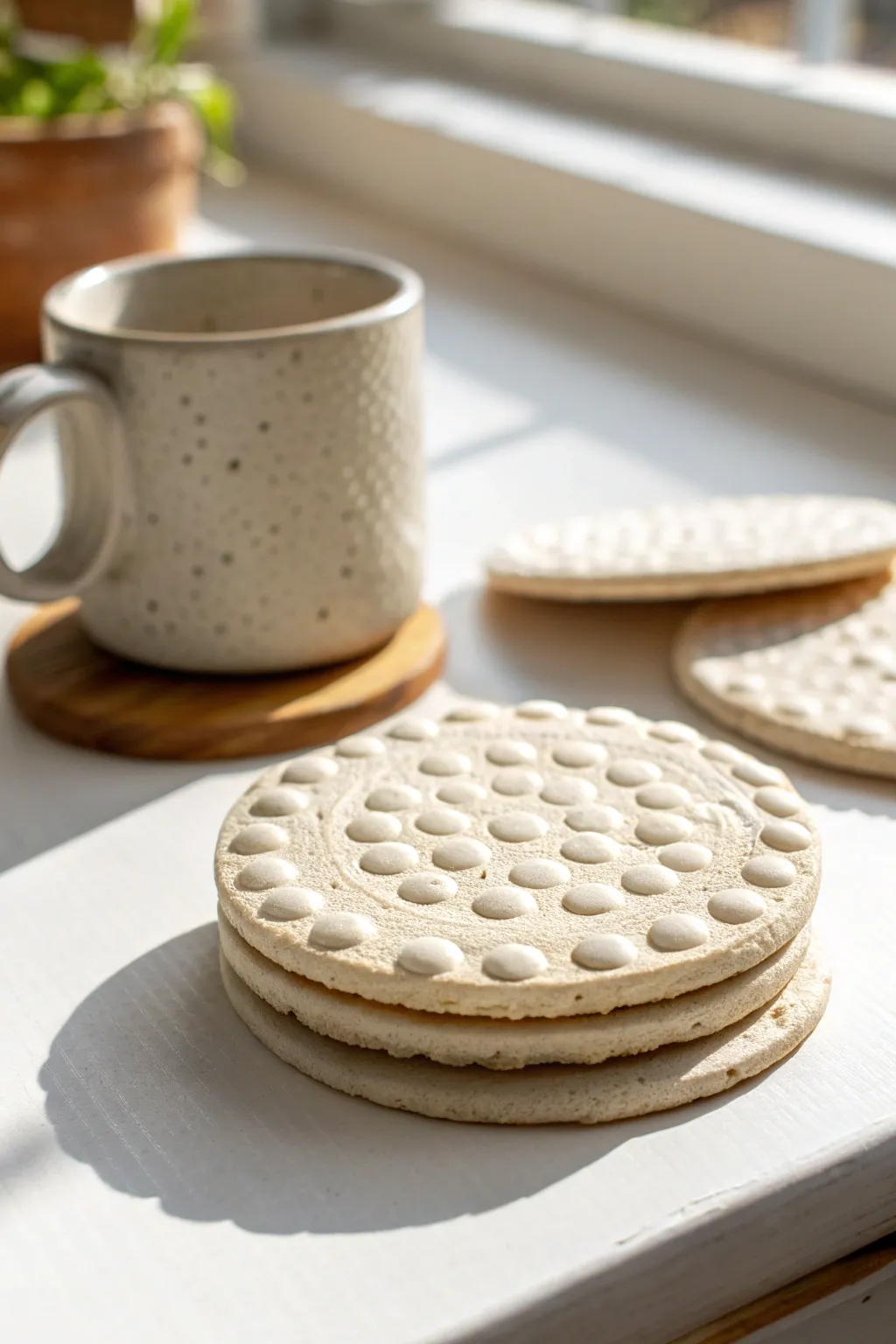
These textural clay coasters add a playful, modern touch to your coffee table with their raised geometric pattern. The simple repeating dots create a satisfying tactile finish that mimics expensive ceramic designs for a fraction of the cost.
How-To Guide
Materials
- White or beige air-dry clay
- Rolling pin
- Circle cookie cutter (approx. 4 inches)
- Small round piping tip or sturdy straw
- Small cup of water
- Sandpaper (fine grit)
- Matte acrylic varnish (optional)
- Parchment paper or craft mat
Step 1: Forming the Base
-
Condition the clay:
Begin by taking a handful of air-dry clay and kneading it in your hands until it feels soft, warm, and pliable. This prevents cracks from forming later. -
Roll it out:
Place the clay on a sheet of parchment paper. Use your rolling pin to flatten it into an even slab, aiming for a thickness of about 1/4 inch so the coaster feels substantial. -
Cut the circle:
Press your large circle cookie cutter firmly into the clay slab to create the coaster shape. Lift away the excess clay from around the cutter before removing the cutter itself. -
Smooth the edges:
Dip your finger into a small cup of water and gently run it along the cut edge of the circle. This smooths out any harsh lines left by the cutter.
Slip & Score Pro-Tip
If your dots keep falling off as they dry, scratch the coaster surface slightly with a needle tool before adding water. This ‘scoring’ creates a stronger mechanical bond.
Step 2: Creating the Texture
-
Prepare the dots:
Take your leftover clay and roll it into a thin coil or ‘snake.’ Pinch off tiny, pea-sized amounts and roll them into small balls between your fingers. -
Plan the outer ring:
To ensure symmetry, lightly mark the positions for your outer ring of dots before attaching them. Just press gently to leave a ghostly impression. -
Attach the border:
Dab a tiny drop of water onto the back of a clay ball and press it firmly onto the outer perimeter of the coaster. Continue this all the way around to create a raised border. -
Create the inner pattern:
Moving inward, arrange more clay balls in concentric circles or a grid pattern. Make sure to press them flat enough so they adhere, but keep them raised for texture. -
Refine the shape:
Using the flat bottom of something small (like a marker cap) or just your thumb, gently flatten the tops of all the dots so they are level and uniform. This ensures a stable surface.
Natural Speckle Hack
Mix dried coffee grounds or black pepper into your clay before rolling it out. This mimics the trendy speckled ceramic look seen in the inspiration mug.
Step 3: Finishing Touches
-
Initial dry:
Let the coaster sit undisturbed on the parchment paper. I like to let this dry briefly for about an hour before checking for any cracks to smooth out. -
Flip and weight:
Because flat clay pieces tend to curl, flip the coaster over carefully after a few hours. Place a book or board gently on top to keep it flat as it cures. -
Full cure time:
Allow the clay to dry completely for 24 to 48 hours, depending on humidity. It should look lighter in color and feel hard to the touch. -
Sand for smoothness:
Once fully dry, take a piece of fine-grit sandpaper and gently buff the edges and the tops of the dots to remove any rough texture or fingerprints. -
Seal the surface:
To protect the coaster from moisture, brush on a thin layer of matte acrylic varnish or a specialized clay sealant. Let it dry completely. -
Add a backing:
For extra furniture protection, you can glue a circle of felt or cork to the bottom of the coaster, though the sanded clay is usually smooth enough on its own.
Stack a set of three or four of these on your coffee table for a minimalist style statement

The Complete Guide to Pottery Troubleshooting
Uncover the most common ceramic mistakes—from cracking clay to failed glazes—and learn how to fix them fast.
Cute Shape Fridge Magnets
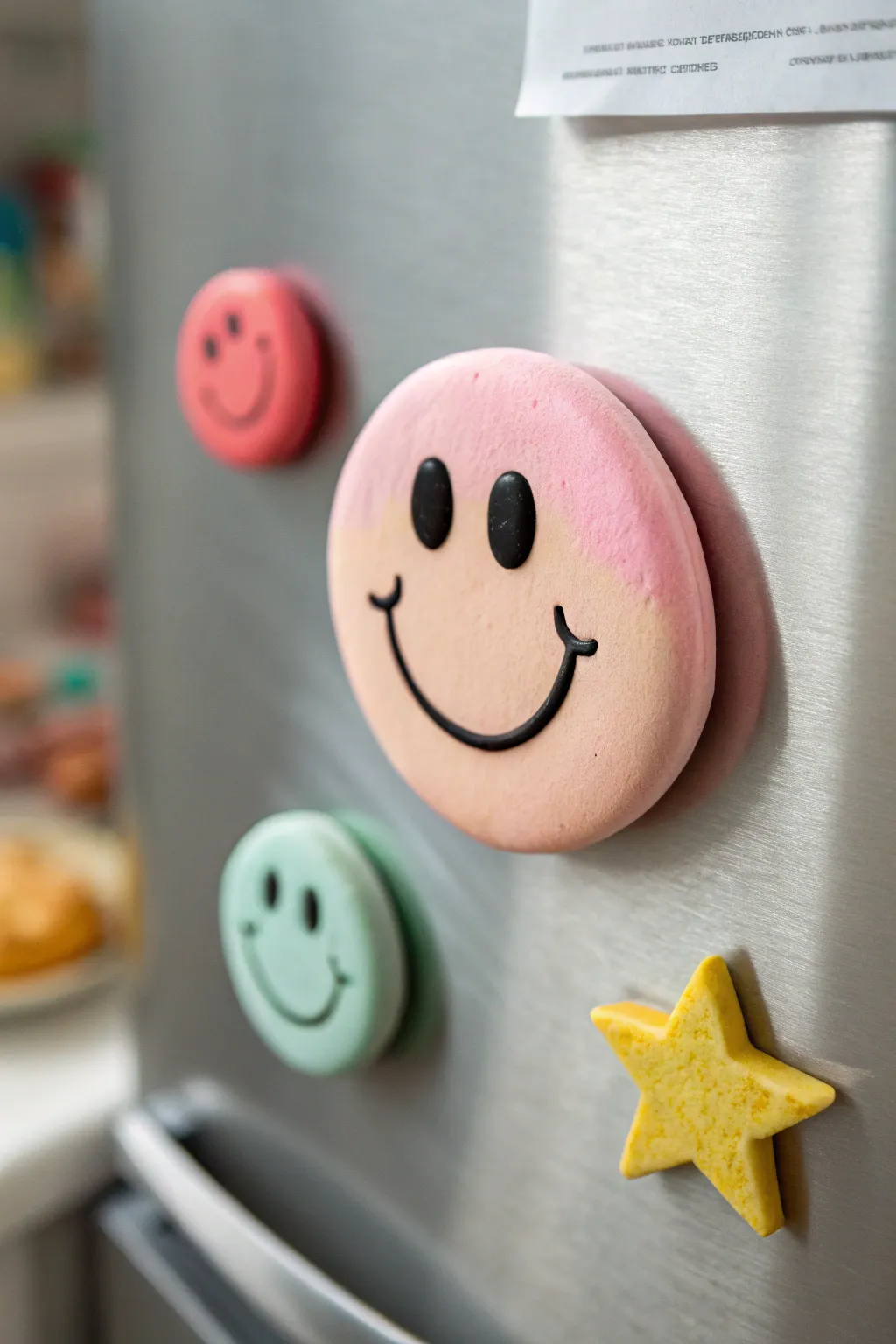
Brighten up your kitchen with these adorable, cookie-style smiley face magnets made from air dry clay. They feature a soft, matte finish and charming dimensional expressions that look good enough to eat.
Step-by-Step Guide
Materials
- White air dry clay
- Acrylic paints (pastel pink, peach, mint green, bright red, yellow, black)
- Round cookie cutters (various sizes)
- Star-shaped cookie cutter
- Rolling pin
- Parchment paper or silicone mat
- Strong craft magnets
- Superglue or E6000
- Fine-grit sandpaper
- Small detail paintbrush
- Gloss varnish (optional for eyes/mouth)
Step 1: Shaping the Clay Base
-
Condition the Clay:
Begin by kneading a generous chunk of white air dry clay until it is warm, pliable, and free of cracks. -
Roll Out the Slab:
Place the clay on parchment paper and roll it out until it’s about 1/4 inch thick. You want these to be chunky and durable, almost like a macaron shell. -
Cut Out Shapes:
Use your largest round cutter for the main smiley face, smaller rounds for the accent smileys, and a star cutter for the yellow magnet. Press down firmly and wiggle slightly for a clean cut. -
Smooth the Edges:
Dip your finger in a little water and gently run it around the cut edges of each shape to soften any sharp ridges or loose clay fibers. -
Embed the Magnet (Optional):
If you are using button magnets, you can gently press one into the back of the wet clay now to create an indentation, then remove it. This helps it sit flush later. -
Let Dry Completely:
Set the shapes aside on a flat surface to dry. I usually flip them over halfway through the drying process (about 24 hours in) to ensure the bottom dries evenly and doesn’t warp.
Fixing Cracks
If small cracks appear as the clay dries, mix a tiny bit of fresh clay with water to make a paste (slip) and fill them in before painting.
Step 2: Refining and Painting
-
Sand for Perfection:
Once fully dry and hard, take a piece of fine-grit sandpaper and lightly buff the surface and edges. This removes any fingerprints and gives that smooth, manufactured look. -
Base Coat – The Ombre Effect:
For the large smiley, mix a pale peach and a soft pink. Paint the bottom half peach and the top half pink, blending them while wet in the middle for a subtle transition. -
Base Coat – Solid Colors:
Paint the smaller rounds in solid mint green and bright red. Paint the star shape a vibrant yellow. You may need two thin coats for full opacity. -
Dry the Base:
Allow the base colors to dry completely before adding any facial features to prevent smudging.
Texture Twist
Before the clay dries, gently press a textured sponge onto the star magnet to give it a realistic, sugary cookie surface finish.
Step 3: Adding the 3D Expression
-
Sketch the Face:
Lightly pencil in the placement of the eyes and smile. For the large smiley, place the eyes wide apart and draw a broad, U-shaped smile with small tick marks at the ends. -
Create Black Clay Details:
Take a tiny amount of fresh wet clay and mix it with black acrylic paint (or use pre-colored black clay). Roll two small balls for eyes and a long thin snake for the mouth. -
Attach the Eyes:
Dab a tiny dot of water or glue where the eyes go. Flatten the black balls slightly into ovals and press them onto the painted surface. -
Attach the Smile:
Lay the thin black snake of clay over your pencil line. Gently press it down to adhere, shaping the ends into cute little curved cheeks. -
Paint Alternative:
If working with tiny clay stripping is too fiddly, you can simply paint these features on with black paint and a steady hand, though the clay adds a nice tactile pop. -
Final Assembly:
Once all paint and added clay details are fully dry, flip the pieces over. Apply a strong adhesive like E6000 to your magnets and press them firmly onto the back.
Pop these cheerful magnets on your fridge and enjoy a daily dose of happiness every time you reach for a snack
Minimal Photo or Card Holder
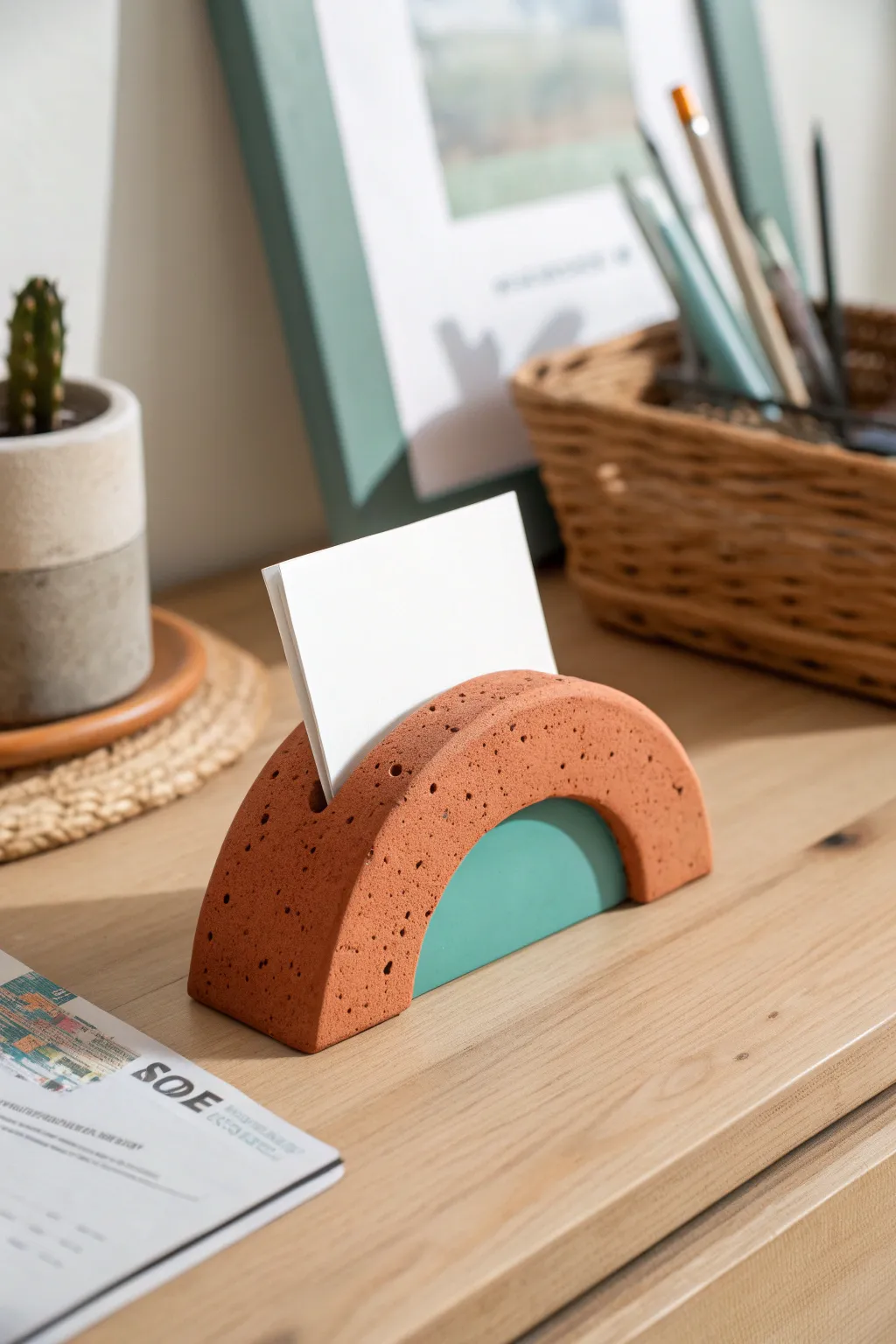
This modern, minimalist rainbow arch serves as a functional piece of art for your desk, perfect for displaying photos or important notes. The design features a textured, terracotta-style outer arch nestling a smooth, sea-foam green inner arch.
Step-by-Step Tutorial
Materials
- Air dry clay (white or light grey)
- Acrylic paint (terracotta orange, burnt sienna, teal/mint green)
- Baking soda (for texture)
- Rolling pin
- Sharp crafting knife or clay cutter
- Circle cutters or bowls of two distinct sizes
- Sandpaper (fine grit)
- Clear matte sealant spray
- Paintbrushes
- Cup of water
- Ruler
Step 1: Shaping the Arches
-
Condition the Clay:
Begin by kneading a large handful of air dry clay until it becomes soft, pliable, and free of any cracks. If it feels too dry, dip your fingers in water and work the moisture in. -
Roll It Out:
Use a rolling pin to flatten the clay into a slab. Aim for a substantial thickness, around 3/4 of an inch to 1 inch thick, as the holder needs weight and stability to stand upright. -
Cut the Outer Arch:
Using a large circle cutter or a bowl as a guide, cut a half-circle shape. You can do this by cutting a full circle and halving it, or just cutting the arch shape directly from the slab using your knife. -
Create the Inner Gap:
Take a smaller circle cutter (or a jar lid) and align it centrally at the bottom of your large arch. Cut away this smaller semi-circle to create the rainbow tunnel shape. -
Form the Inner Arch:
Roll out a second piece of clay to the same thickness. Use the same smaller circle cutter you used for the gap to cut a solid semi-circle that fits perfectly inside the larger arch. -
Test the Fit:
Briefly place the smaller semi-circle inside the larger arch to ensure they nest well. It doesn’t need to be tight; a tiny gap is fine as they are separate pieces. -
Carve the Card Slot:
On the larger outer arch only, use a ruler to mark a straight line across the top center. Gently press your knife or a thick piece of cardstock into the clay to create a grove about half an inch deep. Wiggle it slightly to widen the slot. -
Smooth and Dry:
Dip your finger in water and smooth out any rough edges on both pieces. Let them dry completely for 24-48 hours, flipping them occasionally to ensure even drying.
Step 2: Texturing and Painting
-
Sand Imperfections:
Once fully dry, lightly sand the surfaces with fine-grit sandpaper to remove any sharp ridges or bumps from the cutting process. -
Mix Textured Paint:
To achieve that porous, stone-like look for the outer arch, mix your terracotta orange paint with a teaspoon of baking soda. The mixture should become fluffy and slightly gritty. -
Apply the Base Texture:
Generously paint the outer arch with your baking soda mixture. Dab the brush straight up and down (stippling) rather than stroking it to create a pitted surface. -
Add Depth:
While the paint is still wet, I like to take a darker brown or burnt sienna on a small brush and speckle tiny dots over the terracotta to mimic real stone pores. -
Create Pockmarks:
For larger craters, gently poke the wet textured paint with a toothpick or the end of a paintbrush handle in random spots. -
Paint the Inner Arch:
Paint the smaller inner semi-circle with your smooth teal or mint green acrylic paint. Do not add baking soda to this one; keep the finish sleek for contrast. -
Multiple Coats:
Allow the first coats to dry, then apply a second layer to the inner arch to ensure the color is opaque and vibrant. -
Assembly:
Once both pieces are completely separate and dry, you can choose to glue the inner arch into the outer one with strong craft glue, or simply place it inside freely for a modular look. -
Seal the Piece:
Finish by spraying both pieces with a matte clear sealant. This protects the paint and prevents the baking soda texture from flaking off over time.
Cracks Appearing?
Mix a tiny bit of fresh clay with water to make a paste (slip). Fill any cracks in the dry clay with this paste, let it dry again, and sand smooth.
Pro Tip: Weighted Base
For extra stability holding heavy cards, you can embed a few heavy washers or coins into the bottom of the wet clay while shaping the arches.
Now you have a stylish, custom photo holder that looks like high-end decor.

TRACK YOUR CERAMIC JOURNEY
Capture glaze tests, firing details, and creative progress—all in one simple printable. Make your projects easier to repeat and improve.
Peg-Style Earring Stand
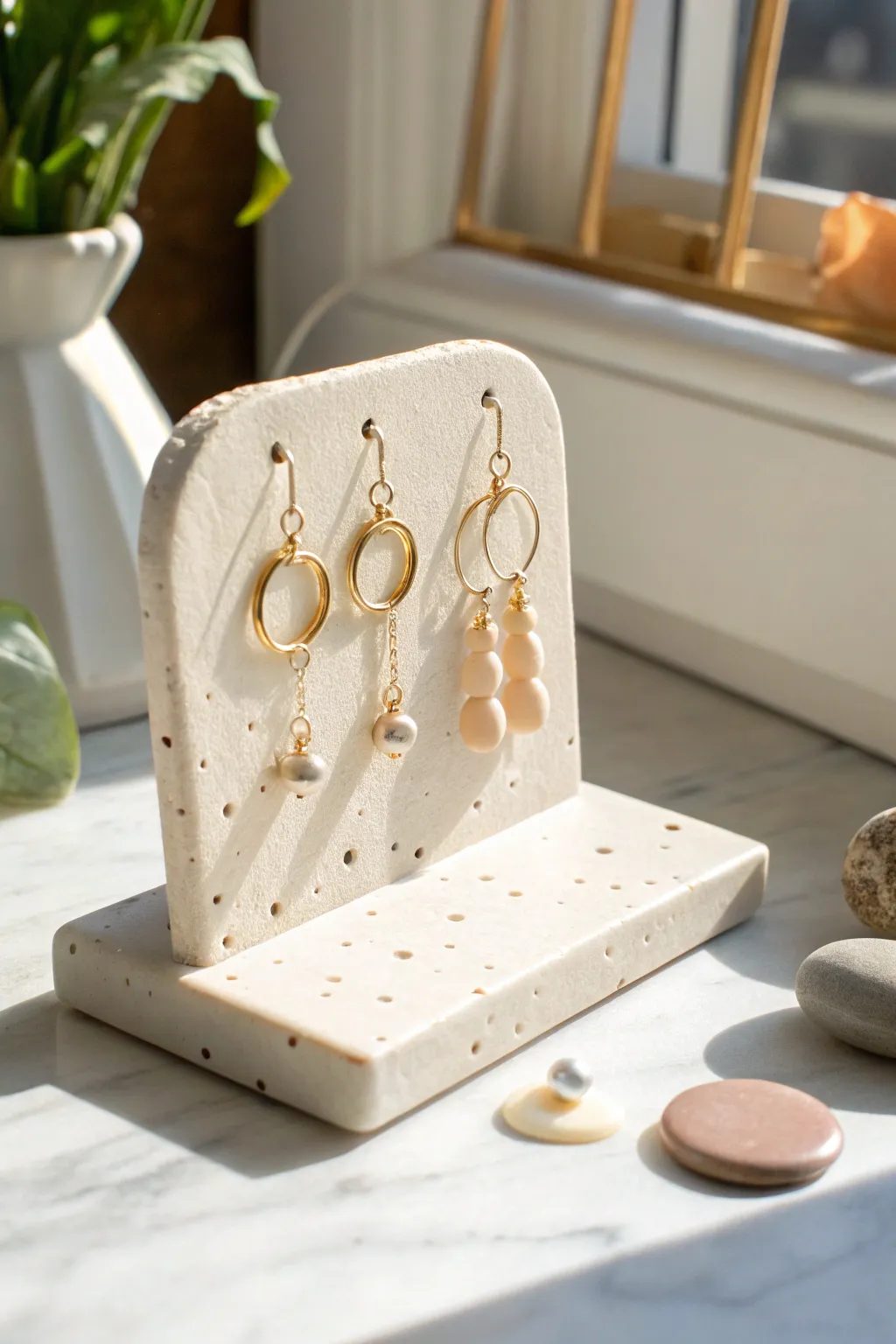
This minimalist earring stand features a sleek L-shaped design with a stone-like speckled finish, perfect for showcasing your favorite dangles and studs. Crafted from simple air-dry clay, it offers a chic and functional way to organize your everyday jewelry on a vanity or windowsill.
Step-by-Step
Materials
- White air-dry clay (approx. 500g)
- Small rolling pin
- Parchment paper or craft mat
- Craft knife or clay slicer
- Ruler
- Water in a small cup
- Coarse black pepper or dried coffee grounds (for speckles)
- Bamboo skewer or large needle tool
- Fine-grit sandpaper (220-400 grit)
- Strong craft glue (E6000 or similar super glue gel)
- Acrylic sealer (optional matte or gloss)
Step 1: Preparing the Clay
-
Condition the clay:
Start by taking a generous chunk of white air-dry clay. Knead it in your hands for a few minutes to warm it up and make it pliable. -
Add texture:
To achieve that organic, speckled stone look, flatten your clay slightly and sprinkle a pinch of coarse black pepper or dried coffee grounds onto it. -
Integrate the speckles:
Fold the clay over the speckles and knead thoroughly until the particles are evenly distributed throughout the entire ball of clay.
Step 2: Shaping the Components
-
Roll out the slab:
Place your clay on a sheet of parchment paper. Use the rolling pin to roll it out into an even slab, aiming for a thickness of about 1/4 inch (6mm) for stability. -
Cut the base:
Using a ruler and craft knife, cut a rectangle for the base. A good size is approximately 3 inches wide by 4 inches deep, but customize this to your space. -
Cut the vertical stand:
Cut a second rectangle for the vertical part. This should be the same width as your base (3 inches) and about 3.5 inches tall. -
Round the corners:
Take the vertical rectangle piece and gently use your fingers or the craft knife to round off the top two corners, creating a soft arch shape. -
Smooth the edges:
Dip your finger in a little water and run it along all cut edges of both clay pieces to smooth out any sharpness or roughness.
Fixing the Wobble
If your dried clay pieces wrapped and won’t sit flat, wrap fine sandpaper around a wood block and sand the bottom until level.
Step 3: Adding Holes & Details
-
Create hanger holes:
Using a bamboo skewer, poke three evenly spaced holes near the top of the vertical arch piece. Wiggle the skewer slightly to ensure the holes are large enough for earring hooks. -
Add decorative pitting:
I like to create extra texture by randomly poking shallow indentations all over the front of both slabs using the blunt end of the skewer or a toothpick. The image shows random tiny holes for a porous stone effect. -
Dry partially:
Let the pieces sit flat on the parchment paper for about 24-48 hours. Flip them gently halfway through the drying process to prevent warping.
Level Up
Create a ‘terrazzo’ effect by kneading in tiny, chopped-up bits of colored dried clay instead of pepper before rolling.
Step 4: Assembly & Finishing
-
Sand for perfection:
Once fully dry and hard, use fine-grit sandpaper to smooth any uneven edges or surface bumps. Wipe away the dust with a barely damp cloth. -
Test the fit:
Hold the vertical piece upright on top of the base piece, positioning it near the back edge. Ensure the contact surfaces are flat and flush. -
Glue the pieces:
Apply a strong craft glue or super glue gel to the bottom edge of the vertical piece. Press it firmly onto the base rectangle. You may need to prop it up against a book while the glue sets. -
Reinforce the joint:
For extra stability, run a tiny bead of glue along the back seam where the two pieces meet. -
Seal (Optional):
To protect your stand from moisture and dust, brush on a thin layer of matte acrylic sealer. This also helps lock in those decorative speckles.
Now you have a stylish, custom display ready to organize your jewelry collection
Geometric Dangle Earrings
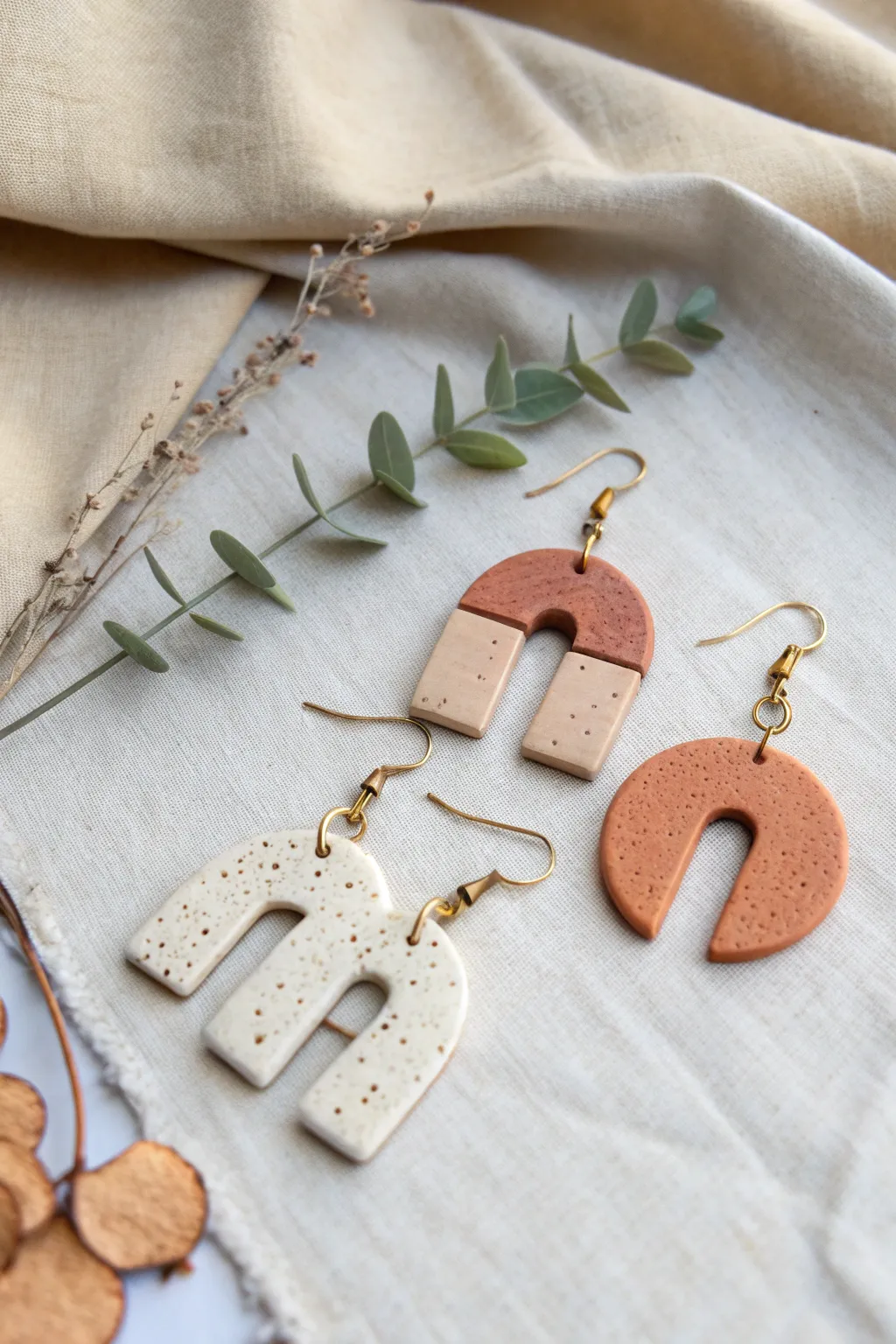
Embrace earthy tones and organic textures with these geometric dangle earrings. This project features three distinct arch-inspired designs, combining warm terracotta hues with natural speckled finishes for a modern bohemian look.
How-To Guide
Materials
- White air-dry clay (or polymer clay)
- Terracotta or rust-colored air-dry clay
- Acrylic rolling pin
- Clay cutters (arch shapes and small rectangles) or X-Acto knife
- Coarse black pepper or dried coffee grounds (for speckling)
- Sandpaper (fine grit)
- Jump rings (gold finish)
- Earring hooks (gold finish)
- Jewelry pliers
- Small hand drill or needle tool
- Parchment paper or clay mat
Step 1: Preparing the Clay
-
Condition the base:
Begin by kneading your white clay until it is soft and pliable. If the clay feels too dry, add a tiny drop of water; if it’s too sticky, let it sit out for a moment. -
Create the speckled texture:
To achieve the organic spotted look seen in the white earrings, sprinkle a pinch of coarse black pepper or dry coffee grounds onto the clay. Fold the clay over and knead repeatedly until the specks are evenly distributed throughout the batch. -
Roll it out:
Place your clay on a flat surface covered with parchment paper. Use your acrylic rolling pin to roll the clay into an even slab, approximately 3mm to 4mm thick. Ensure it’s not too thin, or the finished pieces will be brittle. -
Prepare the terracotta clay:
Repeat the conditioning and rolling process with the terracotta-colored clay. I prefer to leave this color pure without added specks to create a nice contrast against the textured white pieces.
Cracking Clay?
If you see tiny cracks forming as the clay dries, smooth them out immediately with a slightly damp finger or a paint brush dipped in water paste (water + clay scrap).
Step 2: Cutting the Shapes
-
Cut the triple-arch shape:
For the large white statement earrings, use a specialty cutter or an X-Acto knife to cut out a wide ‘M’ shape or a triple-legged arch. Smooth the edges immediately with your finger to remove any loose clay bits. -
Cut the standard arches:
Using the terracotta clay, cut out two standard U-shaped arches. These will be used for the simple hoop-style earrings and the top component of the two-tone pair. -
Create the rectangular drops:
From the remaining speckled white clay, cut two small, identical tall rectangles. These will be the bottom tier for the two-tone earrings. -
Add holes for hardware:
Before the clay dries, use a needle tool to poke holes for your jump rings. For the triple-arch, place the hole at the top of the middle leg. For the two-tone pair, you need holes at the bottom of the terracotta arch legs and the top of the white rectangles.
Texture Trick
Don’t have pepper? You can also use dried tea leaves or actual sand to create the speckled effect. Just ensure the particles are dry to prevent mold.
Step 3: Refining and Assembly
-
Dry the pieces:
Lay all cut shapes on a flat surface lined with clean parchment paper. Let them dry for 24-48 hours, flipping them occasionally to ensure even drying and prevent warping. -
Sand for smoothness:
Once fully cured, use fine-grit sandpaper to gently smooth the edges and flat surfaces. This step gives the earrings their professional, polished finish. -
Drill post-drying (optional):
If you forgot to make holes earlier or they shrank too much, use a small hand drill to carefully bore holes where needed. Go slowly to avoid cracking the dry clay. -
Assemble the two-tone pair:
Using your jewelry pliers, open a jump ring and thread it through the hole in the white rectangle and the corresponding hole in the terracotta arch. Close the ring securely. Repeat for the other side of the arch. -
Attach the ear wires:
Open the loop at the base of your earring hook (or use a small jump ring as a connector). Thread it through the top hole of your clay shapes. -
Final check:
Ensure all jump rings are tightly closed so your components don’t slip off while wearing them. Give the pieces a gentle wipe with a soft cloth to remove any sanding dust.
Now you have a unique set of geometric accessories ready to wear or gift
Statement Necklace Charm Set
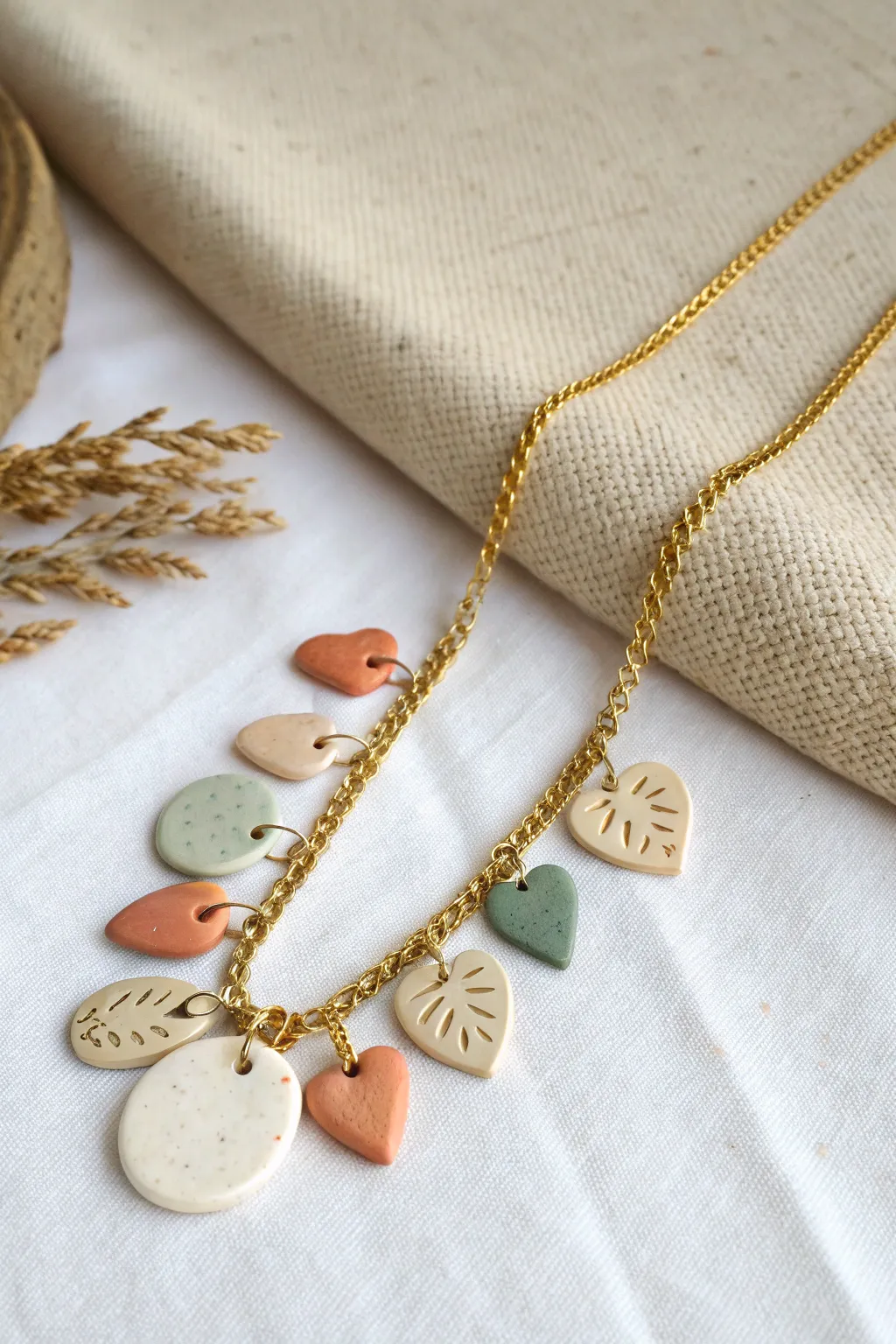
Embrace organic shapes and natural tones with this charming statement necklace made from air dry clay. This project features a medley of hearts, circles, and leaves in calming sage, terracotta, and cream hues, all suspended from a delicate gold chain.
Step-by-Step Guide
Materials
- Air dry clay (white)
- Acrylic paints (terracotta/burnt sienna, sage green, beige, cream)
- Small rolling pin
- Small cookie cutters or clay cutters (heart, circle, oval)
- Exacto knife or craft blade
- Toothpick or needle tool
- Gold jump rings (approx. 6-8mm)
- Gold jewelry chain (approx. 18-20 inches)
- Needle nose pliers
- Flat nose pliers
- Fine grit sandpaper
- Matte varnish or sealant (optional)
- Palette for mixing paint
- Small paintbrush
Step 1: Prepping and Cutting
-
Condition the clay:
Begin by taking a chunk of white air dry clay and kneading it in your hands until it becomes soft, pliable, and free of cracks. -
Roll it out:
Use your rolling pin to flatten the clay on a clean, non-stick surface. Aim for a thickness of about 3-4mm deeply uniform charms. -
Cut the shapes:
Using your small cutters, punch out a variety of shapes. For this specific look, cut out three hearts, three circles (of varying sizes), and three oval drops. -
Smooth the edges:
Dip your finger in a tiny bit of water and gently run it along the cut edges of each shape to soften any sharpness or fraying from the cutter.
Step 2: Adding Texture and Details
-
Create leaf imprints:
Take two of the beige/cream heart shapes and one oval. Using the tip of your needle tool or a small blade, gently press radiating lines into the lush clay to mimic veins of a leaf. -
Pierce the holes:
While the clay is still wet, use a toothpick to poke a hole near the top of every charm. Make sure the hole is large enough for your jump rings to move freely, and wiggle the toothpick slightly to prevent the clay from closing up as it dries. -
Check for flatness:
Gently ensure all pieces are lying perfectly flat and haven’t warped during the handling process.
Broken Hearts?
If a charm cracks while drying, mix a tiny bit of fresh clay with water to make a paste (slip) and fill the crack. Sand it smooth once dry.
Step 3: Drying and Refining
-
Let it dry:
Allow the clay pieces to dry completely for 24-48 hours. I find turning them over halfway through helps them dry evenly on both sides. -
Sand for smoothness:
Once fully cured, take a piece of fine-grit sandpaper and lightly buff the edges and surfaces of the charms to remove any fingerprints or imperfections.
Go Botanical
Instead of carving the leaf veins by hand, press real small leaves or dried flowers into the wet clay for an authentic botanical texture.
Step 4: Painting and Finishing
-
Mix your palette:
Prepare your acrylic paints. You’ll need a terracotta orange, a muted sage green, a soft beige, and a speckled cream color. -
Apply the base coats:
Paint the hearts in terracotta, the smaller circles and one oval in sage green, and the textured leaf shapes in beige. -
Create the speckled effect:
For the large central circle and the green oval, dilute a tiny bit of dark brown or black paint with water. Dip an old toothbrush or stiff brush into it and flick tiny speckles onto the dry painted surface. -
Seal (optional):
To protect your paint job, apply a thin coat of matte varnish. This keeps the earthy, natural finish while adding durability.
Step 5: Assembly
-
Prepare the chain:
Lay out your gold chain flat on your workspace to decide where you want each charm to hang. -
Open the jump rings:
Using two pairs of pliers, twist the jump rings open laterally (side-to-side, not pulling apart). -
Attach the charms:
Thread an open jump ring through the hole in a clay charm, then hook it onto a link in the chain. Twist the jump ring closed securely. -
Arrange the spacing:
Continue attaching all charms, spacing them roughly 1-1.5 inches apart along the center section of the chain just like the reference photo.
Now you have a beautifully bespoke accessory that brings a touch of nature to any outfit
Tiny Bud Vase for Dried Stems
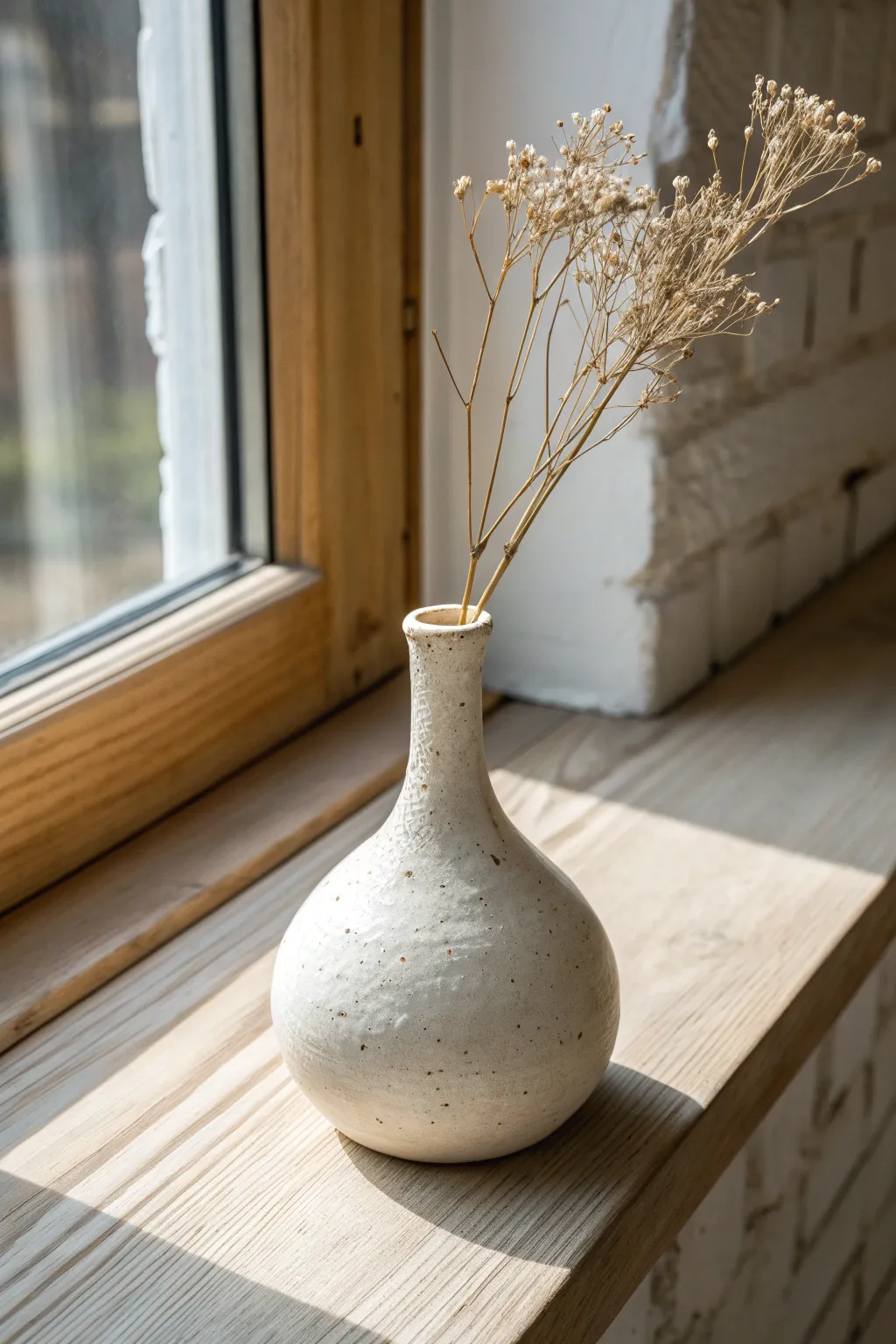
Capture the organic elegance of ceramic studio pottery without needing a kiln. This petite bud vase features a bulbous base and a slender neck, finished with a subtle speckled texture that mimics real stoneware.
Step-by-Step Guide
Materials
- White air-dry clay (approx. 1/2 lb)
- Small cup of water
- Sponge
- Rolling pin or smooth round object
- Cutting tool or knife
- Wooden skewer or chopstick
- Sandpaper (fine grit)
- Acrylic paint: Cream/Off-White and Dark Brown/Black
- Old toothbrush
- Matte spray varnish
Step 1: Forming the Base
-
Condition the clay:
Start by kneading a tennis ball-sized amount of air-dry clay until it is warm, pliable, and free of cracks. -
Create a sphere:
Roll the clay between your palms to form a smooth, tight ball. Tap it gently on your work surface to create a small flat spot so the vase will stand upright without wobbling. -
Open the form:
Using your thumb, press directly into the center of the top of the sphere. Push down about three-quarters of the way, being careful not to push through the bottom. -
Pinch the walls:
Gently pinch the clay between your thumb (inside) and fingers (outside). Rotate the ball as you pinch to thin out the walls evenly, maintaining that round, bulbous shape.
Fixing Cracks
If hairline cracks appear while drying, don’t panic. Mix a tiny bit of fresh clay with water to make a paste (slip) and fill the crack. Let dry and sand smooth.
Step 2: Building the Neck
-
Prepare a coil:
Take a separate small piece of clay and roll it into a thick worm or coil, about the thickness of your finger. -
Attach the coil:
Score (scratch) the rim of your pinched ball and the bottom of your coil. Add a dab of water to the scored areas and press the coil onto the opening to begin the neck. -
Blend the seams:
Use your thumb or a modeling tool to smear the clay from the coil down onto the body of the vase. Do this both on the outside and the inside until the seam is invisible. -
Shape the taper:
With the extra clay added, gently squeeze and pull the neck upwards. Aim for a shape that is wider at the connection point and tapers slightly as it goes up, creating an elegant curve. -
Refine the rim:
If the top edge is uneven, trim it with your knife. Dip your finger in water and smooth the rim so it is soft and rounded, not sharp.
Waterproofing Hack
Air-dry clay melts in water! To use fresh flowers, insert a hidden glass test tube or plastic floral vial inside the neck to hold the water safely.
Step 3: Texturing and Drying
-
Smooth the surface:
Dip a sponge in a little water and wipe down the entire exterior to remove major fingerprints, but don’t aim for factory perfection—the handmade look is key. -
Add subtle texture:
While the clay is still damp, lightly tap the surface with a crumpled piece of foil or a stiff-bristle brush to give it a slightly organic, non-plastic feel. -
Let it dry:
Place the vase in a safe spot away from direct heat. Let it dry completely for 24-48 hours. It should turn solid white and feel room temperature to the touch. -
Sand imperfections:
Once fully dry, take your fine-grit sandpaper and gently sand down any sharp ridges or bumps that distract from the silhouette. Wipe away the dust with a damp cloth.
Step 4: The Faux-Ceramic Finish
-
Base coat:
Paint the entire vase with a cream or warm off-white acrylic paint. You may need two coats to get solid, opaque coverage. -
Prepare the speckle:
Water down a tiny amount of dark brown or black acrylic paint. It should be the consistency of ink or milk. -
Splatter effect:
Dip an old toothbrush into the watery dark paint. Hold it near the vase and run your thumb across the bristles to flick tiny specks onto the surface. I like to practice on paper first to control the spray. -
Seal the piece:
After the paint is bone dry, spray the vase with a matte varnish. This protects the finish and removes the ‘plastic’ sheen of the acrylic paint, making it look more like fired clay.
Pop in a few stems of dried baby’s breath or grasses to complete your minimalist display
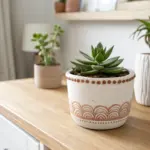
Decorative Planter Cover for Small Pots
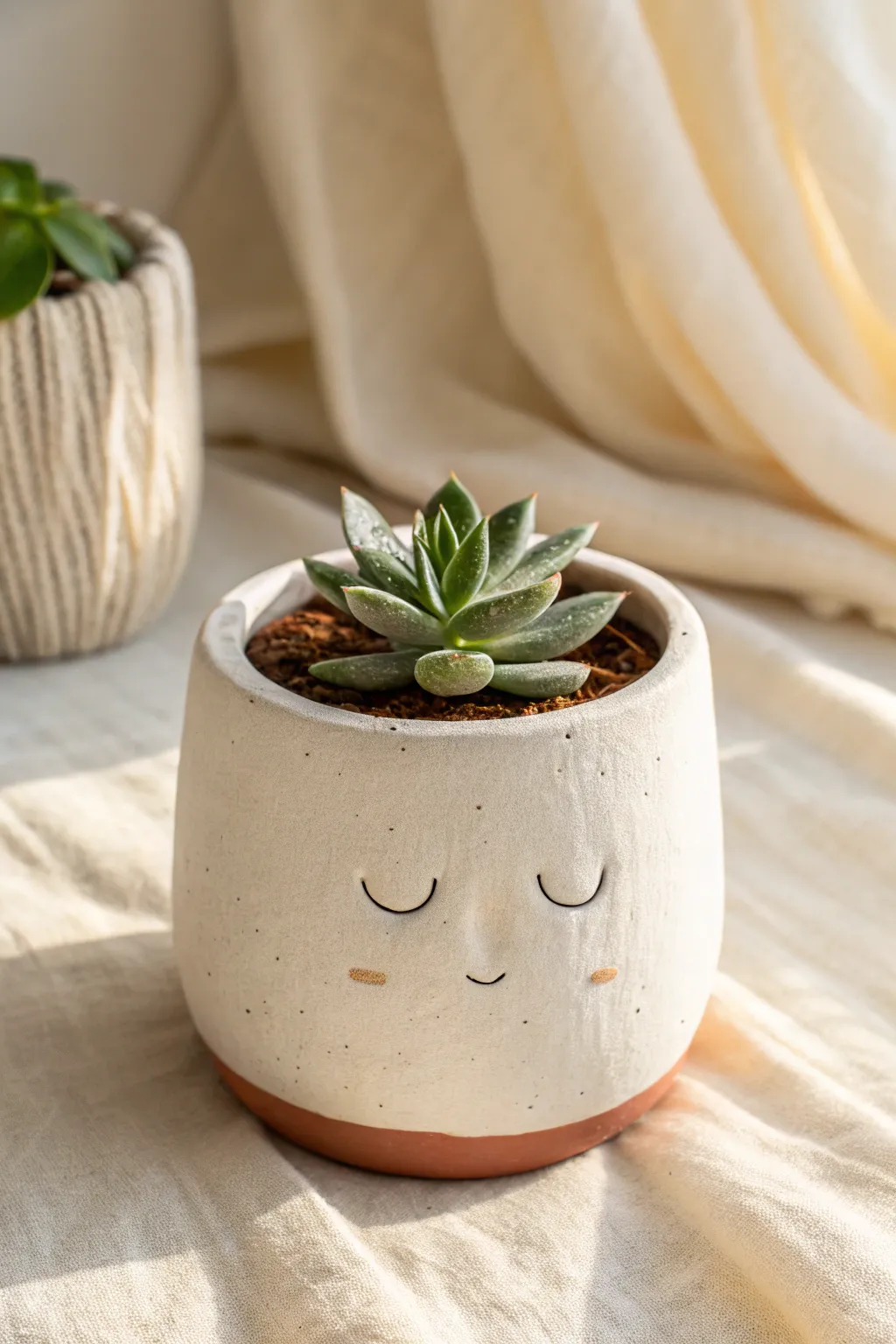
Transform a plain plastic nursery pot into a piece of charming decor with this sleepy-faced vessel. This air-dry clay project features a smooth, speckled finish with a sweet, minimalist expression that adds personality to any windowsill.
Step-by-Step
Materials
- White air-dry clay (approx. 500g)
- Small plastic plant pot (to use as a mold)
- Acrylic rolling pin
- Craft knife or clay cutter
- Small bowl of water
- Fine grit sandpaper
- Terracotta colored acrylic paint
- Black fine-point permanent marker or paint pen
- Blush pink acrylic paint
- Toothbrush (for speckling)
- Brown watercolor or diluted acrylic paint
- Matte varnish or sealant
Step 1: Shaping the Vessel
-
Roll the clay:
Start by kneading your white air-dry clay until it is pliable and smooth. Roll it out on a flat surface to an even thickness of about 1/4 inch, ensuring it’s wide enough to wrap around your plastic pot mold. -
Cut the base:
Place your plastic pot upside down on the rolled clay and trace around the rim with a craft knife. Cut out this circle to form the base of your planter cover. -
Cut the walls:
Measure the height and circumference of your plastic pot. Cut a rectangular strip of clay that matches the height and is slightly longer than the circumference to allow for a seam overlap. -
Assemble the cylinder:
Wrap the rectangular strip around the plastic pot (which acts as your internal support form). You might want to wrap the plastic pot in cling film first for easier removal later. -
Join the seams:
Score the overlapping edges of the clay strip and wet them slightly with your finger or a brush. Press the edges together firmly to create a cylinder. -
Attach the base:
Score the bottom edge of the cylinder and the outer edge of your circular base. Join them together, smoothing the clay upwards from the base into the wall. -
Blend and smooth:
Dip your finger in water and rub it over all the seams until they disappear completely. I find that spending extra time here makes the final finish much cleaner. -
Create the rounded rim:
Use a wet sponge or your fingers to gently round off the top rim of the pot so it isn’t sharp or square. It should curve slightly inward. -
Drying time:
Let the pot dry for about 24-48 hours. Once the exterior feels firm (after about 12 hours), carefully remove the inner plastic pot to allow the inside to dry thoroughly.
Cracks Appearing?
If small hairline cracks appear while drying, don’t panic. Mix a tiny bit of fresh clay with water to make a paste (slip) and fill the cracks, then sand smooth once dry.
Step 2: Decoration and Details
-
Sand for smoothness:
Once bone dry, take your fine-grit sandpaper and gently sand the entire surface. Focus on removing any fingerprints or uneven bumps from the molding phase. -
Paint the base:
Mask off the bottom half-inch of the pot using painter’s tape, or freehand it if you have a steady hand. Paint this bottom section with terracotta acrylic paint to mimic a clay saucer look. -
Add speckles:
Dilute a small amount of brown paint with water. Dip a toothbrush into the mixture and run your thumb across the bristles to flick tiny speckles onto the white portion of the pot for a natural stone effect. -
Draw the face:
Using a pencil, lightly sketch the sleeping eye arches and a tiny smile in the center of the pot. Trace over your lines with a black fine-point permanent marker or paint pen. -
Add rosy cheeks:
Dip the end of a paintbrush or a cotton swab into blush pink paint. Dab two small horizontal ovals just below the eyes to create sweet, rosy cheeks. -
Seal the project:
Apply two coats of matte varnish to the entire pot cover, inside and out. This protects the clay from humidity, though remember it is a cover and not meant for direct watering.
Make it 3D
Before the clay dries, roll a tiny ball of clay and attach it where the nose would be to create a small, protruding button nose for added dimension.
Place your favorite succulent inside and enjoy the calm presence of your new pot friend
Modern Desk Organizer Tray Set
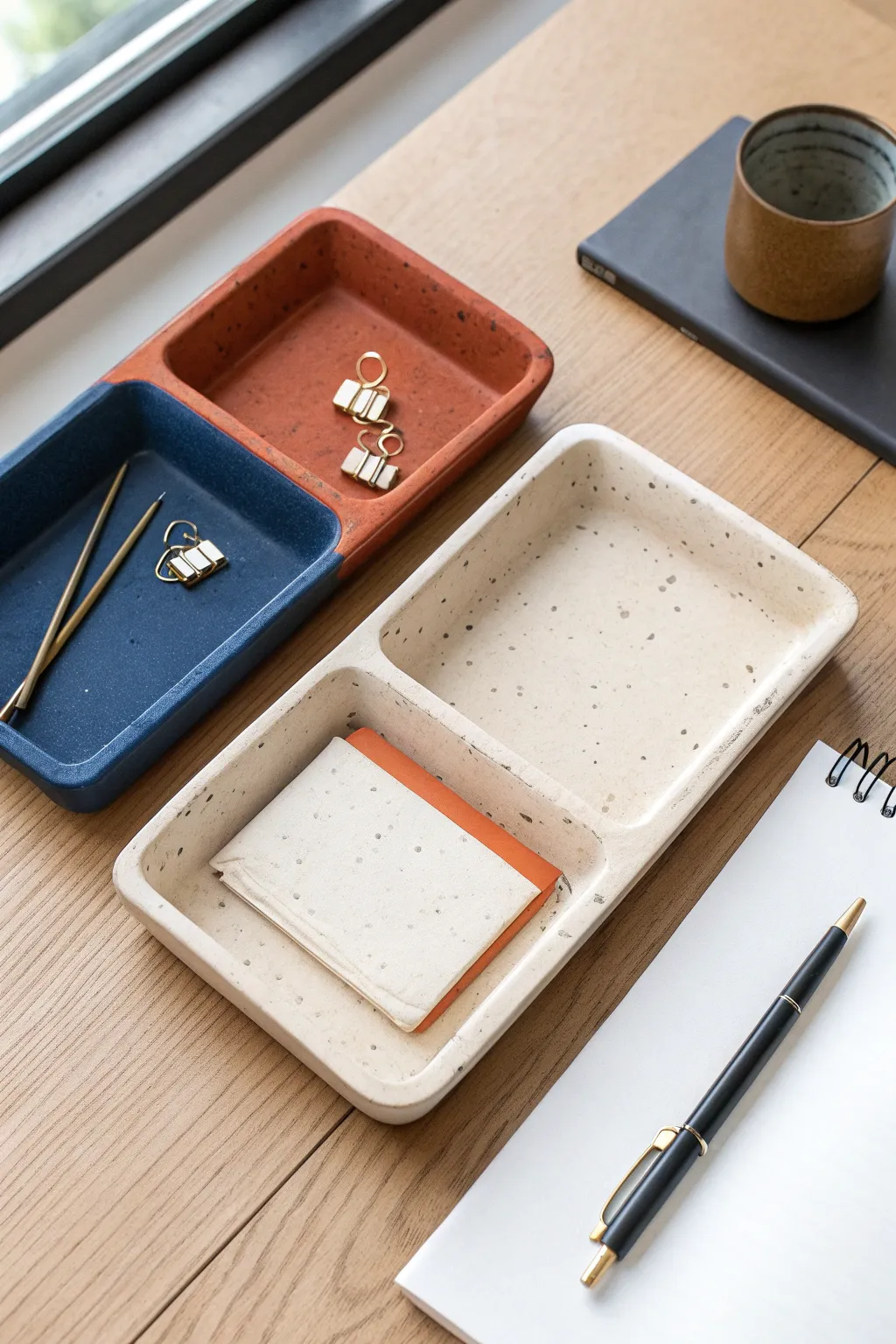
Bring sophisticated organization to your workspace with this pair of modern, minimalist trays featuring a chic speckled finish. The clean lines and dual-compartment design make them perfect for corralling small items like paperclips, sticky notes, and accessories.
How-To Guide
Materials
- Air dry clay (white)
- Acrylic rolling pin
- Sharp crafting knife or clay blade
- Ruler
- Smoothing sponge and water
- Acrylic paints (terracotta orange, navy blue, cream/off-white)
- Old toothbrush (for speckling)
- Brown or black acrylic paint (for speckles)
- Matte varnish or sealant
- Fine-grit sandpaper (220-400 grit)
- Cardboard or cardstock (for templates)
Step 1: Shaping the Base
-
Prepare your template:
Before touching the clay, cut a rectangle from cardboard measuring roughly 4 inches by 8 inches. This will serve as the base template for your dual-compartment tray. -
Condition the clay:
Take a large chunk of white air dry clay and knead it in your hands until it is warm, pliable, and free of cracks. -
Roll out the slab:
Using your acrylic roller, roll the clay out onto a smooth surface or craft mat. Aim for an even thickness of about 1/4 inch throughout the slab. -
Cut the base:
Place your cardboard template onto the rolled clay. Using your craft knife and a ruler for guidance, cut straight down to create a clean rectangular base.
Smooth Operator
To get walls that are perfectly straight, prop rectangular objects (like small boxes or books) against the outside of the clay walls while they dry.
Step 2: Building the Walls
-
Cut side strips:
Roll out more clay to the same 1/4 inch thickness. Cut long strips that are approximately 3/4 inch to 1 inch tall. You will need enough length to go around the perimeter and one strip for the center divider. -
Score and slip:
Use your knife to make small cross-hatch scratches (scoring) along the outer edge of your base. Do the same on one edge of your clay strips. Apply a tiny amount of water (slip) to these roughed-up areas. -
Attach the perimeter walls:
Press the strips onto the base to form the outer walls. I like to cut the corners at a 45-degree angle (mitered) where the strips meet for a sharper corner, but butt joints work fine too. -
Add the divider:
Measure where you want the split to be—either centered or offset like the larger section in the image. Cut a strip to fit exactly inside the walls, score the contact points, and press it into place. -
Blend the seams:
This is crucial for strength. Use a sculpting tool or your finger to smooth the clay where the walls meet the base, both inside and outside, until the seams disappear completely. -
Smooth everything out:
Dip your sponge lightly in water and run it over all surfaces to remove fingerprints and soften sharp edges. Let the tray dry for 24-48 hours until fully hardened.
Make It Match
Mix baking soda into your acrylic paint before applying the base coat. This creates a grainy, stoneware-like texture that mimics real pottery.
Step 3: Finishing and Painting
-
Sand for perfection:
Once bone dry, use fine-grit sandpaper to smooth out any bumps on the rim or flat surfaces. Wipe away the dust with a barely damp cloth. -
Apply base coats:
For the monochrome tray, paint the entire piece cream. For the two-tone tray, use masking tape to block off the middle divider line, painting one half terracotta and the other navy blue. Let dry and repeat for full opacity. -
Create the speckles:
Mix a small amount of dark brown paint with a drop of water to thin it. Dip an old toothbrush into this mixture. -
Flick the paint:
Hold the brush over your trays and run your thumb across the bristles to flick tiny splatters of paint onto the surface. Practice on paper first to control the droplet size. -
Seal the deal:
Allow the paint to cure completely, then apply a coat of matte varnish. This protects the finish and gives it that professional ceramic look without the kiln.
Place your new trays on your desk and enjoy the satisfaction of a tidy, stylish workspace
Textured Wall Tiles on a Simple Hanger
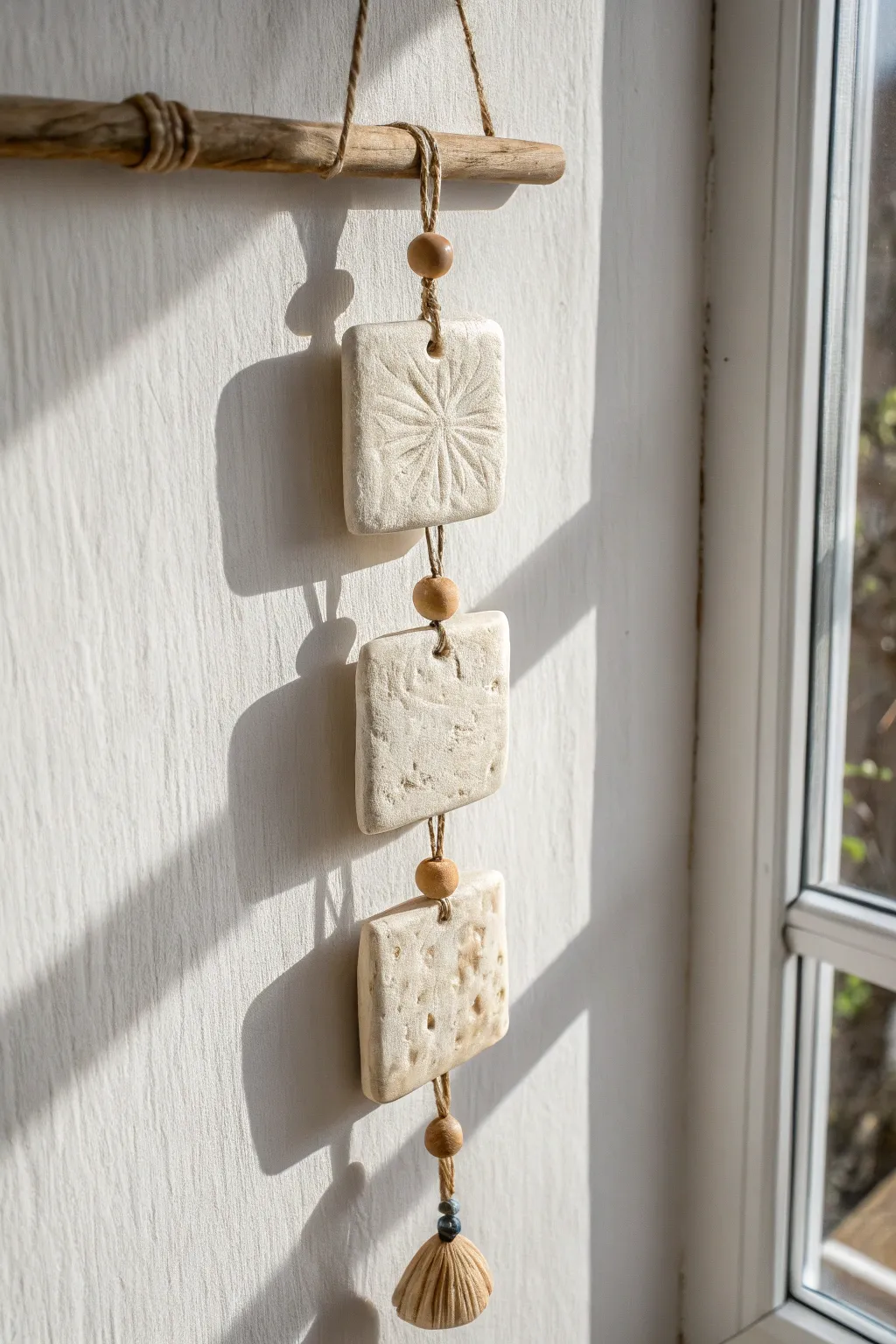
Bring an earthy, tranquil vibe to your space with this vertical wall hanging featuring three distinctly textured air-dry clay tiles. Suspended from a piece of weathered driftwood, the rhythmic pattern of clay squares and wooden beads catches the light beautifully near a window.
Step-by-Step Tutorial
Materials
- White air-dry clay (about 1 lb)
- Rolling pin
- Square cookie cutter (approx. 2.5 – 3 inches) or knife
- Driftwood branch or dowel (approx. 10-12 inches)
- Jute twine
- Wooden beads (assorted sizes)
- Drinking straw or skewer (for making holes)
- Texturing tools: clear glass cup (for starburst), rough stone, sponge, or crumpled foil
- Sandpaper (fine grit)
- Scissors
Step 1: Prepping the Clay Tiles
-
Roll out the clay:
Begin by kneading your air-dry clay until it’s pliable and smooth. Roll it out on a flat surface to an even thickness of approximately 1/4 inch. If the clay sticks, lay down a piece of parchment paper first. -
Cut the shapes:
Use a square cookie cutter to stamp out three identical squares. Alternatively, measure and cut precise squares using a ruler and a craft knife for sharp, clean edges. -
Smooth the edges:
Dip your finger in a little water and gently run it along the cut edges of each square to soften any sharpness or loose clay bits. This gives the tiles a more finished, ceramic look.
Natural Imprints
Look around your garden for texture tools. Dried seed pods, pinecones, or even distinctively veined leaves make incredible, unique impressions in wet clay.
Step 2: Adding Texture
-
Create the sunburst pattern:
For the top tile, create a starburst or flower design. You can use the bottom of a cut-glass tumbler or press a stamp firmly into the center. Ensure the impression is deep enough to see but doesn’t punch through the back. -
Create organic textures:
For the middle and bottom tiles, go for an organic, stone-like feel. Press a rough rock, a piece of coral, or a ball of crumpled aluminum foil into the wet clay. I like to vary the pressure to create distinctive peaks and valleys. -
Pierce holes for hanging:
Use a drinking straw or a skewer to poke a hole at the top and bottom center of each square. Make the holes slightly larger than your twine, as clay shrinks slightly when drying. -
Dry generally:
Place the tiles on a wire rack to dry. Flip them over every few hours to ensure they dry flat and don’t curl. Allow 24-48 hours for complete drying.
Warped Tiles?
If your squares start curling while drying, place a lightweight book on top of them (sandwich them between parchment paper first) once they are leather-hard to flatten them.
Step 3: Assembly
-
Sand the dry tiles:
once fully dry, lightly sand the edges with fine-grit sandpaper to remove any burrs or rough spots. Wipe away the dust with a dry cloth. -
Prepare the hanger:
Cut a piece of jute twine about 2 feet long. Tie one end securely onto your driftwood branch. Wrap it a few times for a rustic look before knotting. -
String the first section:
Thread the loose end of the twine through a wooden bead, then down through the top hole of the first (starburst) tile and out the bottom hole. -
Knot and secure:
Tie a knot immediately under the bottom hole of the first tile if you want it fixed, or simply let it rest on the next bead. Thread on another wooden bead to act as a spacer. -
Add remaining tiles:
Continue the pattern: thread through the top of the middle tile, out the bottom, add a bead spacer, and repeat for the final bottom tile. -
Create the tassel cap:
After the last tile, thread a final bead. For the decorative finish shown in the photo, create a small tassel using scraps of twine or cord. -
Attach the tassel:
Tie the end of your main string around the head of your tassel securely. Trim any excess string so it blends into the tassel fringe. -
Add the hanging loop:
Finally, cut a separate piece of twine for the main hanging loop. Tie each end to the driftwood branch, ensuring it’s balanced so the artwork hangs straight.
Now suspend your handcrafted art in a sunny spot and enjoy the interplay of shadow and texture
Moon Phase Garland in Air-Dry Clay
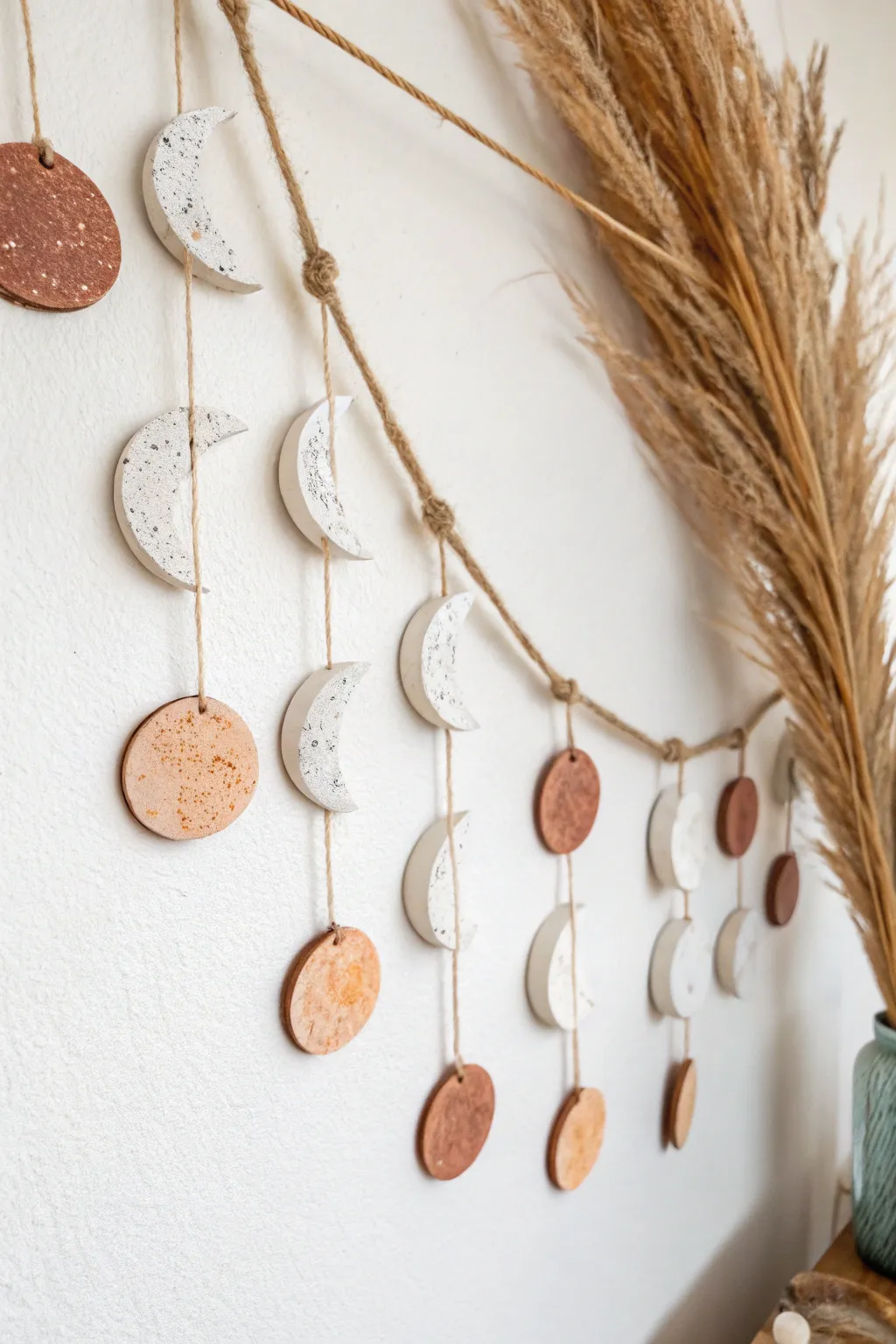
Bring a touch of celestial magic to your walls with this textured air-dry clay garland. The interplay of speckled white crescents and earthy terra cotta circles creates a calming, bohemian aesthetic perfect for a bedroom or living space.
Step-by-Step Guide
Materials
- White air-dry clay
- Terra cotta air-dry clay (or white clay painted later)
- Circle cookie cutters (various sizes)
- Rolling pin
- Parchment paper
- Jute twine or hemp cord
- A straw or toothpick (for poking holes)
- Old toothbrush or bristle brush (for texture)
- Black acrylic paint (diluted) or black watercolor
- Gold acrylic paint (optional for speckling)
- Fine grit sandpaper
- Clear matte sealant spray
Step 1: Shaping the Phases
-
Roll out the clay:
Start by rolling out your white air-dry clay on a piece of parchment paper to prevent sticking. Aim for an even thickness of about 1/4 inch so the pieces aren’t too fragile. -
Cut the circles:
Using your largest circle cutter, stamp out several circles. These will form the base for your crescent moons. -
Create crescent shapes:
Take the same circle cutter and overlap it onto the clay circles you just cut. Press down to slice away an edge, leaving you with a perfect crescent moon shape. Repeat this to create ascending and descending moon phases. -
Create the suns or full moons:
Roll out the terra cotta colored clay to the same thickness. Use a slightly smaller circle cutter to create the round pendants that hang at the bottom of each strand. -
Make the holes:
Before the clay begins to dry, use a straw or a toothpick to poke holes in the pieces. For the hanging strands, you need a hole at the top and bottom of the crescent moons. The bottom circle pieces only need one hole at the top.
Step 2: Adding Texture & Finishing
-
Smooth the edges:
Dip your finger in a little bit of water and run it along the cut edges of your clay pieces to smooth out any roughness or stray crumbs. -
Let them dry:
Lay all pieces flat on parchment paper in a cool, dry place. Let them cure for at least 24-48 hours, flipping them halfway through to ensure even drying and prevent warping. -
Sand for perfection:
Once fully hard, gently sand any remaining rough edges with fine-grit sandpaper for a polished look. -
Create the speckle effect:
To get that stony look on the white moons, dilute a tiny amount of black acrylic paint with water. Dip an old toothbrush into the mix and flick the bristles with your thumb to spray fine speckles over the white clay pieces. -
Add gold detail:
If you want the subtle shimmer seen on the terra cotta circles, repeat the splatter technique using gold acrylic paint, or lightly dab a dry brush with gold onto the surface. -
Seal the clay:
Protect your work by spraying a light coat of clear matte sealant over all pieces. This prevents the clay from re-absorbing moisture and keeps the paint intact.
Fixing Cracks
If you notice small surface cracks as the clay dries, mix a tiny bit of fresh clay with water to make a paste (slip) and smooth it into the cracks with your finger.
Step 3: Assembly
-
Prepare the main line:
Cut a long length of jute twine to serve as the main horizontal garland. Tie loops at both ends for hanging. -
Cut vertical strands:
Cut several shorter lengths of twine for the vertical drops. You’ll need one strand for each moon phase set. -
Attach the bottom piece:
Tie one end of a vertical twine strand to the single hole of a terra cotta circle. I like to secure this with a double knot on the back side for a cleaner look. -
Thread the moons:
Thread the other end of that twine up through the bottom hole of a crescent moon and out through the top hole. Adjust the spacing so the moon sits a few inches above the circle. -
Secure the placement:
To keep the moon from sliding down, tie a discrete knot in the twine right underneath the bottom hole of the crescent. -
Connect to the main line:
Tie the top of the vertical strand securely onto your main horizontal jute line. Repeat this process for all your moon phases, spacing them evenly along the main garland.
Level Up With Beads
Add wooden beads between the clay pieces or at the top of the knots to introduce more texture and warmth to the garland.
Hang your new celestial creation near a window to catch the changing light