
Whenever I need a laugh at the worktable, I reach for polymer clay and make something that looks a little ridiculous on purpose. These funny polymer clay ideas are all about big expressions, goofy characters, and tiny scenes that tell a joke without saying a word.
Smiling Dumpling Squad
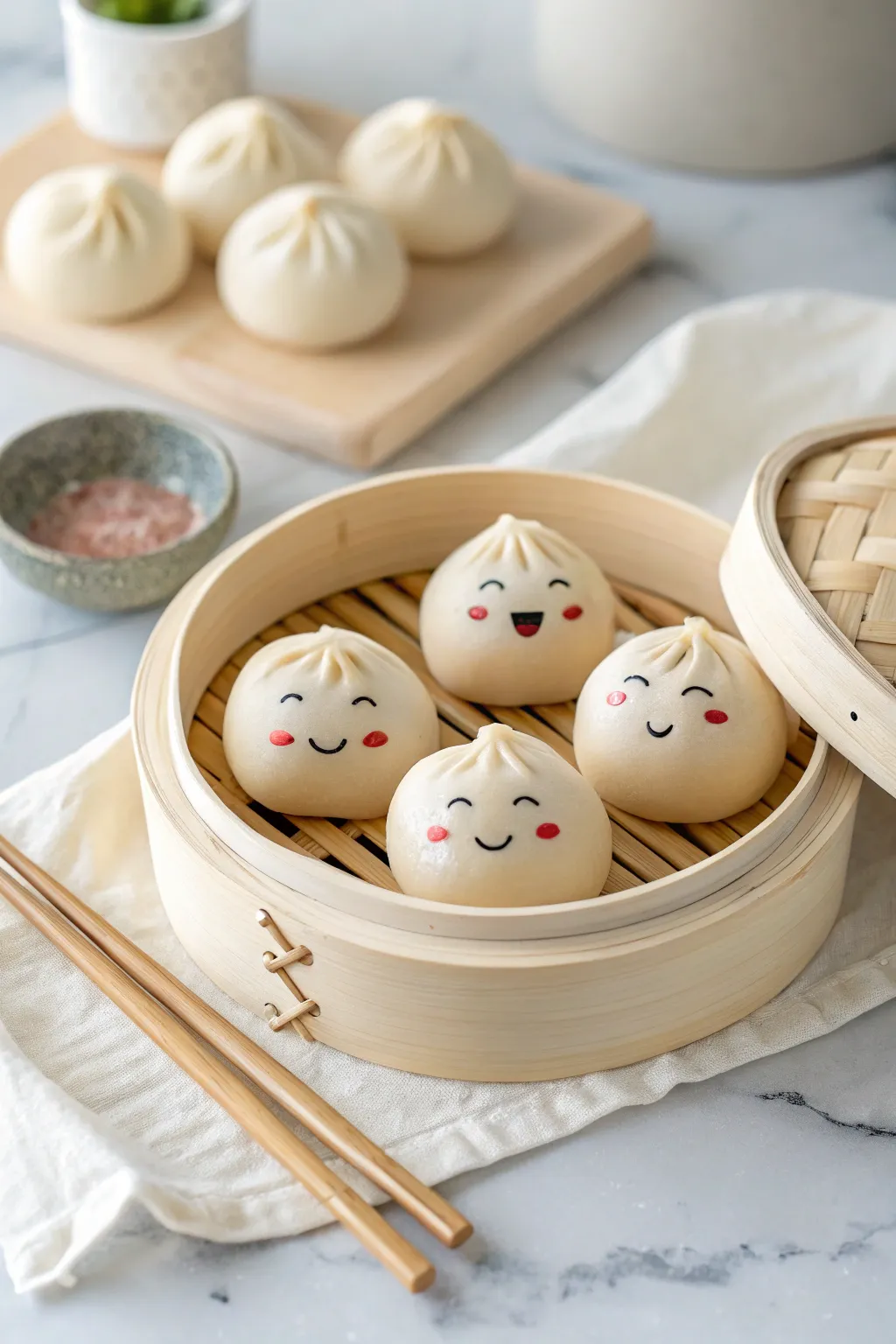
Whip up a batch of dim sum that never goes bad and always greets you with a grin. These adorable polymer clay baozi feature realistic dough textures and charming hand-painted expressions that look good enough to eat.
How-To Guide
Materials
- Translucent white polymer clay
- Solid white polymer clay
- Beige or ecru polymer clay (tiny amount)
- Black acrylic paint
- Red or pink acrylic paint
- Detail paintbrush (000 size)
- Dotting tool or toothpick
- Clay roller
- Needle tool
- Small ball tool
- Soft toothbrush or texture sponge
- Clear matte varnish
- Bamboo steamer (optional prop for display)
Step 1: Mixing the Dough
-
Condition the clay:
Start by warming up your translucent white clay in your hands until it is pliable. You want the dumplings to have that slightly see-through look of real steamed dough. -
Create the perfect color:
Mix three parts translucent white with one part solid white. Add just a crumb-sized specks of beige to knock back the brightness; real dough is rarely pure optical white. -
Divide portions:
Roll your mixed clay into a log and cut it into four equal segments for the dumplings inside the steamer, plus extras if you want companions for the tray. -
Form the base shapes:
Roll each segment into a smooth ball about 1.5 inches in diameter. Gently tap the bottom on your work surface to create a flat base so they sit upright.
Steamed Effect
Dust the raw clay lightly with real cornstarch before texturing. It prevents sticking and bakes onto the surface, looking exactly like flour.
Step 2: Pleating the Buns
-
Pinch the peak:
At the very top center of your ball, pinch a small amount of clay upward to create the gathered peak where the dough would be sealed. -
Start the folds:
Use a needle tool to press indentations radiating from that center peak down the sides of the bun. I usually aim for about 12-15 lines for a realistic look. -
Soften the lines:
Gently stroke the clay between the needle marks with your finger or a silicone tool to turn the sharp cuts into soft, puffy folds. -
Twist the top:
Give the very tip of the peak a tiny, gentle twist. This mimics the motion a chef uses to seal a dumpling. -
Texture the surface:
Lightly tap the entire surface of the bun with a soft toothbrush. This removes fingerprints and creates a realistic, steamed-flour texture.
Step 3: Bringing Them to Life
-
Bake the batch:
Place your dumplings on a baking sheet lined with parchment paper. Bake according to your clay package instructions (usually 275°F for 15-20 minutes). -
Cool completely:
Let the buns cool fully before painting. Painting on warm clay can ruin your brushes and make the paint dry distinctively clumpy. -
Paint the eyes:
Using a 000 detail brush and black acrylic paint, create two small arches for happy, squinting eyes. Position them slightly wide apart on the smooth side of the bun. -
Add the mouth:
Paint a small, simple ‘U’ shape for a smile between the eyes. For variety, fill one in with black and a tiny red tongue to make an open laughing mouth. -
Apply rosy cheeks:
Dip a dotting tool or the flat end of a toothpick into pink paint. Gently stamp a small dot at the outer corner of each eye for a blush. -
Seal the finish:
Coat each dumpling with a very thin layer of matte varnish. Avoid glossy finishes, as steamed buns should look soft and matte. -
Display:
Arrange your squad inside a bamboo steamer lined with wax paper for the ultimate realistic presentation.
Keep it Clean
White clay picks up every speck of dust. Wipe your hands and work surface with a baby wipe or alcohol before handling your final clay mix.
Now you have a charming set of dumplings that will brighten up any shelf or desk



Egg-and-Toast Besties
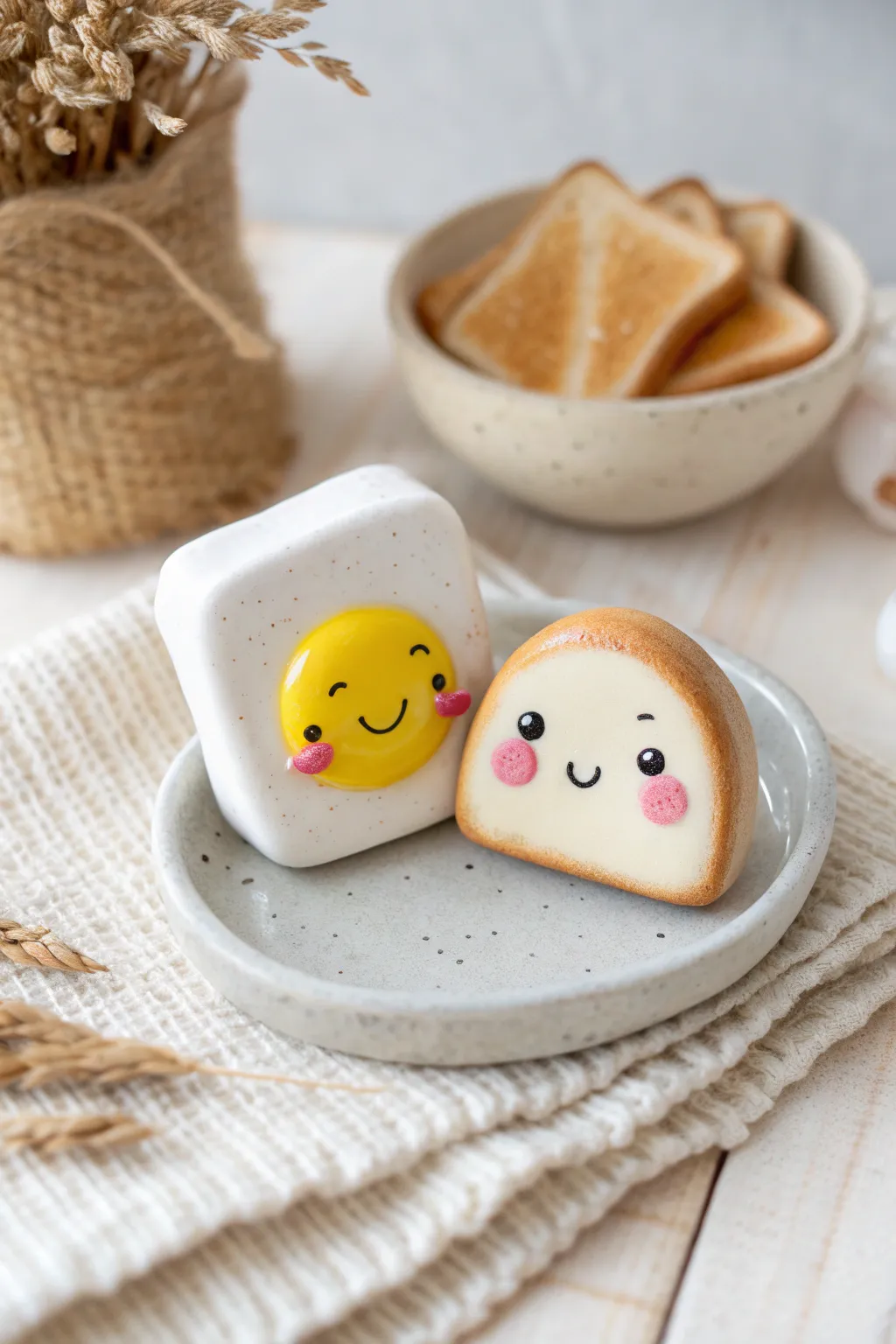
Start your crafting day sunny-side up with this adorable duo of breakfast best friends. These chunky, cheerful figurines feature smooth textures, sweet expressions, and a delightful contrast between the glossy yolk and soft-baked toast crust.
Step-by-Step
Materials
- White polymer clay
- Translucent polymer clay
- Yellow polymer clay (sunny yellow)
- Ochre or light brown polymer clay
- Pastel pink soft pastels or chalk
- Black acrylic paint
- Soft paint brush for shading
- Fine detail brush or dotting tool
- Gloss glaze or UV resin
- Satin or matte varnish (optional)
- Blade or craft knife
- Toothbrush or texturing sponge
Step 1: Shaping the Egg Block
-
Mix and condition:
Start by mixing a large portion of white clay with a very small amount of translucent clay. This gives the egg white a more realistic, slightly milky appearance rather than a stark, plastic white. Condition it until soft. -
Form the base:
Roll the clay into a smooth ball, then flatten it into a thick, rounded square shapes approximately 1 inch wide and 0.5 inches thick. Gently press the sides against your work surface to square them off while keeping the corners soft. -
Texture the surface:
Use an old toothbrush or a stiff bristle brush to tap texture lightly over the entire surface of the white square. This mimics the porous nature of cooked egg whites. -
Add speckles (optional):
For a rustic look like the photo, you can flick extremely tiny specks of watered-down brown paint onto the raw clay, or mix in a tiny pinch of black pepper or ground vanilla bean before shaping.
Sticky Situation?
If your clay gets too soft and fingerprints are showing, pop the shaped pieces in the fridge for 10 minutes before adding the final textures.
Step 2: Creating the Yolk
-
Form the yolk:
Take your yellow clay and roll a medium-sized smooth ball. Flatten the back slightly so it isn’t a perfect sphere, but maintain a high dome shape. -
Attach the yolk:
Press the yellow dome firmly onto the center of your white square. Smooth the connection slightly with your finger or a silicone tool to ensure a good bond. -
Add the face:
Roll two extremely tiny snakes of black clay for the eyes (or paint them later). For the smile, gently impress a tiny U-shape into the yellow clay using a needle tool or small blade. -
Apply blush:
Scrape some pastel pink chalk into a powder. Use a soft brush to dab two rosy cheeks onto the yellow yolk, right next to the smile. Then, add tiny balls of pink clay for a 3D blush effect if desired.
Pro Tip: Realistic shading
Layer your chalk pastels! Start with a light orange-yellow, then layer a darker burnt sienna just on the very edges of the toast crust for depth.
Step 3: Baking the Toast
-
Create the bread shape:
Mix white clay with a tiny dot of yellow to create a creamy dough color. Form a thick triangle with a rounded top, resembling a classic slice of bread. -
Add the crust:
Roll out a thin sheet of ochre or light brown clay. Wrap this strip around the edges of your bread shape, trimming the excess at the bottom where it sits flat. -
Blend and texture:
Gently smudge the seam where the brown crust meets the white center to ensure they stick. Use your toothbrush again to aggressively texture the creamy white center, making it look fluffy or toasted. -
Shade the crust:
Using a soft brush and brown pastel powder, shade the edges of the white center where it meets the crust. This creates that perfectly golden-brown baked gradient. -
Give it personality:
Just like the egg, add a smiling face to the center of the toast. Use black paint or clay for wide-set eyes and a simple smile. -
Rosy cheeks:
Apply pink pastel powder heavily on the cheeks using a dry brush, giving the toast a warm, flushed look.
Step 4: Finishing Touches
-
Bake:
Bake both pieces according to your clay manufacturer’s instructions, usually at 275°F (130°C) for about 30 minutes depending on thickness. -
Paint details:
Once cool, use a fine detail brush and black acrylic paint to refine the eyes and mouths if you didn’t use clay. Add tiny white dots to the eyes for a ‘sparkle’ reflection. -
Gloss the yolk:
Here I prefer to use UV resin for a durable finish, but a heavy coat of gloss glaze works too. Apply it ONLY to the yellow yolk to make it look runny and shiny. -
Matte finish:
Leave the white egg part and the toast matte, or apply a very light matte varnish to protect the pastel shading without adding unwanted shine.
Now you have a charming set of breakfast figurines to brighten up your desk or shelf

Tiny Fruit Drink Characters
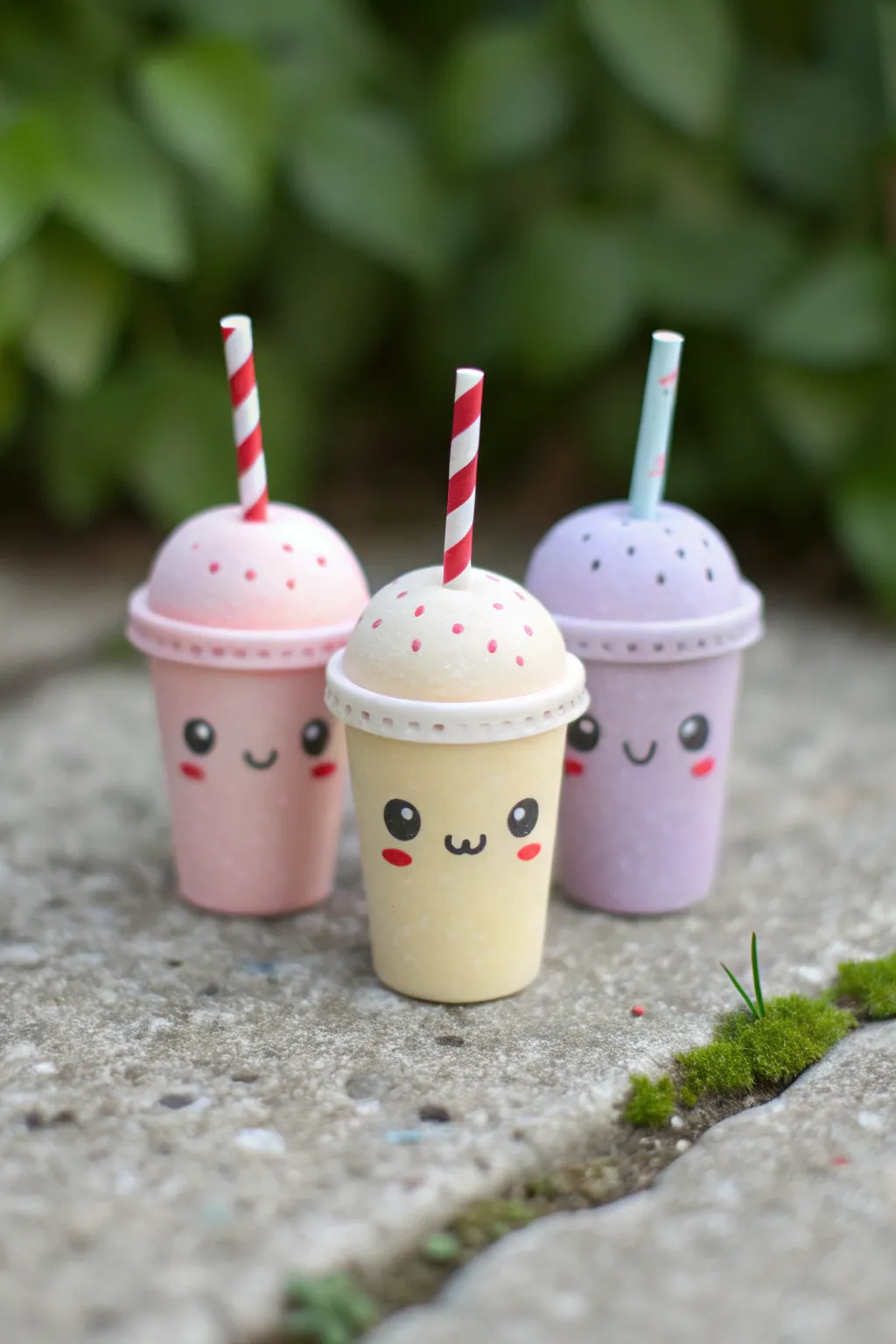
These adorable miniature fruit drinks feature sweet pastel colors and charming smiling faces that are sure to brighten your desk. With their tiny straws and sprinkled lids, they look like the perfect refreshing summer treat in miniature form.
Step-by-Step Tutorial
Materials
- Polymer clay (pale pink, butter yellow, lavender purple)
- Polymer clay (white or translucent white)
- Clay roller or pasta machine
- Small round cutter (approx. 1-inch diameter)
- Needle tool or toothpick
- Dotting tools in various sizes
- Acrylic paint (black, pink, red, white/blue for straw details)
- Fine detail paintbrush
- Tiny paper straw segments or polymer clay snakes for straws
- Liquid polymer clay or strong craft glue
Step 1: Shaping the Cups
-
Mix your colors:
Start by conditioning your pink, yellow, and purple clay until soft. I like to mix a tiny amount of white into each primary color to achieve that soft, milky pastel smoothie look. -
Form the base log:
Roll each colored clay into a thick, smooth cylinder. The cylinder should be slightly tapered, wider at the top and narrower at the bottom, just like a real cup. -
Flatten the bottoms:
Press the cylinder gently onto your work surface to create a flat, stable base. Check that it stands straight without wobbling. -
Create the rim:
Roll a very thin snake of clay in a matching or slightly lighter shade. Wrap this snake around the top edge of your cup, smoothing the seam so it blends invisibly. -
Indent the rim:
Use a needle tool to gently press tiny vertical lines all around this rim strip, giving it a textured, lid-like appearance.
Fingerprint Fix
Before baking, lightly brush your raw clay with a little confusing baby oil or cornstarch. This smoothes out visible fingerprints for a professional finish.
Step 2: Adding the Dome Lids
-
Form the domes:
Roll three balls of clay using either the same color as the cup or a lighter ‘foam’ shade. Flatten the bottom of each ball so you have a perfect semi-circle dome. -
Attach the lids:
Place a dome onto the top rim of each cup. Press down gently to secure the bond without squishing the cup shape. -
Smooth the connection:
Use a sculpting tool to ensure there are no gaps between the dome and the textured rim you made earlier. -
Make the straw hole:
Take a dotting tool or the end of a paintbrush and press a hole into the very center of each dome lid. Make it deep enough to support the straw later. -
Add sprinkle texture:
Using a tiny dotting tool, press shallow idents randomly all over the dome surface to mimic the look of seeds or sprinkles embedded in the foam.
Make it a Keychain
Insert a screw eye pin into the top of the dome before baking. Once cooled, add a jump ring and lanyard to hang it from your bag.
Step 3: Baking and Decorating
-
Insert the straws:
If using polymer clay straws, roll thin snakes of white and red (or blue) twisted together, cut to size, and insert them now. If using paper or plastic straws, wait until after baking. -
Bake the pieces:
Place your smoothies on a baking tile. Follow your clay manufacturer’s instructions for temperature and time—usually 275°F (135°C) for about 15-20 minutes. -
Cool down:
Let the pieces cool completely before painting. Painting on warm clay can make the paint dry clumpy. -
Paint the eyes:
Using black acrylic paint and a small dotting tool, place two round dots for eyes on the front of each cup. Space them widely for maximum cuteness. -
Add eye highlights:
Once the black is dry, use a needle tip with white paint to add a tiny sparkle dot in the upper corner of each eye. -
Draw the mouths:
Use your finest detail brush to paint a small ‘u’ shape or a cat-like ‘w’ mouth between the eyes. Keep the lines very thin. -
Apply blush:
Dip a rounded tool into pink or red paint and stamp tiny oval cheeks just under the eyes. -
Detail the lids:
Use a darker shade of the cup color (or red for the yellow cup) to paint tiny dots into the indentations on the lid, creating the ‘sprinkle’ effect. -
Attach non-clay straws:
If you didn’t bake clay straws, cut small segments of decorative paper straws now and glue them into the holes on top.
Group your colorful trio together for a delightful display that never melts

Derpy Sitting Duck Figurine
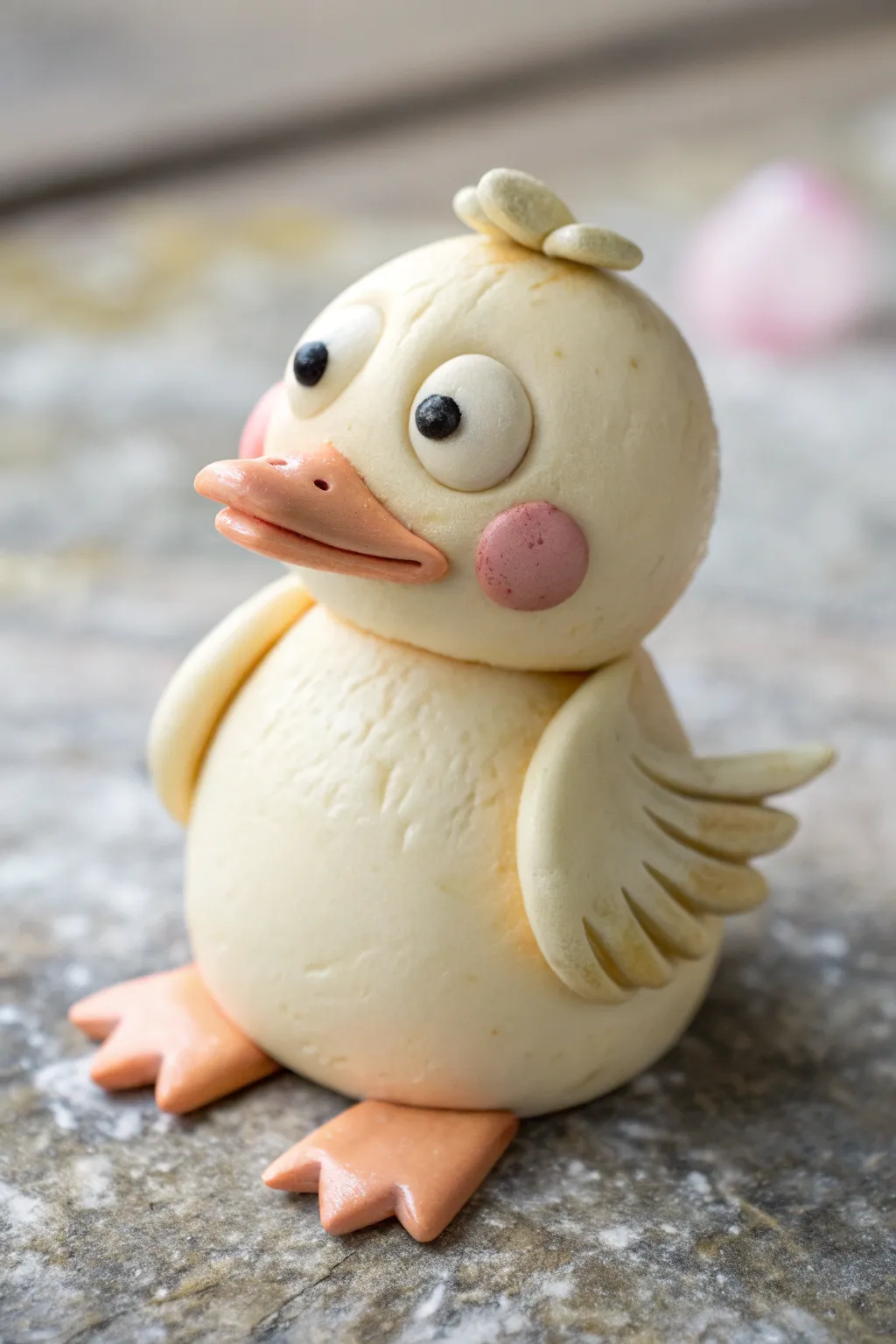
This lovable, wide-eyed duck figurine is full of character, featuring a slightly texture-finished body and a comical expression. This project is perfect for beginners looking to practice simple shapes and detailed facial features in polymer clay.
Step-by-Step Guide
Materials
- Polymer clay in pale yellow (or cream), orange, pink, black, and white
- Ball stylus tools (large and small)
- Clay sculpting tool (needle or knife)
- Small stiff-bristled brush or toothbrush (for texturing)
- Smooth work surface
- Oven (for baking)
Step 1: Body & Head Basics
-
Form the Body:
Start by conditioning a large chunk of pale yellow clay. Roll it into a smooth ball, then gently taper the top just slightly to create a very fat teardrop shape. This will be the duck’s seated body. -
Texture the Body:
Before attaching anything else, gently tap the surface of the body with a stiff-bristled brush or clean toothbrush. This creates a subtle ‘feathery’ texture rather than a perfectly smooth plastic look. -
Create the Head:
Roll a second, slightly smaller ball of the same pale yellow clay for the head. Flatten the bottom slightly so it sits securely on the body. -
Attach the Head:
Press the head firmly onto the thinner top of the body piece. You can insert a small piece of toothpick or wire between them for extra stability if desired.
Head Keep Rolling Off?
If the round head won’t stay put on the round body, cut a short piece of toothpick or creating a wire armature to insert between the two pieces for an invisible internal spine.
Step 2: Face & Details
-
Make the Eye Sockets:
Using a large ball stylus, press two shallow divots into the front of the face where you want the eyes to go. Placing them slightly far apart adds to the ‘derpy’ look. -
Form the Eyes:
Roll two small balls of white clay. Press them into the sockets you created. They should bulge out slightly. -
Add Pupils:
Roll tiny specks of black clay and press them onto the white eyeballs. Placing the pupils slightly off-center or mismatched sizes really sells the funny expression. -
Sculpt the Beak:
Takes a piece of orange clay and shape it into a flattened oval. Use a knife tool to slice horizontally into the front edge to create the mouth opening. -
Detail the Beak:
Use a needle tool or small stylus to poke two tiny nostrils on the upper part of the beak. Gently press the beak onto the face, just below the eyes. -
Add Cheeks:
Flatten two small discs of pink clay. Press these onto the cheeks right next to the beak for a cute blush effect. I like to texture these slightly with the brush as well to blend them in. -
Top Feathers:
Create a tiny tuft of hair by shaping three small teardrops of yellow clay and pressing them onto the very top of the head.
Clean Clay Tip
White and yellow clay pick up dust easily. Keep a scrap piece of ‘garbage clay’ nearby and roll it in your hands before handling light colors to pull dust off your fingers.
Step 3: Limbs & Finish
-
Shape the Wings:
Form two teardrops of yellow clay for the wings. Flatten them gently, then use a knife tool or sculpting tool to cut three or four notches into the wider end to resemble flight feathers. -
Attach Wings:
Press the wings onto the sides of the body. Angle them slightly outward or upward as if the duck is flapping specifically to show off the feather detail. -
Create the Feet:
Take orange clay and form two triangles. Flatten them and cut two notches in the wide end of each to create webbed toes. -
Attach Feet:
Place the feet under the front of the body, positioning them so the toes stick out clearly. Press the body down gently to secure the bond. -
Final Texture Check:
Look over the figurine and re-apply texture with your brush to any areas that got smoothed out while handling, particularly on the wings and head. -
Bake:
Bake the figurine according to your specific polymer clay manufacturer’s instructions (usually around 275°F/135°C for 15-30 minutes per 1/4 inch thickness).
Now you have a hilariously cute desk companion that is sure to bring a smile to anyone who sees it

What Really Happens Inside the Kiln
Learn how time and temperature work together inside the kiln to transform clay into durable ceramic.
Wide-Eyed Shark With Tiny Bottle
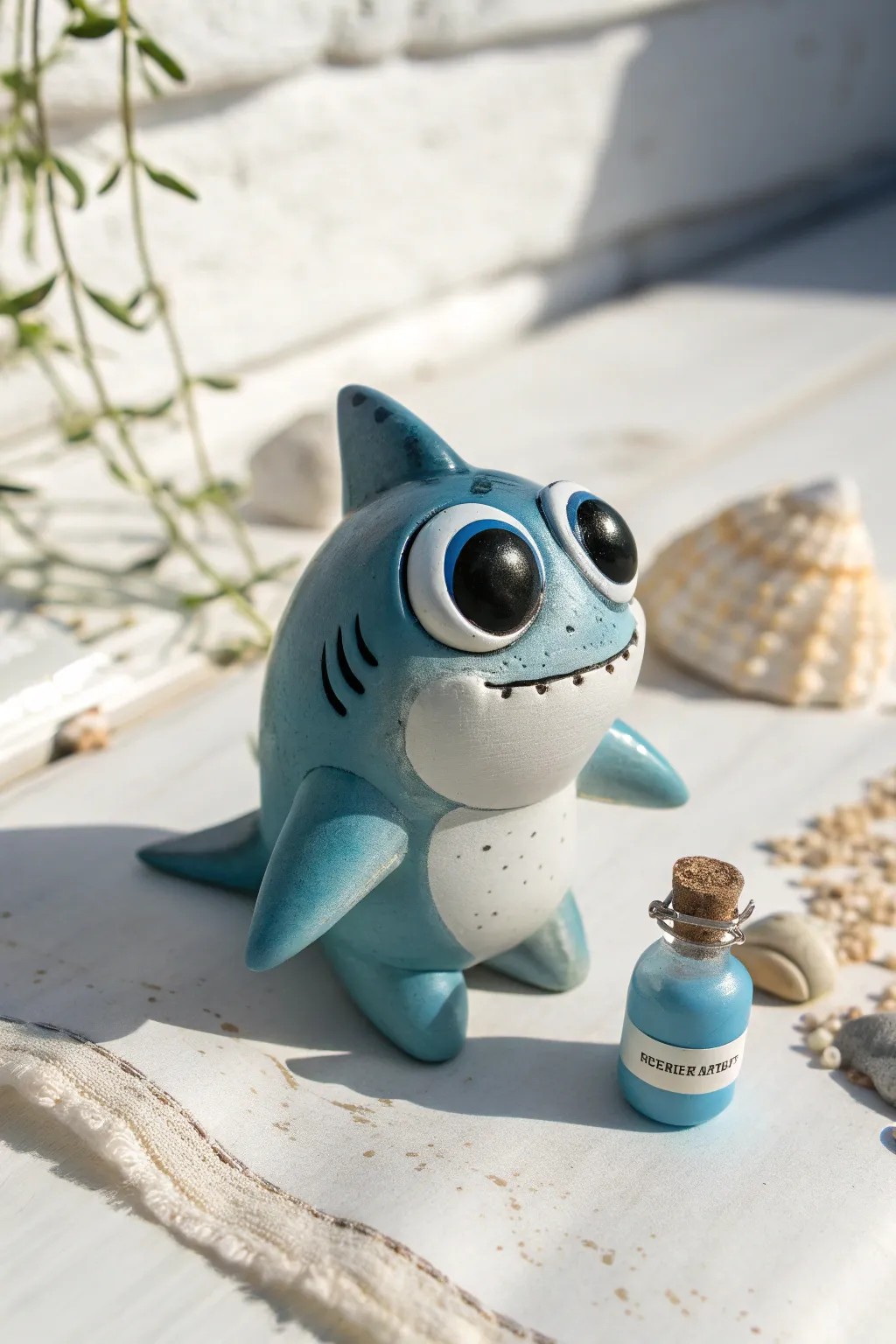
Sculpt a delightfully chubby shark with oversized, expressive eyes and a matching miniature ocean potion. The matte finish and soft shading give this little sea creature a charming, hand-painted ceramic feel perfect for beachside decor.
How-To Guide
Materials
- Polymer clay (Blue, White, Black)
- Small glass bottle with cork
- Silver wire
- Blue glitter or pigment powder
- Tiny printed label (optional)
- Needle tool
- Ball stylus tool
- Soft pastels (dark blue, black)
- UV resin or gloss glaze
- Baking sheet and oven
- Acrylic paint (black, white)
- Brush (fine liner)
Step 1: Shaping the Shark Base
-
Form the Body:
Start by conditioning a large ball of blue clay. Roll it into a smooth egg shape, slightly flattened at the bottom so it can stand upright on its own. -
Flatten the Belly:
Take a portion of white clay and roll it into a thin sheet or a flattened oval. Gently press this onto the front of the blue body, smoothing the edges with your finger to merge the seams seamlessly. -
Add the Legs:
Roll two small sausages of blue clay. Attach them to the bottom front of the body as little stubby feet, blending the clay upwards into the body so only the cute rounded ends stick out. -
Create Fins:
Shape two flattened teardrops for the pectoral fins. Attach them to the sides of the body, angling them slightly downwards and backwards. -
The Dorsal Fin:
Form a classic triangular shark fin shape. Carefully place it on the center of the back. I find using a little liquid clay here helps ensure a strong bond during baking. -
Tail Fin:
Make a flat, curved tail piece. Attach it to the lower back of the sharks body, blending the connection point so it looks like a natural extension of the spine.
Fixing Fingerprints
Is your shark looking smudgy? Before baking, lightly brush the raw clay with a little baby oil or cornstarch. This smooths out fingerprints instantly.
Step 2: Facial Features
-
Indent Eye Sockets:
Using a large ball tool or your thumb, press two dangerously large indents into the upper front of the head to prepare for those massive eyes. -
Place the Whites:
Roll two large balls of white clay and press them firmly into the sockets. They should bulge out significantly to achieve that cartoony look. -
Add Irises and Pupils:
Place large flat circles of blue clay onto the white eyeballs, followed by slightly smaller black circles for the pupils. Position them so the shark looks slightly upward. -
Add Highlights:
Press a tiny dot of white clay into the upper right corner of each pupil. This ‘catchlight’ is crucial for bringing the character to life. -
Carve the Smile:
Use a needle tool to carve a wide, slightly wavy smile line across the face. Add tiny vertical ticks along the line to suggest teeth without making them scary. -
Create Gills:
On each side of the head, behind the smile line, press three curved indentations using the side of your needle tool to represent gills.
Pro Tip: Eye Shine
After baking, add a drop of UV resin or glossy polyurethane varnish ONLY to the eyes. The contrast between the matte body and glossy eyes makes it pop.
Step 3: Texturing and Shading
-
Add Freckles:
Using a needle tool, gently poke random tiny holes across the white belly area and the nose to create a speckled texture. -
Preshade with Pastels:
Keep the clay raw for this step. Dust a soft brush with scraped dark blue pastel powder and gently shade the tips of the fins and the top of the head for depth. -
Bake the Shark:
Place your shark on a baking sheet and bake according to your clay package instructions (usually 275°F/130°C for 15-30 minutes). Let it cool completely.
Step 4: Finishing and Bottle
-
Paint Details:
Once cool, use diluted black acrylic paint to wash over the carved smile and gills, then wipe away the excess surface paint so the dark color stays only in the crevices. -
Fill the Bottle:
Mix a tiny amount of UV resin with blue pigment or ultra-fine glitter. Pour this into your miniature glass bottle until it’s about two-thirds full. -
Cure the Potion:
Insert the cork. If you want the cork permanently sealed, wipe a little resin on the rim before closing, then cure the bottle under a UV lamp. -
Wire Wrap:
Twist a thin piece of silver wire around the neck of the bottle to secure the cork visually. -
Label Application:
Cut a tiny strip of paper, write a word like ‘OCEAN’ or ‘WATER’ (or print a tiny label), and glue it to the front of the bottle.
Display your new little ocean guardian alongside some seashells for the perfect shore-inspired vignette
Loafing Cat With Blank Stare
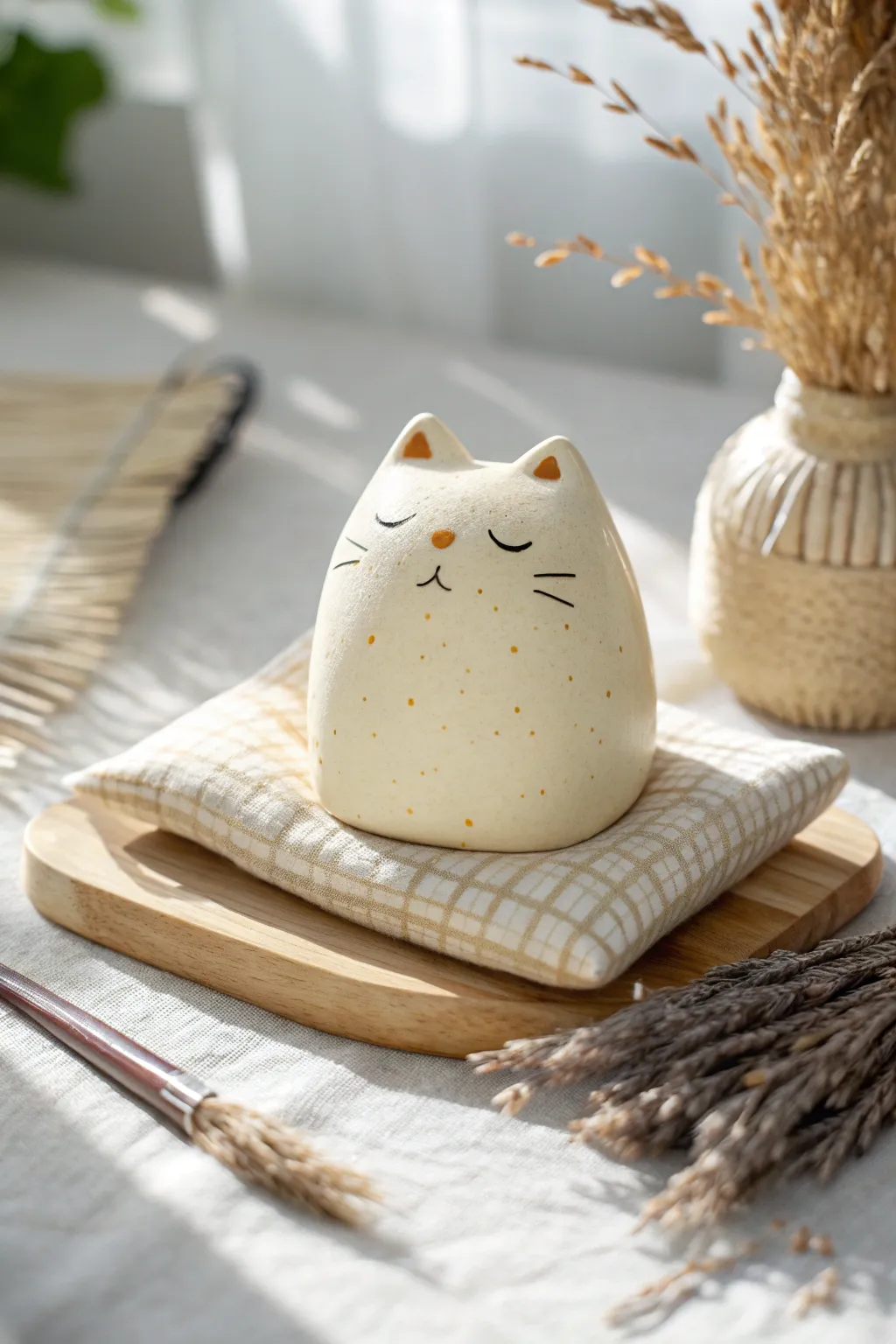
This charmingly rotund figurine mimics the cozy “loaf” position cats famously adopt, complete with a soothing cream finish and delicate speckles. Its minimalist face and smooth, stone-like texture make it look like expensive pottery, but it is surprisingly simple to sculpt at home.
Detailed Instructions
Materials
- White or beige polymer clay (approx. 2 oz)
- Translucent polymer clay (small amount)
- Brown acrylic paint
- Burnt orange or amber acrylic paint
- Fine detail paintbrush (00 or smaller)
- Old toothbrush or stiff bristle brush
- Ball stylus tool
- Needle tool
- Satin or matte water-based varnish
- Rubbing alcohol
- Sandpaper (400 and 1000 grit)
Step 1: Shaping the Base
-
Mix the perfect stone color:
Start by conditioning your white or beige clay. To get that natural, slightly translucent ceramic look, I like to mix one part translucent clay with three parts opaque beige or white. Knead until fully uniform. -
Form the main body:
Roll your clay into a smooth ball about the size of a tangerine. Once smooth, gently taper the top half slightly to create a very subtle pear shape. This will be the cat’s body and head. -
Flatten the base:
Tap the bottom of your shape firmly onto your work surface to create a flat base. The figurine needs to sit solidly without wobbling. The shape should now look like a rounded gumdrop. -
Smooth the surface:
Use your thumb to smooth out any fingerprints. If the clay feels sticky, lightly dust your finger with cornstarch or use a drop of baby oil.
Step 2: Sculpting Ears & Details
-
Pinch the ears:
At the top of the tapered end, use your thumb and forefinger to gently pinch up two small triangles for ears. They should emerge organically from the head shape, not look stuck on. -
Define the ear shape:
Refine the triangles so they are rounded at the tips. Keep them relatively small and wide-set to enhance the chubby, cute aesthetic. -
Indent the ears:
Take your ball stylus tool and press gently into the front of each ear triangle to create the inner ear depression. Smooth the edges of this indentation with your finger. -
Refining the silhouette:
Look at the cat from all angles. It should be a continuous smooth curve from the base to the ears. Gently rub firmly with a little bit of rubbing alcohol on your finger to melt away any final imperfections.
Uneven Speckles?
If your paint ‘spatters’ represent big blobs rather than mist, your paint is too thick. Add more water to the mix and test-flick onto a piece of paper before hitting the clay.
Step 3: Baking and Finishing Surface
-
Bake the clay:
Preheat your oven according to the manufacturer’s instructions for your specific brand of clay. Place the cat on a piece of cardstock or a ceramic tile and bake for the recommended time (usually 30 minutes per 1/4 inch of thickness). -
Cool and sand:
Let the piece cool completely. For that authentic ceramic feel, wet sand the surface using 400 grit sandpaper first to remove any lint, then 1000 grit to make it buttery smooth. Rinse and dry.
Pro Tip: Weighted Base
Before sealing the bottom, hollow it out slightly with a tool and glue in a washer or penny after baking. This gives the figurine a satisfying weight that feels like real ceramic.
Step 4: Painting the Features
-
Create the speckles:
Dilute a tiny drop of brown paint with water until it’s very runny. Dip an old toothbrush into it, wipe off the excess on a paper towel, and flick the bristles with your thumb to mist tiny speckles onto the cat’s lower half. -
Paint the nose:
Using the burnt orange paint and a small dotting tool or the back of your brush, place a small oval horizontally in the upper-middle section of the face for the nose. -
Add inner ear color:
Paint the inside indentation of the ears with the same burnt orange color. Keep the edges neat. -
Draw the eyes:
Using your finest brush and brown paint (not black, which can look too harsh), paint two gentle downward curves for sleeping eyes. Ensure they are symmetrical and aligned with the nose. -
Add the mouth and whiskers:
Paint a tiny inverted ‘Y’ shape directly under the nose for the mouth. Finally, add two floating horizontal whiskers on each cheek area. -
Seal the piece:
Once the paint is absolutely dry, apply a coat of satin or matte varnish. Avoid glossy finishes if you want to maintain the natural pottery look.
Place your little zen cat on a shelf or desk where its peaceful expression can bring a moment of calm to your day

The Complete Guide to Pottery Troubleshooting
Uncover the most common ceramic mistakes—from cracking clay to failed glazes—and learn how to fix them fast.
Gaping-Mouth Toothbrush Monster
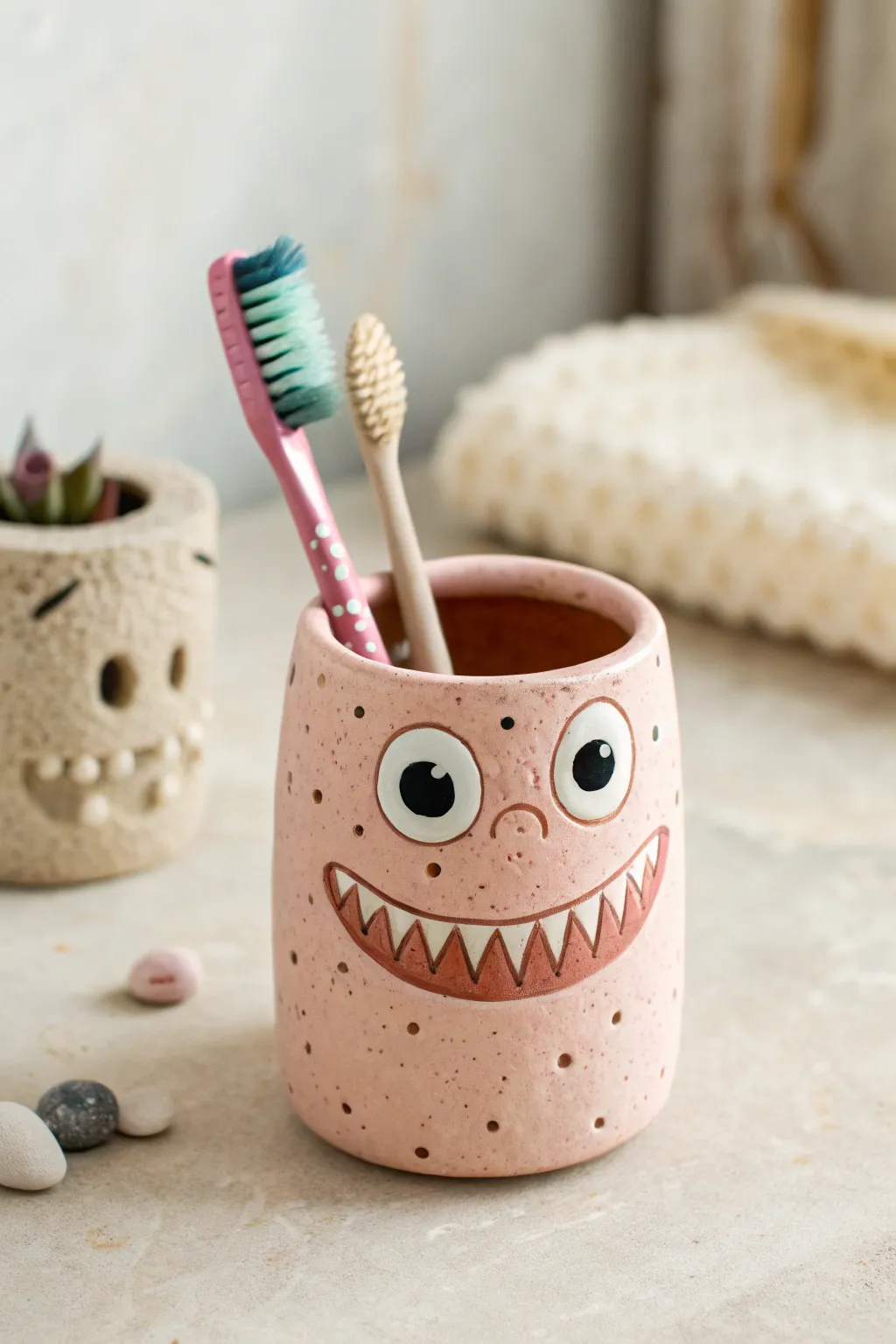
Transform your bathroom counter with this charmingly goofy toothbrush holder that keeps dental hygiene fun. This project features a speckled pink monster with wide, startled eyes and a jagged toothy grin, perfect for guarding your brushes.
Step-by-Step
Materials
- Pink polymer clay
- White polymer clay
- Black polymer clay
- Dark brown or terracotta polymer clay
- Granite or speckled effect clay (or coarse black pepper/sand)
- Wide glass jar or metal tin (heat-safe, to use as a form)
- Acrylic rolling pin
- Needle tool
- Small ball stylus tool
- Blade or craft knife
- Round cutters (small and medium)
- Sandpaper (optional)
- Oven
Step 1: Preparing the Speckled Base
-
Condition the base clay:
Start by conditioning a large block of pink polymer clay until it is soft and malleable. To achieve the speckled look seen in the photo, I like to mix in a small amount of granite-effect clay or even knead in some course black pepper or sand. -
Create a slab:
Roll the conditioned pink clay out into a long, even rectangular sheet. Aim for a thickness of about 1/4 inch (6mm) to ensure the holder is sturdy enough to stand on its own. -
Measure the circumference:
Take your heat-safe glass jar or metal tin—this will act as the internal form. Wrap the clay sheet around it to measure the length needed, marking where the edges meet with a slight overlap. -
Trim to size:
Using your blade, cut the clay rectangle to the marked size. Ensure the top and bottom edges are perfectly straight and parallel.
Pro Tip: Seamless Texture
Mix black pepper or dried used coffee grounds into your pink clay before rolling. This creates an authentic speckle that runs through the clay, not just on the surface.
Step 2: Building the Cylinder
-
Wrap the form:
Carefully wrap the clay sheet around your jar or tin. Press the vertical seam together firmly. You can blend the seam away with your thumb or a clay tool until it’s invisible. -
Create the bottom:
Roll out a separate piece of pink clay for the base. Place your wrapped cylinder on top of it and cut around the perimeter. Press the edges of the base into the cylinder walls to seal the bottom completely. -
Round the rim:
Smooth the top rim of the cylinder with your finger, slightly rounding the edges so they look soft like heavy ceramic rather than sharp cut clay.
Troubleshooting: Stuck Jar
If the clay is stuck to your glass form after baking, place the whole piece in the freezer for 10 minutes. The glass will contract slightly more than the clay, popping it loose.
Step 3: Sculpting the Face
-
Add texture dots:
Use a medium-sized ball stylus or the end of a paintbrush to gently press random indentations all over the surface. If you want darker spots, fill these tiny divots with minuscule specks of black clay and smooth them flat. -
Cut the mouth shape:
Roll out a thin sheet of dark brown or terracotta clay. Cut a wide, crescent-moon shape for the mouth. Press this firmly onto the lower half of the cylinder. -
Add the teeth:
Roll a very thin snake of white clay. Cut small triangles from it or shape tiny cones. Press these onto the brown mouth piece, arranging them along the top and bottom edges to create a jagged, zipper-like grin. -
Make the eyes:
Use a medium round cutter to punch two circles from white clay. Place them high on the cylinder, spacing them fairly wide apart for that distinct goofy look. -
Add pupils:
Roll two small balls of black clay, flatten them slightly, and press them onto the white eye circles. Place them slightly cross-eyed or looking in different directions to add character. -
Sculpt the nose:
Roll a tiny snake of the pink base clay and curve it into a small ‘U’ shape. Press this between the eyes and the mouth to form a simple nose.
Step 4: Finishing Touches
-
Detail the mouth:
Roll a very thin snake of the brown clay used for the mouth. Outline the entire mouth shape with it to give the lips a slight raised border, enhancing the cartoonish style. -
Final smoothing:
Gently go over the entire piece with your finger (dampened lightly with water or baby oil) to remove any fingerprints. -
Bake:
Bake the project according to your clay manufacturer’s instructions, keeping the jar inside to support the shape. Let it cool completely inside the oven to prevent cracking. -
Remove the form:
Once fully cooled, carefully slide the glass jar or tin out. If it sticks, run a thin blade carefully between the clay and the glass.
Now you have a monstrously cute companion ready to brighten up your morning routine
Grumpy Desk Frog Calendar Buddy
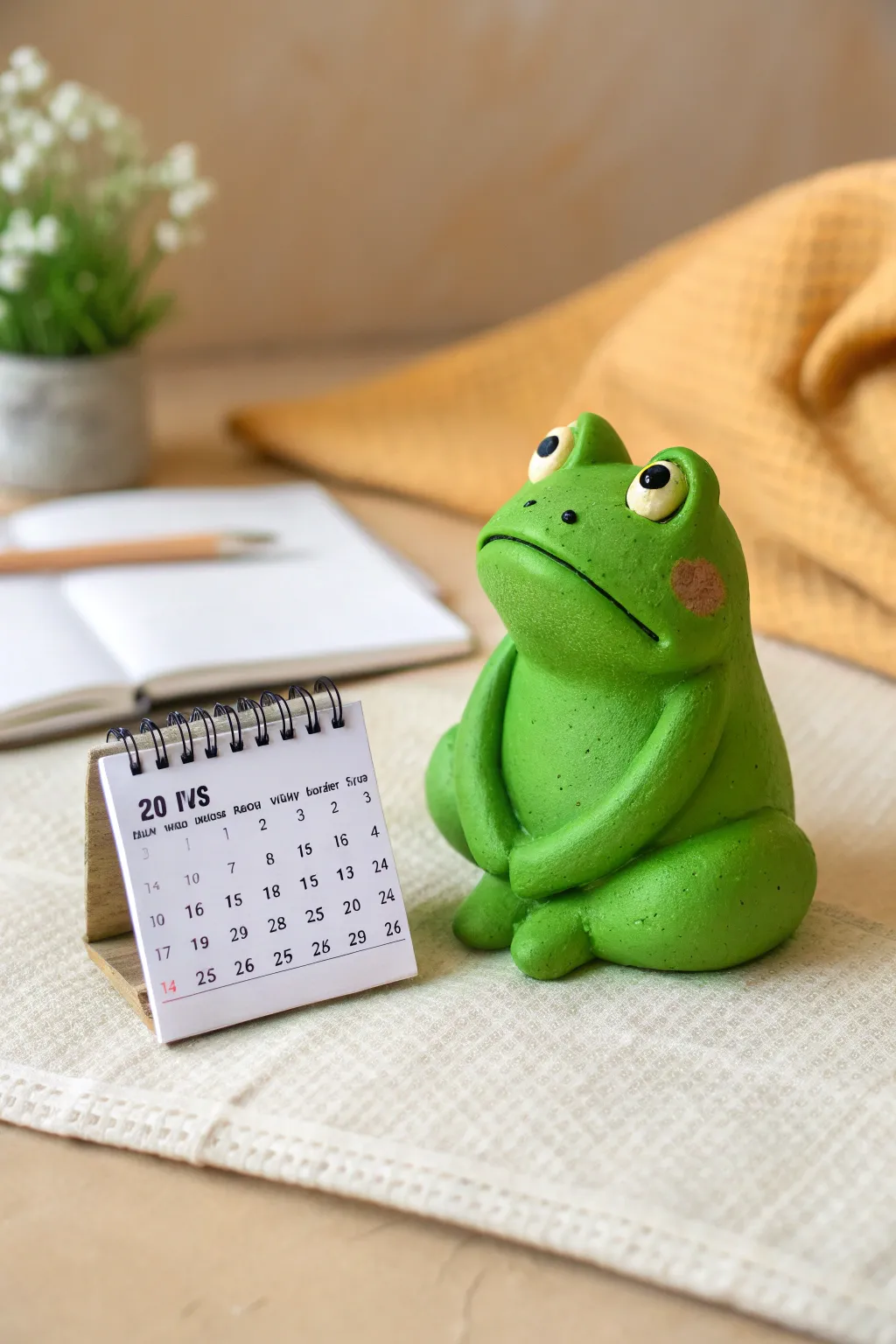
Add a touch of whimsical judgement to your workspace with this adorable, slightly disgruntled frog figurine. Sculpted from polymer clay with a distinctively textured matte finish, this little buddy is perfect for guarding your schedule.
Step-by-Step Guide
Materials
- Polymer clay (Leaf Green, White, Black, Beige/Tan)
- Aluminum foil
- Sculpting tools (needle tool, ball stylus, rubber shaper)
- Dark green soft pastels or acrylic paint (for shading)
- Small paintbrush
- Toothbrush or stiff bristle brush (for texture)
- Oven for baking
Step 1: Forming the Base
-
Create the core:
Crumple a piece of aluminum foil into a teardrop shape about roughly 2.5 inches tall. This saves clay and makes the sculpture lighter. -
Cover the core:
Condition a large block of leaf green polymer clay until soft. Roll it into a sheet about 1/4 inch thick and wrap it completely around your foil core, smoothing out any seams with your thumbs. -
Shape the body:
Mold the clay-covered form so it’s wider at the bottom (the belly) and slightly tapered at the top (the head). The frog should look like a pear sitting on its wide end. -
Define the head:
Using a rubber shaping tool or your thumb, gently press an indentation about two-thirds of the way down the form to distinguish the head area from the body, keeping the transition smooth and organic.
Slumping Sadness?
If the clay gets too soft and the frog starts to slump while sculpting, pop it in the fridge for 10 minutes to firm it up before continuing the details.
Step 2: Sculpting the Legs
-
Make the back legs:
Roll two large balls of green clay into thick logs. Flatten them slightly and attach them to the sides of the lower body, blending the upper edges seamlessly into the torso while leaving the rounded ‘knees’ distinct. -
Form the feet:
At the bottom of each leg, shape simple rounded stumps for feet. This style is minimalist, so no need for detailed toes. -
Create the arms:
Roll two thinner logs of green clay for the front arms. Attach them starting from the ‘shoulder’ area, curving them down to rest naturally on the belly. -
Position the hands:
Overlap the ends of the arms (the hands) slightly in the center of the belly. Press them gently so they look like they are folded in a waiting posture.
Step 3: Facial Features
-
Sculpt eye sockets:
I like to use a large ball tool to press two significant indentations on top of the head where the eyes will go. Push the clay up slightly around the rim to create eyelids. -
Insert the eyes:
Roll two balls of white clay and place them into the sockets. They should protrude quite a bit to give that classic froggy look. -
Add the pupils:
Take two tiny specs of black clay and press them onto the white eyeballs. Place them slightly off-center or looking upward to enhance the goofy expression. -
Carve the mouth:
Use a needle tool or a thin blade to cut a wide, downward-curving line for the mouth. This deep frown is crucial for the ‘grumpy’ personality. -
Add nostrils:
Poke two small holes above the mouth mouth with a small ball tool for the nostrils. -
Apply the cheek patch:
Take a very small piece of beige or tan clay, flatten it into a rough circle, and press it onto the cheek area. Texture it by stippling with a stiff brush.
Accessorize
Make a tiny polymer clay tie or a miniature coffee mug to sit next to him for the ultimate disgruntled office worker vibe.
Step 4: Texturing and Finishing
-
Add skin texture:
To get that stone-like or matte skin effect, gently tap the entire surface of the green clay with a clean toothbrush or a crumpled ball of aluminum foil. Be careful not to smash your sculpted details. -
Shade the crevices:
Use a dry brush to dust a little dark green soft pastel powder or acrylic paint into the creases where the legs meet the body and under the mouth for depth. -
Bake the frog:
Bake the figurine according to your specific brand of clay’s instructions (usually around 275°F/130°C for 15-30 minutes). -
Optional matte varnish:
Once cool, you can leave it natural or apply a matte varnish if you want extra protection without adding shine.
Set him next to your mini calendar and let him handle all the scheduling stress for you

TRACK YOUR CERAMIC JOURNEY
Capture glaze tests, firing details, and creative progress—all in one simple printable. Make your projects easier to repeat and improve.
Snoring Incense Creature
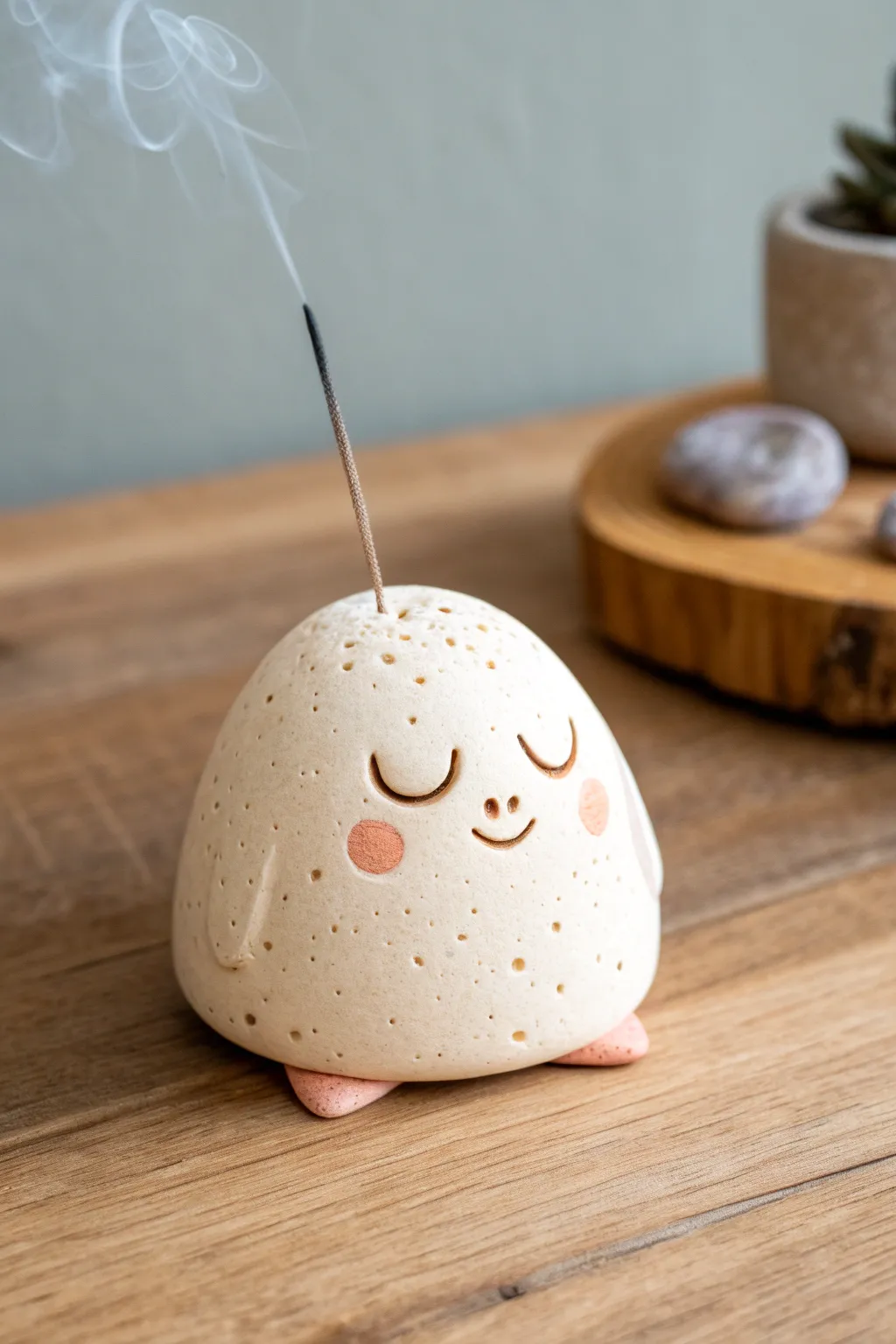
This adorable, round incense holder isn’t just a functional piece; it’s a calm companion for your relaxation rituals. With its speckled texture and serene expression, this little creature appears to be gently snoring away as the incense smoke drifts upward.
How-To Guide
Materials
- White or beige polymer clay (approx. 2-3 blocks)
- Speckled clay inclusions (ground black pepper or scrap clay grit)
- Pink polymer clay (small amount for feet and cheeks)
- Needle tool or toothpick
- Ball stylus tool
- Aluminum foil
- Acrylic roller
- Incense stick (for sizing)
- Oven
- Sanding sponge (optional)
Step 1: Prepping the Base Body
-
Create the core:
Crumple a piece of aluminum foil into a tight ball, slightly larger than a golf ball. This core saves clay and ensures the piece isn’t too heavy. -
Mix the clay:
Condition your white or beige clay until soft. To achieve that organic, speckled stone look, knead in a pinch of ground black pepper or tiny grit made from baked black clay scraps. -
Flatten a sheet:
Roll out a thick sheet of your speckled clay, roughly 1/4 inch thick. Make sure it’s wide enough to wrap fully around your foil ball. -
Cover the core:
Place the foil ball in the center of the clay sheet and wrap the clay upwards. Gently smooth the seams together until the foil is completely hidden and you have a seamless, egg-shaped mound. -
Refine the shape:
Roll the ball gently on your work surface or between your palms to create a smooth, domed shape that tapers slightly at the top, like a very round egg.
Stone Effect Tip
Mix different colors of sand or embossing powder into the clay for a coarser, more realistic stone texture that hides fingerprints well.
Step 2: Adding Personality Details
-
Create the face:
Identify the front of your creature. Use a needle tool to gently carve two ‘U’ shapes for the sleepy eyes. Press lightly to ensure clean lines without dragging the clay. -
Sculpt the nose and mouth:
Use a small ball stylus to press two tiny nostrils between the eyes. Below that, carve a gentle, upward-curving smile. -
Add blush:
Take two tiny balls of pink clay and flatten them into thin disks. Press these onto the creature’s cheeks, right next to the smile. Smooth the edges so they merge flush with the main body. -
Make the feet:
Form two small triangles or gumdrop shapes from the remaining pink clay. Place the body on top of these feet, positioning them slightly apart so the creature sits stably. -
Add arms:
Roll two small snakes of the speckled body clay. Attach them to the sides of the body as little arms, blending the top edge into the body but leaving the bottom slightly raised for dimension.
Make it Hollow
For cone incense, skip the foil core! Build a hollow dome over a glass bulb, bake, remove the glass, and place the dome over a burning cone.
Step 3: Functional Finishing Touches
-
Texture the surface:
Using your needle tool, poke random, shallow holes all over the body. Vary the spacing to mimic natural porous stone or a sea sponge texture. -
Make the incense hole:
Poke a hole straight down into the very top center of the head. Use an actual incense stick to check the size—wiggle it slightly so the fit isn’t too tight, as clay can shrink slightly during baking. -
Final smooth:
Give the surface one last check for fingerprints. Because this piece is meant to look like stone, I usually lightly tap the surface with a toothbrush to remove any unnatural shine. -
Bake:
Bake the piece according to the directions on your specific brand of polymer clay (usually 275°F or 135°C for 15-30 minutes). Let it cool completely inside the oven to prevent cracking. -
Post-bake finish:
Once cool, check that the bottom is flat. If it wobbles, you can gently sand the bottom of the pink feet with fine-grit sandpaper until it sits perfectly still.
Now light a stick of your favorite scent and watch your peaceful little friend drift off to sleep
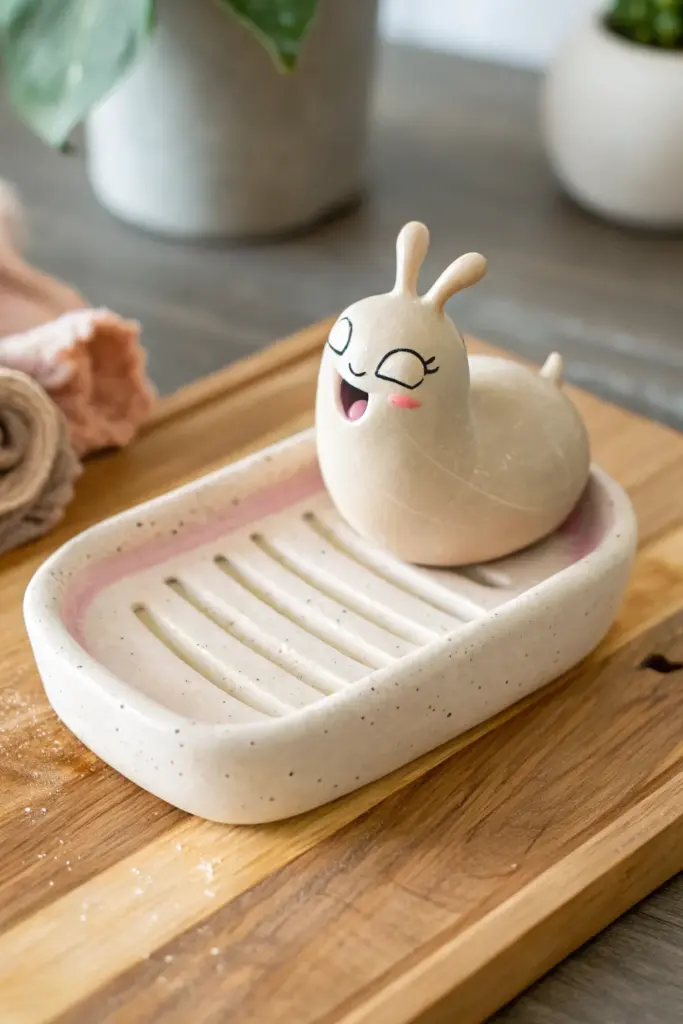
Screaming Soap Dish Slug
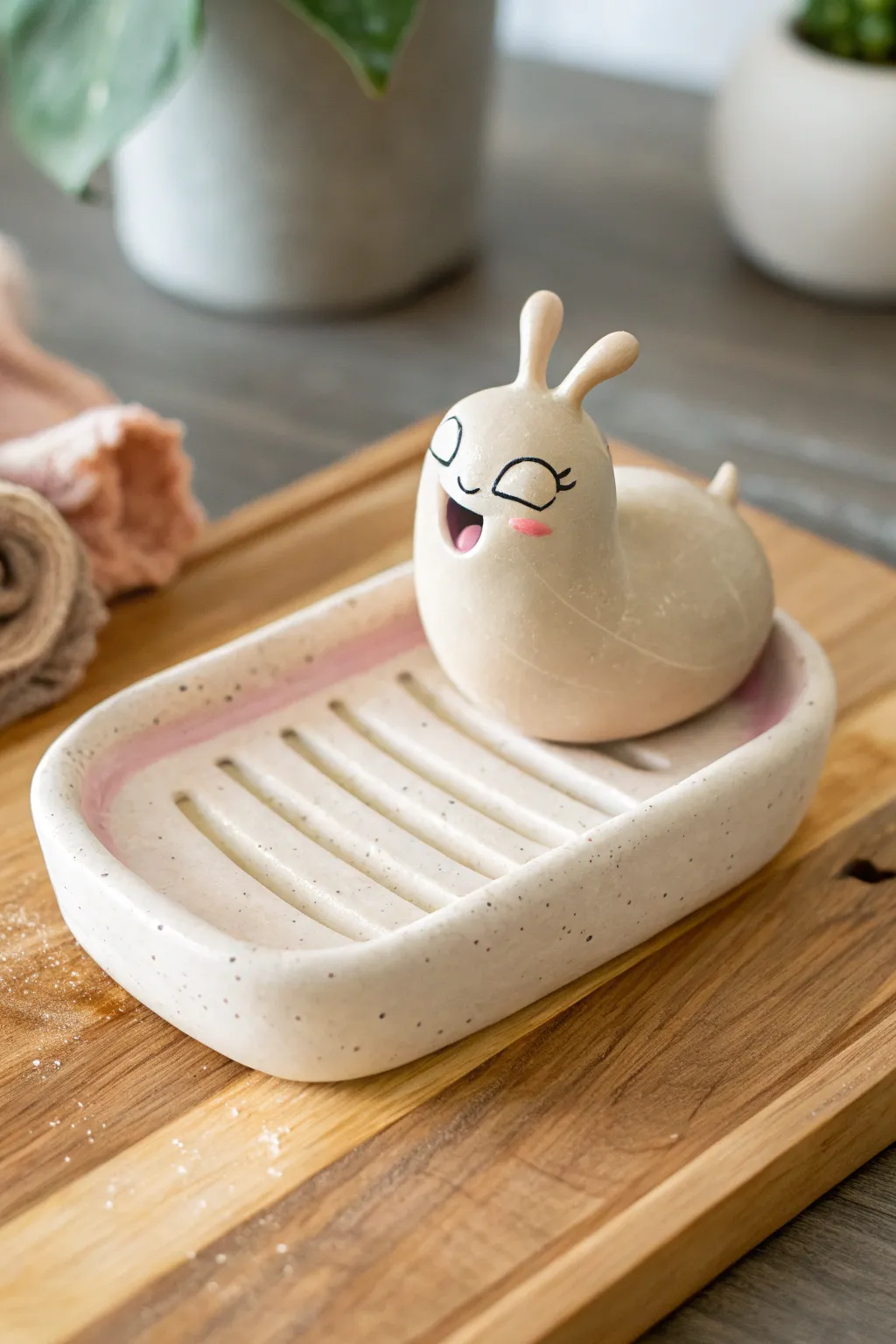
Add some whimsical panic to your bathroom sink with this adorable, slug-themed soap dish. With its charming speckled finish and expressive face, this two-part project combines practical function with a good laugh.
Detailed Instructions
Materials
- Polymer clay (white or beige)
- Speckled clay (or black pepper/sand for DIY speckles)
- Pink acrylic paint or soft pastel shavings
- Rolling pin or pasta machine
- Clay carving tools or a knife
- Small round cutter or straw
- Liquid clay (TLS)
- Black acrylic paint
- Fine detail paintbrush
- Gloss glaze or varnish
- Oven
Step 1: Creating the Soap Dish Base
-
Prepare the Clay:
Start by conditioning your beige or off-white clay until it’s soft and pliable. If you want that realistic ceramic stoneware look seen in the photo, mix in a tiny pinch of black pepper or black embossing powder to create subtle speckles. -
Shape the Main Slab:
Roll the clay out into a thick slab, approximately 1/4 inch thick. Cut this into a rounded rectangle shape, about 3 inches wide by 5 inches long, smoothing the edges with your finger so they aren’t sharp. -
Form the Rim:
Roll a long snake of clay and flatten it slightly. Attach this strip around the perimeter of your base slab to create a raised wall. Use a modeling tool to blend the seams perfectly on the inside and outside so it looks like one solid piece. -
Add the Drainage Slots:
Using a thin blade or a clay knife, carefully cut parallel slots into the center of the dish. Do not cut all the way through the bottom; instead, carve slight grooves or indentations where the soap will sit to allow airflow. Alternatively, create a separate insert with actual holes if you prefer drainage. -
Tint the Interior:
Before baking, take a small amount of pink soft pastel shavings or watered-down pink acrylic and brush it gently along the inner corners of the dish rim. This creates that soft, blushed ceramic glaze effect.
Uneven Seams?
If you can see the line where you attached the slug to the dish, use a rubber-tipped sculpting tool dipped in a tiny bit of baby oil to smooth and erase the seam before baking.
Step 2: Sculpting the Screaming Slug
-
Form the Body:
Roll a ball of the same speckled clay and elongate it into a teardrop shape. The wider end will be the head and the tapered end the tail. Gently curve the body into a slight ‘U’ shape so it looks like it’s inching along. -
Position on the Dish:
Test the fit by placing the slug body on the rim of your unbaked dish. I like to score the bottom of the slug and the rim surface, adding a dab of liquid clay to ensure a permanent bond. -
Make the Antennae:
Roll two small, thin logs of clay. Round off the tops and attach them to the top of the head. Smooth the join downward so they stand up perkily but feel secure. -
Sculpt the Tail Nub:
Add a tiny, pointed cone of clay to the rear of the slug’s body for a little tail detail, blending the clay smoothly into the main form. -
Create the Open Mouth:
Use a small ball tool or a rounded tool handle to press a deep, oval indentation into the face area. This will be the screaming mouth. The deeper the hole, the more dramatic the expression. -
Add the Tongue:
Take a tiny bit of pink clay (or paint it later) and form a small, flat tongue. Press this inside the bottom of the mouth cavity.
Make It Functional
To make the drainage actual functional, cut the slots all the way through the base slab and place the finished dish on a separate saucer to catch drips.
Step 3: Finishing and Details
-
Bake the Project:
Place your assembled dish and slug on a ceramic tile or baking sheet. Bake according to your specific clay brand’s instructions (usually 275°F/135°C for 15-30 minutes). -
Cool Down:
Let the piece cool completely inside the oven or on a wire rack. Don’t touch it while hot, as the clay is still fragile. -
Paint the Face:
Using a very fine detail brush and black acrylic paint, carefully outline the large, oval eyes and add the pupils. Paint the interior of the mouth black (around the tongue) to give it depth. -
Add Cheek Blush:
Dab a tiny amount of pink paint on the slug’s cheeks, right under the eyes, to give it that flustered, embarrassed look. -
Seal the Piece:
Since this will hold wet soap, apply 2-3 coats of a waterproof gloss glaze, specifically designed for polymer clay or a polyurethane varnish. Pay extra attention to the soap grooves.
Place your favorite bar of soap on the grooves and enjoy the silent scream of your new bathroom buddy