
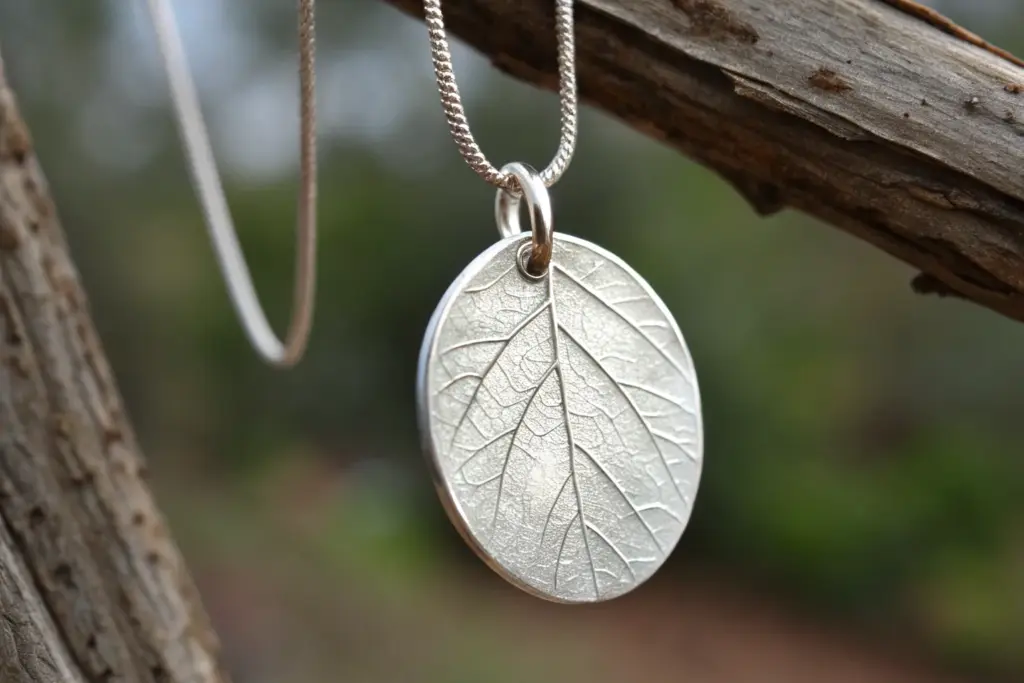
If you’ve been itching to turn silver clay into something you can wear on repeat, pendants are the sweetest place to start. Here are my favorite silver clay pendant ideas—starting with the classic botanical imprint look and drifting into more playful, “how did you make that?” territory.
Botanical Leaf Imprint Medallion
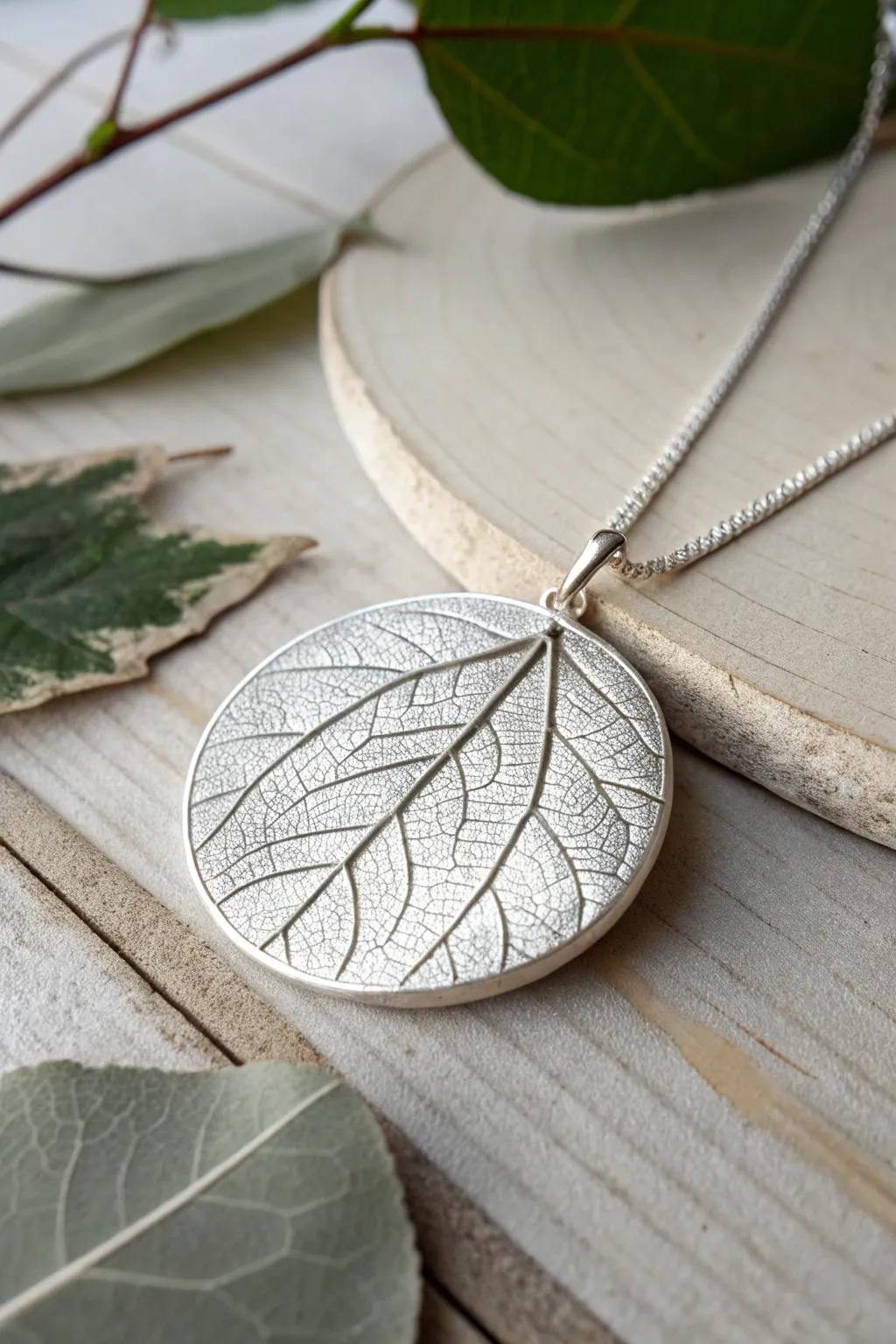
Capture the infinite complexity of nature in fine silver with this botanical medallion project. By pressing a real leaf into silver clay, you’ll create a stunningly detailed texture that contrasts beautifully with a polished, minimalist rim.
Detailed Instructions
Materials
- Silver Metal Clay (approx. 7g-10g)
- Fresh leaf with prominent veins (e.g., sage, hydrangea, or rose)
- Clay roller (acrylic or PVC)
- Playing cards or spacers (1.5mm and 1mm thick)
- Circle cutter
- Badger balm or olive oil (release agent)
- Small paintbrush and water
- Scalpel or clay knife
- Rubber shaping tool
- Kiln or butane torch
- Stainless steel brush
- Agate burnisher
- Silver jump ring
- Sterling silver chain
Step 1: Preparation & Imprinting
-
Prepare the workspace:
Begin by setting up a clean, non-stick work surface. Lightly coat your hands, roller, and work surface with a tiny amount of badger balm or olive oil to prevent sticking. -
Condition the clay:
Remove the silver clay from its package. Knead it briefly in your fingers just until it feels pliable and smooth, ensuring there are no cracks. -
Initial rolling:
Place the clay between two stacks of playing cards (about 4-5 cards thick roughly 1.5mm) to act as depth guides. Roll the clay out into an even slab. -
Select and prep the leaf:
Choose a leaf with a strong vein structure on the back. Apply a very thin layer of oil to the textured side of the leaf so it peels away easily later. -
Make the impression:
Place the leaf vein-side down onto the clay slab. Roll over the leaf firmly once with your roller to embed the veins deep into the clay. -
Remove the leaf:
Carefully lift the edge of the leaf and peel it away to reveal the intricate impression. If you missed a spot, ball up the clay and restart immediately before it dries.
Veins not showing?
If the veins are faint, your clay might be too dry or the leaf too flimsy. Use a ‘skeletonized’ leaf or a thicker variety like sage for deeper textures.
Step 2: Unconfirmed Shaping & Refining
-
Cut the shape:
Position your circle cutter over the most interesting part of the leaf pattern. Press down firmly to cut the medallion shape, then lift away the excess clay. -
create the rim:
Roll a very thin snake of clay to create the raised edge. Paint a small amount of water along the circumference of your circle and gently lay the snake on top, following the curve. -
Blend the rim:
Using a rubber shaping tool and a damp brush, gently smooth the seam where the snake meets the base disc on the outside edge. The goal is to make it look like one solid piece while keeping the interior lip crisp. -
Re-moisten if needed:
If the clay starts to look chalky while you work, lightly brush it with water. I find covering the piece with cling film for a minute brings moisture back to the surface. -
Add the bail attachment:
Form a small U-shape or drill a hole near the top edge for the jump ring. Ensure there is enough clay thickness to support the weight of the pendant. -
Dry completely:
Allow the piece to dry for at least 24 hours, or place it on a mug warmer for 20-30 minutes until bone dry. -
Pre-fire refinement:
Once dry, use sanding pads to smooth the back and the outer edges of the rim. Use a very fine file to tidy up the bail area.
Add Patina
Apply liver of sulfur solution to the finished silver. It darkens the recesses, making the white silver veins pop dramatically against a dark background.
Step 3: Firing & Finishing
-
Fire the piece:
Place the dry piece on a firing brick. Fire with a butane torch (bringing it to a peachy glow for 2-3 minutes) or in a kiln according to your clay package instructions. -
Cool and brush:
After cooling, the silver will look white. Energetically brush the entire piece with a stainless steel brush to start bringing out the silver shine. -
Burnish for contrast:
Use an agate burnisher to rub the raised areas—specifically the rim and the high points of the leaf veins. This creates a brilliant shine that contrasts with the matte background. -
Final assembly:
Open a sterling silver jump ring using pliers, thread it through the bail loop, and attach your chosen chain.
Wear your botanical masterpiece with pride, knowing you’ve preserved a fleeting natural detail in solid silver
Fern Frond Oval Pendant
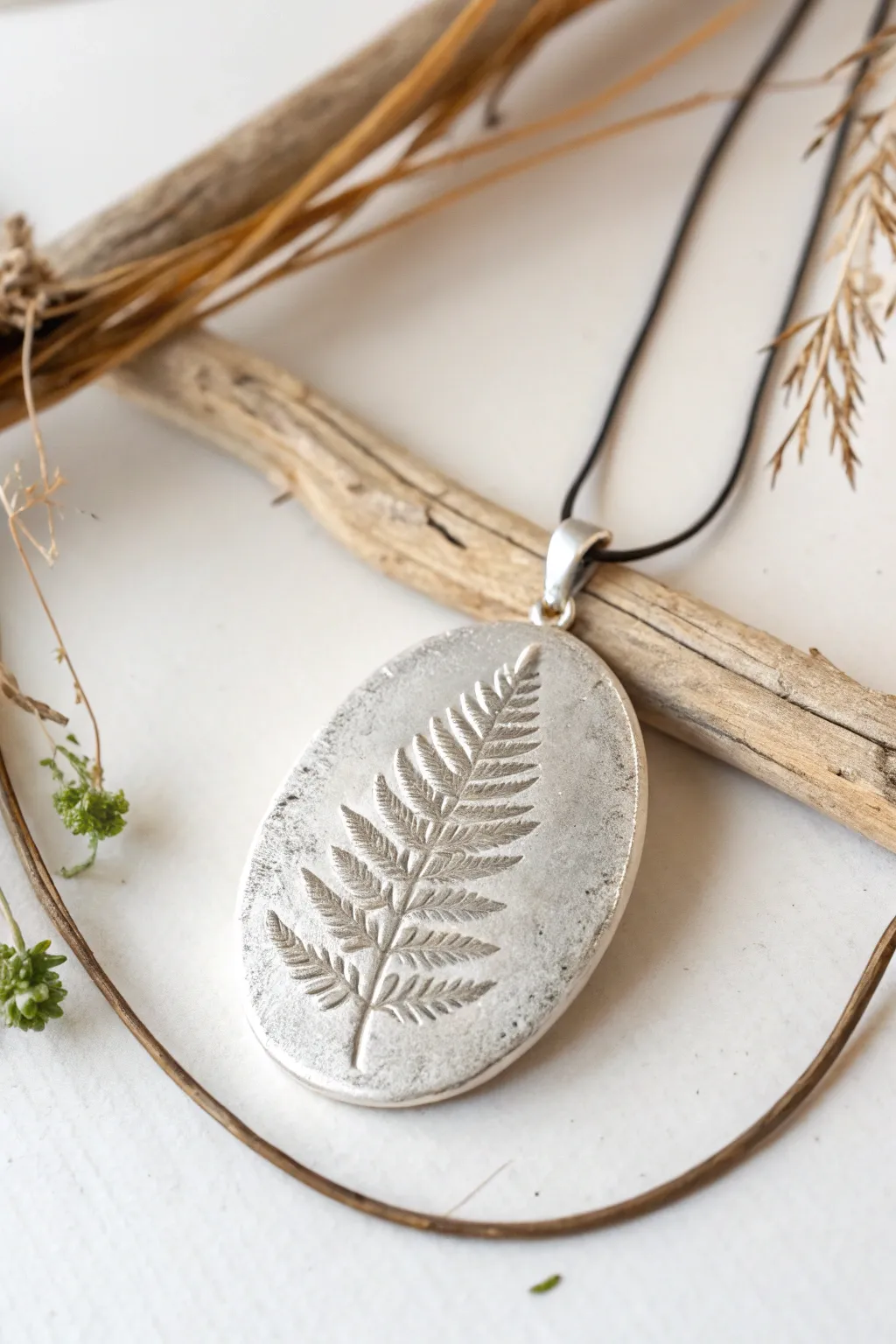
Capture the intricate beauty of nature with this elegant silver clay project that immortalizes a delicate fern frond. This oval pendant features a deep, detailed botanical impression set against a softly textured background for a timeless, organic look.
How-To Guide
Materials
- Silver metal clay (approx. 7-10g)
- Small fresh fern leaf (stiff variety works best)
- Oval cutter (medium size)
- Slat spacers or playing cards (1.5mm thick)
- Acrylic roller
- Badger balm or olive oil (release agent)
- Work surface (Teflon sheet or laminated card)
- Craft knife or needle tool
- Small paintbrush and water
- Sanding sponges (medium and fine grit)
- Butane torch or kiln
- Stainless steel wire brush
- Burnisher or agate tool
- Liver of sulfur (patina solution)
- Polishing cloth
- Sterling silver bail
- Jump ring (optional)
- Leather cord
Step 1: Preparation and Impression
-
Prepare the workspace:
Begin by setting up your non-stick work surface. Lightly coat your hands and the roller with a tiny amount of badger balm or olive oil to prevent the clay from sticking. -
Condition the clay:
Remove your silver clay from the package and knead it gently in your palms for a few moments until it feels pliable and crack-free. Don’t overwork it, as it dries quickly. -
Roll out the slab:
Place the clay on your work surface between two 1.5mm spacers. Roll the clay into a smooth, even slab that is slightly larger than your oval cutter. -
Position the fern:
Select a clean, dry section of your fern frond. Place it face down onto the clay slab. I find that turning the leaf over (vein side down) usually yields a sharper impression. -
Create the texture:
Gently roll over the leaf once with firm, even pressure. Do not roll back and forth, as this can create a double image or shift the leaf. -
Reveal the design:
Carefully lift the corner of the fern leaf with tweezers or a needle tool and peel it away from the clay to reveal the impression.
Pro Tip: Leaf Selection
Choose a fern that is slightly stiff rather than very soft new growth. Stiffer leaves press deeper into the clay and release easier without tearing, giving you a much crisper final mold.
Step 2: Shaping and Refining
-
Cut the shape:
Center your oval cutter over the most attractive part of the fern impression. Press down firmly to cut the shape, then remove the excess clay from around the outside. -
Attach the bail hardware:
If you are embedding a bail connector, insert it into the top edge of the damp clay now. Alternatively, use a straw or small cutter to create a hole for a jump ring near the top edge. -
Dry the piece:
Allow the clay to dry completely. You can use a dehydrator, a cup warmer, or let it air dry for 24 hours. The piece is ready when it feels hard and room temperature to the touch. -
Sand the edges:
Once bone dry, use the sanding sponges to smooth the outer rim of the oval. Round off any sharp edges created by the cutter, but be careful not to sand over the delicate fern texture. -
Clean up dust:
Use a large, soft dry brush to sweep away any clay dust from the sanding process, ensuring the intricate veins of the fern remain clear.
Step 3: Firing and Finishing
-
Fire the pendant:
Place the piece on a firing brick. If torch firing, heat evenly until the piece glows a peachy-orange color and hold that temperature for the time recommended by your clay manufacturer (usually 2-5 minutes). If kiln firing, follow the specific temperature schedule. -
Quench and brush:
Once cool (or quenched in water if the specific clay type allows), vigorous brush the white surface with a stainless steel wire brush. This compresses the metal and reveals the silver shine. -
Burnish for shine:
Use an agate burnisher or a polished steel tool to rub the high points of the fern and the rim of the oval. This makes the silver gleam and creates a nice contrast with the textured background. -
Apply patina:
Prepare a hot liver of sulfur solution. Dip the pendant until it turns a dark gray or black. This oxidizer will settle deep into the leaf veins and the background texture. -
Polish highlights:
Rinse and dry the pendant. Use a polishing cloth or fine sanding sponge to remove the black patina from the raised surface of the fern and the oval border, leaving the dark color in the recesses to make the design pop. -
Final assembly:
Attach a sterling silver bail using a jump ring if you created a hole, or thread the bail through your embedded connector. String it onto a simple leather cord to complete the rustic look.
Level Up: Framing
Before drying, use a syringe filled with silver clay paste to pipe a tiny beaded border around the edge of the oval. This creates a framed, cameo-style appearance for your botanical print.
Wear your botanical masterpiece with pride knowing you’ve preserved a small piece of nature in fine silver
Wildflower Petal Press Pendant
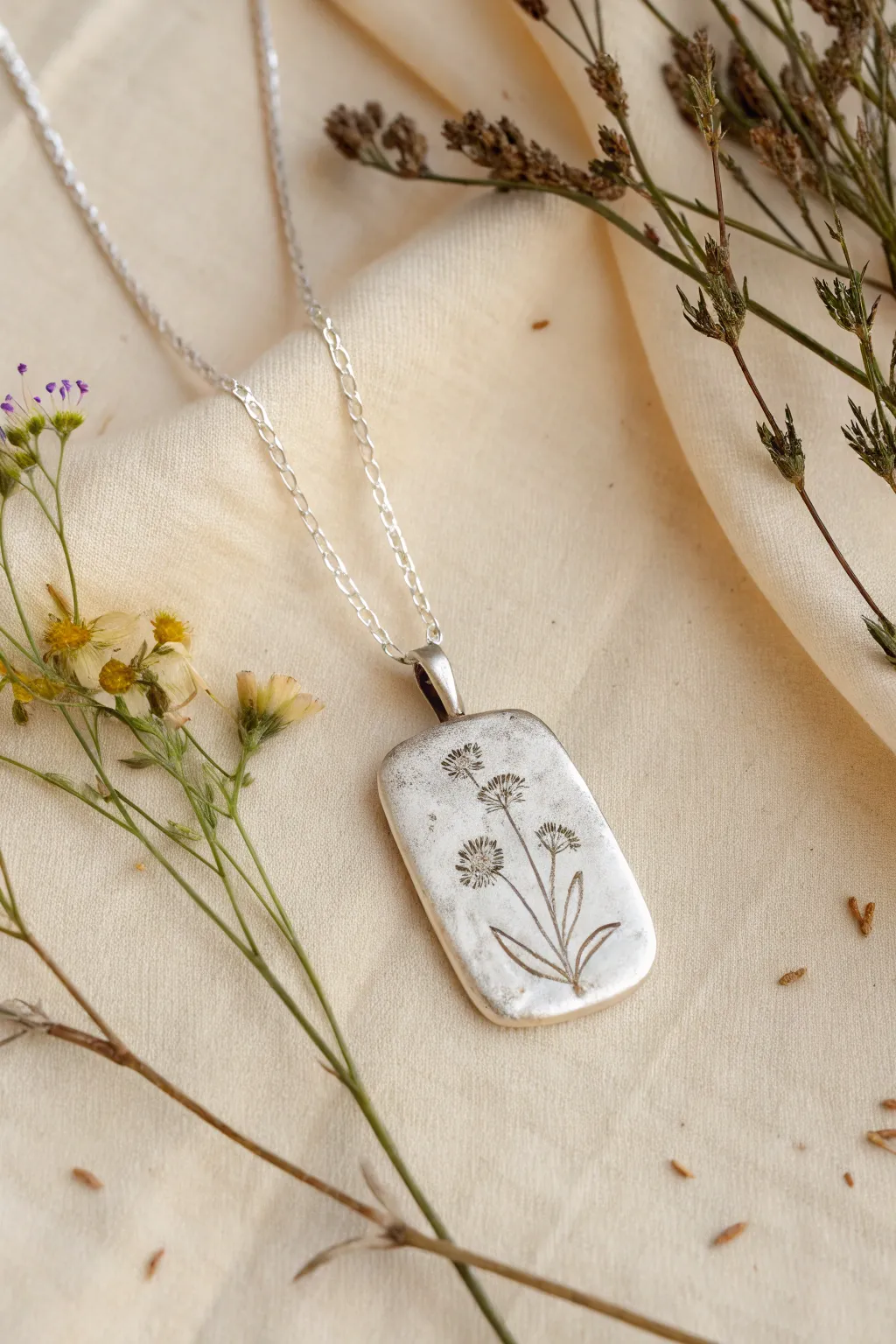
Capture the delicate beauty of a summer meadow with this silver clay pendant, featuring an imprinted wildflower design. The piece has a soft, organic rectangular shape with rounded edges and an antique finish that highlights the floral details.
Detailed Instructions
Materials
- Silver metal clay (approx. 7-10g)
- Small rolling pin or PVC pipe
- Playing cards or slate spacers (1.5mm thickness)
- Rubber stamp with wildflower design (or real pressed dried flowers)
- Olive oil, badger balm, or clay release agent
- Craft knife or needle tool
- Small oval or teardrop shape cutter (optional)
- Small paintbrush and water
- Sanding sponges (fine and superfine grit)
- Butane torch or kiln
- Brass wire brush
- Liver of sulfur (patina solution)
- Polishing cloth
- Silver jump ring and chain
Step 1: Shaping the Clay
-
Prepare your workspace:
Set up a clean, localized work surface. Lightly grease your hands and your work surface with a tiny drop of olive oil or badger balm to prevent the silver clay from sticking. -
Condition the clay:
Take the silver clay out of the package and knead it gently in your fingers for a few seconds until it feels pliable and smooth, ensuring there are no cracks. -
Roll out the slab:
Place the clay between two stacks of playing cards (about 3-4 cards high) or 1.5mm spacers. Roll the clay into an even slab using your rolling pin. -
Lubricate the stamp:
Very lightly oil your wildflower rubber stamp. This is crucial so the clay releases cleanly without pulling up the details. -
Impress the design:
Press the stamp firmly and evenly into the center of the rolled clay. Do not rock the stamp; just press straight down and lift straight up.
Clean Imprints
If using a deep stamp, lay a piece of cling film over the clay before stamping. It softens the edges of the impression and prevents the stamp from getting stuck in the clay.
Step 2: Refining and Cutting
-
Cut the shape:
Using a craft knife or a rectangular cutter, cut around the stamped design. For the look in the photo, create a soft rectangle with slightly bowed sides rather than perfect straight lines. -
Round the corners:
Gently tap the corners with your finger or use the side of your knife to round them off, removing any sharp angles. -
Add the bail:
Form a small loop or ‘bail’ from a separate small strip of clay, or insert a pre-made fine silver eyelet into the top edge. Use a dab of water to essentially ‘paste’ the loop securely to the top of the pendant. -
Smooth the edges:
Dip a small paintbrush in water and run it along the cut edges of the pendant to smooth out any roughness or cutting marks. -
Dry completely:
Let the piece dry for at least 24 hours just by air, or place it on a cup warmer or dehydrator for about 20-30 minutes. It must be bone dry before firing. -
Pre-fire sanding:
Once fully dry, gently sand the edges and the back with a fine-grit sanding sponge to perfect the shape. Be careful not to sand away the imprinted flower design.
Cracked edges?
If small superficial cracks appear while rolling, your clay is drying out. Dab a tiny amount of water on the crack and smooth it over immediately with your finger or a rubber shaper.
Step 3: Firing and Finishing
-
Fire the piece:
Place the dry piece on a firing block. Ignite your butane torch and heat the piece until it glows a peachy-orange color. Hold this temperature for 2-3 minutes (or follow your specific clay brand’s kiln schedule). -
Cool and brush:
Quench the piece in water once the red glow fades, or let it air cool. Briskly brush the white surface with a brass wire brush until the silver shines through. -
Apply patina:
Prepare a hot liver of sulfur solution. Dip the pendant into the solution until it turns a dark gray or black color. -
Polish high points:
Rinse and dry the pendant. Use a polishing cloth or a superfine sanding sponge to buff the surface. This removes the black patina from the raised areas while leaving the dark color inside the stamped wildflower grooves. -
Final assembly:
Attach a sterling silver jump ring through the bail loop, thread your chain through, and give the piece a final buff with a soft cloth.
Wear your silver meadow pendant with pride or gift it to a nature lover
Twig and Bark Texture Tag Pendant
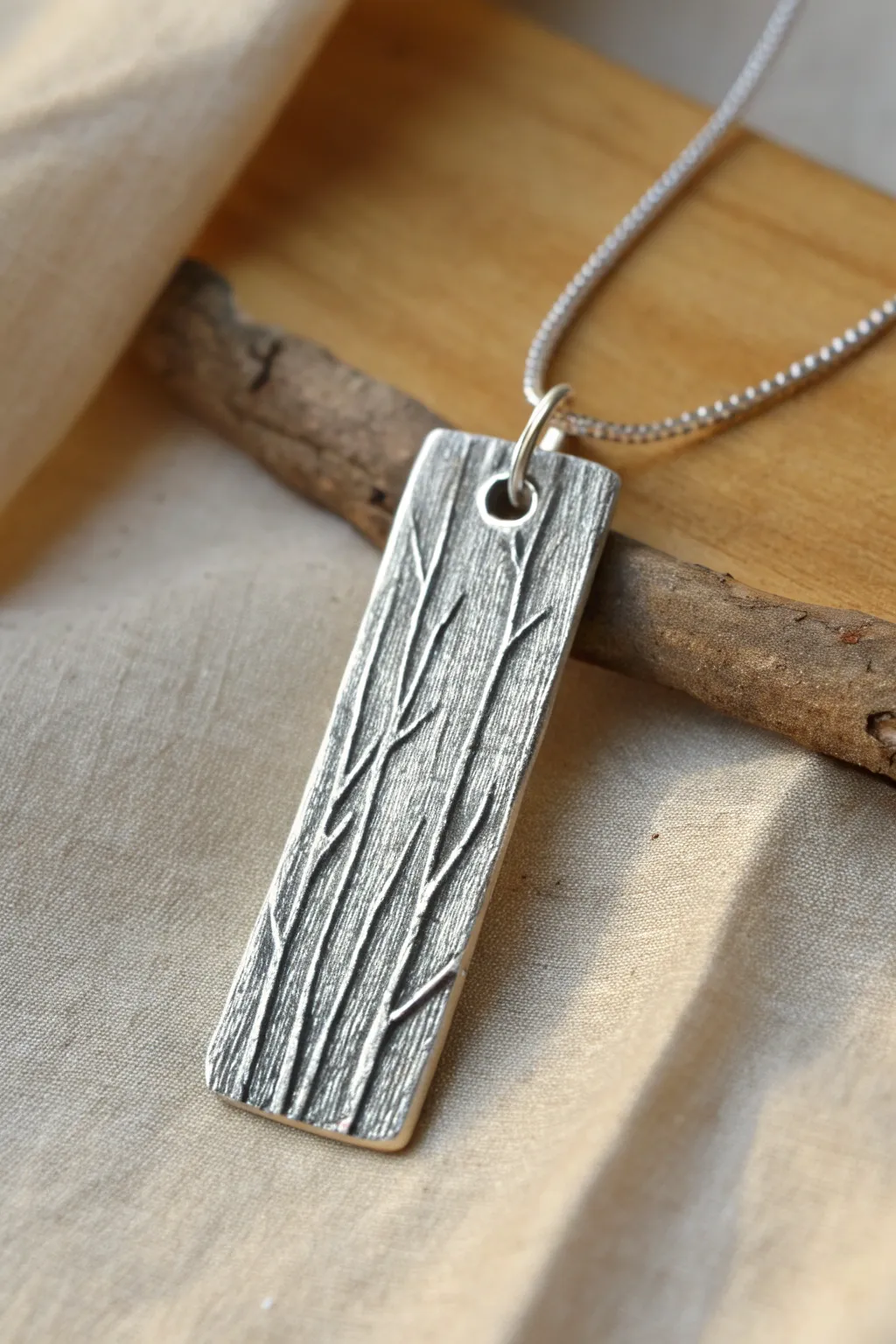
Capture the serene beauty of winter woods with this textured silver clay tag pendant featuring delicate tree branches. The fine silver finish highlights the organic ridges of the bark pattern, perfectly contrasted by oxidized recesses for a striking, rustic look.
Step-by-Step
Materials
- Silver metal clay (approx. 7g-10g)
- Texture sheet or rubber stamp with tree branch pattern
- Rolling pin or acrylic roller
- Playing cards or slat spacers (1.5mm or 3-4 cards thick)
- Clay knife or tissue blade
- Small straw or drinking straw (for hole)
- Sanding sponges/pads (various grits)
- Butane torch or kiln
- Brass wire brush
- Liver of Sulfur (LOS) gel or patina solution
- Polishing cloth or agate burnisher
- Olive oil or Badger balm (release agent)
- Jump ring and silver chain
Step 1: Shaping the Clay
-
Prepare your workspace:
Set up a clean, non-stick work surface like a Teflon sheet or laminated card. Lightly coat your hands and roller with a tiny amount of olive oil or badger balm to prevent the clay from sticking. -
Roll out the slab:
Take your lump of silver clay and place it between your spacers or stacks of playing cards (about 3-4 cards high). Roll the clay into a smooth, even slab. Ensure the slab is slightly larger than the final tag dimensions you want to achieve. -
Apply the texture:
Lightly oil your tree branch texture mat or stamp. Place the texture face down onto the clay slab (or clay onto the texture, depending on your preference) and roll firmly once to imprint the design deeply. Avoid shifting the texture to prevent ghost images. -
Cut the rectangle:
Using a sharp clay knife or tissue blade, cut a clean, long rectangle shape around the best part of the branch pattern. I find a clear grid ruler helps to keep the long sides perfectly parallel. -
Create the bail hole:
While the clay is still wet, use a small straw or a needle tool to punch a hole centered near the top edge. Remember that silver clay shrinks during firing, so make the hole slightly larger than the jump ring you plan to use. -
Refine the edges:
Gently smooth the cut edges with a water-dampened finger or a clay shaper tool to remove any sharp burrs created during cutting. Set the piece aside to dry completely.
Step 2: Refining and Firing
-
Dry the piece:
Let the clay air dry for 24 hours, or speed up the process using a mug warmer or dehydrator until the piece is bone dry. It should feel hard and room temperature to the touch, not cool. -
Pre-fire sanding:
Once dry, gently sand the edges and corners with a fine-grit sanding sponge. You want the edges to look deliberate and finished. Be gentle with the face of the pendant so you don’t erase the fine branch details. -
Fire the pendant:
Fire the piece according to your clay manufacturer’s instructions. If using a butane torch, place the piece on a firing block and heat until it glows a peachy-orange color, holding that temperature for at least 2-3 minutes. If kiln firing, follow the schedule for fine silver. -
Cool and brush:
Allow the silver to cool completely. It will look white and matte. Vigorously brush the entire piece with a brass wire brush and a little soapy water to burnish the surface and reveal the silver shine.
Depth Perception
To render the branches more distinct, try pressing slightly harder on one side of the roller. This creates uneven depth, mimicking organic bark growth and adding visual interest.
Step 3: Finishing Touches
-
Apply patina:
Prepare a hot water bath with a few drops of Liver of Sulfur (LOS). Dip the pendant into the solution until it turns a dark gray or black. This darkness will settle into the deep lines of the tree branches. -
Rinse and neutralise:
Immediately rinse the piece in a bowl of water with baking soda (bicarbonate of soda) to stop the chemical reaction. -
Polish the highlights:
Using a polishing cloth or a high-grit polishing pad, rub the surface of the pendant. This removes the black patina from the raised areas—the background texture—leaving the deep recesses of the branches dark for contrast. -
Add hardware:
Open a sterling silver jump ring using two pairs of pliers. Thread it through the hole in your pendant, close it securely, and string on your chain.
Warped Edges?
If your rectangle curled while drying, gently dampen the back with a wet finger (don’t soakit). Place a heavy book on top for an hour to flatten it out before firing.
Now you have a unique piece of wearable nature that captures the stark beauty of winter trees

The Complete Guide to Pottery Troubleshooting
Uncover the most common ceramic mistakes—from cracking clay to failed glazes—and learn how to fix them fast.
Seed Pod Texture Pendant
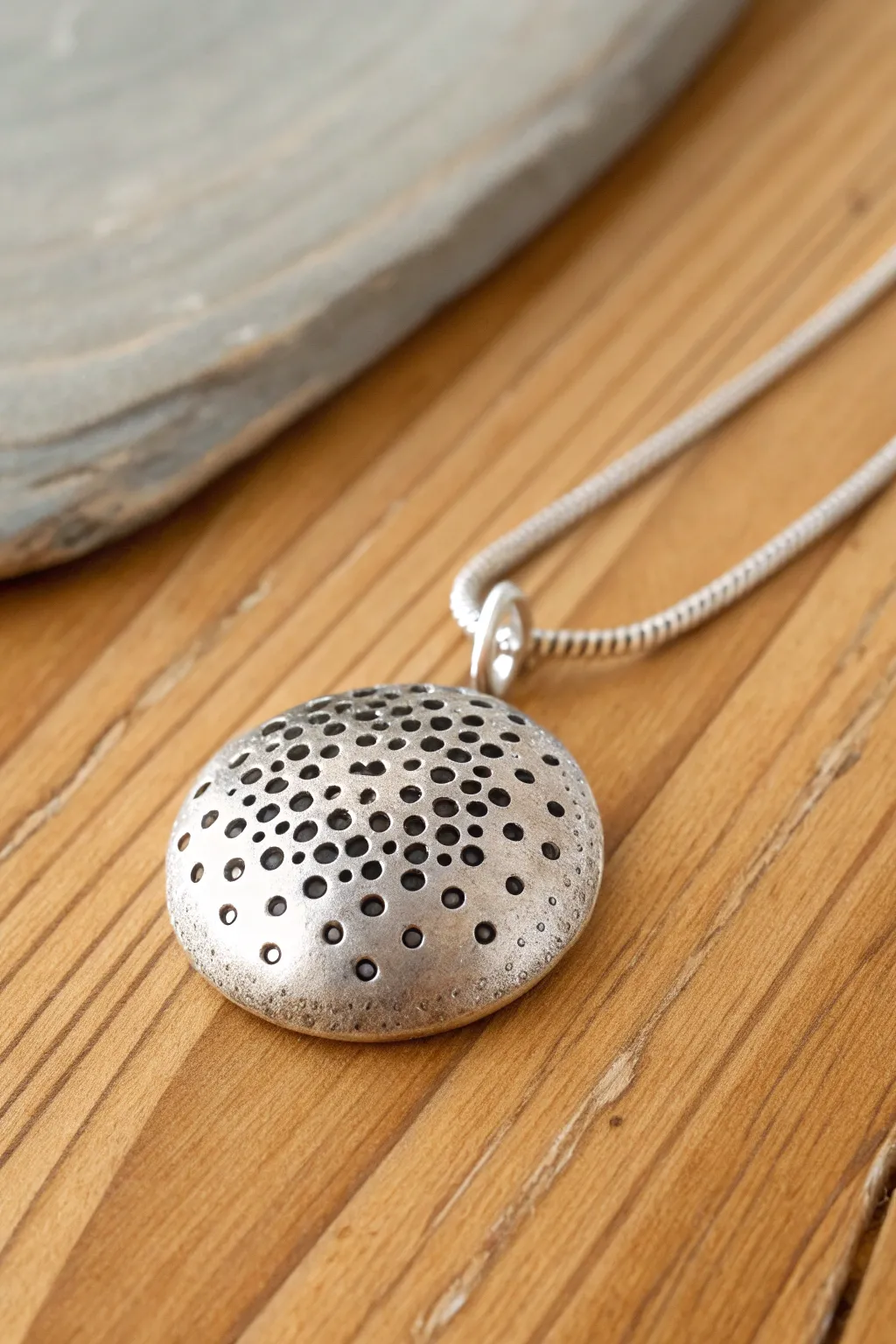
Capture the delicate beauty of nature with this textured silver clay pendant, reminiscent of dry seed pods or washed-up coral. Its gentle dome shape and pattern of varied indentations create a tactile piece that catches the light beautifully when polished.
Step-by-Step
Materials
- Sliver metal clay (approx. 7-10g)
- Small rolling pin
- Playing cards or spacers (1.5mm thick)
- Round clay cutter (approx. 25-30mm)
- Lightbulb or doming form
- Assorted ball stylus tools (various sizes)
- Work surface (Teflon sheet or laminated card)
- Olive oil or badger balm
- Small paintbrush and water
- Silver wire or pre-made bail
- Firing equipment (kiln or butane torch)
- Brass brush
- Agate burnisher
- Polishing papers or sanding sponges
- Liver of Sulfur (patina)
Step 1: Shaping and Texturing
-
Prepare the workspace:
Begin by lightly conditioning your work surface and your hands with a tiny amount of olive oil or badger balm to prevent the silver clay from sticking. -
Condition the clay:
Take your lump of silver clay and knead it gently in your fingers for a few moments until it serves as a pliable, crack-free ball. -
Roll out the slab:
Place the clay between your spacers (about 4 playing cards thick or 1.5mm) and roll it flat with your roller to create an even slab. -
Cut the shape:
Use your round cutter to punch out a clean circle. Remove the excess clay and save it immediately in an airtight container for future use. -
Smooth the edges:
Dip your finger or a small brush in a little water and gently run it around the circumference of the circle to smooth out any rough edges created by the cutter. -
Dome the pendant:
Gently lift the clay circle and drape it over a household lightbulb or a specific doming mold to create a gentle, convex curve. Let it sit for a minute to take the shape, but don’t let it fully dry yet. -
Create the texture:
While the clay is still on the form and leather-hard, use your various ball stylus tools to press indentations into the surface. Start with the larger tools for the main ‘seeds.’ -
Add detail:
Fill in the gaps with smaller stylus tips. Vary the pressure; some indentations should be deep, while others barely skim the surface for a natural, organic look. Avoid piercing all the way through. -
Texture the edges:
Roll the smallest stylus tip or a texturing tool gently around the very rim of the pendant to give the edge a pitted, sand-washed appearance that matches the face.
Step 2: Refining and Attaching
-
Dry completely:
Allow the piece to dry thoroughly on the rounded form. This can be done with a dehydrator, hot plate, or simply air-drying overnight. -
Refine the surface:
Once bone dry, use fine-grit sanding sponges to gently smooth the back and any sharp ridges on the front. Be careful not to sand away your texture. -
Create the bail connection:
Drill a small hole near the top edge for a jump ring, or use silver clay paste to attach a pre-made clay bail loop to the back of the dome. -
Final dry check:
If you used paste for the bail, ensure that connection point creates a solid bond and is completely dry before moving to the firing stage.
Clean Stylus Tip
Make sure to dip the tip of your ball stylus into water or balm frequently. If the tool is dry, it tends to pull the clay up when you lift it, ruining the clean circular indentation.
Step 3: Firing and Finishing
-
Fire the piece:
Fire the pendant according to your clay manufacturer’s instructions. If torch firing, ensure you heat firmly until it holds a consistent salmon-orange glow for the required time. -
Quench and brush:
After cooling (or quenching if your clay type allows), brush the white fired surface vigorously with a brass brush and soapy water to reveal the silver shine. -
Burnish for shine:
Use an agate burnisher to rub the high points of the texture—the spaces between the holes—to make them gleam efficiently against the recessed areas. -
Apply patina:
Prepare a warm Liver of Sulfur solution. Dip the pendant until it turns dark gray or black to accentuate the depth of the ‘seed’ holes. -
Final polish:
Use a polishing cloth or fine sanding stick to remove the black patina from the raised surface, leaving the dark color only inside the indentations for high contrast.
Gemstone Accents
Before drying, press small fireable cubic zirconia into several of the larger indentations. The stones will fire in place, adding a hidden sparkle to your organic texture.
String your finished organic pod on a snake chain to complete this elegant, nature-inspired look
Acorn-Inspired Pendant
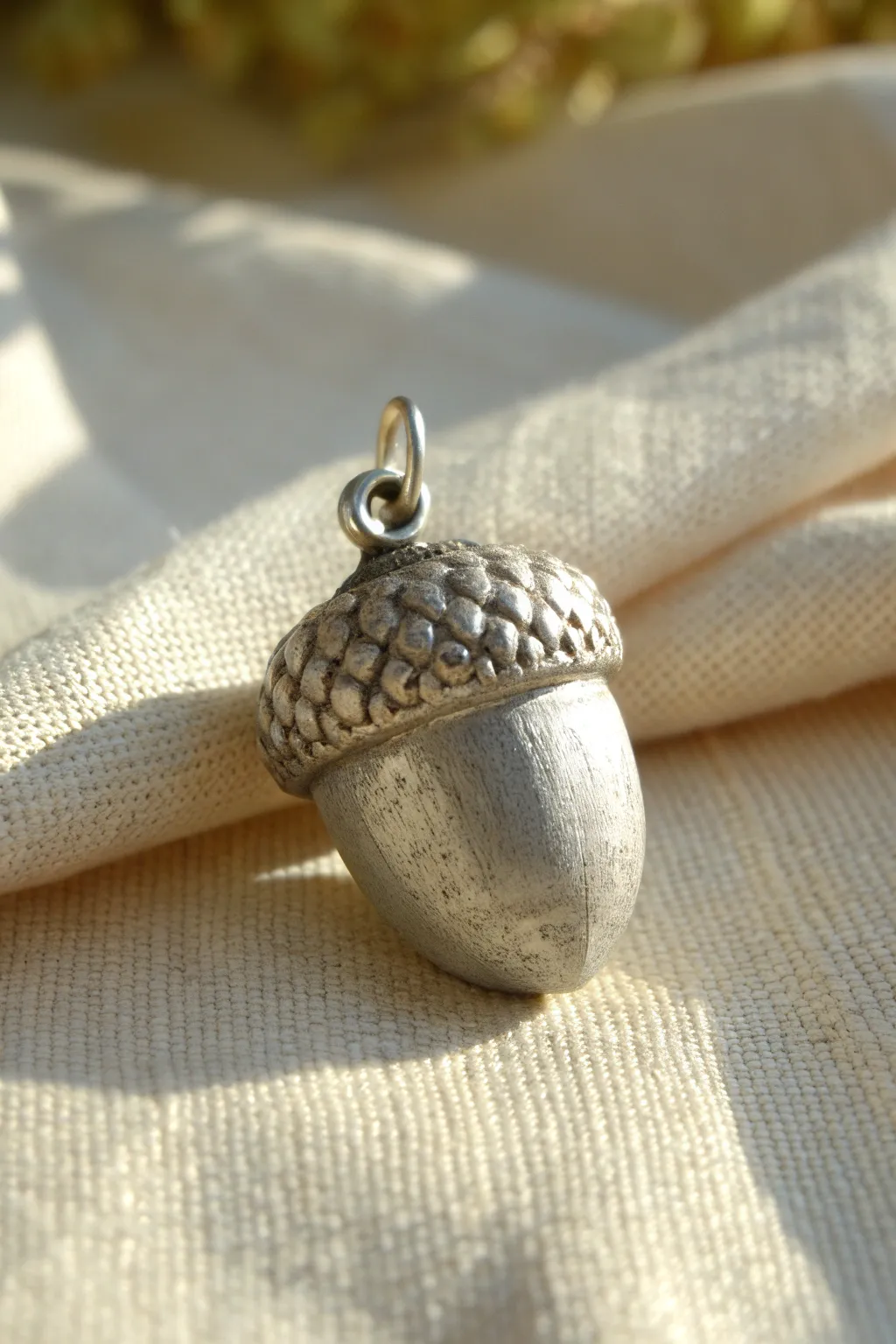
Capture the magic of autumn with this remarkably detailed silver acorn pendant. Using metal clay techniques, you’ll sculpt a textured cap and a smooth, brushed nut that looks like a forest treasure dipped in moonlight.
Step-by-Step Guide
Materials
- 20g Silver metal clay (PMC or Art Clay)
- Small polystyrene ball or acorn-shaped core (cork clay works well too)
- Olive oil or badger balm (as release agent)
- Needle tool or clay shaper
- Small textured rubber mat or fresh acorn cap (optional for texture)
- Fine grit sandpaper or sanding sponges
- Silver paste (slip)
- Small paintbrush
- Jump ring
- Butane torch or kiln
- Brass brush
- Agate burnisher (optional)
Step 1: Forming the Core
-
Prepare the workspace:
Begin by greasing your hands and work surface lightly with olive oil or badger balm to prevent the silver clay from sticking. -
Shape the nut base:
Take about two-thirds of your silver clay and roll it into a smooth ball. Slowly taper one end to create a gentle point, mimicking the classic oval shape of an acorn nut. -
Hollow or solid?:
If you want a lighter pendant, mold the clay over a cork clay core shaped like an acorn. If making it solid silver (heavier), ensure the clay is rolled tightly without air pockets. -
Refine the surface:
Smooth out any fingerprints on the ‘nut’ section using a little water on your fingertip or a clay shaper. This bottom part should be perfectly smooth before drying. -
Dry the base:
Allow this base piece to dry completely on a hotplate or in a dehydrator. It must be bone dry before you add the cap.
Cracks in the Cap?
If tiny cracks appear while you’re working on the cap, brush a little water or diluted paste over the area immediately to rehydrate and smooth it before adding texture.
Step 2: Sculpting the Textured Cap
-
Prepare the cap clay:
Roll out the remaining silver clay into a flat circle, slightly larger than the top of your dried acorn nut. -
Attach the cap:
Apply a small amount of silver paste (slip) to the top of the dried nut. Gently drape current wet clay circle over the slip, molding it down to form the acorn’s hat. -
Create the texture:
To replicate the bumpy texture seen in the photo, roll dozens of tiny, poppy-seed-sized balls of clay. This takes patience but yields the best result. -
Apply the granules:
Brush a layer of silver paste onto the cap area. Place your tiny clay balls onto the cap, pressing them gently so they adhere but keep their rounded shape. Pack them closely together. -
Alternative texturing:
If you prefer a faster method, use a needle tool to impress a cross-hatch or stippled pattern directly into the wet cap clay to simulate the rough texture. -
Add the stem loop:
Roll a small snake of clay and form a loop. Attach this to the very center of the cap using plenty of paste. Reinforce the connection point with a tiny snake of clay wrapped around the base of the loop. -
Final drying:
Let the entire assembly dry completely. This is crucial—any moisture trapped inside will cause the piece to explode or crack during firing.
Step 3: Firing and Finishing
-
Sanding:
Once bone dry, inspect the smooth ‘nut’ part. Use fine sandpaper to gently buff away any imperfections, being careful not to touch the textured cap. -
Firing:
Fire the piece according to your clay manufacturer’s instructions. A kiln is ideal for a solid piece, but a butane torch can work if you are careful to maintain temperature for the required time. -
Cooling and brushing:
After firing, the piece will look white and chalky. Let it cool, then vigorously brush the entire pendant with a brass wire brush and soapy water to reveal the silver shine. -
Create the directional finish:
The image shows a distinct brushed finish on the nut. Use a harsh sanding sponge or coarse steel wool, dragging it vertically from the cap to the tip to create those vertical scratch lines. -
Burnish for contrast:
I like to take an agate burnisher and rub just the tops of the textured granules on the cap. This makes them sparkle against the darker recesses. -
Patina (optional):
To enhance the depth, you can dip the piece in a liver of sulfur solution to darken it, then polish the high points again, leaving the shadows dark. -
Final assembly:
Open a sturdy silver jump ring, thread it through the bail loop you created, and close it securely with pliers.
Natural Texture Hack
Instead of rolling tiny balls, press a real acorn cap into a mold maker, then press your clay into that mold for instant, realistic nature texture.
Wear your silver acorn as a reminder of nature’s simple elegance and your own crafting ability

What Really Happens Inside the Kiln
Learn how time and temperature work together inside the kiln to transform clay into durable ceramic.
Specimen Label Frame Pendant
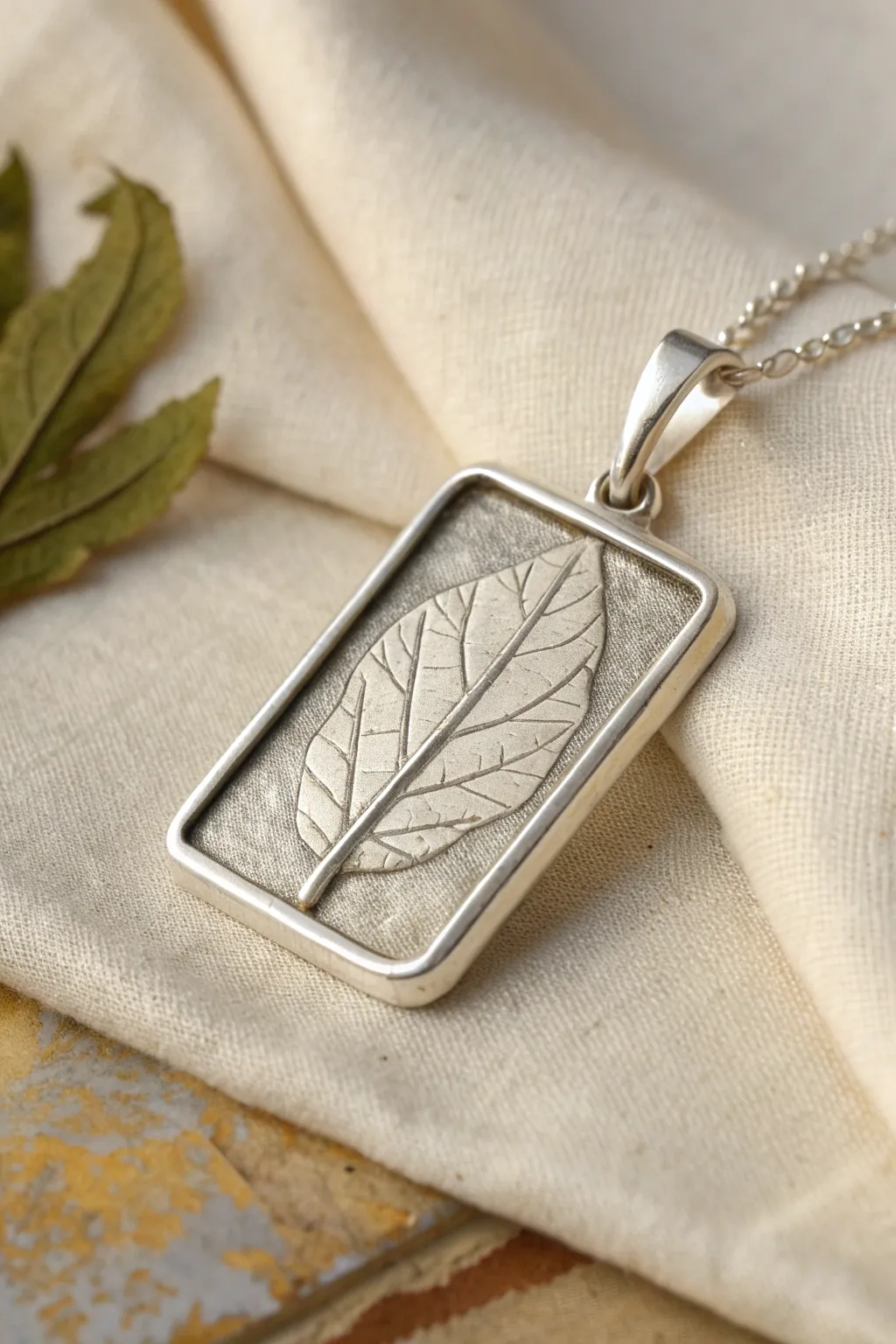
Capture the delicate details of nature forever with this sophisticated specimen-style pendant. By framing a simple leaf impression within a raised border, you elevate a natural object into a piece of fine art jewelry that looks like a museum treasure.
How-To Guide
Materials
- Silver metal clay (approx. 10-15g)
- Small natural leaf with strong veining (e.g., sage, rose, or hydrangea)
- Rectangular clay cutter (approx. 1.5″ x 1″)
- Silver wire for bail or a pre-made embeddable bail
- Rolling pin and spacers (1.5mm and 0.75mm)
- Needle tool or scalpel
- Slip (paste) made from silver clay
- Fine grit sandpaper or sanding sponges
- Kiln or butane torch
- Burnishing tool or tumbler
- Liver of sulfur (patina)
Step 1: Creating the Textured Base
-
Roll the base slab:
Start by conditioning your lump of silver clay until it is pliable and crack-free. Roll it out on a non-stick surface using 1.5mm spacers to create a uniform rectangular slab that is slightly larger than your cutter. -
Make the leaf impression:
Select a fresh leaf with prominent veins on the back. Place it vein-side down onto the center of your clay slab. Gently roll over the leaf once with your roller to press the texture deeply into the silver. -
Remove the organic material:
Carefully lift the leaf edge with tweezers and peel it away to reveal the impression. If any tiny bits of organic matter remain, use a needle tool to gently pick them out without marring the design. -
Cut the inner panel:
Using your rectangular cutter (or a template and scalpel), cut out the main panel centered around the leaf impression. Remove the excess clay and set the panel aside to dry slightly, but keep it leather-hard.
Uneven Frame Walls?
If your frame looks wobbling, lay a piece of sandpaper on a flat table. In the dry stage, invert the pendant and rub it gently in figure-8 motions to level the top.
Step 2: Building the Frame
-
Create a snake coil:
Take the excess clay you trimmed off and re-roll it into a long, even snake. You can use a clay extruder for perfect consistency, or roll it by hand until it’s about 1.5mm to 2mm thick. -
Shape the border:
Moisten the outer edge of your rectangular base with a little water or silver clay slip. Lay the clay snake along the perimeter of the rectangle to form a raised frame. I prefer to mitre the corners with a blade for a sharper look. -
Secure the frame:
Gently press the coil down so it adheres to the base. Use a rubber-tipped shaper or a damp paintbrush to blend the inside seam where the frame meets the base, ensuring there are no gaps. -
Refine the edges:
Smooth the outer edges of the frame to make them flush with the base slab. Check that the frame walls are straight and uniform in height.
Step 3: Attachments and Finishing
-
Add the bail:
Form a loop using silver wire or clay to create a bail. Attach this securely to the center top of the frame using slip. Ensure the connection is robust as this will support the pendant’s weight. -
Dry completely:
Allow the piece to dry fully. This can take 24 hours at room temperature or can be accelerated on a mug warmer. The clay must be bone dry before firing to prevent exploding. -
Pre-fire sanding:
Once bone dry, use high-grit sanding sponges to refine the frame’s top surface and outer edges. Do not sand the leaf texture. Ensure the frame looks crisp and geometric. -
Fire the clay:
Fire the piece according to your silver clay manufacturer’s instructions. A kiln firing (usually around 1650°F / 900°C for 2 hours) is recommended for maximum strength, though torch firing works for smaller pieces. -
Brush finish:
After firing and cooling, brush the piece with a brass bristle brush related to soapy water. This burnishes the surface, transforming the white matte finish into shining silver. -
Apply patina:
Dip the pendant in a warm Liver of Sulfur solution. The silver will darken quickly. Rinse thoroughly with water to stop the reaction once it reaches a dark grey or black. -
Highlight the details:
Using a polishing cloth or fine steel wool, buff the raised surfaces—the frame and the high points of the leaf veins. This removes the patina from the high spots while leaving the dark oxidation in the background recesses for contrast.
Crisper Impressions
Coat your fresh leaf lightly with olive oil or badger balm before rolling. This prevents sticking and ensures the leaf releases cleanly without tearing the clay.
String your new heirloom on a silver chain and enjoy the permanent botanical beauty you’ve created
Moon and Stars Relief Pendant
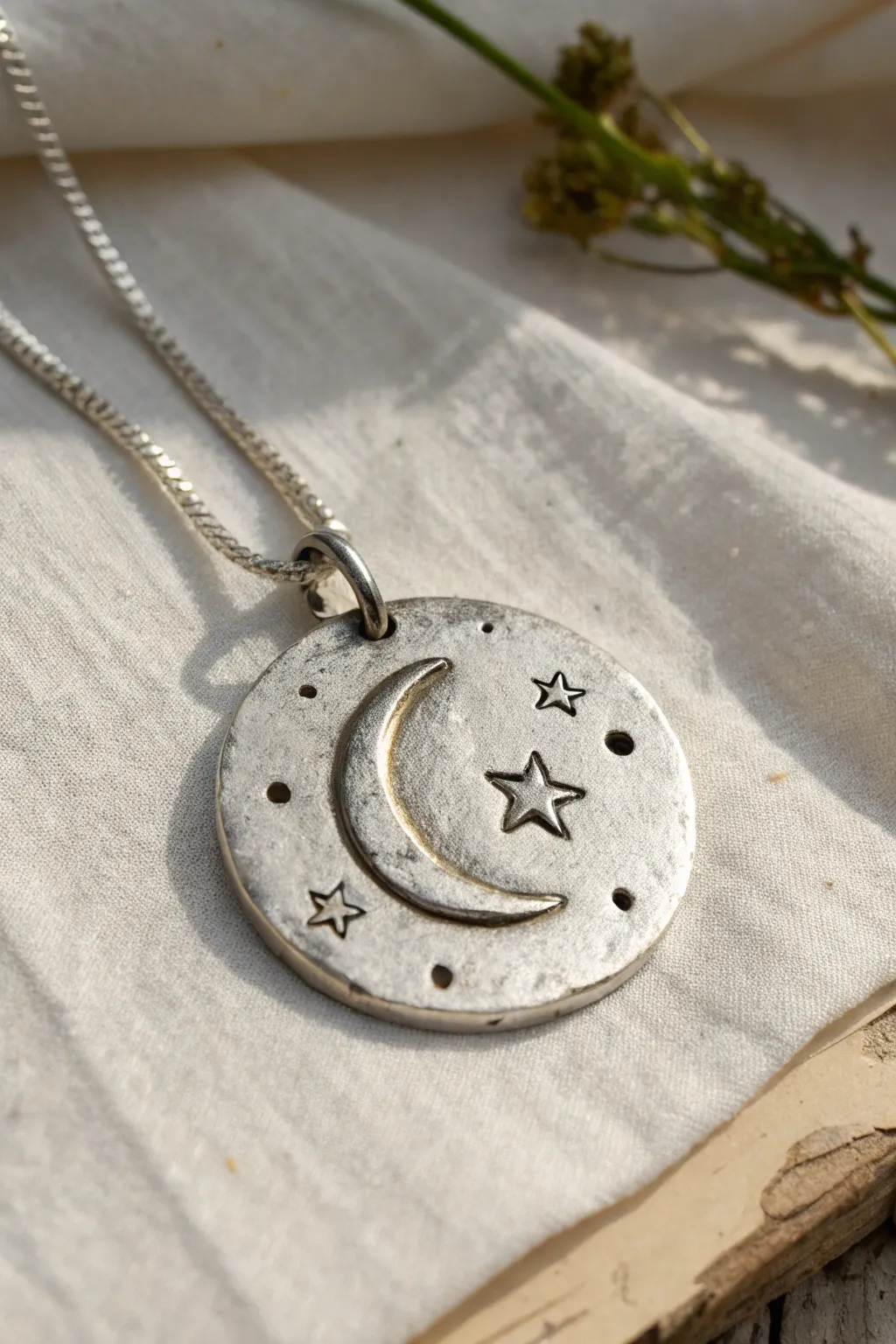
Capture the magic of the night sky with this rustic, textured pendant featuring a prominent crescent moon and scattered stars. Silver clay is the perfect medium for achieving this ancient-coin aesthetic without needing traditional metalsmithing tools.
Detailed Instructions
Materials
- Precious Metal Clay (PMC) or Art Clay Silver (7g pack)
- Small rolling pin or clay roller
- Playing cards (for thickness guides)
- Release agent (olive oil or Badger Balm)
- Drying form or flat tile
- Small carving tool or needle tool
- Star-shaped leather stamp or tiny fondant cutter
- Drinking straw or small round cutter (for punch marks)
- Jump ring (large)
- Butane torch or kiln
- Stainless steel wire brush
- Liver of Sulphur (patina)
- Fine grit sandpaper or sanding sponge
Step 1: Shaping the Base
-
Prepare your workspace:
Begin by greasing your hands and work surface lightly with your release agent. This prevents the precious silver clay from sticking where you don’t want it. -
Roll the clay:
Take a lump of clay and roll it into a ball in your palms. Place it on your work surface between two stacks of playing cards (about 3-4 cards high) to ensure an even thickness. -
Form the disc:
Roll the clay flat. Use a round cutter or the rim of a small glass to cut a perfect circle, approximately 20-25mm in diameter. -
Smooth the edges:
Dip your finger in a tiny bit of water and gently run it around the circumference of the disc to smooth out any rough cutting lines or burrs.
Step 2: Adding the Lunar Design
-
Create the crescent moon:
You can achieve the moon in two ways: either rollout a tiny snake of clay and shape it onto the surface (applique), or for this specific look, use a carving tool to deeply impress the crescent shape. If adding clay, score the back of the moon and use water paste to adhere it firmly. -
Stamp the stars:
Press your small star stamp into the clay on the right side of the moon. Vary the pressure slightly so some stars look deeper than others, giving it a playful, handmade feel. -
Add decorative punched dots:
Using a small, blunt tool or the tip of a stylus, press small circular divots around the outer rim of the pendant. These create a nice border and balance the negative space. -
Make the bail hole:
Use a drinking straw or a hole cutter to punch a hole at the very top of the pendant. Ensure it’s large enough to accommodate your jump ring, shrinking included. -
Dry completely:
Allow the piece to dry for at least 24 hours on a warming plate or overnight. It must be bone dry before firing to prevent cracking. -
Refine the dry clay:
Once dry, gently sand the edges and the surface with fine-grit sandpaper to remove any fingerprints or unwanted jagged bits. Be gentle, as the clay is brittle at this stage.
Shrinkage Factor
Silver clay shrinks 8-15% during firing. If you want a specific finished size, simply make your initial wet clay circle slightly larger to compensate.
Step 3: Firing and Finishing
-
Fire the pendant:
Place the piece on a firing brick. Ignite your butane torch and heat the piece until it glows a peachy-orange color. Hold this temperature for the time specified by your clay manufacturer (usually 2-3 minutes). -
Quench and brush:
Once cool, quench the piece in water. It will look white and chalky. Vigorously brush it with a stainless steel wire brush to reveal the shining silver metal underneath. -
Apply patina:
Prepare a warm Liver of Sulphur solution. Dip the pendant until it turns dark gray or black. This darkness will settle into the moon crevice and star stamps. -
Polish highlights:
Use a polishing cloth or a sanding sponge to buff the high points of the silver, removing the black patina from the flat surface but leaving it inside the recessed designs for contrast. -
Attach hardware:
Open a sturdy silver jump ring using two pliers. Thread it through the top hole and loop it through your chain before closing it securely.
Double Sided Magic
Before drying, gently texture the back of the pendant using a piece of lace or a textured rolling pin for a secret detail that feels great against the skin.
Wear your celestial creation as a daily reminder to keep looking up

TRACK YOUR CERAMIC JOURNEY
Capture glaze tests, firing details, and creative progress—all in one simple printable. Make your projects easier to repeat and improve.
Simple Mountain Silhouette Pendant
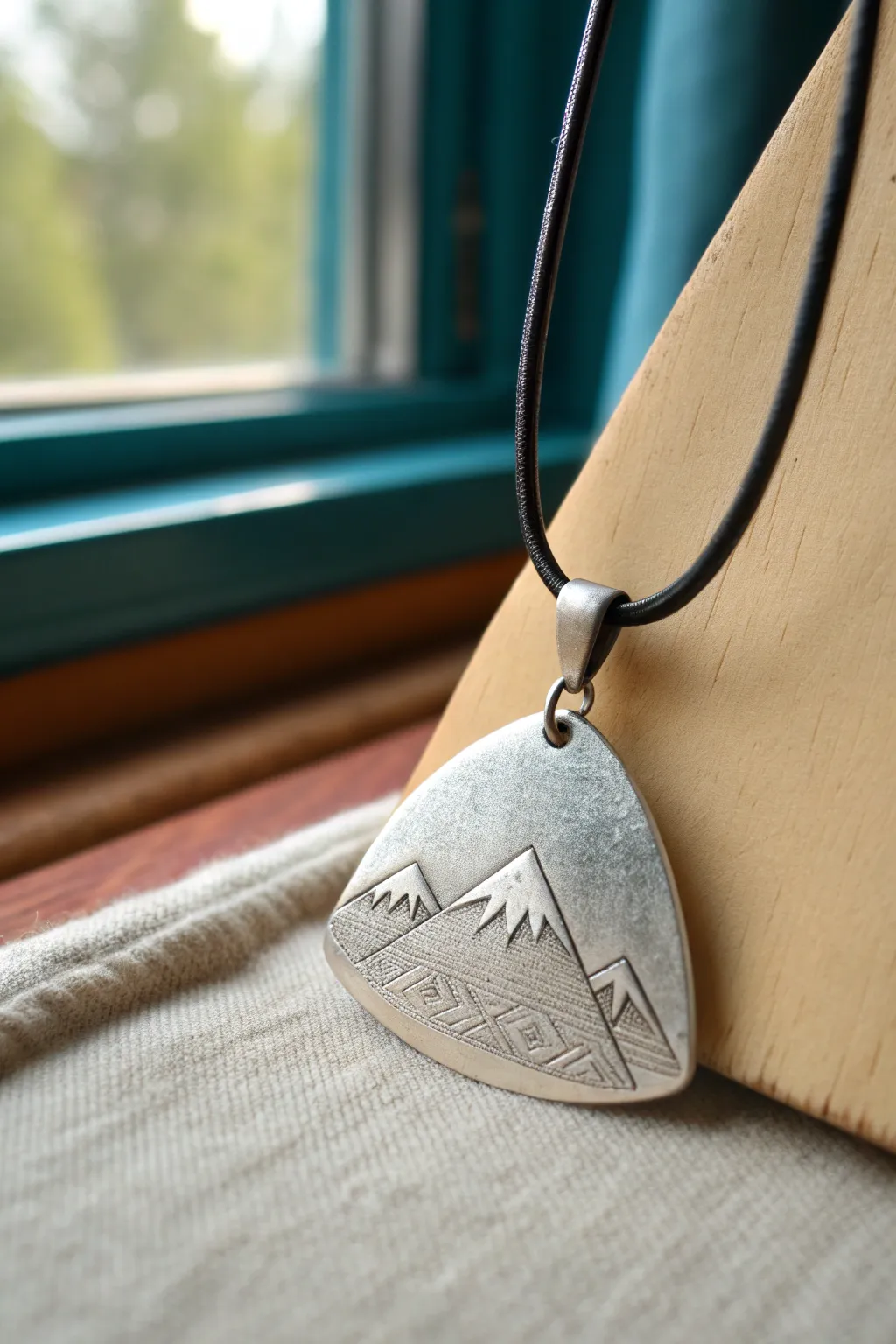
This project captures the sturdy elegance of mountain peaks in a stylized, geometric design perfect for everyday wear. You’ll create a rounded triangular pendant featuring deeply impressed mountain motifs filled with tribal-inspired linear patterns, all finished with a soft, brushed silver glow.
Step-by-Step Guide
Materials
- Silver metal clay (approx. 7-10g)
- Roller and spacers (1.5mm or 4 cards thick)
- Teflon work surface or non-stick mat
- Template: Rounded triangle or guitar pick shape
- Needle tool or craft knife
- Fine-point carving tool or needle tool for freehand details
- Rubber shaping tool (colour shaper) or small paintbrush
- Water spritzer
- Cool slip (paste made from clay scraps and water)
- Sanding sponges (medium to fine grit)
- Torch or kiln for firing
- Brass wire brush
- Liver of Sulfur (patina solution)
- Polishing cloth or agate burnisher
- Jump ring (heavy gauge)
- Black cord or leather necklace
Step 1: Shaping the Base
-
Condition the Clay:
Begin by removing your silver clay from the package and kneading it quickly in your palms to ensure it is pliable and crack-free. Rub a little olive oil or badger balm on your hands first to prevent sticking. -
Roll out the Slab:
Place the clay on your Teflon sheet between your spacers. Roll it out into a smooth, even slab about 1.5mm thick. Ensure the surface is free of air bubbles or cracks. -
Cut the Shape:
Place your rounded triangle template over the clay. Using a needle tool held vertically, trace around the template to cut out the pendant shape. Lift away the excess clay immediately and store it in plastic wrap. -
Smooth the Edges:
Dip your finger or a rubber shaper in a tiny amount of water and gently run it along the cut edges of the pendant to round them off and remove any sharp burrs from the cutting process.
Step 2: Designing the Mountains
-
Outline the Peaks:
With the clay still moist but firm, use a needle tool to lightly sketch the outline of three mountain peaks. Place the largest peak in the center and two smaller ones flanking it. -
Carve the Main Lines:
Go back over your outlines with confident pressure to deepen the grooves. You want deep, clean lines that will hold the patina later. Create the zig-zag snow caps near the top of the central peak. -
Add Geometric Fill:
Inside the lower body of the mountains, carve geometric patterns. Use a combination of parallel lines, zig-zags, and small diamonds to create the texture seen in the reference image. Press deeply enough to displace the clay slightly without cutting through. -
Create the Bail Attachment:
Using a small festive cutter or the tip of a straw, punch a hole near the top center of the pendant for the jump ring. Ensure there is at least 2mm of clay between the hole and the top edge for strength. -
Dry Completely:
Allow the piece to dry fully. This can take 24 hours at room temperature, or use a dehydrator or mug warmer for about 20-30 minutes. The clay must be bone dry before the next step.
Clean Lines Pro Tip
For super crisp geometric lines, let the clay dry *slightly* to a leather-hard state before carving. Very wet clay tends to drag and create ragged edges.
Step 3: Refining and Firing
-
Pre-Fire Sanding:
Once bone dry, use fine-grit sanding sponges to smooth the edges and the back of the pendant. Be gentle around your carved design to avoid sanding away the details. -
Clean Dust:
Use a soft, fluffy brush to whisk away all clay dust from the carved crevices. Any dust left inside will fuse during firing and ruin the crispness of your lines. -
Drill Check:
Twist a small drill bit by hand through your bail hole to ensure it is clean and perfectly round before firing. -
Fire the Piece:
Fire the pendant according to your clay manufacturer’s instructions. If torch firing, bring it to a glow and hold for the recommended time (usually 2-3 minutes). If kiln firing, follow the schedule for full sintering. -
Cool and Brush:
Let the piece cool completely. It will look white and matte. Scrub it vigorously with a brass wire brush and a drop of dish soap to bring out the silver shine and burnish the surface.
Troubleshooting Cracks
If you see hairline cracks while carving, brush immediately with a tiny bit of water. If cracks appear after drying, fill them with syringe paste before firing.
Step 4: Finishing Touches
-
Apply Patina:
Prepare a hot Liver of Sulfur solution. Dip the pendant into the bath until it turns dark gray or black. Rinse immediately in cold water to stop the reaction. -
Highlight the Design:
Use a polishing cloth or a sanding sponge to remove the patina from the high spots (the flat surface and mountain tops), leaving the darkness only in the deep carved lines. -
Assembly:
Twist open a heavy-gauge jump ring using two pairs of pliers. Thread it through the hole in the pendant and close it securely. -
Final Polish:
give the piece one last rub with a polishing cloth to achieve a soft satin finish, then string it onto a simple black leather cord.
Now you have a rugged yet refined piece of jewelry that carries the spirit of the mountains wherever you go.
Ruffled Edge Organic Pebble Pendant
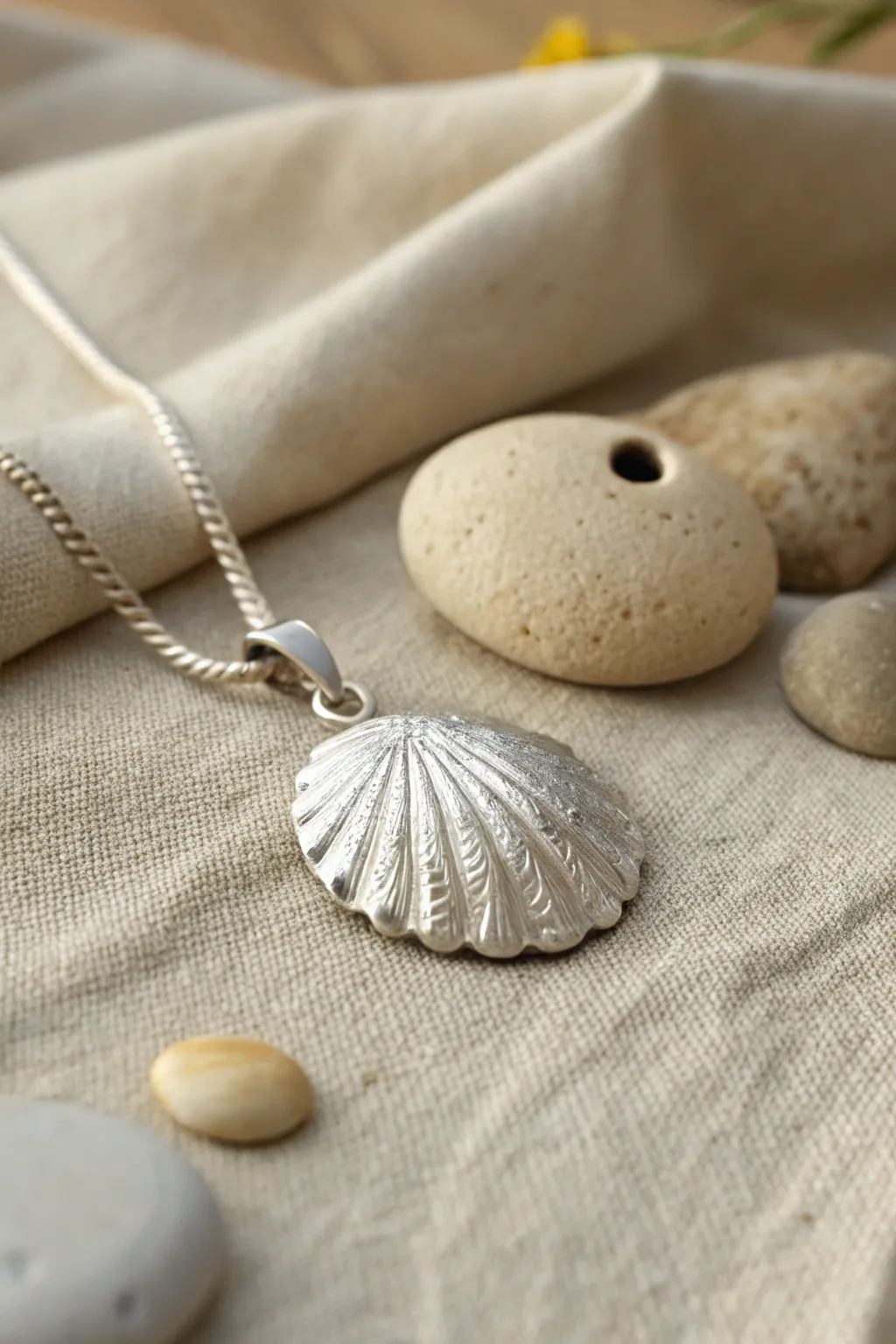
Capture the beauty of the coast with this delicate silver clay pendant, modeled directly from nature. By pressing a real shell into the clay, you can perfectly replicate its radiating ridges and organic texture for a timeless piece of fine silver jewelry.
Step-by-Step Tutorial
Materials
- Silver clay (7-10g package)
- Real scallop shell (clean and dry)
- Olive oil, badger balm, or non-stick rolling surface
- Rolling pin
- Playing cards or 1.5mm spacers
- Clay shaper tool or needle tool
- Small straw or metal tubing (for bail loop)
- Drying method (dehydrator, hot plate, or air)
- Sanding sponges (fine and superfine)
- Torch or Kiln
- Stainless steel brush
- Burnishing tool
- Patina solution (optional)
- Jump rings and silver chain
Step 1: Preparation & Molding
-
Prepare the shell:
Select a clean scallop shell with distinct ridges. Lightly coat the inside (concave) surface of the shell with a very thin layer of olive oil or balm to prevent the clay from sticking. -
Prepare the workspace:
Rub a small amount of balm onto your hands and your non-stick work surface to keep the silver clay manageable. -
Condition the clay:
Take your lump of silver clay out of the package and knead it briefly in your fingers until it feels pliable and smooth, removing any potential trapped air. -
Initial rolling:
Place the clay between two spacers or a stack of playing cards (about 3-4 cards high). Roll it into a smooth, even slab; ensure it is slightly larger than the shell you intend to use. -
The impression:
Gently lift your clay slab and place it over your chosen shell. Using your thumbs, press the clay firmly into the ridges of the shell. I like to start from the center and work outward to ensure every detail is captured without trapping air bubbles. -
Trim the excess:
While the clay is still pressed into the shell, use a needle tool or clay shaper to trim away the excess clay around the natural scalloped edge. Follow the shell’s border closely for that authentic ruffled look.
Clay sticking?
If the clay refuses to release from the shell mold, pop the whole thing in the freezer for 5 minutes. The cold often shocks the clay loose without damage.
Step 2: Refining & Drying
-
Create the bail attachment:
Roll a small snake of excess clay and form a loop, or mold a separate small tab. Attach this to the top (hinge area) of your shell shape using a bit of water or silver clay paste as glue. -
Clean the edges:
Dip a fine paintbrush in water and gently smooth the cut edges of the pendant to remove any sharp burrs left from trimming. -
Dry completely:
Allow the clay to dry fully. You can leave it for 24 hours in open air, or speed this up using a mug warmer or dehydrator for about 20-30 minutes. It must be bone dry before firing. -
Sanding:
Once dry, use fine-grit sanding pads to gently smooth the back of the pendant and refine the edges. Be careful not to sand away the front texture. -
Drill the hole:
If you created a solid tab instead of a loop, carefully drill a hole through the tab now using a hand drill or pin vise. Don’t press too hard, as the dry clay is brittle.
Step 3: Firing & Finishing
-
Fire the piece:
Place the dried piece on a firing block. If using a butane torch, fire until it glows a peachy-orange color and hold that temperature for at least 2 minutes (or follow your specific clay brand’s kiln schedule). -
Cool down:
Let the piece cool naturally on the block. Do not quench it in water, as this can shock the metal structure. -
Brush finish:
The fired silver will look white and matte. Briskly brush it with a stainless steel wire brush to compress the surface and reveal the metallic silver shine. -
Burnish for highlights:
Use a steel burnisher or the back of a spoon to rub firmly along the raised ridges of the shell design. This creates the high-shine contrast seen in the photo against the textured valleys. -
Final assembly:
Open a sturdy jump ring with pliers, thread it through your pendant’s loop, and attach it to your chosen twisted silver chain.
Enhance texturing
For a deeper antique look, apply a liver of sulfur patina to the fired piece, then polish the high spots. The dark recesses make the ridges pop dramatically.
Wear your beautiful silver shell as a daily reminder of sunny days at the beach
Reversible Two-Texture Pendant
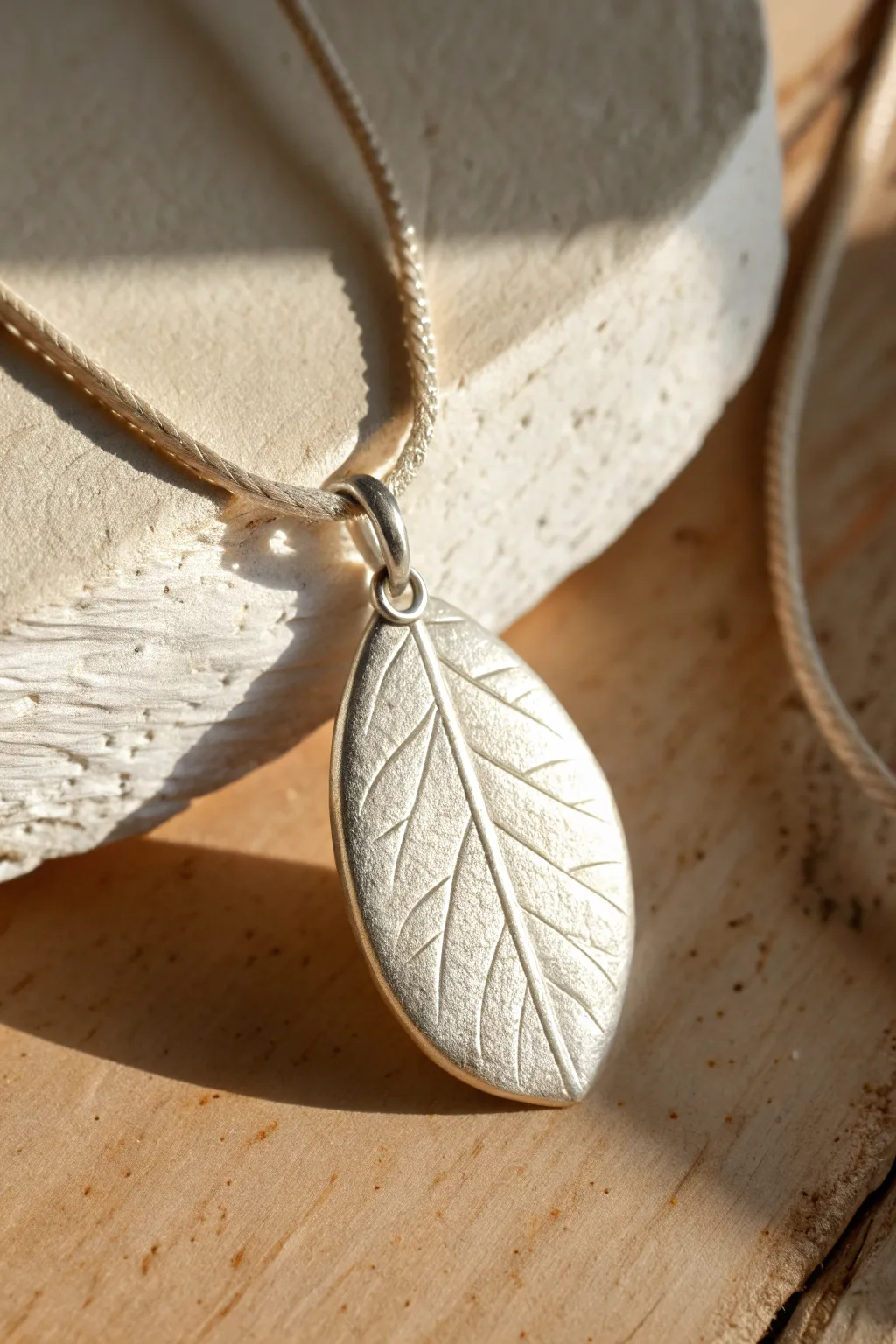
Capture the delicate beauty of nature with this elegant silver clay leaf pendant. Featuring distinct veins and a soft, matte finish, this project transforms a simple lump of clay into a timeless piece of fine silver jewelry.
Step-by-Step
Materials
- Silver metal clay (approx. 7-10g)
- Small textured leaf (fresh or rubber texture mat)
- Clay roller or acrylic brayer
- Playing cards or slat spacers (1.5mm thick)
- Needle tool or scalpel
- Fine-grit sanding sponges (red/blue)
- Small round file
- Torch or kiln for firing
- Brass brush
- Agate burnisher
- Jump ring (sterling silver)
- Olive oil or Badger balm (release agent)
Step 1: Preparation and Rolling
-
Prepare your workspace:
Begin by cleaning your work surface and coating your hands and tools lightly with olive oil or Badger balm. This prevents the precious silver clay from sticking where you don’t want it. -
Condition the clay:
Take your lump of silver clay out of the package and knead it briefly in your palms until it feels pliable and crack-free. Keep it wrapped in plastic when not immediately using it to prevent drying. -
Roll out the slab:
Place your clay between two stacks of playing cards or 1.5mm slat spacers. Roll smoothly with your roller to create an even slab of clay.
Fresh is Best
For the most realistic venation, use a fresh leaf from the garden rather than a rubber stamp. The organic veins impart incredible detail that rubber cannot replicate.
Step 2: Texturing and Cutting
-
Apply the texture:
Lightly oil your chosen leaf or texture mat. Place it face down onto the clay slab. Roll over the texture firmly once—avoid rolling back and forth, which can cause ‘ghost’ images. -
Cut the shape:
Using a needle tool or scalpel, carefully cut around the outline of your leaf shape. Hold the tool perpendicular to the work surface for a clean, straight edge. -
Create the reversible side:
Since this is a reversible project, carefully flip the clay over. You can gently press a different subtle texture (like sandpaper or fabric) onto this back side if desired, or keep it smooth. -
Add the bail hole:
While the clay is still wet, use a small straw or a specialized cutter to punch a hole at the very top of the leaf stem. Ensure it is large enough to accommodate your jump ring, shrinking included.
Two-Tone Patina
Apply a liver of sulfur patina to the entire piece, then polish the high points (veins) again. This leaves the recesses dark, adding dramatic depth.
Step 3: Refining and Firing
-
Dry thoroughly:
Allow the piece to dry completely. You can use a dehydrator, a cup warmer, or just let it air dry for 24 hours. The clay must be bone dry before firing to prevent exploding. -
Pre-fire sanding:
Once dry, gently sand the edges with a fine-grit sanding sponge to smooth out any cutting burrs. Be very gentle, as the unfired clay is brittle like chalk. -
Fire the pendant:
Place the piece on a soldering block for torch firing or in a kiln. Follow the specific temperature and time instructions for your brand of silver clay (typically 1650°F / 900°C for 2 hours in a kiln for maximum strength). -
Quench and Cool:
If torch firing, you can quench in water once the red glow fades. If kiln firing, let it cool naturally.
Step 4: Finishing Touches
-
Brush the surface:
The fired silver will look white and matte. Scrub it vigorously with a brass brush and soapy water to burnish the surface and reveal the metallic silver shine. -
Burnish the veins:
To make the veins pop like in the photo, use an agate burnisher to rub specifically along the raised lines. This creates a high-polish contrast against the satin background. -
Assemble:
Open a sterling silver jump ring using two pairs of pliers. Thread it through the hole you created and twist it closed securely. -
Final polish:
Give the entire piece a quick rub with a polishing cloth to remove any fingerprints and enhance the luster before stringing it on a cord.
Now you have a stunning, nature-inspired pendant ready to wear or gift.
Stone Accent Bezel Pendant
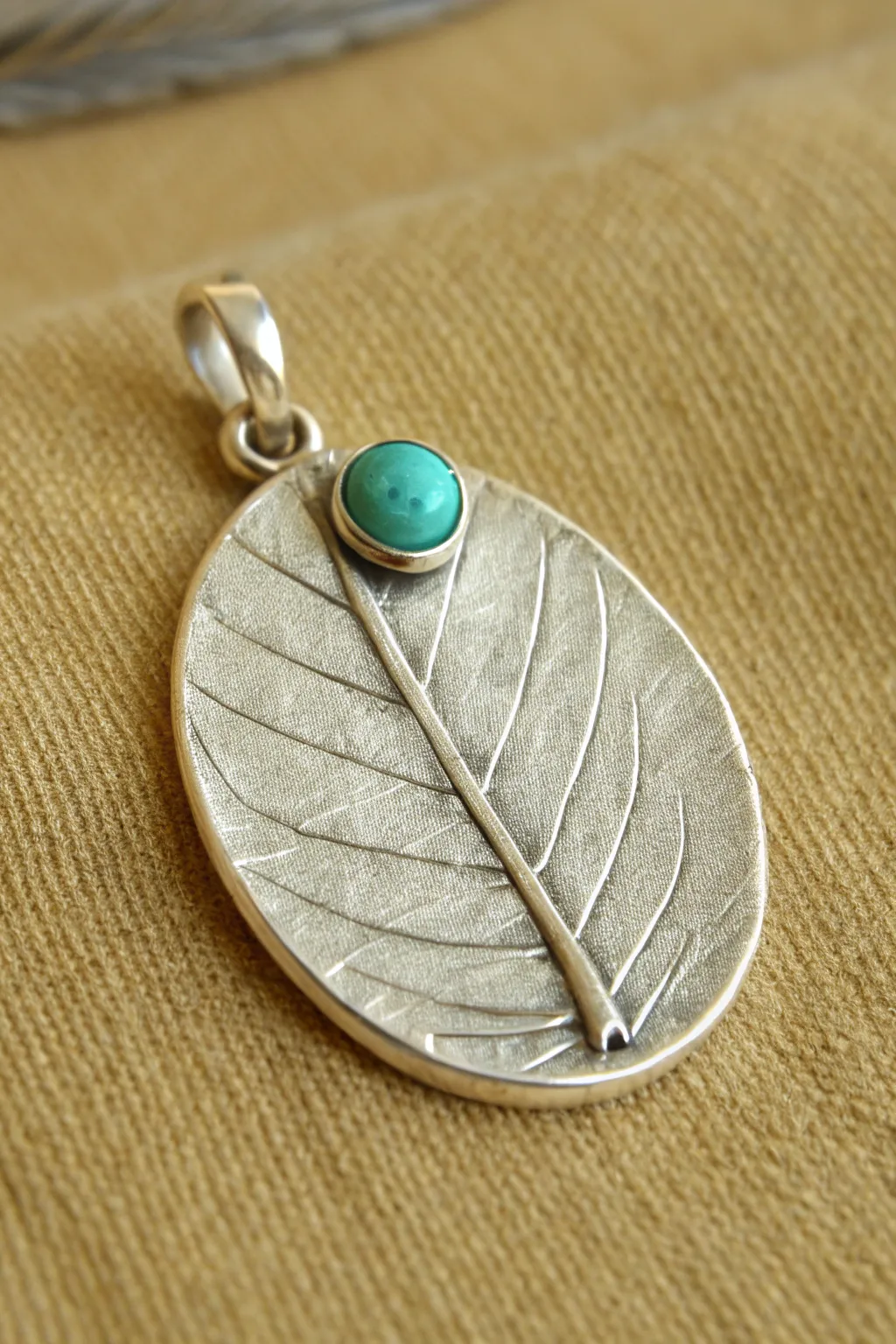
This elegant silver clay project features a delicate, organic leaf vein texture pressed directly into the metal. Finished with a vibrant turquoise cabochon set in a bezel, it creates a stunning contrast between soft, matte silver and bright gemstone color.
Step-by-Step Tutorial
Materials
- Silver metal clay (approx. 10g-15g)
- Round turquoise cabochon (4mm-6mm)
- Fine silver bezel wire (matching stone height)
- Textured rolling sheet or a real leaf with heavy veins
- Oval cutter or shape template
- Rolling pin with spacing guides (1.5mm thickness)
- Clay knife or needle tool
- Slip (paste type silver clay)
- Small paintbrush
- Firing method (kiln or torch)
- Sanding pads/sponges (various grits)
- Agate burnisher
- Jump ring or bail
- Liver of sulfur (optional for patina)
Step 1: Preparing the Clay Base
-
Prepare the workspace:
Begin by cleaning your hands and work surface thoroughly. Apply a thin layer of olive oil or badger balm to your hands and your roller to prevent sticking. -
Roll out the clay:
Take your lump of silver clay and roll it out into a smooth slab. Use spacing guides or playing cards (about 4-5 cards thick) to ensure an even thickness of approximately 1.5mm. -
Apply the texture:
Place your leaf texture sheet or a fresh, heavily veined leaf onto the clay slab. Roll over it firmly once with the roller to imprint the leaf veins deeply into the surface. -
Cut the shape:
Place your oval cutter over the textured area, positioning it so the central vein creates a nice vertical or diagonal line. Press down firmly to cut the shape, then lift away the excess clay.
Step 2: Adding the Bezel Setting
-
Fit the bezel wire:
Wrap the fine silver bezel wire around your turquoise stone to get the exact size. Mark the overlap, cut it with flush cutters, and file the ends so they meet perfectly flush. -
Close the bezel loop:
While this wire is fine silver and can be fired, I prefer to fuse the ends or solder them with hard silver solder before embedding, or simply butt the ends tightly together if relying on the clay to hold it (though soldering is more secure). -
Position the bezel:
Decide where you want the stone. In the reference image, it sits near the top, slightly overlapping the central vein. Gently press the bezel ring into the wet clay just enough to leave an impression. -
Secure with paste:
Lift the bezel ring, apply a small amount of silver clay paste (slip) to the impression and the bottom of the wire, and press the ring back into place. Ensure there are no gaps between the wire and the base. -
Blend the join:
Use a small, damp paintbrush to smooth the paste around the base of the bezel cup, creating a seamless transition into the textured background.
Clean Bezel Tip
When pressing the bezel wire into the clay, ensure the wire’s wall is taller than the stone’s curve, but not too high, or it will crinkle when you try to set the gem.
Step 3: Finishing and Firing
-
Attach the bail:
Form a small loop or snake of clay to attach a bail at the top, or drill a hole large enough for a jump ring once the piece is dry (but before firing). Secure any added clay elements with plenty of paste. -
Dry thoroughly:
Allow the piece to dry completely. A dehydrator helps, or leave it for 24 hours. The clay must be bone dry; if it feels cool to the touch, it still contains moisture. -
Refine edges:
Once dry, use fine-grit sanding sponges to gently smooth the outer edges of the oval, removing any sharpness or irregularities from the cutting process. -
Fire the pendant:
Fire the piece according to your silver clay package instructions. Kiln firing is ideal for structural strength, usually around 1650°F (900°C) for two hours, but torch firing works for smaller pieces like this too. -
Cool and brush:
Quench in water or allow to air cool. Scrub the fired silver with a brass brush under water with a drop of dish soap to bring out the initial metallic shine.
Level Up: Double Texture
Before rolling the leaf texture, lightly texture the back of the pendant with a subtle sandpaper or fabric pattern. It makes the piece feel professional and finished from all angles.
Step 4: Setting the Stone
-
Burnish the surface:
Use an agate burnisher to rub the high points of the leaf texture and the bezel wall, making them gleam while leaving the recesses matte. -
Insert the stone:
Place the turquoise cabochon into the bezel cup. It should fit snugly. -
Push the bezel:
Use a bezel rocker or burnisher to gently push the finesilver wall over the stone. Work in opposites (12 o’clock, then 6 o’clock) to ensure the stone stays centered. -
Final polish:
Smooth out any tool marks on the bezel wire. You can apply a liver of sulfur patina to darken the vein recesses, then polish the high spots again for dramatic contrast.
Wear your new botanical pendant with pride, knowing you captured a piece of nature in solid silver.
Mini Story Scene Locket Pendant
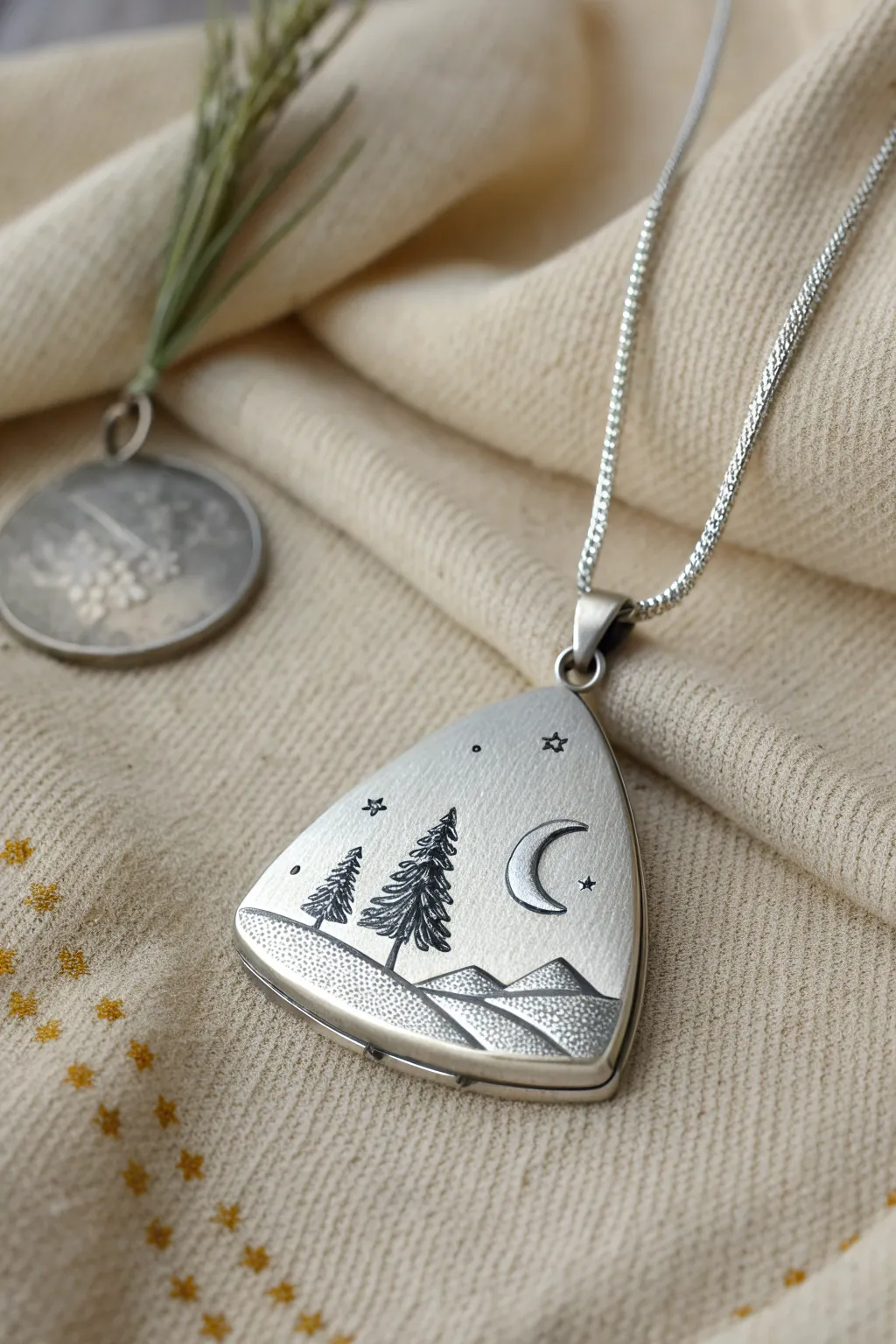
Capture the serene beauty of a moonlit forest with this enchanting locket project. Using silver metal clay, you’ll sculpt a sleek, stylized triangular form featuring delicate engravings of pine trees and mountains against a stippled starry sky.
Step-by-Step
Materials
- Silver metal clay (approx. 15-20g)
- Canola oil or olive oil (release agent)
- Non-stick work surface or Teflon sheet
- Rolling pin and spacers (1.5mm or 4mm thickness)
- Triangular or guitar pick shape metal cutter
- Needle tool or fine sculpting stylus
- Rubber shaping tools
- Small fine-point texture stamp (optional, for ground)
- Slip (metal clay paste)
- Small paintbrush
- Fine grit sandpaper or sanding sponges
- Kiln or torch firing setup
- Liver of sulfur (patina)
- Polishing cloth and burnishing tool
- Sterling silver jump ring and bail
- Hand drill or pin vise with small bit (1mm-2mm)
Step 1: Forming the Locket Halves
-
Condition the Clay:
Begin by lubricating your hands and work surface with a small amount of oil. Take your silver metal clay and knead it gently until it is pliable and free of cracks, ensuring a smooth consistency. -
Roll the Sheets:
Using your slats or spacers set to about 1.5mm (or 6 cards thick), roll out the clay into an even sheet. You will need enough surface area to cut two identical shapes. -
Cut the Base Shapes:
Use your triangular cutter to punch out two identical pieces. If you don’t have a cutter, print a template on paper, lay it over the clay, and carefully trace around it with a needle tool. -
Create the Chamber Walls:
Roll a small snake of clay and flatten it to create a thin wall strip. Using a little water or slip, attach this strip around the perimeter of one of your triangles, leaving a clean edge. This creates the hollow space inside the locket. -
Refine the Joins:
Smooth the seam between the wall and the base plate using a rubber shaper. Ensure there are no gaps, as this structural integrity is vital for firing.
Clean Lines
When engraving leather-hard clay, clean your needle tool often. Build-up on the tip causes jagged lines instead of smooth cuts.
Step 2: Engraving the Scene
-
Plan the Design:
While the top piece (the lid) is still leather-hard (firm but not dry), lightly sketch your design using a very fine needle tool. Outline the rolling hills, the position of the trees, and the crescent moon. -
Carve the Trees:
Deepen the lines for the pine trees. Start with a vertical trunk line, then use short, downward strokes to create the needle texture. Vary the pressure to give the branches depth and dimension. -
Outline the Moon and Stars:
Carefully press the outline of the crescent moon. For the stars, you can press small star-shaped punches or draw tiny asterisks with your stylus. -
Texture the Landscape:
To differentiate the rolling hills from the sky, add texture to the ground area. I find that stippling with a needle tool creates a lovely sandy or grassy effect, contrasting nicely with the smooth sky. -
Dry Completely:
Allow both pieces to dry fully on a warmer or simply air dry overnight. The darker gray color of wet clay should turn to a chalky white.
Hidden Message
Before sealing or finishing, scratch a secret date, name, or short quote onto the inside surface of the locket back for a personal touch.
Step 3: Assembly and Finishing
-
Sand and Refine:
Once bone dry, use fine-grit sandpaper to smooth the edges of both pieces. Be very gentle with the engraved top piece to preserve your details. -
Drill Connecting Holes:
Using a pin vise, carefully drill a hole at the top point of the front piece for the bail mechanism and alignment holes at the bottom if planning a hinge (or keep it simple as a slide-locket). -
Fire the Clay:
Follow your specific silver clay brand’s instructions for firing. Typically, this involves kiln firing at around 1650°F (900°C) for two hours to ensure full sintering, especially for a locket mechanism. -
Brush and Burnish:
After firing, the piece will be white. Brush it with a brass, stainless steel, or glass fiber brush to reveal the silver shine. Burnish the high points of the moon and trees for a mirror finish. -
Apply Patina:
Prepare a warm liver of sulfur solution. Dip the pendant until it turns dark gray or black. This darkness will settle into the etched trees and stippling. -
Polish Highlights:
Use a polishing cloth or sanding sponge to remove the patina from the surface, leaving the black oxidation only in the recessed lines of your forest scene. -
Add Hardware:
Attach a sterling silver bail to the top hole and complete the locket assembly based on your chosen mechanism.
Now you have a stunning, personalized keepsake that carries the quiet mystery of the forest with you.