

One of my favorite things about pottery painting is how a simple clay piece can suddenly feel like it was made just for you. Here are my go-to clay pottery painting ideas—starting with the classic crowd-pleasers and ending with a few studio-style twists that still feel totally doable at home.
Polka Dot Party
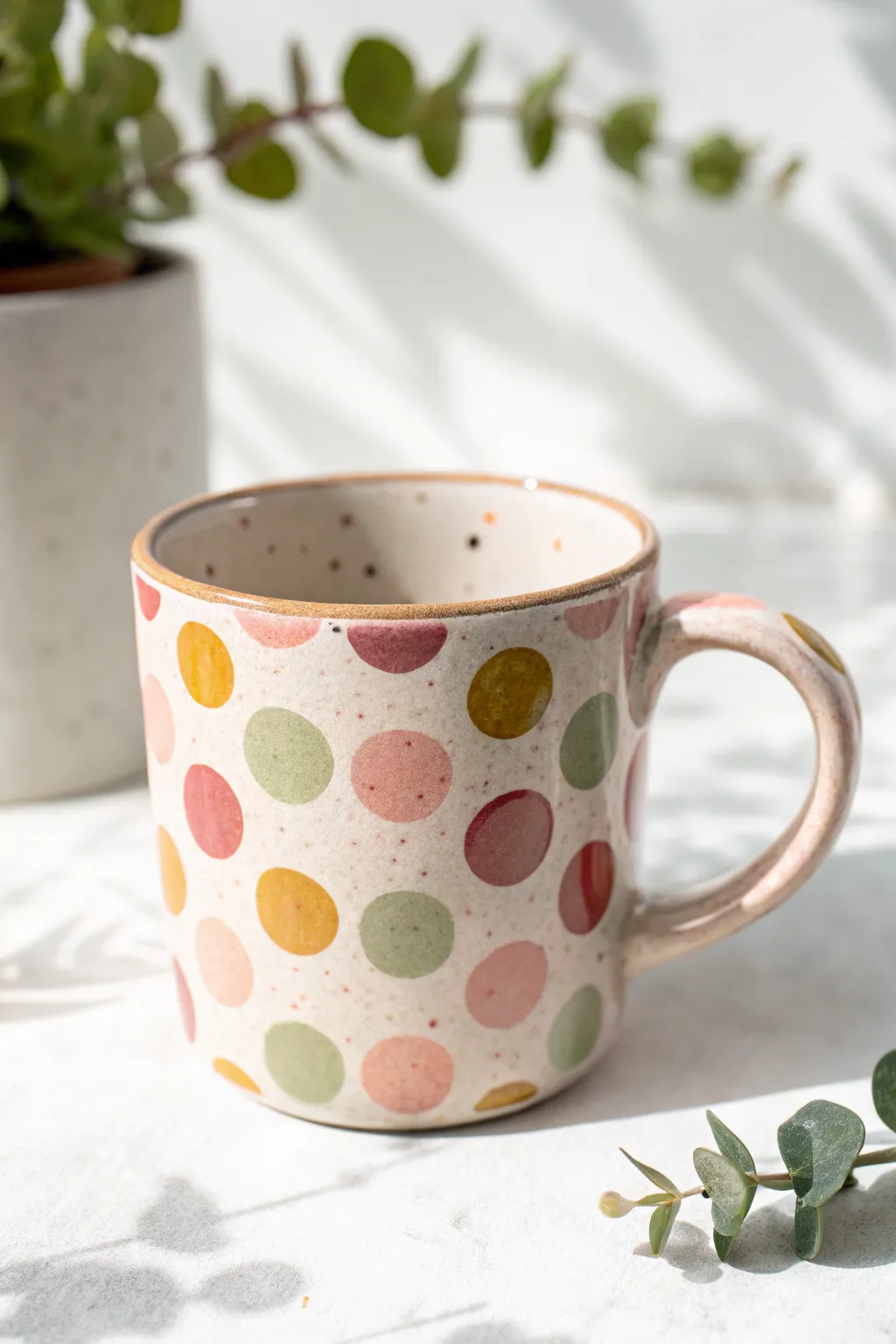
Embrace a playful, earthy aesthetic with this charming mug design that balances vibrant colors with a rustic finish. The combination of soft, oversized polka dots and a speckled cream glaze creates a cozy, handmade feel perfect for your morning coffee.
Step-by-Step Guide
Materials
- Bisque-fired ceramic mug
- Underglazes (Mustard Yellow, Sage Green, Blush Pink, Rusty Red)
- Cream or Off-White speckled glaze (opaque)
- Wax resist (liquid wax)
- Round sponge brush (approx. 1 inch diameter)
- Small detail brush
- Damp sponge
- Clean water
Step 1: Planning and Base Prep
-
Wipe Down:
Begin by wiping your bisque mug with a damp sponge. This removes any dust from the firing process and ensures your glaze adheres properly. -
Rim Consideration:
Decide if you want an exposed clay rim like the example. If so, you will need to be careful not to apply underglaze or the main cream glaze to the very top edge. -
Testing the Layout:
Visualize where your dots will go. The beauty of this design is the random, scattered pattern, so you don’t need a ruler, but try to avoid clustering too many of the same color together.
Uneven Dots?
If your sponge leaves a texture or misses the center, use a detail brush to fill in the middle of the dot with underglaze while the paint is still wet to smooth it out.
Step 2: Applying the Polka Dots
-
Loading the Sponge:
Pour a small amount of your Mustard Yellow underglaze onto a palette. Dip your round sponge brush into the paint, ensuring the entire face of the sponge is covered but not dripping. -
Stamping Yellow Dots:
Press the sponge firmly against the mug wall to create a circle. Give it a gentle twist as you pull away to keep the edges clean. Repeat this randomly around the mug, leaving plenty of space for other colors. -
Cleaning and Switching:
Rinse your sponge brush thoroughly and squeeze out excess water. Now load it with the Sage Green underglaze. -
Adding Green Dots:
Stamp your green circles into the empty spaces. Allow some dots to sit lower or higher than others to maintain that confetti-like energy. -
Incorporating Blush Pink:
Repeat the process with your Blush Pink underglaze. I like to place these next to the darker colors to create a nice contrast in values. -
Finishing with Rust:
Fill in the remaining large gaps with the Rusty Red underglaze using the same sponge technique. Leave some white space between all dots; they shouldn’t touch. -
Partial Dots:
Don’t forget the edges! Stamp ‘half-dots’ near the bottom of the mug or near the handle to make the pattern look continuous and wrap-around. -
Handle Detail:
Use a smaller brush to paint a few freehand dots on the handle itself, creating a cohesive look throughout the piece. -
Drying Time:
Let the underglaze dots dry completely. They should look chalky and matte before you move to the next step.
Step 3: Waxing and Glazing
-
Applying Wax Resist:
Using a dedicated brush, carefully paint liquid wax resist exactly over each colored dot. The wax protects the underglaze from the topcoat. -
Waxing the Rim:
If you are keeping the rim raw clay, apply a strip of wax resist along the top edge of the mug as well. -
Dry the Wax:
Allow the wax to dry until it feels firm and tacky, usually about 15-20 minutes. -
Dipping the Glaze:
Stir your speckled cream glaze thoroughly to suspend the speckles. Using dipping tongs or your hand (if the interior is already glazed), dip the entire mug into the cream glaze. -
Wiping Back:
As the glaze creates a bead over the waxed areas, use a damp sponge or your finger to gently wipe any cream glaze off the wax spots, revealing the colorful dots underneath. -
Final Cleanup:
Check the bottom of the mug to ensure no glaze is on the foot ring, cleaning it with a sponge if necessary. -
Firing:
Fire the piece in the kiln according to the specific temperature instructions of your clay and glaze combination.
Layer Up
For more dimension, apply three coats of underglaze to each dot before waxing. This creates a slightly raised texture that feels great in the hand.
Now you have a cheerful custom mug ready to brighten up your morning routine


Classic Stripes and Banding
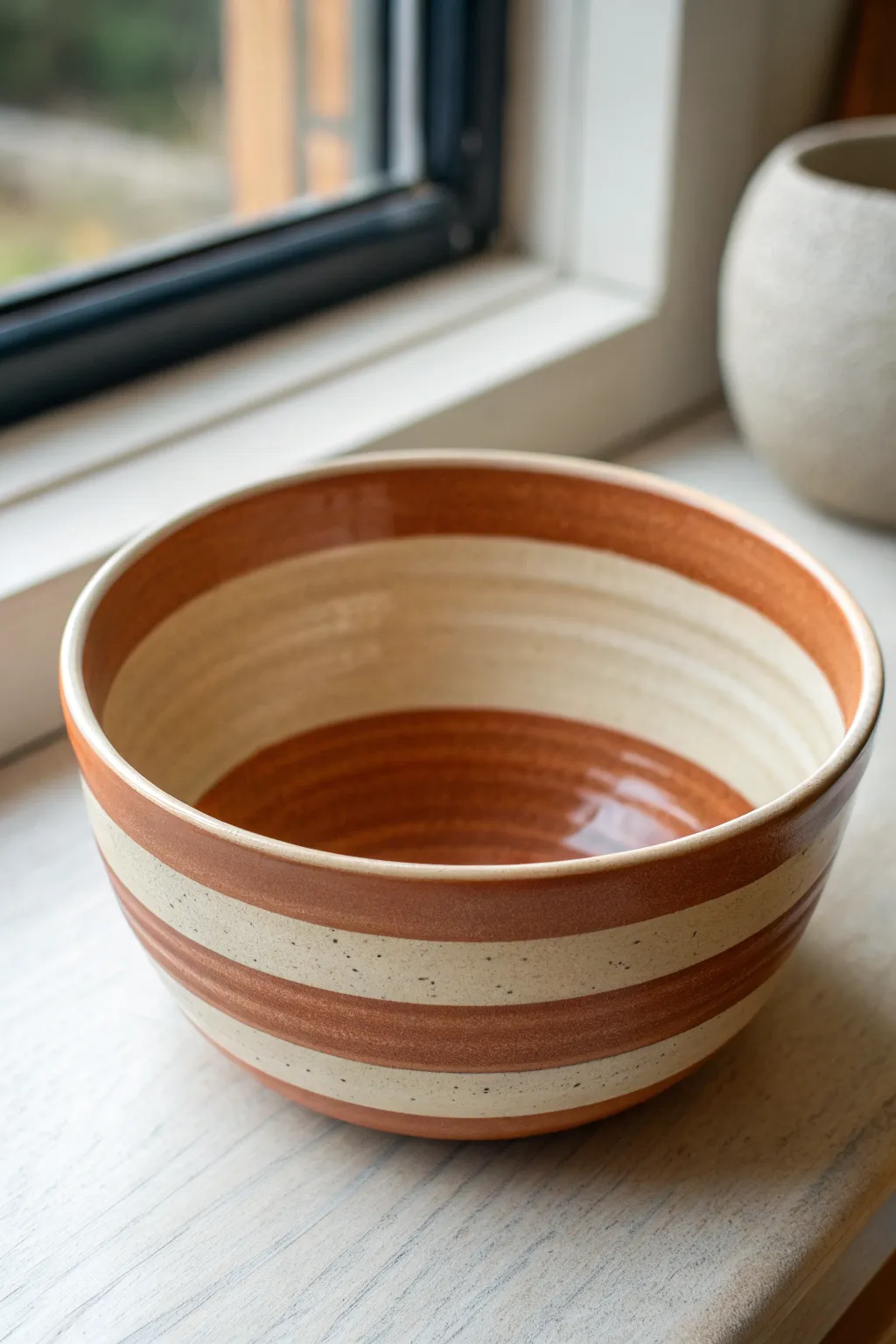
Embrace the timeless beauty of natural tones with this warm, striped bowl design. The alternating bands of rusty terracotta and creamy, speckled oatmeal create a cozy, rustic aesthetic perfect for any home.
Step-by-Step
Materials
- Bisque-fired ceramic bowl
- Underglaze (warm terracotta/rust color)
- Underglaze (creamy oatmeal or off-white)
- Speckled glaze additive (if oatmeal glaze isn’t pre-speckled)
- Potter’s wheel or heavy banding wheel
- Soft fan brush
- Flat shader brush (medium width)
- Sponge
- Bowl of water
- Clear dipping glaze (glossy)
Step 1: Preparation & Planning
-
Clean the surface:
Begin by wiping down your bisque bowl with a varied damp sponge. This is crucial as it removes any kiln dust that could prevent the glaze from adhering properly. -
Center the piece:
Place your bowl directly in the center of your potter’s wheel or banding wheel. Give it a spin to check; if it wobbles visually, tap it gently until it spins true. -
Visualize the bands:
Look at your bowl’s height. You will be creating broad, alternating stripes. Aim for about four distinct bands on the exterior: rim, upper body, lower body, and foot.
Step 2: Painting the Bands
-
Load the brush:
Dip your medium flat shader brush generously into the terracotta underglaze. You want the brush fully loaded but not dripping. -
Apply the first rim stripe:
Get the wheel spinning at a slow, steady pace. Gently touch the brush to the outer rim and hold your hand steady, allowing the wheel’s rotation to paint the line for you. -
Thicken the band:
Use slight downward pressure to widen this top stripe to about an inch thickness. I find bracing my elbow on the table helps keep the line crisp. -
Mirror the inside:
While the wheel is spinning, bring that terracotta color over the lip and paint the top inch of the interior to match the exterior rim band. -
Create the lower exterior stripe:
Move your brush down to the lower third of the bowl. Apply the second terracotta band here, keeping it parallel to the top one. -
Paint the bottom center:
For the interior, paint a large circle of terracotta at the very bottom well of the bowl. This creates a beautiful depth when looking inside. -
Let it dry:
Wait until the terracotta colored bands lose their wet sheen and turn a chalky, matte color. -
Apply second coats:
Repeat the previous painting steps to add a second and third coat of terracotta. This ensures the color will be opaque and solid after firing.
Wobbly Stripes?
If your hand shakes, try resting your pinky finger against the side of the wheel base (not the spinning part!) for stability while holding the brush.
Step 3: The Speckled Cream Layer
-
Switch to cream:
Clean your brush thoroughly or switch to a new flat brush. Load it with the speckled cream underglaze. -
Fill the gaps:
With the wheel spinning slowly, apply the cream color in the empty spaces between your terracotta bands. Be careful not to overlap the colors too much, though a tiny overlap is okay. -
Layer the cream:
Lighter colors often need more coats. Apply three generous coats of the cream glaze, allowing drying time between each. -
Add speckles (optional):
If your cream glaze doesn’t have built-in speckles, use a stiff toothbrush dipped in iron oxide wash or black underglaze to gently flick tiny specks over the cream sections.
Level Up: Texture
Before painting, while the clay is leather hard, use a trimming tool to carve shallow grooves where the cream bands will go for tactile contrast.
Step 4: Finishing
-
Clean the foot:
Use a damp sponge to wipe away any glaze that may have dripped onto the very bottom foot ring of the bowl so it doesn’t stick to the kiln shelf. -
Final drying:
Let the entire piece dry completely, usually overnight, before moving to the glazing stage. -
Clear glaze application:
Dip the entire bowl into a clear, glossy glaze. This will seal the clay and make the colors pop with that shiny finish seen in the photo. -
Fire the piece:
Fire the bowl in the kiln according to the clay and glaze manufacturer’s temperature guidelines (usually Cone 06 or Cone 5/6).
Once fired, you will have a stunning, food-safe bowl ready for your morning oatmeal or evening soup

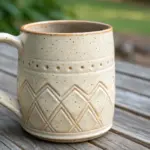
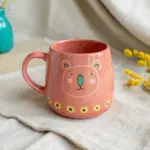

Easy Doodle Icons
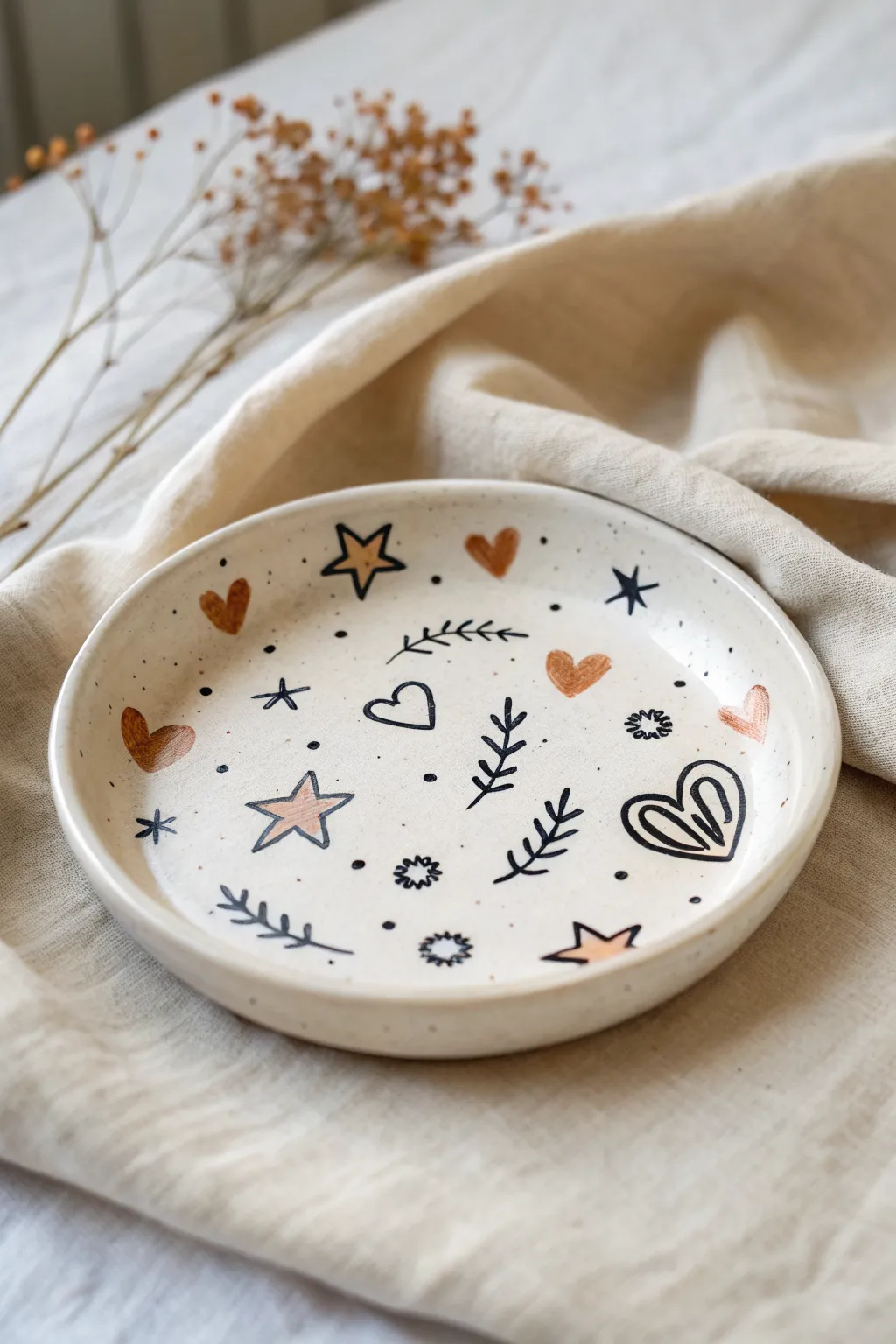
Transform a plain ceramic dish into a charming piece of art with nothing more than simple hand-drawn motifs. This project features scattered stars, hearts, botanical sprigs, and tiny dots in a warm, muted palette that feels cozy and organic.
Detailed Instructions
Materials
- Bisque-fired ceramic plate or shallow bowl (white or speckled clay body)
- Underglaze pencil (black)
- Underglaze paints (rusty orange, soft pink/peach, black)
- Fine detail paintbrush (size 0 or 00)
- Clear transparent glaze (food safe)
- Sponge and water bowl
- Kiln access (for firing)
Step 1: Preparation & Planning
-
Clean the Surface:
Before you begin any painting, take a slightly damp sponge and wipe down your bisque-fired plate. This removes any ceramic dust or oils from your hands that might repel the glaze later. -
Visualize the Layout:
Study the reference image to understand the spacing. Notice how the ‘weight’ is distributed evenly; the hearts, stars, and leaves are scattered randomly but don’t clump together in one spot. -
Sketch lightly:
Using a very light touch with a regular pencil, you can map out where your largest icons will go. Don’t worry about mistakes—graphite burns off completely in the kiln.
Step 2: Drawing the Linear Motifs
-
Outline the Hearts:
Dip your fine liner brush into black underglaze (or use an underglaze pencil/pen). Draw a few open hearts scattered around the center and edges. vary their sizes slightly for interest. -
Add Botanical Sprigs:
Paint simple leaf branches. Start with a central curved line, then add small dashes on either side to create leaves. Create some with rounded leaves and some with sharper, pine-needle strokes. -
Create Line Stars:
Draw a few five-point stars using just the black outline. Keep them rustic and hand-drawn; perfect symmetry isn’t the goal here. -
Detail with Starbursts:
Fill in smaller gaps with tiny asterisks or starburst shapes. I like to think of these as little sparks of light filling the empty space. -
Draw the striped heart:
Locate a spot for a feature element, like the striped heart in the image. Draw a heart outline, then add a smaller heart inside it, and fill one half with diagonal stripes.
Smudged Lines?
If you accidentally smear a black line while glazing, let it dry completely. Then, gently scratch the smudge away with a toothpick or crafting knife before refiring.
Step 3: Adding Color Accents
-
Paint Solid Hearts:
Switch to your rusty orange underglaze. Paint a few small, solid hearts in the remaining open spaces. You may need two coats for opaque coverage. -
Fill the Stars:
Select a lighter peach or soft pink underglaze. Carefully fill in the open star outlines you drew earlier. It’s okay if the color goes slightly over the black line—it adds to the doodle charm. -
Add Free-Floating Shapes:
Paint a few additional solid stars or hearts in the pink/peach tone without black outlines to add variety and softness to the composition. -
The Dotted Texture:
Using the very tip of your brush handle or a dedicated dotting tool, dip it into black underglaze. Gently dot the background space around your icons. Keep the dots random and sparse.
Metallic Magic
Add a third firing with a gold luster click-pen to outline the hearts or fill the stars for a touch of real gold shine.
Step 4: Finishing & Firing
-
Dry Completely:
Allow your underglaze designs to dry fully. This usually takes about 20-30 minutes, and the colors will look chalky and lighter than the finished result. -
Apply Clear Glaze:
Once dry, apply a coat of clear, food-safe dipping or brushing glaze over the entire piece. Do this quickly so you don’t smear your detailed lines. -
Wipe the Foot:
Ensure the bottom ring (foot) of the plate is completely wiped clean of glaze with a wet sponge, or it will stick to the kiln shelf. -
Final Fire:
Fire the piece in the kiln according to the clay and glaze manufacturer’s instructions (usually Cone 5 or 6 for stoneware).
Enjoy using your new, delightfully patterned dish for trinkets or treats
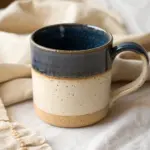


Modern Color Blocking
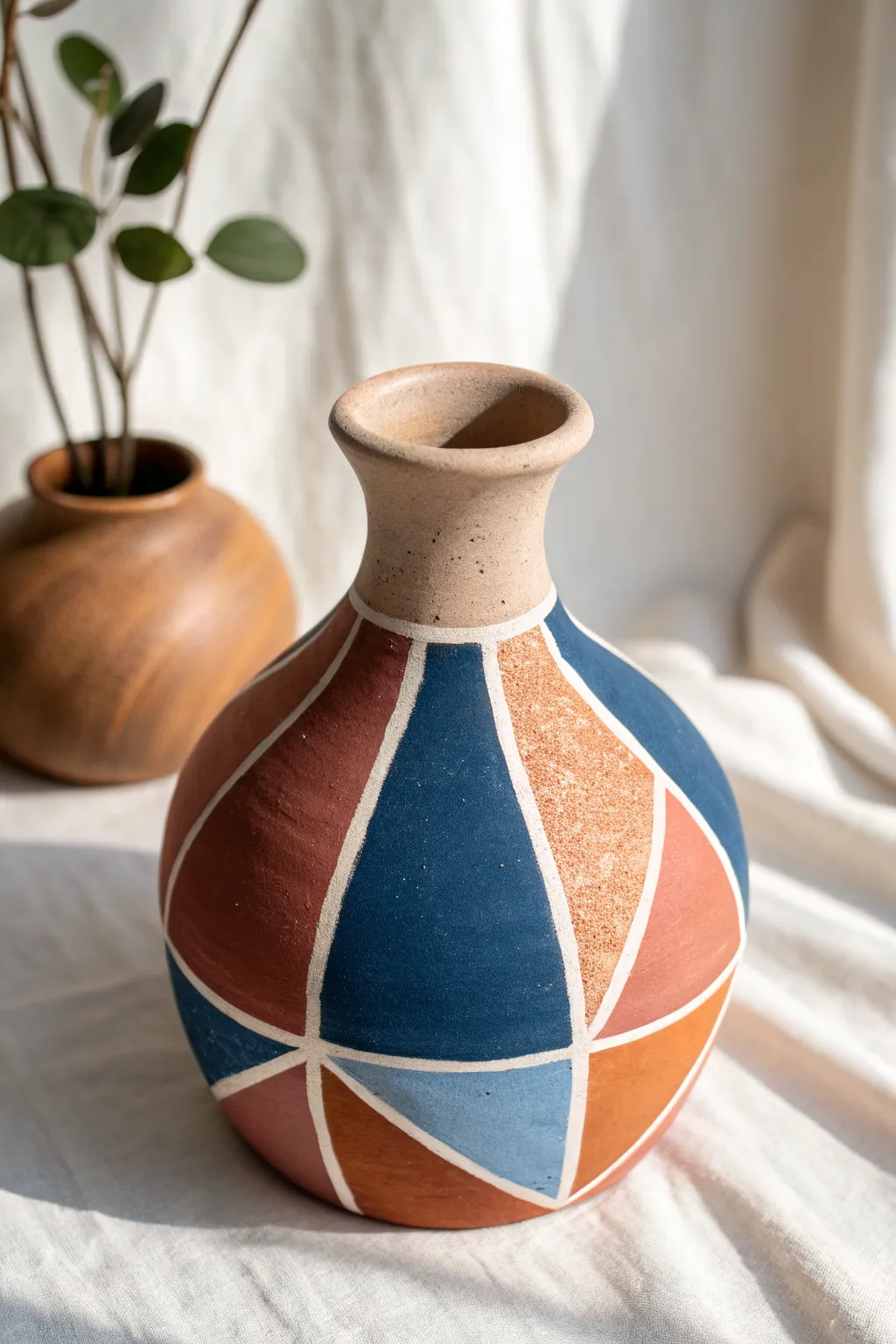
Transform a simple bisque vase into a statement piece with this bold geometric color-blocking design. By showcasing raw clay alongside deep matte hues like navy, terracotta, and rust, you create a sophisticated contrast that feels both modern and earthy.
Step-by-Step Tutorial
Materials
- Unfinished bisque or terracotta vase (bulbous shape with narrow neck)
- Acrylic paints (navy blue, terracotta, burnt orange, light blue, warm off-white)
- Fine-line masking tape or painters tape (1/8 inch or 1/4 inch width)
- Flat shader brushes (medium and small)
- Detail round brush (size 1 or 2)
- Clean cloth or sponge
- Palette or paper plate
- Matte varnish spray (optional)
Step 1: Preparation & Mapping
-
Clean the Surface:
Before you begin, wipe down your vase with a slightly damp cloth to remove any dust or ceramic powder. This ensures that your tape adheres properly and lines remain crisp. -
Define the Neck:
Decide where the painted design will stop. For this look, tape a horizontal ring around the base of the neck. Everything above this line will remain raw, unpainted clay to highlight the natural texture. -
Map the Design:
Using thin masking tape (1/8 inch works best for these delicate lines), start creating your geometric pattern. Apply long strips of tape vertically and diagonally across the body of the vase. Let the lines intersect randomly to form varied shapes like triangles and trapezoids. -
Secure the Tape:
Once your pattern is mapped out, run your fingernail or a burnishing tool firmly over all the tape edges. This crucial step prevents paint from bleeding underneath and saves you from touch-ups later.
Step 2: Color Blocking
-
Plan Your Palette:
Squeeze your acrylic colors onto your palette. You want a balance of dark and light tones. Aim for a mix of navy blue, deep terracotta, a lighter rust orange, and a soft light blue. -
First Coat – Dark Tones:
Start with your darkest color, the navy blue. Choose a large central triangle or shape and fill it in carefully using a flat brush. Apply the paint somewhat thickly but evenly to cover the clay texture. -
Apply Terracotta Shades:
Move on to adjacent shapes with your terracotta and burnt orange tones. Try not to put two shapes of the same color right next to each other; spacing them out creates better visual balance. -
Add Accents:
Fill in smaller remaining shapes with your light blue accent color. This lighter shade adds a pop of brightness that keeps the design from feeling too heavy. -
Let it Dry:
Allow the first coat to dry completely for about 20 minutes. Bisque ware is porous and soaks up paint quickly, so it might dry faster than canvas. -
Second Coat:
Apply a second layer of paint to each shape. This ensures the colors are solid, opaque, and vibrant, completely hiding the clay color underneath.
Uneven Lines?
If paint bled under the tape, don’t panic. Wait for it to dry completely, then gently scrape the excess paint away with a craft knife or toothpick before painting your white lines.
Step 3: The Reveal & Detailing
-
Remove Tape:
Once the second coat is dry (but not fully cured—roughly 15-20 minutes after painting), gently peel off the masking tape. Pull the tape away at a 45-degree angle to get the cleanest edge. -
Assess the Lines:
You will now have unpainted raw clay lines between your colors. To achieve the crisp white lines shown in the reference, you will need to paint these channels. -
Painting the Grid:
Using your smallest detail brush and warm off-white paint, carefully paint over the raw clay channels that were previously covered by tape. I find resting my pinky finger on a dry spot of the vase helps steady my hand. -
Neck Border:
Don’t forget the horizontal line at the base of the neck. Paint this delicate white ring to cleanly separate the painted body from the raw textures of the neck. -
Clean Up Edges:
If your white lines wobbled slightly into the color blocks, just wait for the white to dry, then use your colored paints to tidy up the edges for a razor-sharp finish. -
Final Protection:
Once the entire vase is fully dry (give it a few hours), spray it with a matte varnish if you want to protect the paint without adding unwanted shine. This preserves that modern, velvety look.
Pro Tip: Textured Finish
Mix a pinch of baking soda into your terracotta or orange paint before applying. This creates a gritty, ceramic-like texture that mimics the natural feel of unglazed pottery.
Place your new vase near a window where the natural light can highlight the beautiful contrast between the smooth paint and the raw neck

The Complete Guide to Pottery Troubleshooting
Uncover the most common ceramic mistakes—from cracking clay to failed glazes—and learn how to fix them fast.
Soft Ombre Gradient
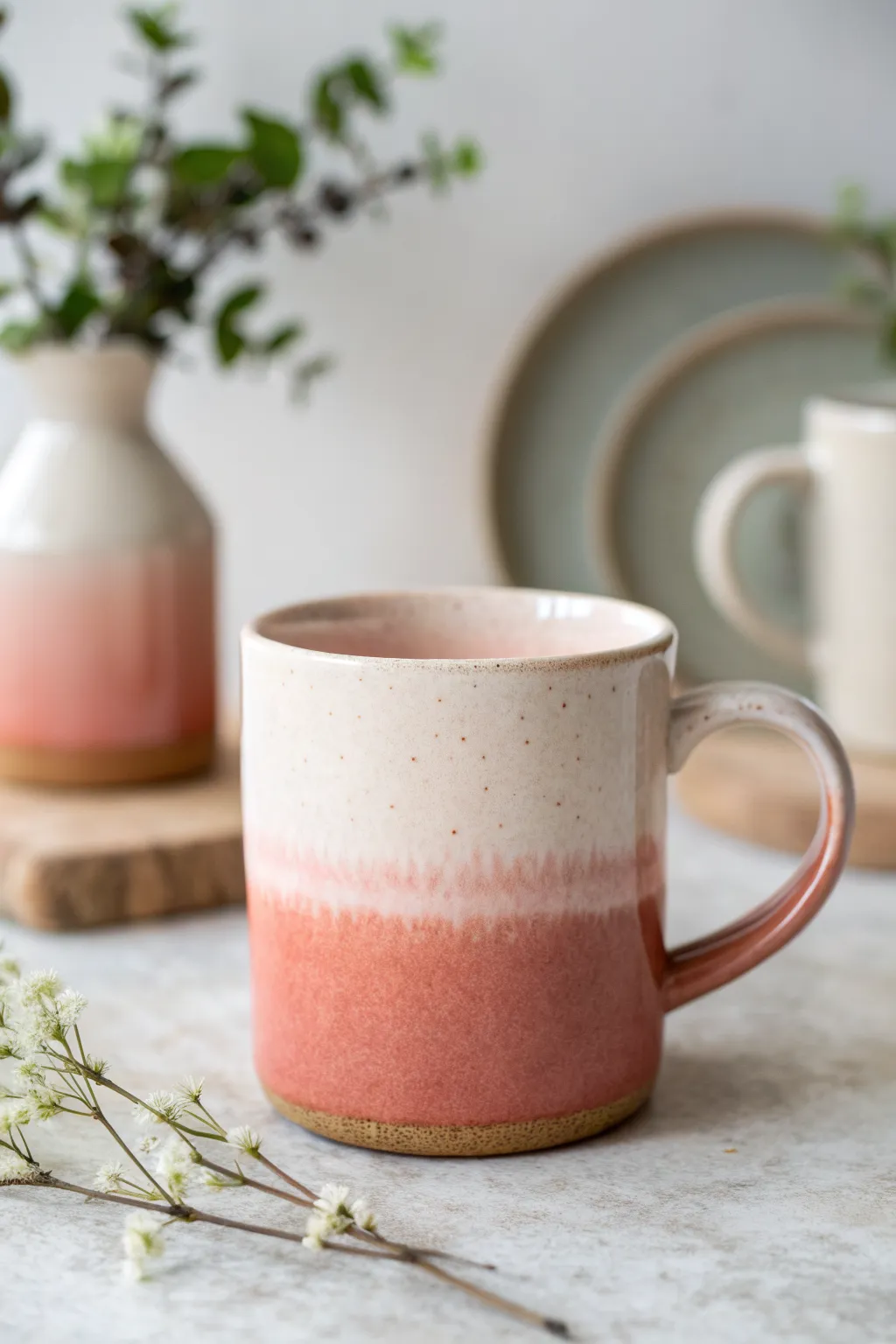
Capture the warmth of a sunrise with this gently transitioning ombre effect that blends creamy speckled white into a soft, earthy salmon pink. This technique creates an organic, feathered look where the glazes meet, giving your handmade pottery a cozy and sophisticated finish.
Step-by-Step Guide
Materials
- Bisque-fired ceramic mug (stoneware clay body recommended)
- Cream or antique white stoneware glaze (semi-opaque)
- Salmon pink or terracotta stoneware glaze
- Wax resist emulsion
- Small sponge brush
- Wide glazing brush or large fan brush
- Clean bucket of water
- Damp sponge for cleanup
- Glaze tongs (optional but helpful)
Step 1: Preparation & Masking
-
Clean the bisque:
Before you begin, wipe down your entire bisque-fired mug with a barely damp sponge. This removes any kiln dust or oils from handling that might repel the glaze. -
Prepare the base:
Dip your small sponge brush into the wax resist. Carefully apply a band of wax, about a quarter-inch high, around the very bottom edge of the mug and cover the entire underside. -
Dry the wax:
Let the wax resist dry completely. This step ensures the raw clay body remains visible at the foot, creating a lovely textural contrast with the smooth glaze.
Uneven Fade?
If the line between colors is too harsh, use a damp sponge to gently dab the boundary while the glaze is still wet. This feathers the edges for a smoother gradient.
Step 2: Applying the Glazes
-
Mix the cream glaze:
Vigorously stir or shake your cream-colored glaze. You want a consistency similar to heavy cream to ensure even coverage without being too thick. -
Dip the interior:
Pour the cream glaze inside the mug, roll it around to coat every surface, and pour the excess back into your container. Wipe any drips off the rim immediately with a damp finger. -
Dip the top half:
Hold the mug by the foot and dip it upside down into the cream glaze. Submerge it past the halfway point, covering about 60% of the exterior. -
Let it set:
Allow the cream glaze on the top half to dry until it is powdery to the touch. This prevents the colors from muddying too much in the next step. -
Mix the pink glaze:
Prepare your salmon pink glaze. If you want the transition to be extra soft, I sometimes add a tiny splash of water to thin it just slightly. -
Dip the bottom half:
Holding the mug by the rim (carefully touching only the dry cream glaze), dip the bottom half into the salmon glaze. Only submerge up to where the colors should meet. -
Overlap the glazes:
To get that beautiful blended line, dip the pink section slightly higher so it overlaps the cream section by about half an inch. -
Dip the handle:
If your mug has a handle, use a ladle or brush to pour the pink glaze over the lower portion of the handle, matching the horizon line of the mug body.
Step 3: Finishing Touches
-
Create the speckles:
Dip a stiff-bristled toothbrush or fan brush into a dark iron oxide wash or a concentrated brown glaze. Run your thumb over the bristles to flick tiny speckles onto the upper cream section. -
Clean the foot:
Use a damp sponge to wipe away any glaze beads that have collected on the waxed bottom area. The wax makes this easy, but a quick wipe ensures a clean kiln shelf. -
Check the overlap:
Inspect the area where the two glazes meet. If the layer looks too thick, gently pat it with a clean fingertip to thin it out, which helps prevent running during firing. -
Final drying:
Let the mug dry completely for at least 24 hours before loading it into the kiln. Moisture trapped in the clay can cause issues during firing. -
Fire the piece:
Fire the mug in your kiln according to the clay and glaze manufacturer’s instructions (typically Cone 5 or 6 for stoneware).
Coordinating Handle
For a thoughtful detail, leave the very top of the handle unglazed or paint a third accent strip there to match the raw clay texture at the base.
Enjoy your morning coffee in a mug that perfectly balances modern color with rustic charm
Simple Floral Wreath Rim
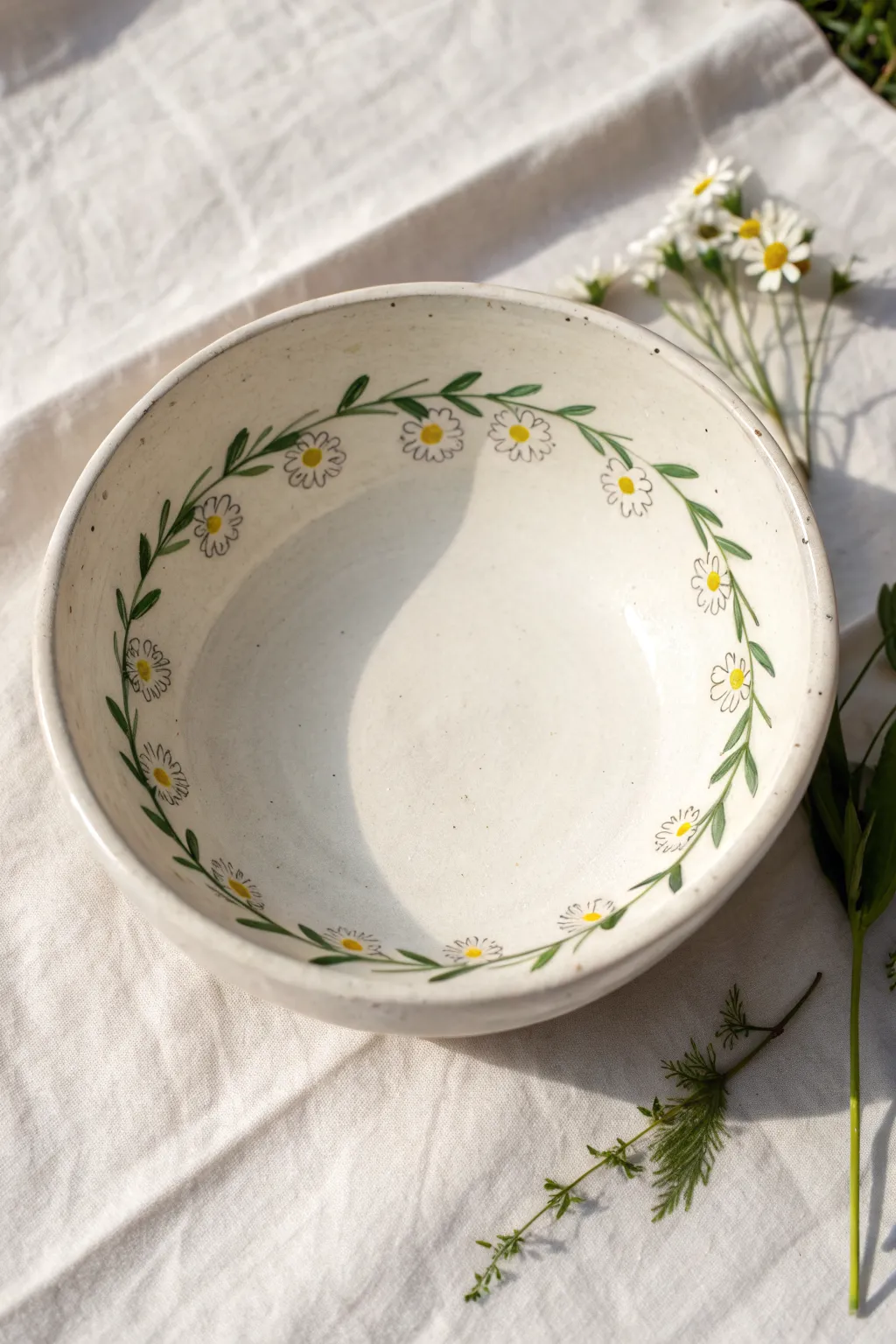
Transform a plain ceramic bowl into a meadow-inspired piece with this delicate floral wreath design. Using simple brushstrokes and a soft color palette, you’ll create a charming garland of white daisies and greenery that gracefully circles the inner rim.
Detailed Instructions
Materials
- Bisque-fired ceramic bowl (white or cream clay body preferred)
- Underglazes: Leaf Green, Deep Green, Bright White, Sunshine Yellow
- Small round paintbrush (size 0 or 1)
- Fine liner brush (size 00 or 000)
- Pencil (HB or lighter)
- Clear dipping glaze
- Water cup and paper towels
Step 1: Planning and Sketching
-
Clean surface:
Begin by wiping down your bisque bowl with a slightly damp sponge to remove any kiln dust or oils from your hands, ensuring a clean painting surface. -
Mark specific points:
Lightly mark four equidistant points around the inside rim of the bowl with your pencil to help you space out your design evenly. -
Sketch the vine:
Draw a very faint, wavy line connecting your points about an inch or two down from the top edge. This doesn’t need to be perfect; it just acts as a guide for the flow of the stems. -
Place flower centers:
Along your guide line, lightly sketch small circles where you want your daisy centers to be. Space them somewhat regularly, but vary the exact positioning slightly for a natural look.
Clean Lines
If your vine line looks shaky, don’t wipe it off. Thicken the line slightly at the wobble to turn it into a leaf attachment point.
Step 2: Painting the Greenery
-
Mix your greens:
Create a natural variation in your foliage color. I like to put a blob of Leaf Green and a smaller blob of Deep Green on my palette, dipping into both to get slight streaks. -
Paint the main stem:
Using the liner brush, careful trace over your pencil guide line with the green paint. Keep the pressure light to maintain a thin, delicate stem. If the line breaks occasionally, that adds to the rustic charm. -
Add first leaves:
Switch to your small round brush. Press down and lift up quickly to create teardrop-shaped leaves coming off the main stem. Aim for pairs of leaves in the gaps between your flower placeholders. -
Connect the leaves:
Use the very tip of the brush to draw tiny stems connecting each leaf back to the main vine. -
Vary direction:
As you work around the bowl, ensure some leaves point upwards and others drape downwards to simulate movement.
Step 3: Painting the Daisies
-
Paint flower centers:
Dip the back end of your paintbrush handle into the Sunshine Yellow underglaze. Dot this firmly onto your sketched circles to create perfect, round centers. -
Start the petals:
Using the liner brush loaded with Bright White, paint small, short strokes radiating outward from the yellow centers. Don’t worry if the white paint is thicker; a little texture looks lovely here. -
Petal spacing:
Paint 8-10 petals per flower. Leave tiny gaps between them so they don’t merge into a solid blob; you want individual, defined petals. -
Outline details:
For a sketched look like the example, you can take a very dry liner brush with the tiniest amount of thinned dark grey or black underglaze and outline just the tips of a few petals or leaves, though this is optional. -
Clean up:
Use a damp brush to gently wipe away any visible pencil marks that aren’t covered by paint, or scratch away stray paint droplets with a toothpick.
Level Up: Speckled Clay
Use a speckled buff clay instead of white. The iron flecks will show through the translucent clear glaze, giving the bowl a rustic, vintage farmhouse aesthetic.
Step 4: Finishing and Firing
-
Dry thoroughly:
Let the underglaze dry completely. It should look chalky and matte to the touch before you proceed. -
Glaze application:
Dip the entire bowl into a clear glaze. Shake off the excess gently to ensure an even coat. -
Fire:
Fire the piece in the kiln according to the clay and glaze manufacturer’s instructions (usually Cone 06 or Cone 6).
Enjoy your beautiful new bowl for morning cereal or as a lovely display piece on your kitchen counter




What Really Happens Inside the Kiln
Learn how time and temperature work together inside the kiln to transform clay into durable ceramic.
Leafy Botanical Sprigs
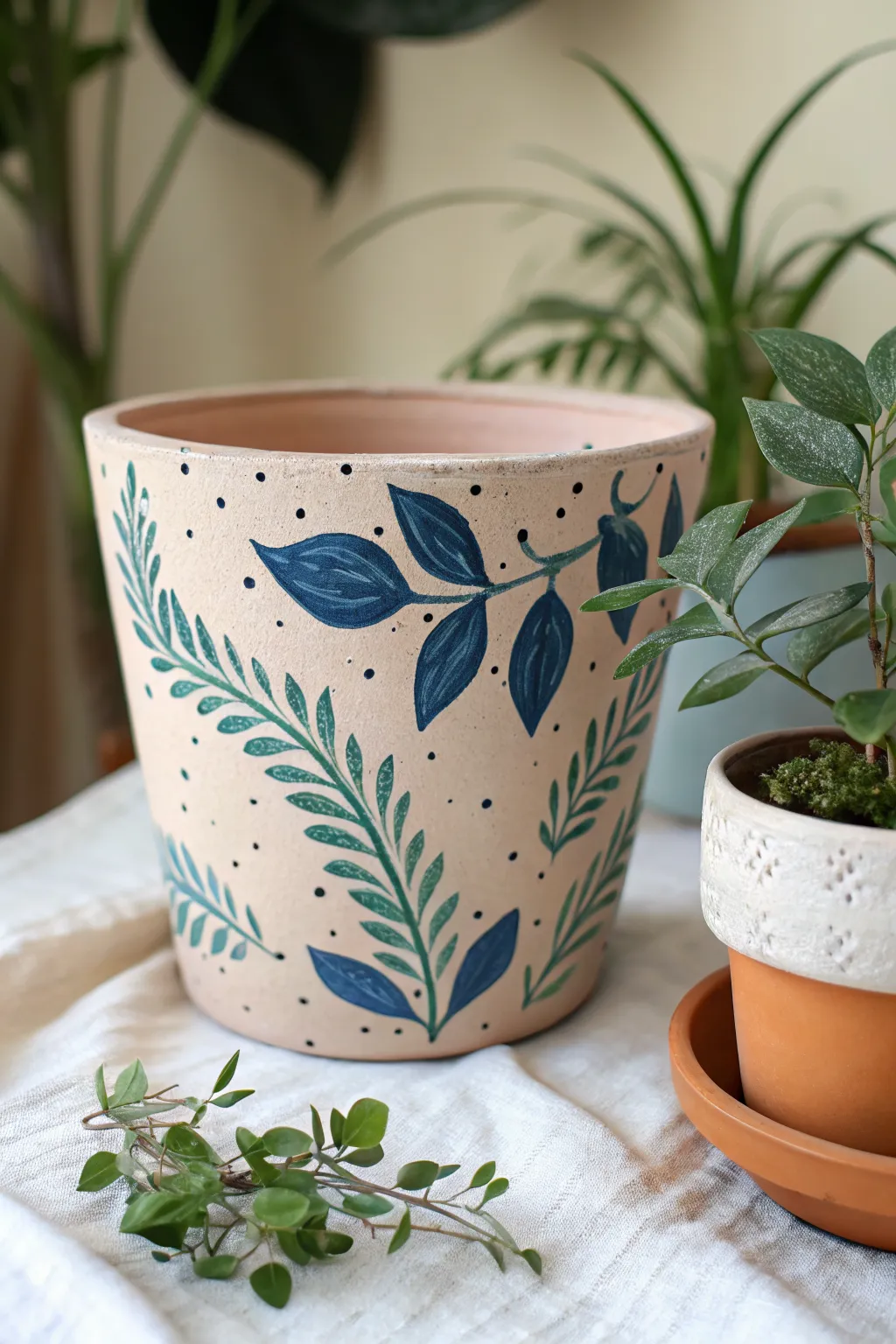
Transform a plain terracotta pot into a chic home for your greenery with this elegant leaf design. By combining sweeping fern fronds with bold, dark blue leaves against a creamy background, you’ll create a piece that feels both modern and organic.
How-To Guide
Materials
- Terracotta pot (clean and dry)
- Acrylic primer (white or gesso)
- Acrylic paints: Cream/Pale Beige, Dark Navy Blue, Teal/Green, Black
- Flat paintbrush (medium size)
- Round paintbrush (size 4 or 6 for leaves)
- Fine liner brush (size 0 or 1 for stems/details)
- Dotting tool or toothpick
- Spray sealant (matte or satin finish)
- Palette or paper plate
- Water cup and paper towels
Step 1: Base Preparation
-
Clean the surface:
Before you start, wipe down your terracotta pot with a damp cloth to remove any dust or oils. Let it dry completely so the paint adheres properly. -
Apply the primer:
Using your flat brush, coat the entire exterior of the pot with a layer of primer. This prevents the porous clay from soaking up all your paint. -
Paint the background color:
Mix a soft cream or pale beige shade. Apply two to three even coats over the primer, allowing the paint to dry fully between layers until you have a solid, opaque base.
Oops! Paint smudge?
If you smudge a leaf, let it dry completely. Then, paint over the mistake with your cream background color before re-painting the leaf.
Step 2: Planning the Layout
-
Visualize the flow:
Imagine where your vines will creep. You want the design to look like it’s growing up from the bottom and wrapping around the sides naturally. -
Sketch lightly (optional):
If you are nervous about freehanding, use a very light pencil to draw single lines representing the main stems. Keep the lines curved and fluid.
Make it Metallic
For a glamorous twist, swap the black dots for gold leaf or metallic gold paint markers to catch the light.
Step 3: Painting the Fern Fronds
-
Draw the fern stems:
Load your fine liner brush with the teal or green paint. Paint long, arching lines starting near the base of the pot and curving upward. -
Add the leaflets:
Using the same teal color, paint small, quick flicks branching off the main stem. Start with longer strokes near the bottom of the stem and make them shorter as you reach the tip. -
Refine the shape:
I like to go back and add a tiny bit of lighter green to the tips of a few leaflets to create depth, but keeping it monochrome works beautifully too.
Step 4: Painting the Broad Leaves
-
Paint the main stems:
Switch to your dark navy blue paint. Use the liner brush to paint thicker, sturdier-looking stems meandering between the fern fronds. -
Create the leaf shape:
Using the round brush (size 4 or 6), press down firmly to start the base of the leaf and lift as you pull outward to create a pointed tip. This ‘press and lift’ motion creates a natural leaf shape. -
Fill in the leaves:
Ensure the navy leaves are opaque. You might need a second coat of blue once the first layer is dry if the beige background shows through. -
Add leaf details:
Once the navy leaves are completely dry, use your fine liner brush with a slightly lighter blue (or mix a tiny bit of white into your navy) to paint a thin central vein down the middle of each leaf.
Step 5: Finishing Touches
-
Add the whimsical dots:
Dip a dotting tool or the back of a paintbrush into black paint. Gently stamp small dots randomly in the empty spaces around the leaves. -
Vary the spacing:
Keep the dots somewhat sparse; they should look like floating pollen or distant seeds, not a crowded pattern. -
Let it cure:
Allow the entire pot to dry for at least 24 hours to ensure all layers are hardened. -
Seal the deal:
Take the pot to a well-ventilated area and apply a clear matte or satin spray sealant. This protects your artwork from water damage when you water your plant.
Now you have a stunning, hand-painted vessel ready to display your favorite houseplant
Sunny Citrus Slices
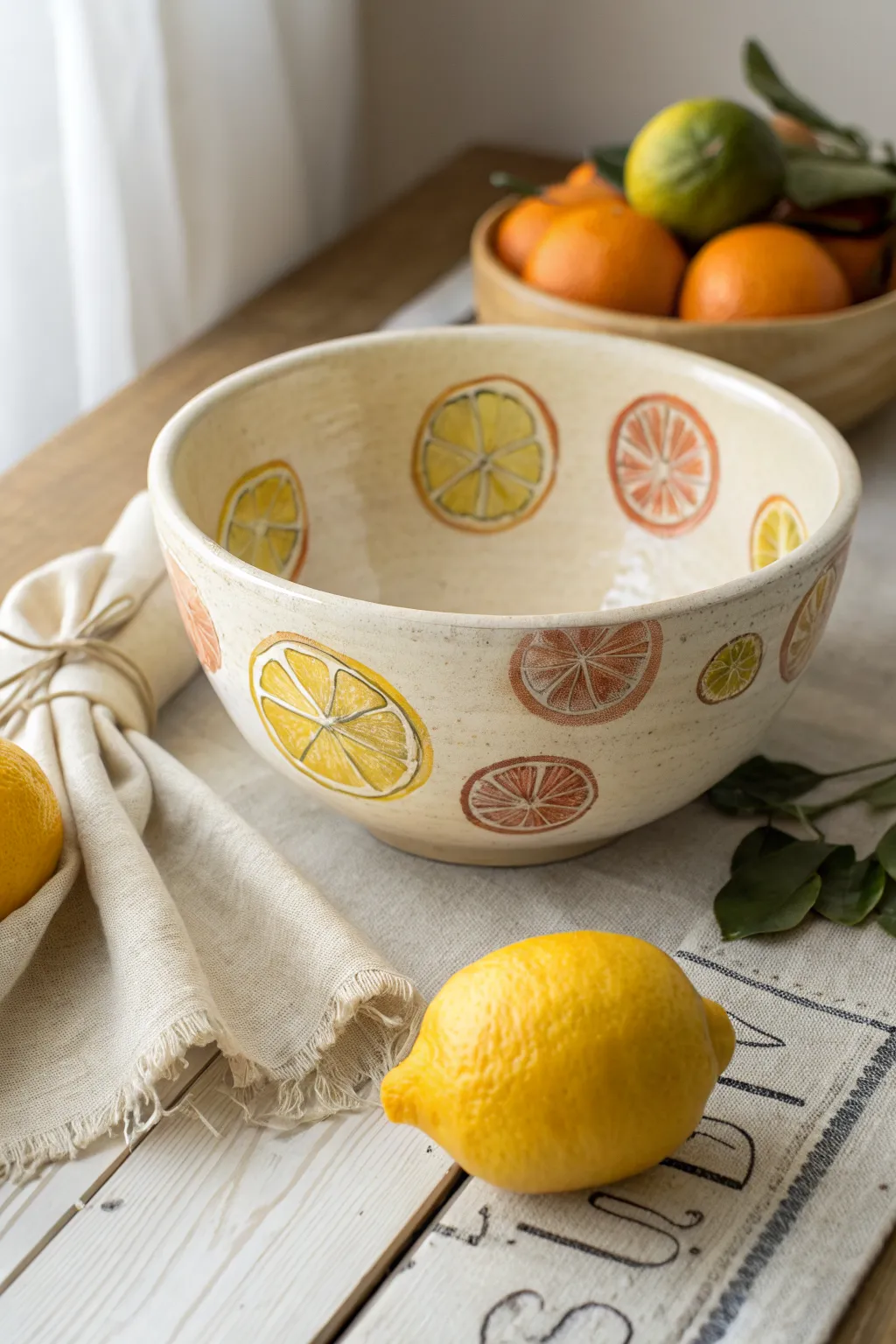
Bring the zest of summer to your table with this cheerful pottery project featuring vibrant lemon and blood orange slices. The rustic, hand-painted segments pop beautifully against a creamy speckled glaze, creating a look that is both modern and charmingly artisanal.
Detailed Instructions
Materials
- Bisque-fired ceramic bowl (medium size)
- Underglazes: Bright Yellow, Deep Orange, Burnt Sienna, Olive Green
- Cream or speckled white dipping glaze (transparent or semi-opaque)
- Round watercolor brushes (sizes 4 and 6)
- Fine liner brush (size 0 or 1)
- Pencil (standard #2)
- Palette or small dishes for mixing
- Sponge and water
- Turntable (optional but helpful)
Step 1: Preparation & Sketching
-
Clean surface:
Wipe down your bisque bowl with a damp sponge to remove any kiln dust or oils from your hands, ensuring a clean slate for painting. -
Plan placement:
Visualize where you want your citrus slices. Aim for a random, scattered pattern with some slices near the rim, some lower down, and plenty of negative space in between. -
Sketch outlines:
Lightly draw circles onto the bisque using a pencil. Don’t worry about perfection; slightly irregular circles look more organic. Vary the sizes slightly to mimic real fruit. -
Detail segments:
Inside each circle, lightly sketch a smaller inner circle for the pith, then divide the center into 6-8 triangular wedges to form the fruit segments.
Fixing Smears
Did you smudge the underglaze while painting? Don’t panic. Let it dry completely, then gently scratch the mistake off with a toothpick or a wooden clay tool.
Step 2: Painting the Lemons
-
Base yellow:
Dip your size 4 brush into the Bright Yellow underglaze. Paint the triangular segments of your lemon slices, leaving a thin gap of unpainted bisque between each wedge. -
Inner rind:
Using the same yellow, paint a thin ring around the segments, keeping it separate from the wedges to represent the pith. -
Wait and layer:
Let the first coat dry until it’s chalky and matte. Apply a second and possibly third coat of yellow to ensure the color is vibrant and opaque. -
Outer zest:
Mix a tiny amount of Burnt Sienna into your yellow to dirty it slightly. Use the liner brush to outline the very outer edge of the lemon slices for definition.
Level Up: Texture
Before the first firing, carve the dividing lines of the fruit segments slightly into the clay with a needle tool. The glaze will pool in these grooves for extra depth.
Step 3: Painting the Blood Oranges
-
Mix warm tones:
Prepare your blood orange color by mixing Deep Orange with a touch of Burnt Sienna. I sometimes add a dot of red if I want them really moody. -
Fill segments:
Paint the wedges of the remaining circles with this orange mix, again leaving those thin unpainted lines between segments. -
Layer depth:
Once the orange base is dry, take your liner brush with pure Burnt Sienna and add tiny strokes inside the segments near the center to create a textural, juicy look. -
Paint the rind:
Use the original Deep Orange color to paint the outer ring of these slices.
Step 4: Finishing Touches
-
Add vintage green:
For variety, paint one small, rogue slice in Olive Green to resemble a lime, using the same segmentation technique as before. -
Clean up:
If any lines look messy, use a barely damp brush or a scratch tool to gently scrape away excess underglaze and crisp up the edges. -
Check density:
Ensure all painted areas have 2-3 coats. Single coats of underglaze can look streaky after firing. -
Bisque fire (optional):
If your studio allows, do a quick bisque fire to set the underglaze. If not, proceed carefully to glazing. -
Apply clear glaze:
Dip the entire bowl into a clear or semi-opaque cream glaze. If using a brush-on glaze, apply 2-3 generous coats, being careful not to smear your dry fruit designs. -
Final wipe:
Wipe the foot of the bowl completely clean with a sponge to prevent it from sticking to the kiln shelf. -
Glaze fire:
Fire the bowl to the cone temperature recommended for your specific clay and glaze combination.
Enjoy using your cheerful, custom bowl for your morning yogurt or as a bright centerpiece

TRACK YOUR CERAMIC JOURNEY
Capture glaze tests, firing details, and creative progress—all in one simple printable. Make your projects easier to repeat and improve.
Clean Geometric Shapes
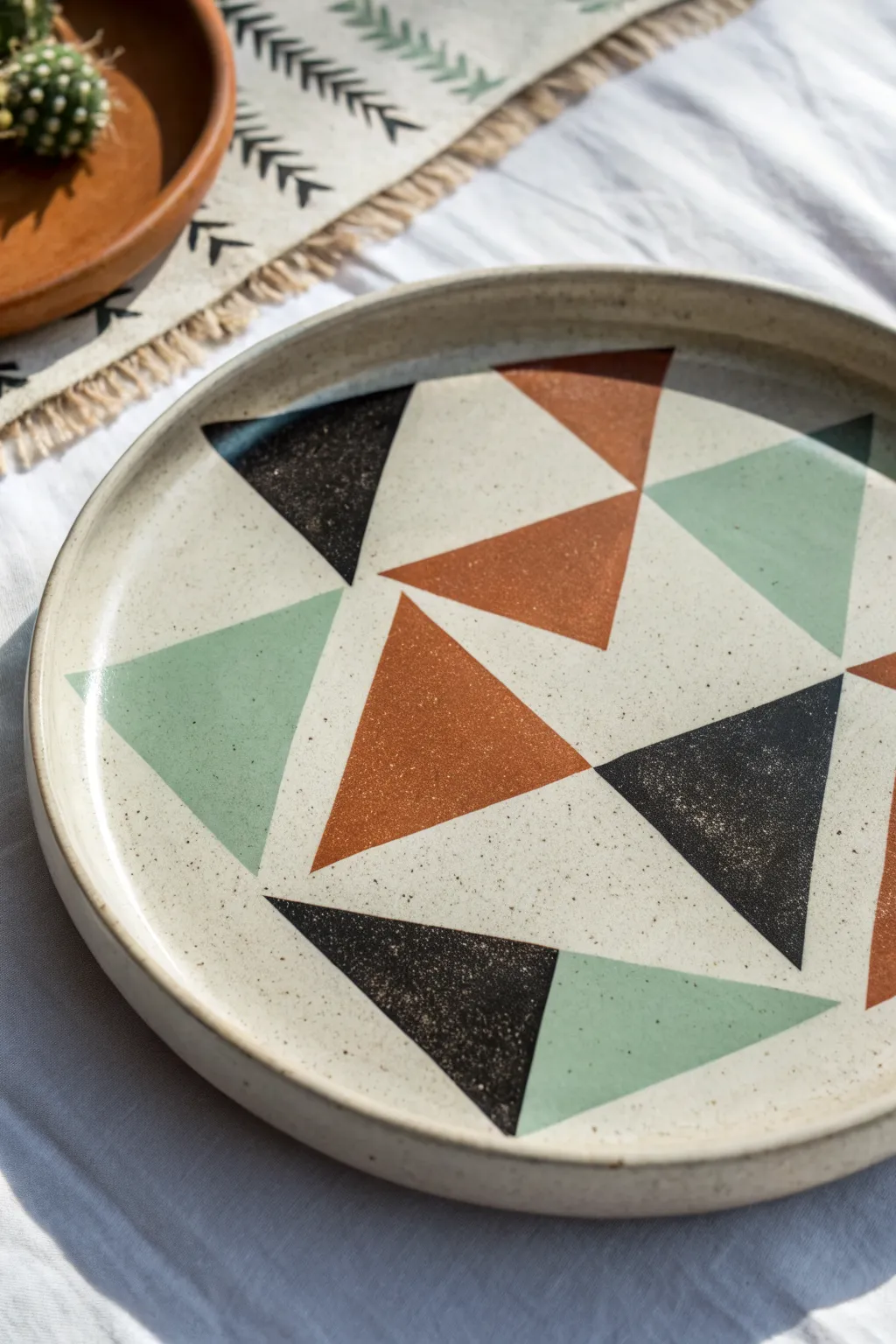
Bring modern charm to your table with this clean geometric design featuring interlocking triangles in warm, earthy tones. The speckled cream background adds a lovely organic texture that makes the crisp lines pop without feeling too rigid.
How-To Guide
Materials
- Bisqueware ceramic plate (rimmed works best)
- Underglazes in: Rust/Terracotta, Sage Green, Black, and Speckled Cream/White
- Flat shader brush (size 6 or 8)
- Fine liner brush (size 0 or 1)
- Pencil (HB or lighter)
- Ruler or straight edge
- Paper template (optional for triangle sizing)
- Clear transparent glaze
- Damp sponge
Step 1: Preparation & Base Coat
-
Clean the bisque:
Start by wiping down your entire bisqueware plate with a damp sponge. This removes any dust that might prevent the glaze from adhering properly. -
Apply the base color:
Using a wide, soft brush, apply three coats of the speckled cream underglaze to the entire surface of the plate. Ensure each coat is dry to the touch before applying the next. -
Let it dry completely:
Allow the base coats to dry thoroughly. The surface needs to be solid enough to endure some light pencil work without scratching through to the clay body.
Step 2: Drafting the Design
-
Mark the center:
Find the approximate center of your plate lightly with a pencil. This will help you balance the geometric pattern. -
Draw the main grid lines:
Using a ruler, lightly sketch a series of intersecting lines creating a large, loose grid. It doesn’t need to be perfect graph paper; the charm is in the slightly varied sizes. -
Form the triangles:
Draw diagonal lines through your grid squares to create triangles. Aim for a mix of orientations—some pointing up, some down, some sideways—to create that dynamic ‘shattered’ look. -
Refine the composition:
Step back and look at your drafted pattern. If a section looks too empty, subdivide a larger shape into two smaller triangles. Erase gently if needed.
Tape Hack
For ultra-crisp lines without a steady hand, use thin automotive masking tape or specific pottery tape (1/8 inch) to mask off the triangle boundaries before painting.
Step 3: Painting the Geometrics
-
Outline the first color:
Select your Rust/Terracotta underglaze. Choose specific triangles to fill, trying to space them out so they don’t all clump together. Use your fine liner brush to outline the edges of these chosen shapes. -
Fill the rust shapes:
Switch to your flat shader brush and fill in the outlined rust triangles. Apply 2-3 coats for solid, opaque coverage. -
Apply the sage green:
Next, pick triangles adjacent to the rust ones or in empty zones for the Sage Green. I like to visualize a balance across the plate before committing paint. Outline and fill these with 2-3 coats. -
Add the black contrast:
Use the Black underglaze for the remaining selected segments. These dark anchors give the design its modern edge. Outline carefully with the liner brush first to keep corners sharp. -
Leave negative space:
Crucially, leave several triangles unpainted, allowing the speckled cream base coat to show through. This negative space is what makes the pattern breathe.
Avoid Smudging
Work from the center of the plate outwards, or rotate the wheel/plate frequently so your hand never rests on wet glaze while reaching for a new section.
Step 4: Finishing Touches
-
Tidy up edges:
Once dry, inspect your lines. If any paint went unintendedly over a line, you can gently scratch it away with a wooden skewer or toothpick. -
Burn off pencil marks:
Don’t worry about erasing your pencil lines perfectly. The graphite will burn away completely in the kiln, leaving clean borders between your colors. -
Clear glaze application:
Dip the plate in clear transparent glaze or brush on two even coats. This will seal the underglaze and make the plate food-safe and glossy. -
Fire the piece:
Load the plate into the kiln and fire according to the clay and glaze specifications (usually cone 06 or cone 6, depending on your materials).
Now you have a stunning, modern serving piece ready for your next dinner party
Bold Checkerboard Pop
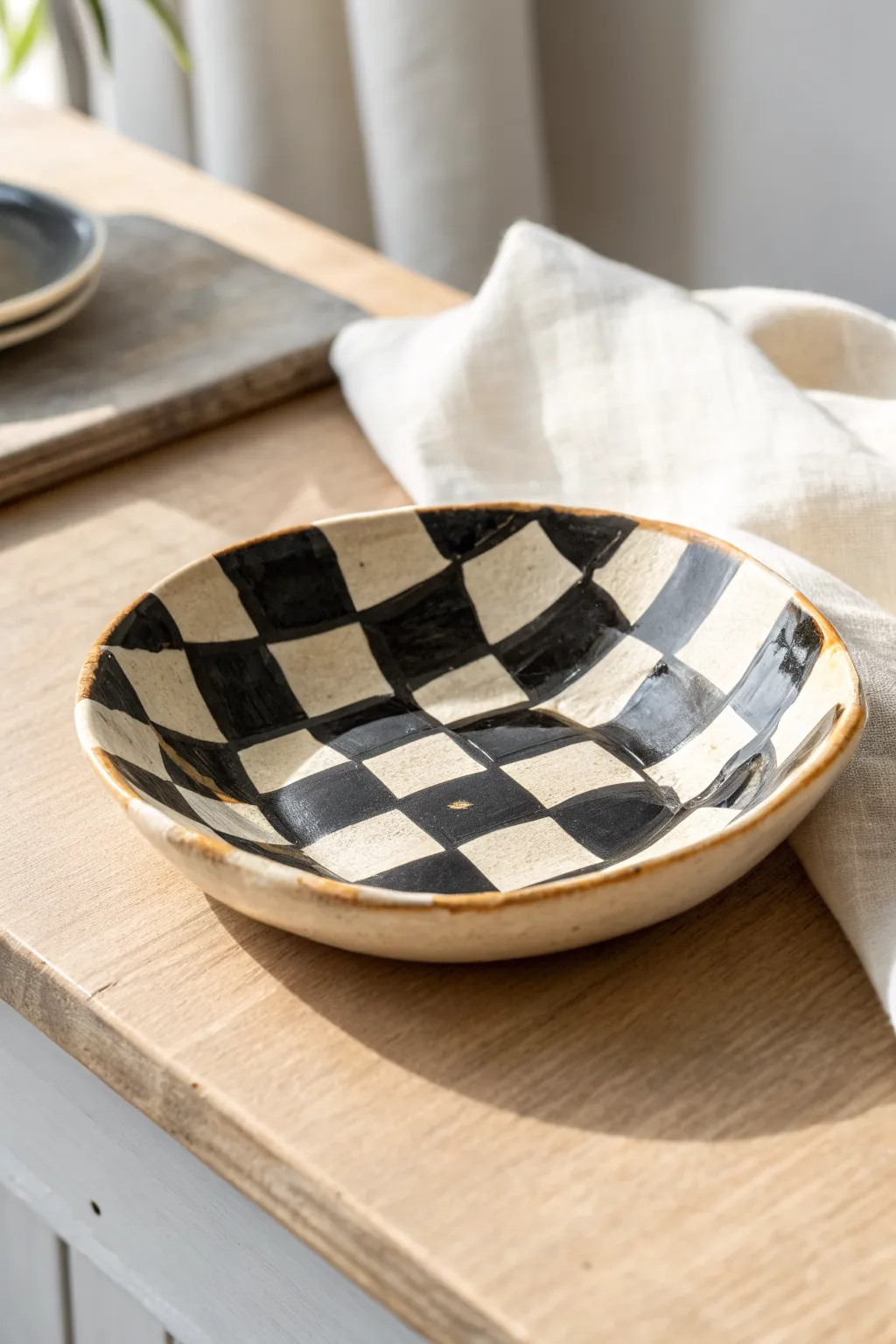
This project transforms a simple clay vessel into a striking modern statement piece using a classic checkerboard motif. The contrast between the bold black squares and the natural creamy clay creates a sophisticated, hand-painted look that feels both trendy and timeless.
Detailed Instructions
Materials
- Bisque-fired shallow clay bowl or plate
- Underglaze pencil (black)
- Black underglaze
- Small flat brush (size 4 or 6)
- Fine liner brush
- Clear transparent dipping or brushing glaze
- Damp sponge
- Ruler or flexible measuring tape
- Iron oxide wash (optional)
Step 1: Drafting the Grid
-
Clean the bisque:
Start by wiping down your bisque-fired bowl with a damp sponge to remove any kiln dust or finger oils, ensuring the underglaze will adhere properly. -
Find the center:
Place the bowl on a flat surface. Using your flexible ruler, find the general center point of the bowl’s interior and make a tiny mark with your underglaze pencil. -
Mark vertical guides:
Draw a straight line across the bowl through your center point, extending from rim to rim. I like to keep this line relatively light so it disappears under the dark glaze later. -
Mark horizontal guides:
Ideally perpendicular to your first line, draw a second line crossing it, creating a large ‘cross’ in the bowl. -
Plot grid spacing:
Decide on the size of your checks—about 1.5 to 2 inches works well for this scale. Mark these intervals along your guide lines moving outward from the center. -
Connect the grid:
sketch the rest of the grid lines, following the curve of the bowl. Don’t worry if the squares warp slightly as they climb the sides; this organic feel is part of the charm. -
Mark the ‘black’ squares:
Before you open any paint, place a tiny ‘x’ or dot inside every other square that needs to be painted black. This prevents the dreaded mistake of painting two adjacent squares the same color.
Wobbly Lines?
Don’t stress about perfection. The beauty of this piece is its hand-painted nature. If your grid looks too rigid, the final bowl will lose that organic, artisanal character shown in the photo.
Step 2: Painting the Pattern
-
Outline the squares:
Dip your fine liner brush into the black underglaze. Carefully outline the inside edges of one of your marked squares to create a crisp boundary. -
Fill in the center:
Switch to your small flat brush. Load it with black underglaze and fill in the center of the outlined square, smoothing out brushstrokes as you go. -
Repeat the process:
Continue this outline-then-fill method for all the marked squares. Working from the center outward helps keep your hand from smudging wet paint. -
Apply a second coat:
Once the first layer is dry to the touch, apply a second coat of black underglaze to ensure opaque, solid coverage. -
Clean up edges:
If any black paint strayed into a ‘white’ square, use a clean, stiff brush dipped in water—or an exacto knife—to gently scrape or wipe away the mistake.
Step 3: Finishing Touches
-
Rim detail:
For that rustic edge seen in the photo, lightly sponge a diluted iron oxide wash or a thin terracotta-colored underglaze along the very rim of the bowl. -
Clear glaze application:
Once the underglaze is bone dry, carefully dip the bowl into a clear transparent glaze, or apply three even coats of brushing clear glaze. -
Dry foot the piece:
Use a sponge to wipe any glaze off the bottom ‘foot’ of the bowl so it doesn’t fuse to the kiln shelf. -
Final firing:
Fire the piece in the kiln according to the clear glaze instructions (usually Cone 5 or 6 for stoneware).
Color Pop
Swap the classic cream background for a pastel pink or mint green underglaze before painting the black squares for a funky, Memphis-style twist on the checkerboard trend.
Now you have a stunning, food-safe vessel ready to hold fruit or serve as a centerpiece on your table
Minimal Line-Art Animals

Embrace the beauty of simplicity with this charming ceramic mug featuring a contented, snoozing cat. The speckled clay body provides a warm, rustic canvas for the minimal rust-red line work, creating a cozy vessel perfect for your morning brew.
Step-by-Step Guide
Materials
- Bisque-fired ceramic mug (speckled clay body preferred)
- Underglaze pencil or very fine detail brush (rust/red-brown)
- Underglaze (rust/red-brown color)
- Clear transparent dipping glaze
- Soft fan brush (for glaze application)
- Sponge and water
- Pencil for sketching (standard graphite)
- Kiln (or access to a firing service)
Step 1: Preparation & Sketching
-
Clean surface:
Begin by wiping down your bisque-fired mug with a slightly damp sponge. This removes any dust that might interfere with the underglaze adhering properly. -
Position the design:
Identify the center of the mug face opposite the handle. This is the prime real estate for your sleepy cat. -
Lightly sketch:
Using a regular graphite pencil, very lightly sketch the outline of the cat. Don’t worry about mistakes; the graphite will burn off completely in the kiln. Start with a large oval shape for the body.
Oops! Wobbly Lines?
If your line painting goes astray, don’t panic. Let the mistake dry completely, then gently scratch the unwanted underglaze away with a crafting knife or needle tool.
Step 2: Painting the Line Art
-
Select your tool:
For the crispest lines, an underglaze pencil is easiest. However, for that organic, hand-painted look seen in the photo, I prefer using a liner brush with slightly thinned liquid underglaze. -
Outline the head:
Start with the cat’s head. Draw the ears first, keeping them pointy but soft, then curve down for the forehead. -
Add facial detals:
Draw two small U-shapes for closed eyes. Add a tiny triangle for the nose and a few quick whisker strokes extending outward. -
Define the back:
Create the long, sweeping curve of the cat’s back. This single line defines the shape, so try to keep your hand steady and confident. -
Tuck the paws:
Draw the curled-up front paws tucked underneath the chin. A simple rounded shape works best to suggest the form without over-detailing. -
Complete the tail:
Sweep the tail line around the bottom of the body, curving it up slightly to frame the cat’s form. Connect any gaps to ensure the shape feels solid. -
Add texture lines:
At the very bottom edge of the mug, underneath the cat, paint short, vertical hatch marks all around the base to create a grassy or textured border effect.
Step 3: Handle & Finishing Touches
-
Paint the handle:
Using a larger brush, apply three coats of the same rust-brown underglaze to the handle. Let each coat dry until it loses its sheen before applying the next. -
Clean up:
Check for any smudges or stray droplets of underglaze. Gently scrape them off with a toothpick or a clean, damp brush. -
Bisque fire (optional but recommended):
If your studio allows, doing a second bisque firing to set the underglaze prevents smearing during the glazing process. If not, let the piece dry for at least 24 hours. -
Apply clear glaze:
Dip the entire mug into a clear transparent glaze. Ensure the inside is fully coated as well. Shake off excess gently. -
Wipe the foot:
Use a sponge to wipe all glaze off the very bottom of the mug (the foot ring) so it doesn’t stick to the kiln shelf. -
Final fire:
Fire the mug to the appropriate cone temperature for your clay and glaze (usually Cone 5 or 6 for stoneware).
Level Up: Sgraffito Style
Instead of painting lines, paint a solid patch of underglaze in the shape of a cat, let it dry, and carve the details through the color to reveal the speckled clay beneath.
Now you have a cozy custom mug ready for your favorite warm beverage
Ocean Wave Swirls
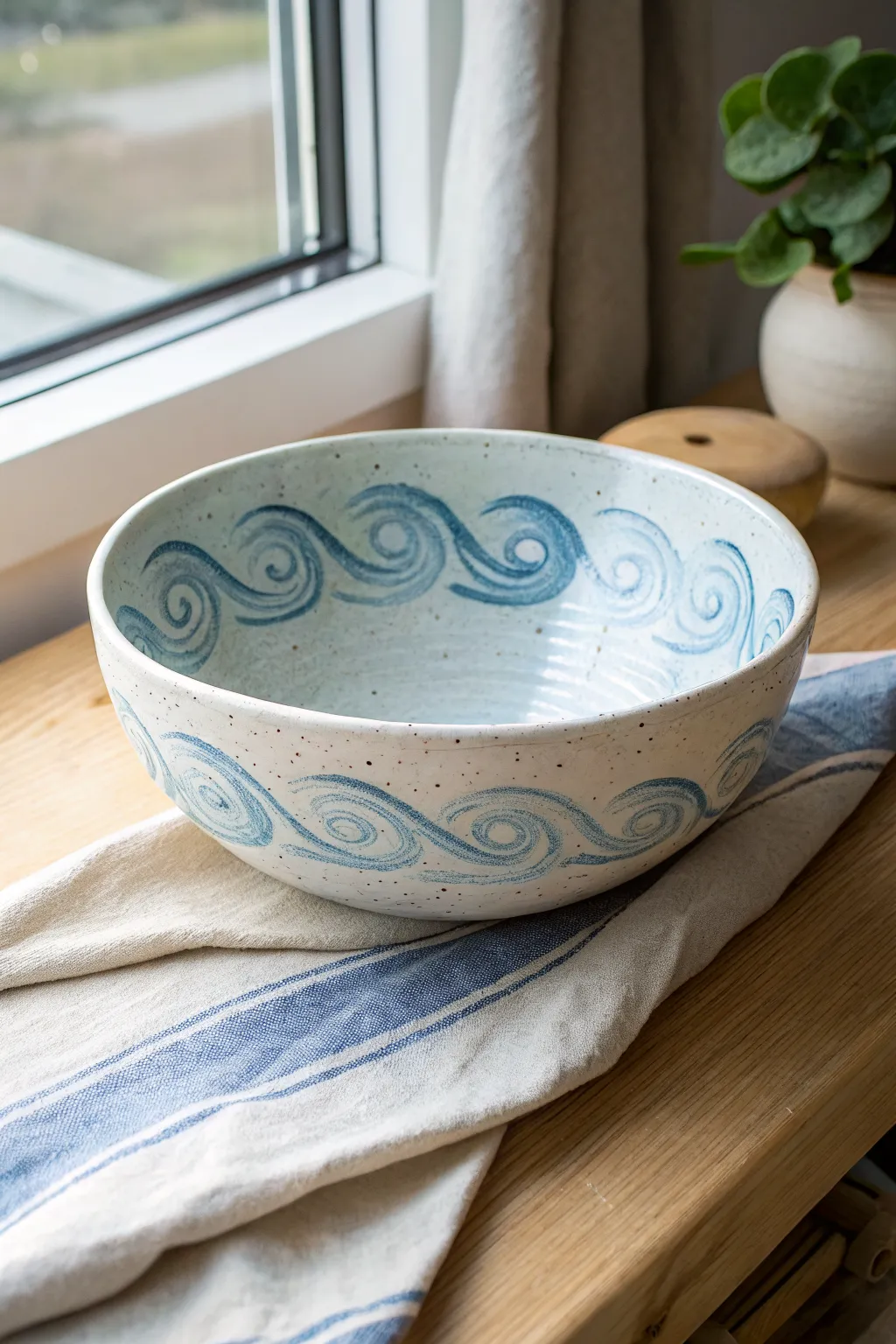
Capture the rhythmic motion of the sea with this calming pottery project. Using a speckled clay body and a simple blue underglaze, you’ll create elegant, repeating wave motifs that flow seamlessly around the interior and exterior of a functional bowl.
Detailed Instructions
Materials
- Speckled stoneware clay (bisque fired bowl)
- Medium blue underglaze
- Clear transparent glaze (food safe)
- Small round brush (size 2 or 4)
- Pencil (graphite burns off in kiln)
- Decorator’s banding wheel
- Sponge
- Water container
Step 1: Preparation & Planning
-
Prepare the Bisque:
Start with a clean, bisque-fired bowl. Speckled ‘stoneware’ clay adds lovely character, but plain white clay works too. Wipe the entire surface with a damp sponge to remove any kiln dust and ensure your underglaze adheres properly. -
Map the Exterior:
Place your bowl on a banding wheel. Using a pencil, lightly mark a horizontal guideline around the exterior, about halfway up the wall. This will serve as the baseline for your wave pattern, keeping it level. -
Mark Repeating Intervals:
Divide the circumference of your bowl into equal sections using your pencil. Mark small vertical ticks on your guideline every 3 to 4 inches; these marks will be the center points for each swirling wave crest.
Banding Wheel Hack
Keep your elbow tucked into your ribs and your hand steady; rotate the wheel rather than moving your brush to get the smoothest curves.
Step 2: Painting the Exterior Waves
-
Load the Brush:
Shake your blue underglaze thoroughly. Load a small round brush so it’s saturated but not dripping. The goal is a fluid stroke that mimics water. -
Draft the Primary Swirl:
Starting at one of your pencil tick marks, paint a large, sweeping spiral. Start from the center of the spiral and paint outwards, letting the tail of the wave dip down towards the bottom of the bowl before curling back up. -
Connect the Waves:
Create the next spiral at the next tick mark. Extend the tail of this new wave so it flows underneath the previous spiral, creating an interlocking chain of swirls. The connection should feel seamless, like a rolling ocean. -
Add Texture Details:
Once the main spiral shape is down, use the tip of your brush to add 2-3 additional curved lines following the contour of the main swirl. This adds thickness and movement to the wave without making it a solid block of color. -
Dry Brush Technique:
For a bit of visual texture, allow your brush to run slightly dry on the ends of the strokes. This creates a scratchy, organic look that complements the speckled clay beautifully.
Step 3: Decorating the Interior
-
Mirror the Pattern:
Move to the inside of the bowl. You want the interior waves to sit just below the rim. Lightly sketch a guideline about an inch or two down from the top edge. -
Paint the Interior Swirls:
Repeat the painting process on the inside clay wall. I find it easiest to stabilize my painting hand on the rim of the bowl while spinning the banding wheel slowly with the other hand. -
Check Consistency:
Step back and rotate the bowl. Ensure the blue rhythm feels balanced. If a section looks too sparse, add a small curved accent line or ‘splash’ mark to fill the gap.
Smudged Lines?
Don’t panic! Since it’s underglaze on bisque, you can gently sand off mistakes with fine-grit sandpaper once the paint is bone dry.
Step 4: Glazing & Finishing
-
Bisque Fire (Optional):
If you are worried about smudging your design during glazing, you can bisque fire the piece again to set the underglaze. Otherwise, let the underglaze dry completely for at least an hour. -
Prepare Clear Glaze:
Stir your clear transparent glaze gently to remove bubbles. It should be the consistency of heavy cream. -
Apply Glaze:
Using a wide, soft fan brush or by dipping, apply a generous coat of clear glaze over the entire bowl. Ensure full coverage over the blue designs so they are bright and sealed. -
Clean the Foot:
Use a sponge to wipe any glaze off the foot ring of the bowl so it doesn’t stick to the kiln shelf. -
Final Fire:
Fire the bowl to the temperature appropriate for your specific clay and glaze combination (usually Cone 5 or 6 for stoneware).
Once it emerges from the kiln, your bowl will hold the tranquil energy of the tides, perfect for a cozy soup or salad.
Starry Constellation Dots

Transform a plain ceramic mug into a breathtaking piece of the galaxy with this celestial design. The deep matte black finish contrasts beautifully with delicate white constellations and scattered stardust, creating a mug that’s perfect for sipping tea while stargazing.
Step-by-Step Tutorial
Materials
- Bisque-fired ceramic mug (tapered shape preferred)
- Matte black ceramic underglaze
- Bright white ceramic underglaze
- Fine liner brush (size 0 or 00)
- Small stiff-bristle toothbrush (for spattering)
- Detail brush (size 1 or 2)
- Pencil for sketching
- Palette or small tray
- Clear matte or satin dipping glaze (optional, based on desired finish)
Step 1: Preparing the Void
-
Clean surface:
Begin by wiping down your bisque mug with a damp sponge. This removes any dust that could prevent the glaze from adhering properly. -
Base coat application:
Using a soft, wide brush, apply the first coat of matte black underglaze to the entire exterior of the mug, including the handle. Don’t worry about perfect opacity yet; we are building layers. -
Layering the black:
Once the first coat is dry to the touch, apply a second coat. Cross-hatch your brushstrokes (paint perpendicular to the first layer) to ensure full, solid coverage without streaks. -
Interior glazing:
Paint the inside of the mug with the same black underglaze. For a starry surprise, you can leave it solid black or plan to speckle the top rim interior later. -
Final dense coat:
Apply a third and final coat of black if your brand of underglaze requires it for solid opacity. Let the mug dry completely until it’s chalky and matte.
Step 2: Creating the Galaxy
-
Splatter technique:
Pour a small amount of bright white underglaze onto your palette and thin it slightly with water until it has a milk-like consistency. -
Testing the stars:
Dip your stiff toothbrush into the thinned white paint. Test the spray on a piece of paper first by running your thumb over the bristles to flick tiny droplets. -
Starry background:
Hold the toothbrush about 6 feet away from the mug for fine mist, or closer for larger stars. Gently flick the bristles to spray a fine mist of white specks all over the mug, rotating it as you go. Focus slightly more density on the interior rim. -
Large distant stars:
Using the back end of a paintbrush or a dotting tool, dip into unthinned white underglaze and place random individual dots around the mug to represent brighter, distant planets or stars.
Galaxy Control
If you accidentally spatter a large blob of white where you don’t want it, let it dry completely, then carefully paint over it with a dot of your black background color.
Step 3: Mapping the Constellations
-
Planning the layout:
Lightly sketch your chosen zodiac constellation with a pencil directly onto the dry black underglaze. I like to keep a reference image of the star chart handy to get the angles right. -
Painting the anchor stars:
Identify the main points of your constellation sketch. Use your detail brush to paint small, solid white 5-point stars at the most prominent intersecting points. -
Connecting the dots:
With your finest liner brush and slightly thinned white underglaze, carefully drag straight lines connecting your anchor stars. -
Handle detail:
Don’t forget the handle! Add a single larger 5-point star or a small cluster of dots on the thumb rest area of the handle for a cohesive look. -
Cleanup:
If any lines are too thick, you can gently scratch away the excess white paint with a toothpick or clean up the edge with black underglaze after it dries. -
Rim check:
Inspect the rim and gently sponge off any glaze that might have pooled at the very bottom edge (the foot) so it doesn’t stick to the kiln shelf. -
Firing:
Fire the piece according to your clay and glaze specifications. Since we want a matte look similar to the photo, skip a glossy clear glaze dip and fire solely to set the underglaze, or use a specific matte clear glaze if needed for food safety.
Zodiac Customization
Personalize this for a gift by painting the recipient’s specific zodiac constellation on one side and the constellation of the current month on the opposite side.
Now you have a stunning piece of the cosmos to hold your morning coffee
Dreamy Cloud Pattern
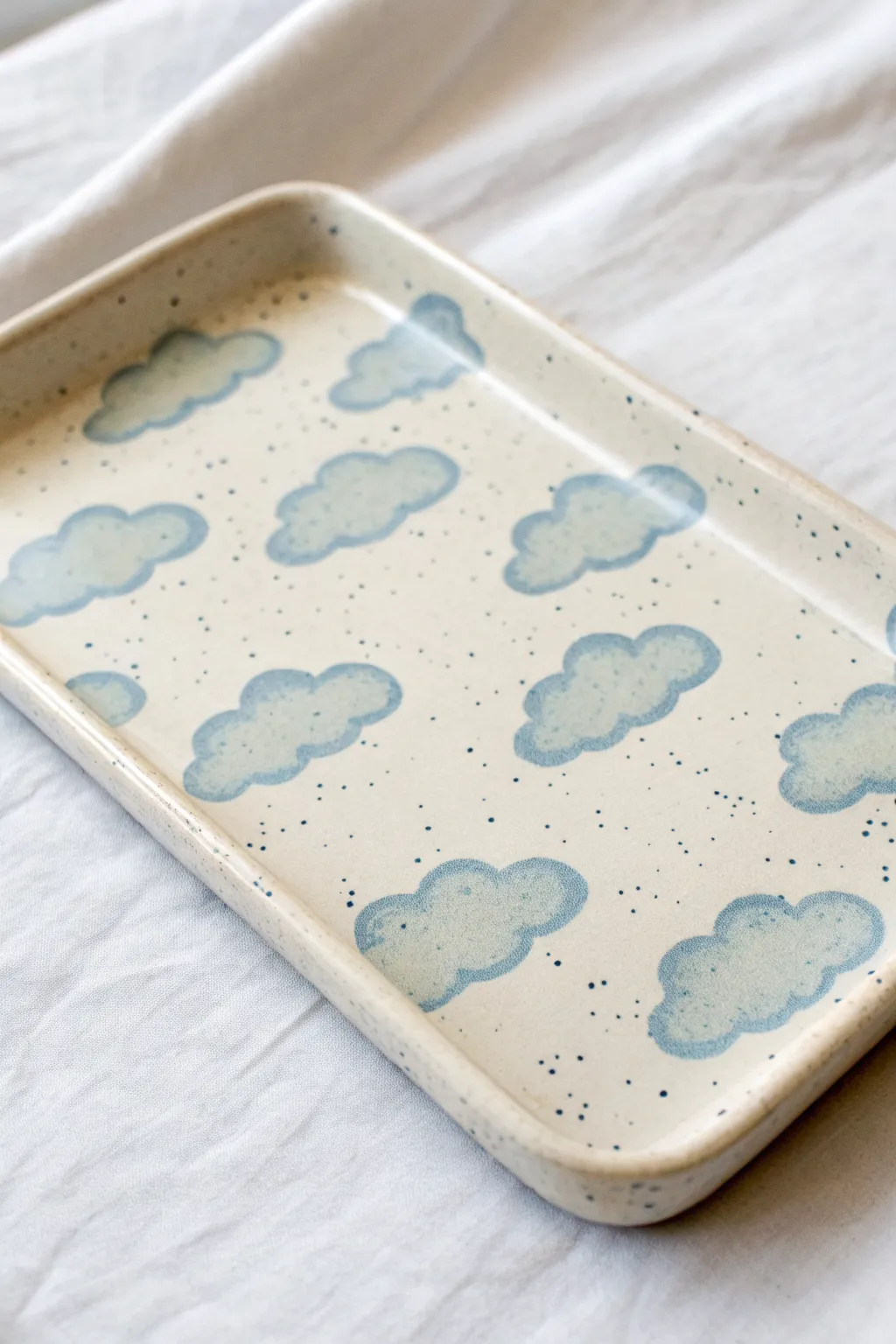
Bring the serene beauty of the sky into your home with this charming ceramic tray featuring fluffy blue clouds. The creamy, speckled background adds a warm, organic feel that perfectly contrasts with the airy cloud motifs.
How-To Guide
Materials
- Rectangular bisque ceramic tray
- Cream or off-white underglaze (speckled variety preferred)
- Light sky blue underglaze
- Medium or denim blue underglaze
- Wide flat brush (for base coat)
- Medium round brush (size 4 or 6)
- Small liner brush (size 0 or 1)
- Clear dipping glaze
- Palette or mixing plate
- Sponge and water bowl
Step 1: Preparing the Canvas
-
Clean the bisque:
Start by gently wiping down your rectangular bisque tray with a slightly damp sponge. This removes any dust that might prevent the glaze from adhering properly. -
Apply the first base coat:
Using a wide flat brush, apply an even coat of the cream or off-white speckled underglaze to the entire top surface and rim of the tray. -
Layering the base:
Allow the first coat to dry until it’s chalky to the touch, then apply a second coat. Repeat for a third coat to ensure solid, opaque coverage where the clay body doesn’t show through. -
Speckling (if needed):
If your base glaze isn’t pre-speckled, you can flick a toothbrush loaded with slightly watered-down brown or grey underglaze over the dried surface to create that organic texture.
Cloud Consistency
Make your clouds look consistent by painting the center hump slightly larger than the side humps, creating a pleasing pyramid shape.
Step 2: Painting the Clouds
-
Plan your placement:
Visualize a grid pattern for your clouds. They should be staggered slightly rather than perfectly aligned to give a more natural, drifting look. -
Paint cloud shapes:
Load your medium round brush with the light sky blue underglaze. Paint fluffy, horizontal cloud shapes. Think of combining three or four connected humps, with the bottom being relatively flat. -
Fill the shapes:
Ensure the blue cloud shapes are filled in solidly. You may need two coats of the light blue if your underglaze is somewhat translucent. -
Outline the clouds:
Once the light blue shapes are dry, take your small liner brush and dip it into the medium/denim blue underglaze. Carefully trace the perimeter of each cloud. -
Vary the line weight:
I like to keep the outline slightly uneven—perhaps a bit thicker on the bottom curves—to give the clouds volume and a charming, illustrative style. -
Add floating dots:
Using the very tip of your liner brush or a toothpick, dip into the darker denim blue. Dot the background randomly between the clouds. -
Vary dot density:
Add clusters of 2-3 tiny dots near the clouds and scatter single dots further away to create a sense of movement and atmosphere.
Smudged Outlines?
If your dark blue outline bleeds into the light blue, the base layer was too wet. Let the light blue bone-dry before outlining.
Step 3: Finishing Touches
-
Check the rim:
inspect the rim of the tray. If any blue paint accidentally smudged onto the edge, wipe it away carefully or touch it up with your cream base color. -
Final drying:
Let the entire piece dry completely. The underglazes should look matte and chalky. -
Glazing:
Dip the tray into a clear transparent glaze. Ensure you shake off excess glaze so it doesn’t pool in the corners of the tray. -
Firing:
Fire the piece in the kiln according to the specific instructions for your clay and glaze type (usually Cone 06 or Cone 6).
Once fired, you’ll have a dreamy, durable tray perfect for holding trinkets or serving snacks
Terrazzo Speckle Look
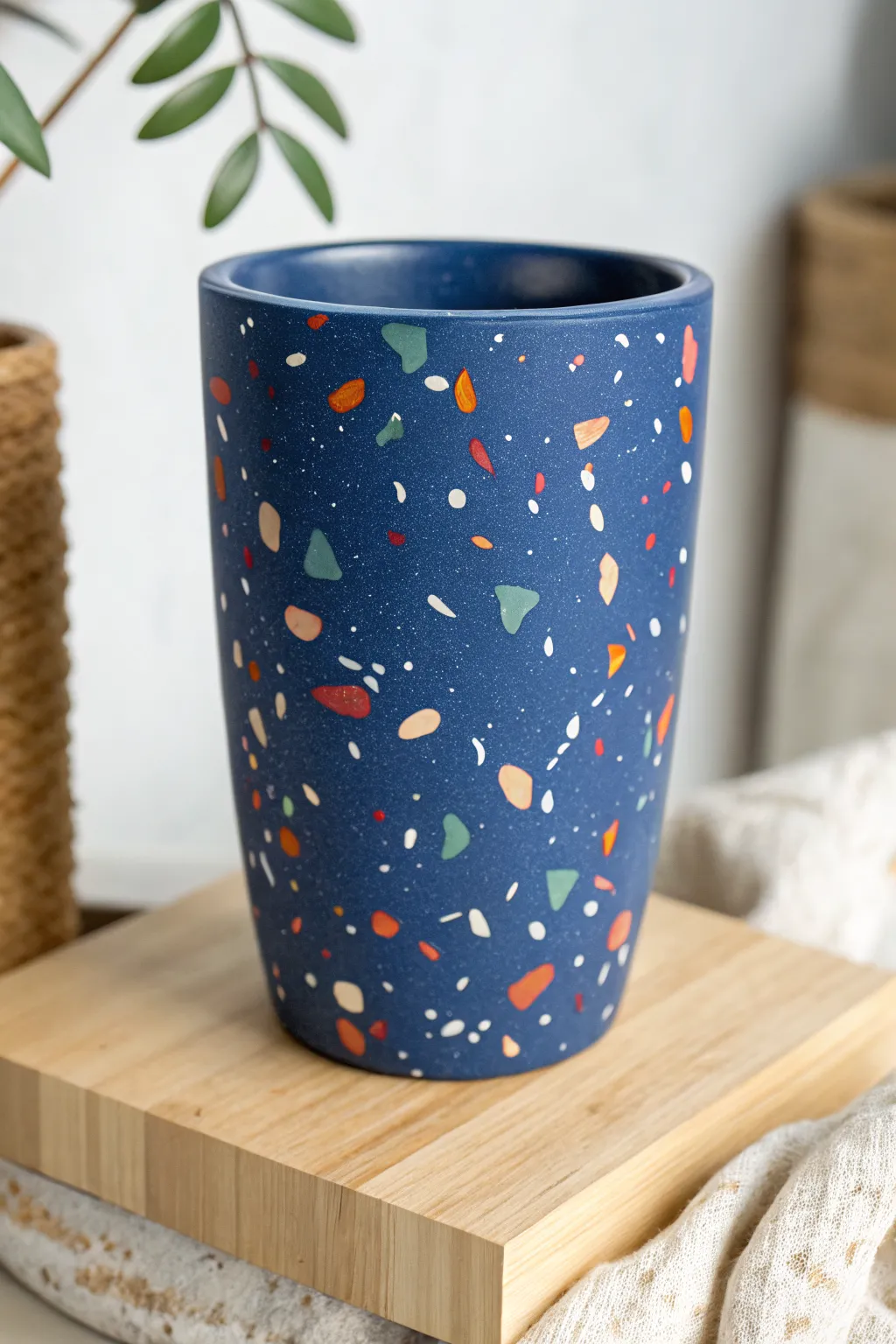
Transform a plain clay vessel into a modern masterpiece with this faux terrazzo technique. The deep navy background makes the playful pops of coral, mint, and white speckles truly sing, mimicking the look of traditional Italian flooring.
Step-by-Step Guide
Materials
- Tall cylindrical bisque clay vase or planter
- Deep navy blue acrylic paint (matte finish)
- White acrylic paint
- Coral/orange acrylic paint
- Mint green acrylic paint
- Blush pink acrylic paint
- Golden yellow acrylic paint
- Medium flat paintbrush
- Small round detail brush (size 1 or 2)
- Old toothbrush or stiff bristle brush
- Palette or small dishes for mixing
- Water cup and paper towels
- Protective matte sealant spray or varnish
Step 1: Base Preparation
-
Clean the surface:
Wipe down your clay bisque vase with a slightly damp sponge or cloth. This removes any dust or oils that might prevent the paint from adhering properly. -
Apply the first coat:
Squeeze out a generous amount of your deep navy blue paint. Using the medium flat brush, apply a smooth, even base coat over the entire exterior and the inner rim. -
Dry and repeat:
Let the first coat dry completely to the touch, which usually takes about 15-20 minutes. Apply a second coat to ensure totally opaque, solid coverage with no streaky clay showing through. -
Check the rim:
Pay special attention to the top rim. I like to paint about an inch down the inside of the vase so the clay color doesn’t peek out when you look at it from an angle.
Natural look trick
Real terrazzo stones have sharp angles, not curves. When painting your shapes, try to make them look like shattered tiles rather than round polka dots or ovals.
Step 2: Creating the Terrazzo Stones
-
Mix your colors:
Prepare your palette with small dollops of white, coral, mint green, blush pink, and golden yellow. You want these colors to be slightly thick so they cover the dark blue in one go. -
Paint the large shapes:
Dip your small round brush into the mint green. Paint random, irregular polygon shapes scattered across the vase. Think triangles with soft corners or uneven trapezoids. -
Add the warm tones:
Clean your brush and switch to the coral orange. Add similar irregular shapes in the empty spaces. Vary the sizes—some should be large distinct ‘stones,’ while others can be smaller chips. -
Layer in light accents:
Using the blush pink and golden yellow, fill in remaining gaps with more shapes. Try to keep the spacing random; avoid creating intentional patterns or lines. -
Add white chips:
Use the white paint to add the smallest ‘stone’ shapes. These act as high-contrast anchors against the navy background. -
Refine opacity:
If the navy background is showing through your lighter colors (especially the yellow or pink), go back and dab a second layer of paint on top of the shapes once they are dry.
Level Up: Texture
Mix a tiny pinch of baking soda into your ‘stone’ paint colors. It adds a subtle grit that makes the painted chips feel like actual embedded stone.
Step 3: The Speckle Effect
-
Prepare the splatter:
Mix a small amount of white paint with a few drops of water. You want a consistency similar to heavy cream—fluid enough to fly off a brush, but thick enough to stay opaque. -
Test your aim:
Dip an old toothbrush or a stiff brush into the watered-down white paint. Test the splatter on a piece of scrap paper or cardboard first to gauge the spray pattern. -
Apply the fine mist:
Hold the brush near the vase and flick the bristles with your thumb to spray tiny white dots over the entire surface. This mimics the sandy grout texture of real terrazzo. -
Rotate and repeat:
Rotate the vase slowly as you flick, ensuring even coverage. Don’t worry if some speckles land on your colored shapes; that actually makes it look more realistic.
Step 4: Finishing Touches
-
Full dry time:
Allow the entire piece to dry overnight. The splatter paint can be thicker in spots, so give it plenty of time to set hard. -
Seal the deal:
In a well-ventilated area, spray the vase with a clear matte sealant. This unifies the sheen of the different paints and protects your artwork from scratches. -
Final inspection:
Once dry, check for any missed spots on the rim or base and touch up if necessary before placing your plant inside.
Place your new vase on a wooden stand to highlight those earthy, stone-like textures you just created
Marbled Paint-Swirl Finish
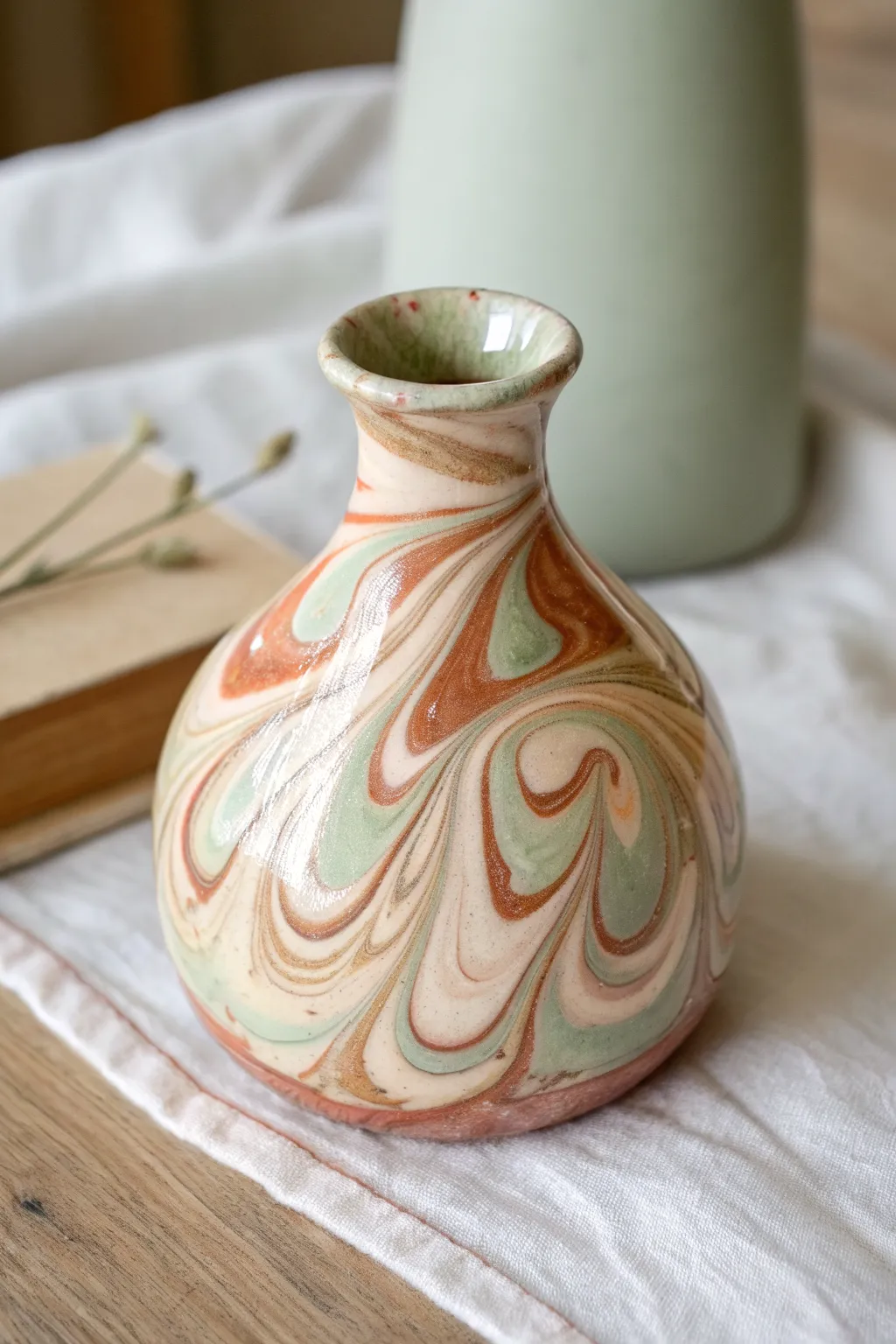
Capture the organic beauty of agate and flowing water with this mesmerizing marbled vase project. Using a simple dirty-pour technique on bisque ware, you can achieve swirling patterns of rust, sage green, and cream that look professionally glazed.
Detailed Instructions
Materials
- Bisque ceramic vase (bulbous shape preferred)
- Acrylic pouring medium
- Acrylic craft paints (Burnt Sienna/Rust, Sage Green, Warm Cream/Beige)
- Small plastic cups (one for each color)
- One larger pouring cup
- Wooden stir sticks
- Glossy clear glaze or high-gloss varnish sealant
- Cardboard box or catch tray
- Elevated drying rack or cans
- Water
- Painter’s tape
Step 1: Preparation
-
Clean surface:
Begin by wiping down your bisque ware vase with a slightly damp sponge to remove any dust or ceramic particles that might interfere with paint adhesion. -
Mask the base:
If you want to keep the very bottom rim of the vase natural, apply a strip of painter’s tape to the underside or foot of the vase. -
Set up the station:
Place your catch tray or cardboard box on your work surface. Set up two empty cans or a wire rack inside the box to elevate the vase, allowing excess paint to drip off freely.
Muddy colors?
Avoid over-mixing inside the pour cup. Layer gently and don’t stir. If colors look brown when pouring, use thicker layers of cream between the darker colors next time.
Step 2: Mixing the Marbling Mediums
-
Ratio set up:
In your small plastic cups, pour equal parts acrylic paint and pouring medium. You will need about 2 ounces of total mixture for a small vase, but mix a little extra to be safe. -
Mix the Rust:
Combine your Burnt Sienna paint with the medium. Stir gently until fully incorporated; vigorous stirring creates air bubbles which we want to avoid. -
Mix the Sage:
Repeat the process with the Sage Green paint. Aim for a consistency similar to warm honey—it should flow off the stick in a continuous stream. -
Mix the Cream:
Finally, mix your Warm Cream or Beige paint. This will likely be your dominant color to keep the look light and airy. -
Check consistency:
If I find the mixtures are too thick, I add a few drops of water at a time until they are fluid but not watery.
Gold Veins
Mix a small amount of metallic gold paint with pouring medium and add thin layers into your pour cup for shimmering ‘gold leaf’ veins throughout the marble.
Step 3: The Pour Technique
-
Layer the clear cup:
Take your larger, clean pouring cup. Pour a generous amount of the Cream mixture into the bottom first. -
Add alternating colors:
Slowly pour a layer of Rust, then a layer of Green, then back to Cream. Do not stir this cup. -
Repeat layering:
Continue layering the paints directly on top of one another until the cup is about half to three-quarters full. -
Begin the pour:
Hold the cup over the top opening of your vase. Begin pouring steadily right onto the rim or just inside the neck, letting the paint cascade down the sides. -
Rotate and tilt:
As the paint flows, gently rotate the cup or move your hand in a small circular motion to distribute the different colors around the vase. -
Encourage coverage:
If there are bald spots near the bottom, you can carefully pick up the vase from the inside of the neck and tilt it to help gravity guide the paint. -
Let it drip:
Once the vase is fully coated, leave it on the elevated stand. Let the excess paint drip off completely, which usually takes about 20-30 minutes.
Step 4: Finishing Touches
-
Dry thoroughly:
Allow the vase to dry for at least 24 to 48 hours. The thick layers of paint need significant time to cure underneath the surface skin. -
Remove tape:
Carefully peel off the painter’s tape from the bottom. If the paint has dried over the tape edge, score it lightly with a craft knife first to prevent peeling the design. -
Clean the rim:
If paint pooled heavily inside the top rim, you can clean it up with a small brush and a matching solid color for a neat finish. -
Seal for shine:
Apply two coats of a high-gloss clear varnish or clear glaze. This mimics the look of fired ceramic glaze and protects the delicate marbling pattern.
Now you have a stunning, faux-glazed centerpiece ready for dried florals or shelf display
Faux Drippy Glaze Edge
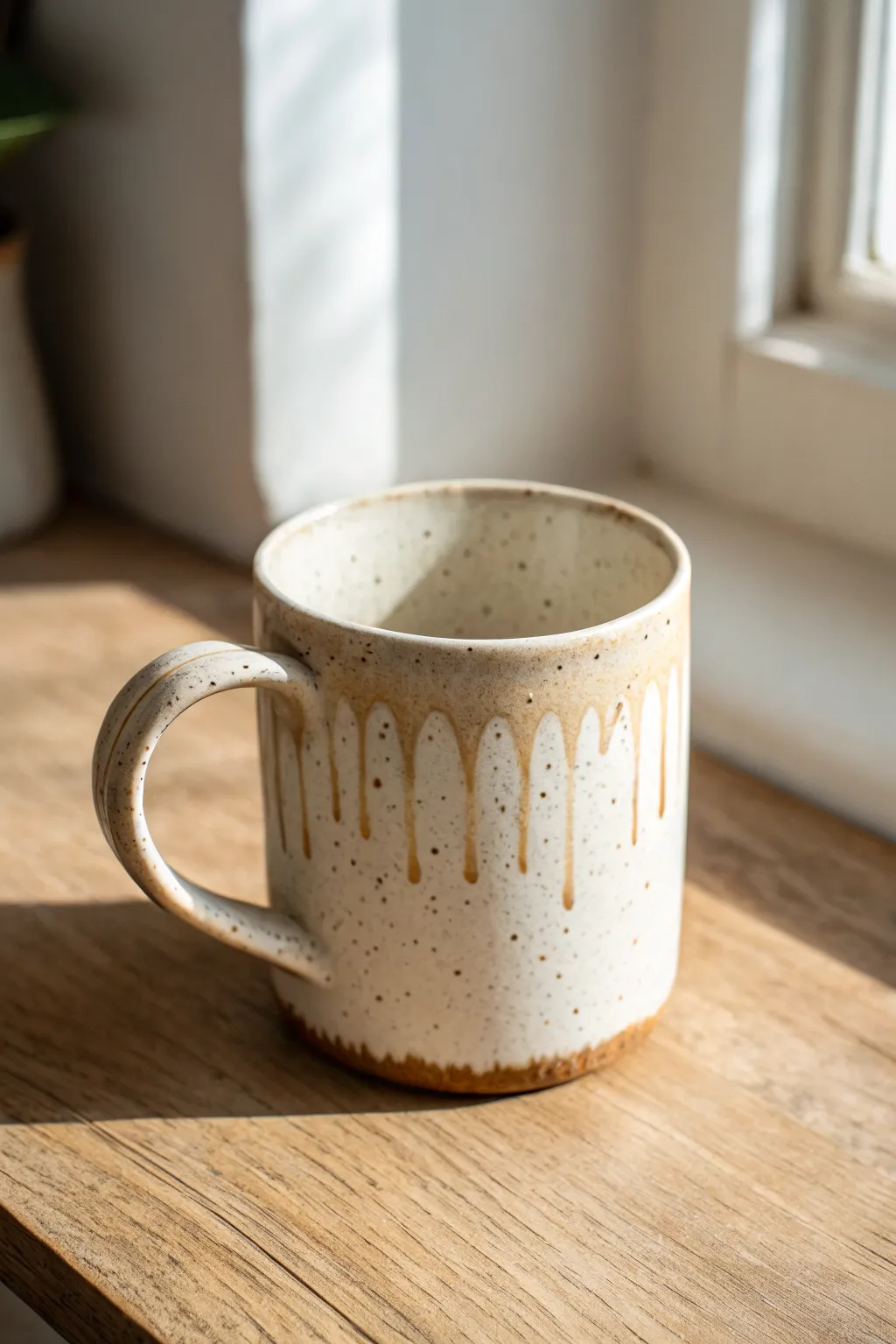
Achieve that trendy, artisan “studio pottery” vibe on a budget by mimicking the look of fluid glaze drips without the kiln-fired unpredictability. This technique allows you to control exactly where those charming caramel-colored runs fall on a speckled cream base.
How-To Guide
Materials
- Bisque ceramic mug (smooth surface)
- Speckled cream or oatmeal-colored ceramic glaze
- Caramel or toasty brown ceramic glaze (semi-translucent works best)
- “Writer bottle” or fine-tip squeeze applicator
- Soft fan brush
- Small round detail brush
- Damp sponge
- Water cup
Step 1: Base Coat Application
-
Clean surface:
Begin by wiping down your bisque mug with a damp sponge. This removes any dust or oils from handling and ensures your first layer of glaze adheres perfectly. -
First layer:
Using the soft fan brush, apply a smooth, even coat of the speckled cream glaze to the entire mug, including the handle and the inside. -
Dry and repeat:
Let that first coat dry until it is chalky and cool to the touch. Apply a second coat to ensure full opacity, smoothing out any brushstrokes as you go. -
Handle with care:
Apply a third coat if your specific glaze brand recommends it for full coverage. I usually find three coats gives that rich, substantial look seen in studio pottery. -
Clean the foot:
Use a damp sponge to wipe any glaze off the very bottom “foot” of the mug so it doesn’t stick to the kiln shelf later.
Drips Stopped Short?
If your glaze seems too thick to drip naturally, mix in a tiny drop of water or glazing medium to loosen the consistency before putting it in the applicator bottle.
Step 2: Creating the Drips
-
Fill the applicator:
Pour a small amount of your caramel-colored glaze into a writer bottle or fine-tip squeeze applicator. Shake it gently to remove air bubbles. -
Rim application:
Hold the bottle nozzle right against the top rim of the mug. Squeeze gently to create a thick band of brown glaze along the very edge. -
Start the drips:
While that brown rim is still wet, position the nozzle at a point where you want a drip. Squeeze a little harder to release a bead of glaze and let gravity pull it down. -
Vary the lengths:
Move along the rim, creating drips at random intervals. Make some long and dramatic, and others short and subtle. -
Natural spacing:
Don’t space them perfectly evenly; nature is random. Leave some wider gaps of just the cream base showing through. -
Thicken the top:
Go back over the top horizontal rim with the applicator to ensure the transition from rim to drip looks seamless and fluid. -
Check consistency:
If the glaze isn’t running enough on its own, you can gently coax it down with the tip of the bottle or a small detail brush.
Layer Up Texture
For added depth, use two different shades of brown for the drips. Apply the lighter shade first, wait for it to set, then add darker drips over top.
Step 3: Finishing Touches
-
Base accent:
Dip your detail brush into the caramel glaze and paint a thin, uneven line around the very bottom edge of the mug to mimic exposed clay. -
Feather the bottom:
Use the brush to dab the top edge of that bottom brown line slightly, making it look organic rather than a perfect stripe. -
Speckle check:
If your cream glaze doesn’t have built-in speckles, you can now flick a toothbrush loaded with brown iron oxide or thinned brown paint over the surface for that gritty texture. -
Dry completely:
Allow the thick drips to dry completely. They will take longer than the base coat, so be patient before moving the piece. -
Top coat:
Apply a final coat of clear glaze if your colored glazes are underglazes. If they are gloss glazes, you are ready to fire according to the manufacturer’s directed cone.
Once fired, you will have a cozy, rustic mug perfect for your morning coffee routine
Sgraffito Scratch-Back Details
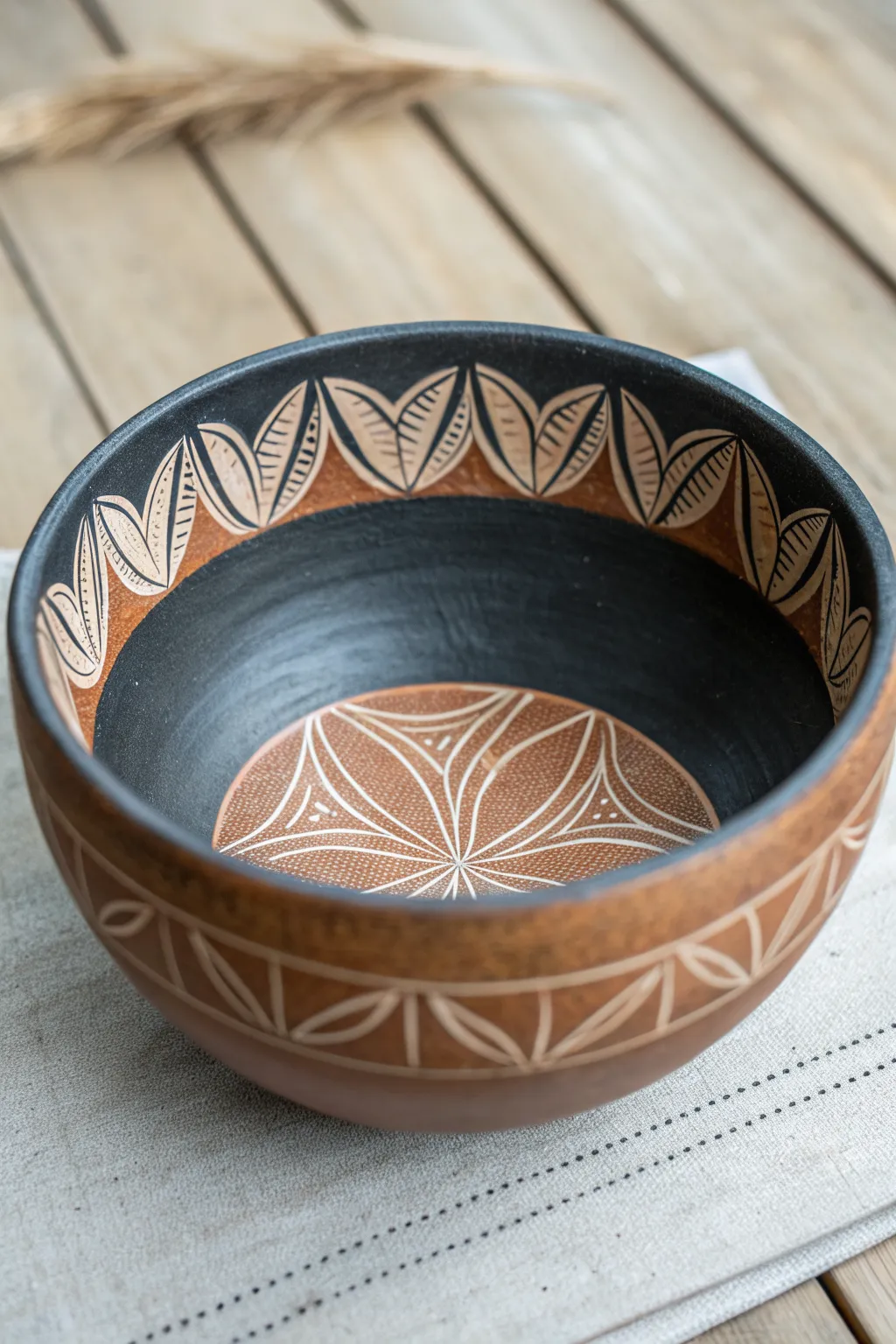
This striking bowl combines deep black contrast with the natural warmth of red clay, using sgraffito to carve elegant organic designs. The piece features a stylized starburst pattern in the center and repeating leaf motifs along the rim, creating a beautiful balance of negative and positive space.
Detailed Instructions
Materials
- Leather-hard red stoneware or terracotta bowl
- Black underglaze (or black slip)
- White or cream underglaze (or slip)
- Small flat brush (hake or soft synthetic)
- Sgraffito loop tool (small)
- Needle tool or sharp pencil
- Damp sponge
- Clear transparent glaze
- Pottery wheel or banding wheel
Step 1: Preparation & Application
-
Prepare the surface:
Ensure your thrown or hand-built bowl is at the perfect leather-hard stage. It should be firm enough to handle without warping but soft enough to carve easily. Wipe the surface gently with a damp sponge to remove any dust. -
Map out the zones:
Place the bowl on a banding wheel. Using a needle tool, lightly score two concentric circles inside the bowl to define the three main areas: the central floor, the middle wall band, and the upper rim band. -
Apply the exterior band:
On the outside of the bowl, paint a band about 1-2 inches wide using the red clay color left natural or a terra cotta slip if your clay body isn’t red. For this specific look, we represent the ‘carved’ look often by painting a slip and carving through, but here the base clay does the work. Let’s assume we are painting the *lines* with slip or underglaze later, or carving away a coating. -
Paint the black interior band:
Using a soft brush, apply 2-3 coats of black underglaze to the middle section of the bowl’s interior. Rotate the wheel to get a clean, solid coverage. Allow it to dry until the shine disappears between coats. -
Paint the rim and center:
Note the reference image: the area *around* the black band has designs. Apply a layer of black underglaze to the upper inner rim and the exterior band near the rim. For the center circle, apply a coat of white/cream slip if you want the dots to be light, or keep it red clay and paint black around negative shapes. Based on the image, the background is black and the lines reveal the clay. So, apply solid black underglaze to the entire interior and the upper exterior band. -
Let it firm up:
Allow the underglaze to dry to a leather-hard state again. It shouldn’t be tacky, but not bone dry either.
Clean Lines
Keep a small, dry paintbrush handy while carving. Use it to constantly flick away the ‘crumbs’ of clay so they don’t get pressed back into your fresh lines.
Step 2: Carving the Designs
-
Mark the leaf spacing:
On the interior rim, use your needle tool to faintly mark vertical guidelines every 2 inches or so to ensure your leaf pattern stays evenly spaced. -
Carve the interior leaves:
Using a small loop tool, carve through the black underglaze to reveal the clay body. Create pairs of leaves that lean away from each other, forming a V-shape. Carve the outline first, then add the internal veins. -
Add detail to the leaves:
Inside each leaf outline, scratch small horizontal dashes to create texture, imitating veins. I find that quick, confident strokes work best for this hatching effect. -
Create the exterior pattern:
Move to the outside of the bowl. Scrape a horizontal line around the circumference to frame the design. Below this line, carve a repeating geometric leaf pattern similar to the inside but perhaps slightly larger or simplified. -
Connect the exterior leaves:
Connect the bases of your exterior leaves with triangular shapes or simple connecting lines to form a continuous band around the bowl.
Step 3: The Center Starburst
-
Outline the central flower:
In the very bottom center of the bowl, lightly scratch a six-pointed flower or star design. The petals should touch at the center and flare outward toward the black band. -
Carve the petal interiors:
Carve outline curves for the petals. Then, carve internal parallel lines that follow the curve of the leaf shape, leaving thin black lines between your cuts. -
Stipple the background:
In the negative spaces between the star petals, use the point of your needle tool to create a stippled texture. Poke hundreds of tiny dots to reveal the clay beneath, creating a lighter, textured background against the smooth black petals. -
Refine the edges:
Go back over your main outlines with the loop tool to clean up any ragged edges where the underglaze might have chipped slightly.
Chipping Underglaze?
If the black underglaze is chipping off in chunks rather than carving smoothly, your clay is too dry. Mist it lightly with water and cover with plastic for an hour.
Step 4: Finishing
-
Brush away crumbs:
Use a large, dry, soft brush to gently sweep all the clay crumbs (burrs) off the bowl. Do not use your finger, or you might smudge the black underglaze into the raw clay. -
Bisque fire:
Once the bowl is bone dry, load it into the kiln for a bisque firing. -
Glaze application:
After bisque firing, dip the entire bowl into a clear, transparent glaze. This will seal the clay and make the red and black colors pop vibrantly. -
Final firing:
Fire the bowl a second time to your clay body’s maturity temperature (likely Cone 5 or 6 for stoneware).
The finished bowl will have a wonderful tactile quality where the raw clay contrasts with the smooth glaze.
Wraparound Mini Landscape Scene

Capture the serene beauty of a rolling landscape on your morning coffee cup with this charming folk-art style design. The creamy speckled glaze provides a perfect rustic canvas for stylized pine trees and soft, rolling hills.
Step-by-Step Tutorial
Materials
- Bisque-fired ceramic mug
- Underglaze pencil (black or dark grey)
- Underglazes: Dark Green, Teal/Blue-Green, Rust/Terracotta, Golden Yellow
- Clear dipping glaze (gloss or satin)
- Small round detail brush (size 0 or 1)
- Medium round brush (size 4)
- Sponge
- Water cup
Step 1: Sketching the Scene
-
Wipe the surface:
Before starting, wipe your bisque mug down with a slightly damp sponge. This removes dust and creates a clean surface for the underglaze to adhere to. -
Establish the horizon:
Using a pencil, lightly sketch the rolling hills. Don’t worry about erasing; standard pencil lead burns off in the kiln. Draw two overlapping curves about a third of the way up the mug to create the middle ground hills. -
Create the foreground:
Sketch a larger, rounded hill shape at the bottom that overlaps the previous lines, anchoring the scene. This will be your rust-colored section. -
Add vertical elements:
Mark light vertical lines where you want your three pine trees to stand. Space them out unevenly for a more natural look. -
Draw the sun:
Sketch a simple circle in the upper right sky area for the sun or moon.
Step 2: Blocking in Color
-
Paint the background hills:
Load your medium round brush with teal or blue-green underglaze. Because underglaze can be translucent, you will want to apply 2-3 coats, letting each layer dry until matte before adding the next. -
Fill the foreground:
Switch to the rust/terracotta color for the bottom hill. Apply your coats in smooth strokes, following the curve of the hill to keep texture consistent. -
Paint the sun:
Use the golden yellow underglaze to fill in the circle in the sky. Three coats will ensure it stays bright and opaque after firing. -
Add the geometric tent:
If you are including the small triangle shape on the right (it looks like a stylized tent or tree), paint the stripes now using alternating rust and possibly a darker blue.
Fixing Smudges
Did a drop of dark glaze land on the raw clay sky? Wait for it to dry completely, then gently scratch it off with an X-Acto knife or needle tool.
Step 3: Detailing and Line Work
-
Outline the hills:
Once the color block areas are bone dry, take your very fine detail brush or a black underglaze applicator bottle. Outline the top edges of the blue hills with a thin, defining line. -
Paint the tree trunks:
Using the dark green (or black if you prefer high contrast), paint distinct vertical lines for the tree trunks. -
Add pine branches:
I find it easiest to start at the top of the trunk and work downward. Use short, downward-angled strokes that get slightly wider as you move down the tree to create that classic pine shape. -
Create texture lines:
Add the diagonal hatching lines on the blue hill section using a diluted blue or thin black lines. This adds visual interest and shading. -
Bottom border pattern:
Along the very bottom edge of the mug, beneath the rust hill, paint a simple zig-zag or ‘X’ pattern line to frame the artwork. -
Add sky speckles:
Dip a stiff brush or toothbrush into black underglaze and flick it gently to create tiny stars or texture in the sky area. Keep this subtle.
Glaze Consistency
For the fine lines on the pine trees, thin your underglaze slightly with a drop of water. It should flow like ink to prevent the brush from dragging.
Step 4: Finishing Touches
-
Final inspection:
Check for any smudges on the unpainted clay areas. These can be gently sanded off or wiped away with a clean, damp sponge. -
Clear glaze application:
Once the underglaze is completely dry, dip the entire mug into a clear glaze. A dipping glaze works best for even coverage over the raw clay texture. -
Fire the piece:
Load the mug into the kiln and fire to the appropriate cone temperature for your specific clay and glaze (usually Cone 5 or 6 for stoneware).
Enjoy sipping from your cozy landscape mug knowing you painted every detail by hand