
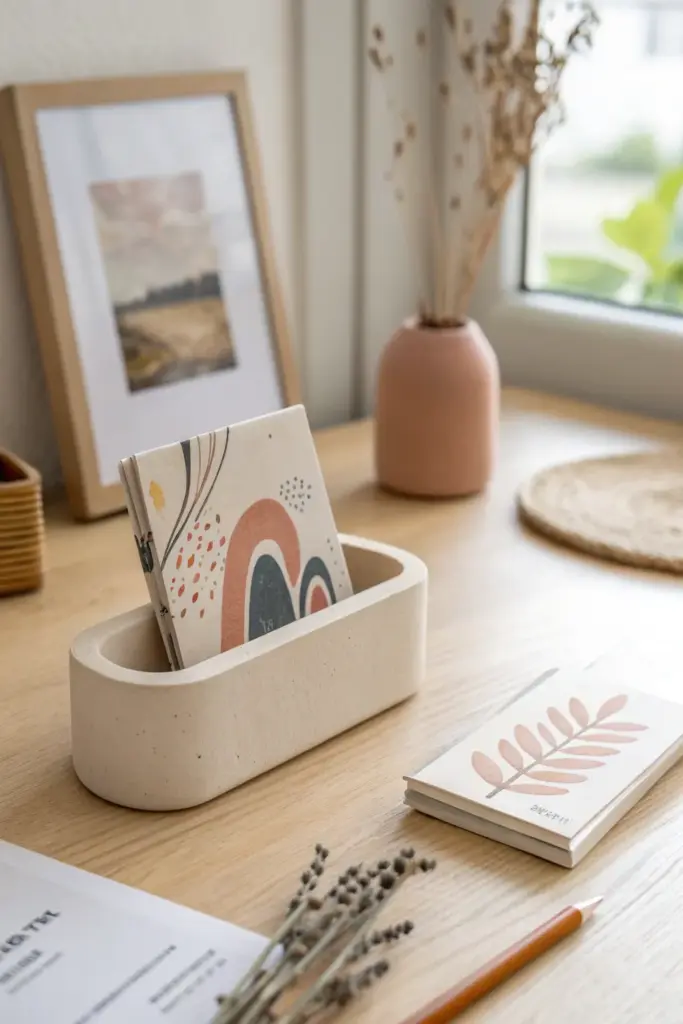
If you’re craving that cozy, handmade vibe at home, clay room decor is one of my favorite ways to make it happen fast. I’m sharing the kinds of air-dry clay and polymer clay projects I’d actually set around my own space—simple, functional, and so satisfying to look at every day.
Minimal Trinket Dishes
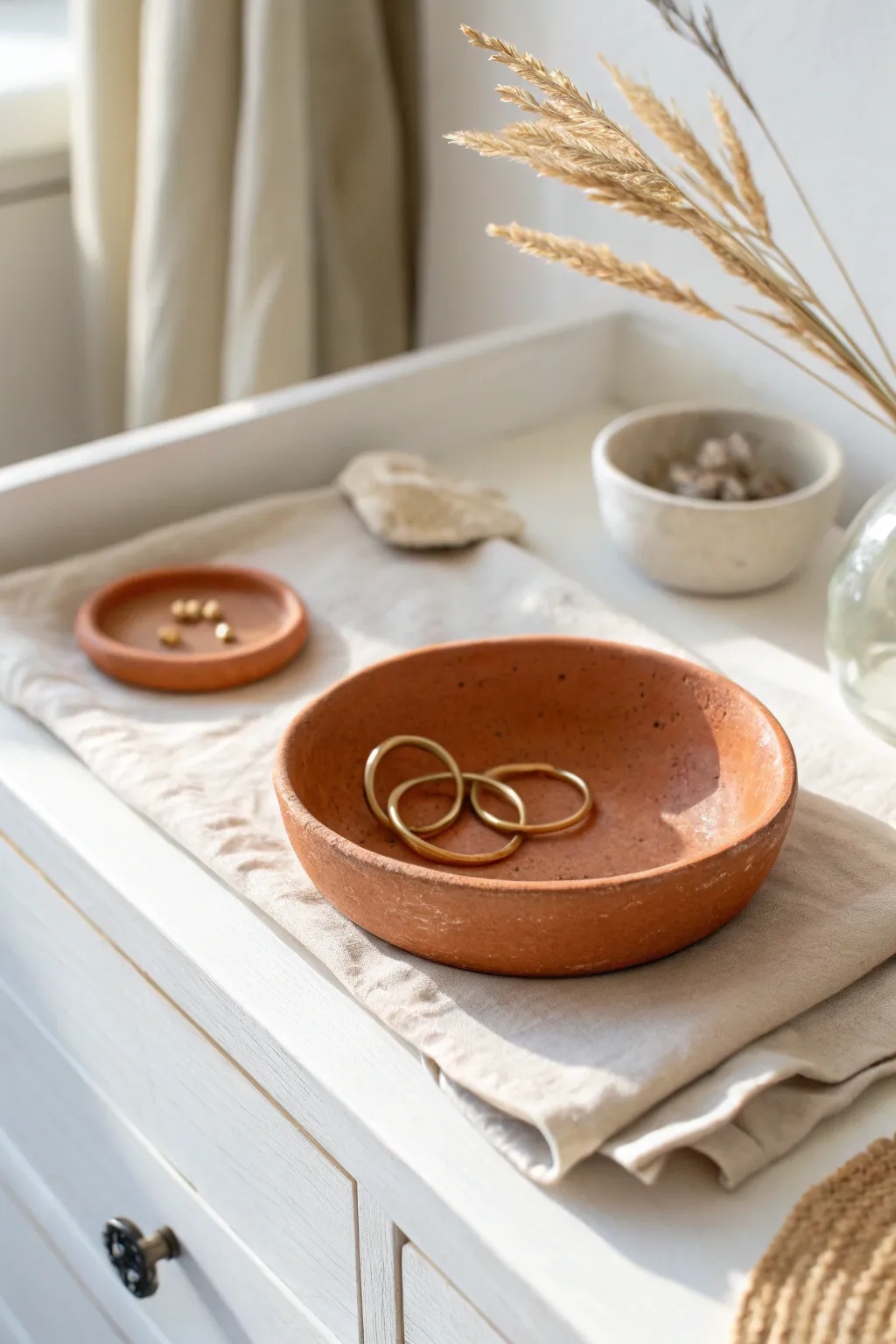
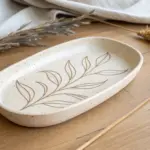
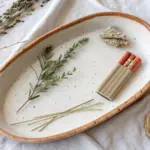
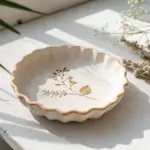
Create a warm, minimalist atmosphere on your dresser with these simple, terracotta-colored trinket dishes. This project focuses on celebrating the raw, earthy texture of clay, perfect for holding your favorite rings and studs in style.
Step-by-Step
Materials
- Air-dry clay (terracotta color)
- Rolling pin
- Rolling guides or wooden slats (approx. 1/4 inch thick)
- Small bowl (for use as a mold/template, approx. 5-6 inches)
- Round cookie cutter or glass (approx. 3 inches)
- Small sponge
- Bowl of water
- Sandpaper (fine grit)
- Sealer (matte varnish or Mod Podge)
Step 1: Shaping the Large Dish
-
Prepare the Clay:
Begin by taking a substantial chunk of terracotta air-dry clay. Knead it in your hands for a minute or two until it is warm, pliable, and free of any air bubbles. -
Roll it Out:
Place the clay on a smooth surface or a canvas mat. Use rolling guides on either side to ensure an even thickness of about 1/4 inch as you roll it flat. -
Cut the Base Circle:
Place your medium-sized bowl upside down on the clay to use as a template. Use a craft knife or a needle tool to trace and cut out a perfect circle around the rim. -
Form the Sides:
Gently lift the clay circle. Instead of using a mold, we will hand-build the rim for a more rustic look. Ideally, pinch the edges upward slightly, turning the circle in your hand as you go to create a shallow lip. -
Refine the Shape:
If you struggle with hand-shaping, you can slump the clay circle inside a slightly larger bowl lined with plastic wrap. Press it gently to conform to the curve, but don’t smooth it too perfectly; the texture is part of the charm. -
Smooth the Rim:
Dip your finger in a little water and run it along the top edge of the rim. This smooths out any sharp cuts or jagged bits from the shaping process. -
Add Texture:
To mimic the speckled look in the photo, take an old toothbrush or a stiff bristle brush. Lightly tap surface of the clay to create tiny, subtle pores and imperfections.
Step 2: Creating the Mini Catch-All
-
Original Roll:
Take the remaining scraps from your first dish and re-knead them. Roll this batch out to the same 1/4 inch thickness. -
Cut the Small Circle:
Use your smaller round cookie cutter or the rim of a drinking glass to cut a small disc, roughly 3 inches in diameter. -
Create the Lip:
With this smaller piece, use your thumb to press down in the center while using your index finger to support the outer edge. Rotate the disc while pressing to create a raised rim, almost like a coaster. -
Sponge Finish:
Dampen your small sponge and squeeze out almost all the water. Gently wipe the surface of both dishes to smooth major fingerprints while leaving the pleasant clay grain visible.
Faux Stone Texture
Mix dried coffee grounds or coarse black pepper into the wet clay before rolling. When dry, this creates an amazing speckled, faux-stone finish without painting.
Step 3: Drying and Finishing
-
Slow Dry:
Place both dishes on a wire rack in a cool, dry place. Let them dry for at least 24-48 hours. I like to flip them over halfway through to ensure the bottom dries evenly. -
Sanding:
Once bone dry, take your fine-grit sandpaper and very gently sand the rims. You aren’t trying to make it perfectly smooth, just removing any sharp burrs that could scratch you. -
Clean Dust:
Wipe away all sanding dust with a dry cloth or a soft brush. Ensure no powder remains in the textured pores. -
Sealing:
Apply a thin coat of matte sealer or varnish. A glossy finish would ruin the natural aesthetic, so ensure your sealer is invisible or extremely matte. -
Second Coat:
Allow the first coat to dry according to the bottle instructions, then apply a second thin coat for durability, especially if you plan to put metal jewelry in them. -
Final Cure:
Let the sealer cure completely before placing your jewelry inside.
Make it a Set
Create a third dish in an oval or rectangular shape to complete the ‘rule of three’ for styling. Varying the shapes keeps the vignette looking organic.
Enjoy styling your dresser with these simple, grounding pieces alongside some dried florals or soft linens
Ring Cone Holders
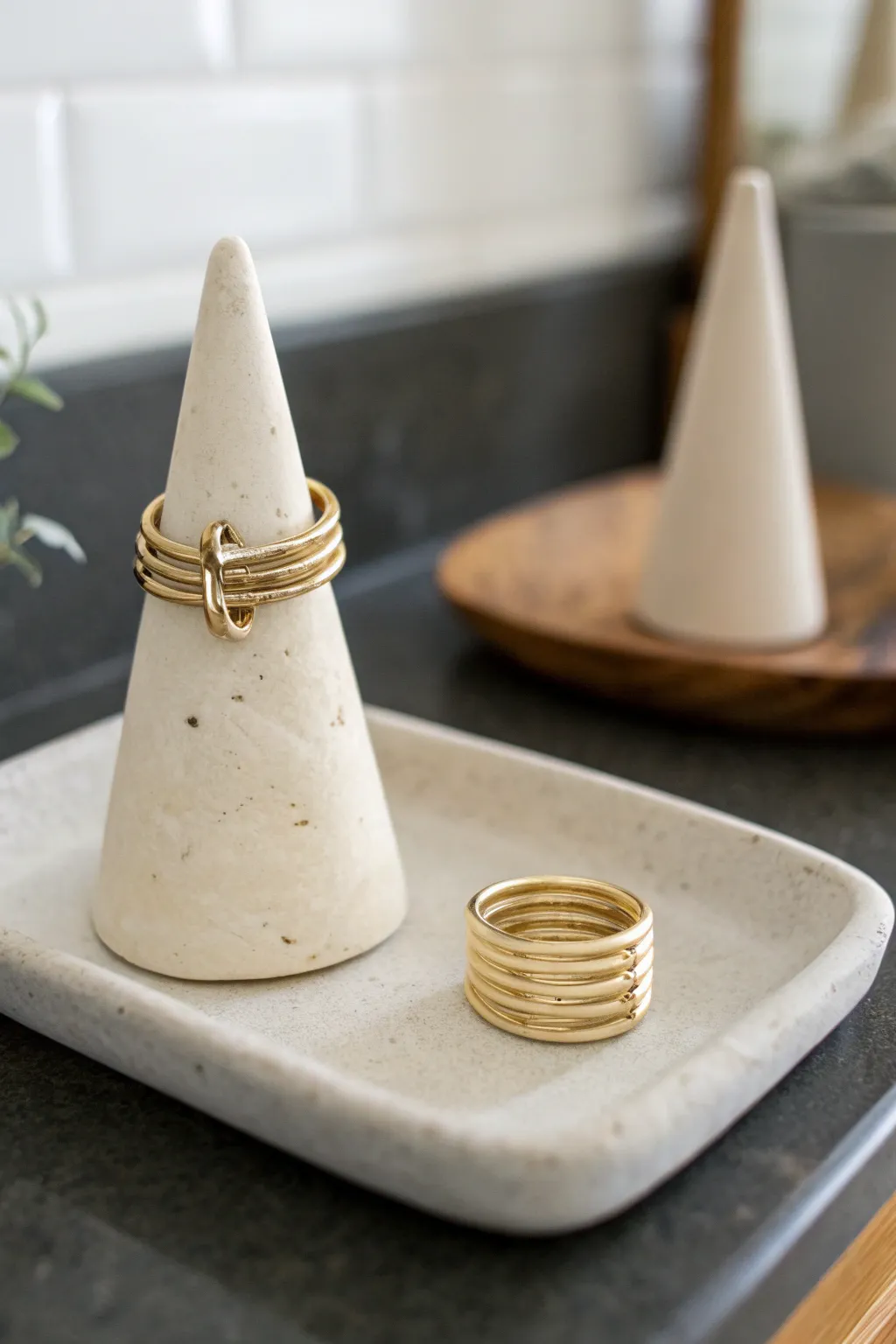
Embrace the beauty of modern minimalism with this elegant ring cone and matching tray set. The natural, stone-like finish and clean geometric lines make it the perfect sophisticated home for your favorite gold jewelry pieces.
Step-by-Step Guide
Materials
- White polymer clay
- Coarse black pepper or black craft sand (for speckling)
- Acrylic rolling pin
- X-Acto knife or clay blade
- Cardstock or thick paper
- Tape
- Fine-grit sandpaper (400 to 600 grit)
- Baking sheet with parchment paper
- Oven
- Matt varnish (optional)
Step 1: Preparing the Clay
-
Condition the clay:
Start by warming the white polymer clay in your hands, kneading it thoroughly until it creates a soft, pliable consistency that won’t crack when bent. -
Create the faux stone effect:
Flatten your conditioned clay into a pancake shape. Sprinkle a small pinch of coarse black pepper or black craft sand onto the surface. -
Incorporate the texture:
Fold the clay over the specks and knead it again until the black particles are evenly distributed throughout the white clay, mimicking real stone. -
Roll it out:
Using your acrylic rolling pin, roll the clay out on a smooth surface to an even thickness of about 1/4 inch.
Seamless Cone Tip
To fix a wobbly cone, gently tap the base flat against your work surface. To fix a visible seam, roll the cone back and forth on a piece of paper.
Step 2: Sculpting the Cone
-
Make a template:
Create a simple cone template by cutting a quarter-circle shape out of your cardstock paper. This ensures your clay cone will have a sharp, uniform point. -
Cut the clay shape:
Place the template onto your rolled clay and carefully trace around it with your X-Acto blade to cut out the wedge shape. -
Form the cone:
Gently curl the straight edges of the clay wedge toward each other. Bring them together until they touch, forming the cone shape. -
Seal the seam:
Use your finger or a smoothing tool to gently blend the seam where the edges meet. I find a light rolling motion against the table helps erase the line completely. -
Refine the shape:
Stand the cone up and check its posture. If the tip is blunt, gently pinch and roll it between your fingers to sharpen it.
Surface Bubbles?
If you see air bubbles while rolling out your clay, pierce them gently with a needle tool and smooth over the hole before baking to prevent surface bumps.
Step 3: Creating the Tray
-
Cut the base:
Roll out a fresh slab of your speckled clay. Cut a rectangle roughly 4 by 6 inches, then use a small jar lid or freehand curve to round off the four corners. -
Prepare the rim coil:
Roll a long, thin snake of clay to serve as the rim. Aim for an even thickness suitable for the wall height you desire. -
Attach the rim:
Place the clay snake on top of the rectangle’s edge. Press it down gently to adhere it to the base, following the rounded corners smoothly. -
Blend the interior:
Using a modeling tool or your fingertip, drag the clay from the inside of the rim down onto the base to fuse them together seamlessly. -
Smooth the exterior:
Repeat the blending process on the outside edge so the wall and base look like one solid piece rather than two connected parts. -
Final smoothing:
Dip your finger in a tiny bit of water (or baby oil) and run it over the entire surface to remove any fingerprints or tool marks.
Step 4: Finishing
-
Bake carefully:
Place both pieces on a parchment-lined baking sheet. Bake according to your specific clay package instructions, usually around 275°F (135°C). -
Cool down:
Allow the pieces to cool completely in the oven with the door slightly ajar to prevent thermal shock cracks. -
Sand for matte effect:
Once cool, wet sand the pieces under running water with fine-grit sandpaper. This enhances the stone look and removes any remaining lint. -
Seal (Optional):
If you want extra durability, apply a very thin coat of matte varnish, though leaving the raw sanded finish often looks more like natural ceramic.
Now you have a chic, modern display that keeps your rings organized in style
Catchall Tray for Keys and Wallet
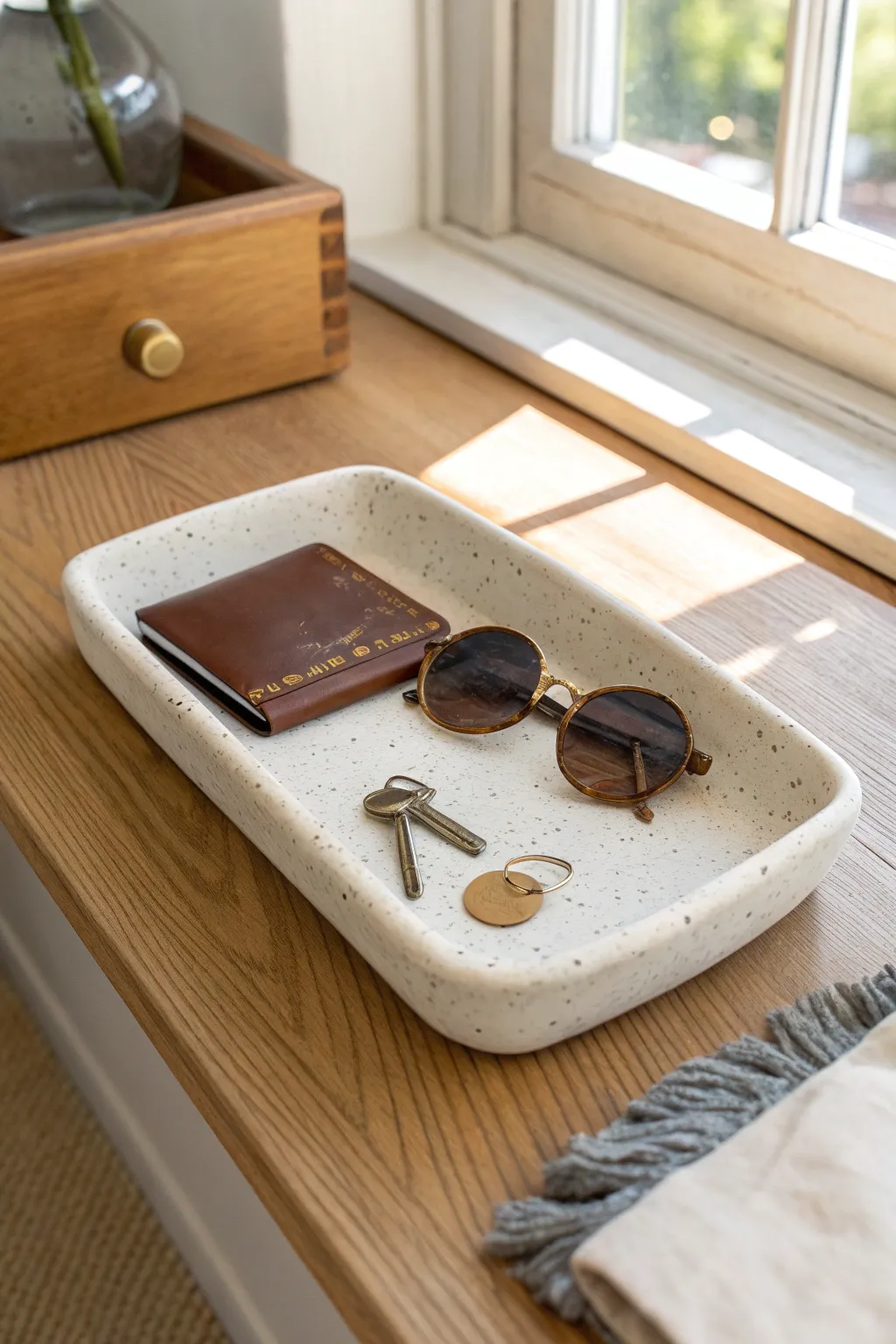
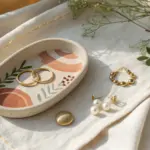
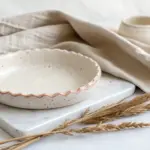
Keep your essentials organized with this minimalist catchall tray featuring a charming speckled texture and soft, rounded edges. Perfect for an entryway table or desk, this handmade piece combines functionality with the organic beauty of clay.
Step-by-Step Tutorial
Materials
- Air-dry clay (white)
- Acrylic paint (white)
- Acrylic paint (black or dark grey)
- Rolling pin
- Clay cutting tool or craft knife
- Sponge
- Bowl of water
- Sandpaper (fine grit)
- Old toothbrush
- Gloss or matte sealer (varnish or Mod Podge)
- Parchment paper or non-stick mat
Step 1: Shaping the Base
-
Prepare the Clay:
Take a generous handful of white air-dry clay and knead it well in your hands to warm it up and remove any air bubbles. This conditioning step prevents cracking later. -
Roll out the Slab:
Place the clay on parchment paper and use a rolling pin to flatten it into an even slab about 1/4 inch thick. Aim for a consistent thickness to ensure even drying. -
Cut the Rectangle:
Using a ruler and your cutting tool, slice the clay into a rectangle approximately 6 inches by 9 inches. Don’t worry if it isn’t mathematically perfect; organic shapes have character. -
Round the Corners:
Gently use your fingers or the cutting tool to trim the sharp corners of the rectangle into soft curves. -
Create the Walls:
Pinch the edges of the slab upwards to create a raised rim about 3/4 inch high. Go around the entire perimeter, using your thumb and forefinger to pull the clay up gently. -
Smooth the Edges:
Dip your finger or a small sponge into water and run it along the rim and outer walls to smooth out cracks or fingerprints. Keep the water usage minimal to avoid weakening the clay.
Smoother Surfaces
Use a barely damp sponge during the shaping phase to constantly smooth the clay. This reduces sanding time later and creates a creamy texture.
Step 2: Refining and Drying
-
Verify the Shape:
Look at the tray from eye level to ensure the walls are relatively even in height. Gently push or pull any sections that look lopsided. -
Create the Interior Curve:
Use the back of a spoon or your curved palm to gently press the inside corners where the wall meets the base, creating a seamless, rounded transition rather than a sharp angle. -
Initial Drying:
Let the tray dry in a cool, draft-free spot for 24 to 48 hours. I usually flip it over gently halfway through so the bottom dries completely. -
Sanding:
Once bone dry, use fine-grit sandpaper to buff away any rough spots on the rim or surface until it feels smooth to the touch. Wipe away the dust with a barely damp cloth.
Add Color
Mix a tiny drop of terracota or beige paint into your white base coat for a warmer, ‘stoneware’ look before adding the black speckles.
Step 3: Painting and Finishing
-
Base Coat:
Apply a coat of white acrylic paint to the entire tray to give it a clean, uniform finish. Let it dry completely. -
Prepare the Speckle Mix:
Dilute a small amount of black or dark grey acrylic paint with a few drops of water until it has an inky consistency. -
Flick the Specs:
Dip an old toothbrush into the diluted black paint. Hold it over the tray and run your thumb across the bristles to flick tiny specks of paint onto the surface. Practice on paper first to control the spray. -
Let Dry:
Allow the speckles to dry fully, which should only take about 15-20 minutes depending on how heavy your application was. -
Seal the Tray:
Apply a layer of clear sealer (glossy or matte, depending on your preference) to protect the paint and make the tray durable or slightly water-resistant.
Your stylish new tray is now ready to hold your daily essentials and keep your space tidy
Simple Desk Organizer Cup
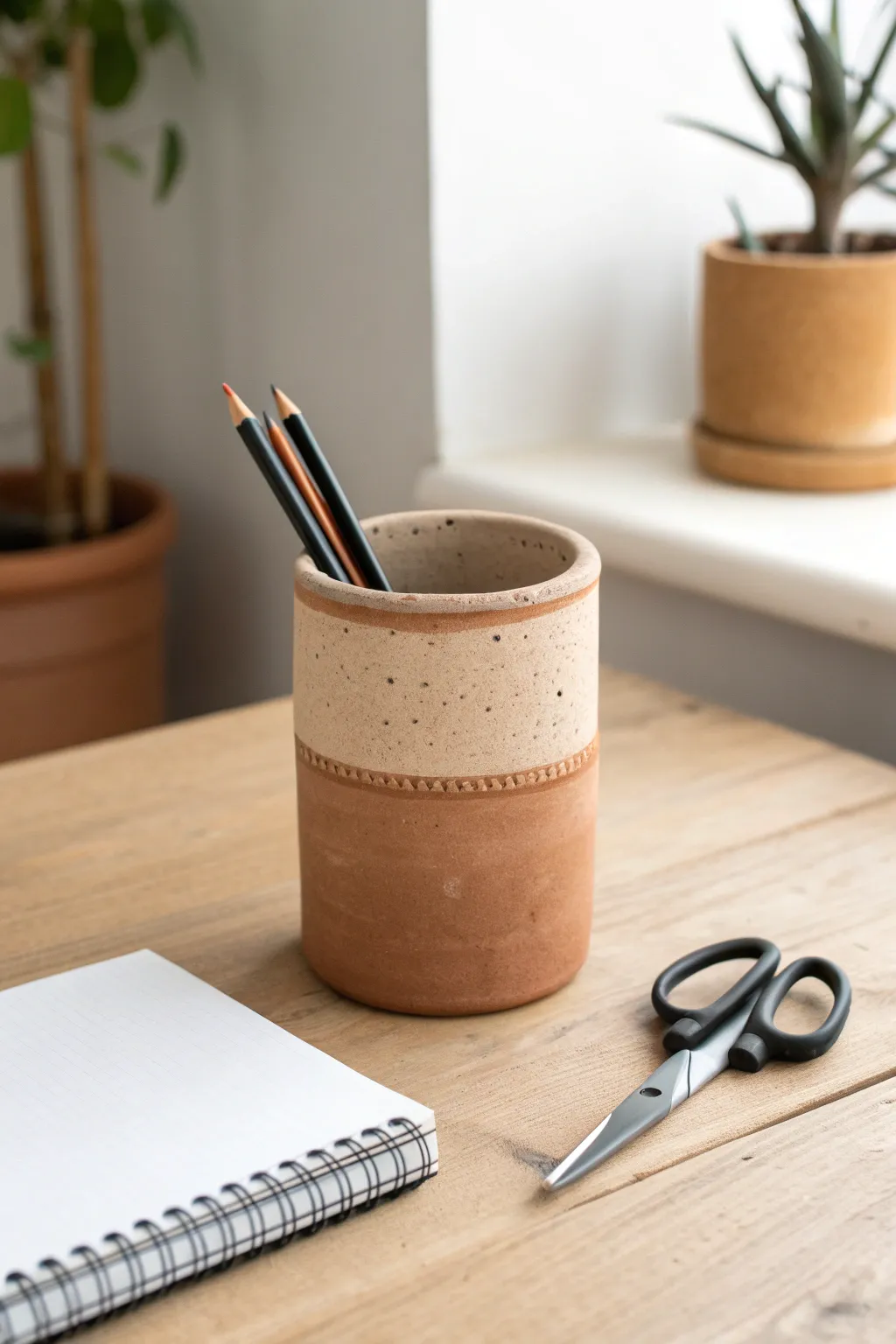
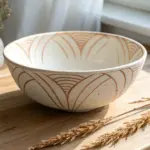
Bring earthy warmth to your workspace with this hand-built clay vessel featuring a lovely textural contrast. The split-finish design combines raw terracotta with a speckled cream glaze, separated by delicate stamped detailing.
Step-by-Step Guide
Materials
- Terracotta clay (low-fire or air-dry depending on kiln access)
- Rolling pin
- Fettling knife or clay cutter
- Slip and scoring tool (or a fork)
- Cylindrical form (like a PVC pipe or rolling pin) for shaping
- Small wooden modeling tool or popsicle stick
- Speckled cream or white glaze (if firing)
- Clear matte sealant (if using air-dry clay)
- Sponge
- Ruler
Step 1: Building the Form
-
Prepare the slab:
Begin by wedging your terracotta clay to remove air bubbles, then roll it out into a consistent slab about 1/4 inch thick so the walls will be sturdy but not too heavy. -
Measure and cut:
Using a ruler and your fettling knife, cut a rectangle for the walls. A good size is roughly 4 inches high by 10 inches long, but you can adjust based on how wide you want the opening. -
Cut the base:
Cut a circle from the remaining slab that matches the desired diameter of your cup. I often place my cylindrical form on the clay and trace around it for a perfect fit. -
Score the edges:
Score (scratch) the short ends of your rectangle and the outer edge of your circular base. Apply a small amount of clay slip or water to these roughed-up areas. -
Assemble the cylinder:
Carefully wrap the rectangle around your cylindrical form or just curve it by hand to create a tube. Press the scored ends together firmly to create a seam. -
Blend the seam:
Use a wooden tool or your thumb to smooth the seam both inside and outside until the join is invisible. Support the wall from the opposite side while you work to keep the shape round. -
Attach the base:
Place the cylinder onto the scored base circle. Gently press the walls down onto the base, then drag a little clay from the base up onto the wall to seal the connection. -
Smooth the exterior:
Run a damp sponge over the entire surface to remove fingerprints and create a uniform texture.
Step 2: Detailing and Finishing
-
Mark the glaze line:
Decide where you want the two-tone effect to split. Using a ruler, lightly etch a horizontal line around the circumference of the cup, positioned slightly above the vertical center. -
Add texture:
Use the edge of a small wooden tool, a popsicle stick, or even the cap of a pen to stamp varied indentations directly along that etched line. Create a repeating pattern of vertical dashes or small dots. -
Dry properly:
Allow the piece to dry slowly. If you are using kiln-fire clay, it needs to be bone dry before the bisque fire. If using air-dry clay, wait 24-48 hours until it is hard and lighter in color. -
Bisque fire:
If using traditional ceramics, fire the piece to cone 04 (or your clay’s specific bisque temperature). -
Glazing technique:
Dip the top half of the cup into a cream-colored speckled glaze, stopping exactly at your textured line. Hold it upside down for a few seconds so the excess drips away from the raw clay bottom. -
Clean up:
If any glaze dripped onto the textured band or the raw bottom, wipe it away immediately with a clean, damp sponge to keep that crisp separation. -
Final fire or seal:
Fire the piece again for the glaze melt. If you used air-dry clay, paint the top half with acrylic paint and speckles, then seal the inside with a waterproof varnish so it is durable.
Clean Seams
When joining the clay rectangle into a cylinder, cut the ends at a 45-degree angle (beveled) rather than blunt. This creates a larger surface area for the join and makes the seam much easier to hide.
Make it a Set
Create a cohesive desk set by making a shallow dish for paperclips and a flat coaster using the same two-tone technique. Vary the height of the stamped line for visual interest across the collection.
Once dry and finished, your organizer is ready to add a touch of handcrafted charm to your daily workflow

The Complete Guide to Pottery Troubleshooting
Uncover the most common ceramic mistakes—from cracking clay to failed glazes—and learn how to fix them fast.
Modern Phone Stand
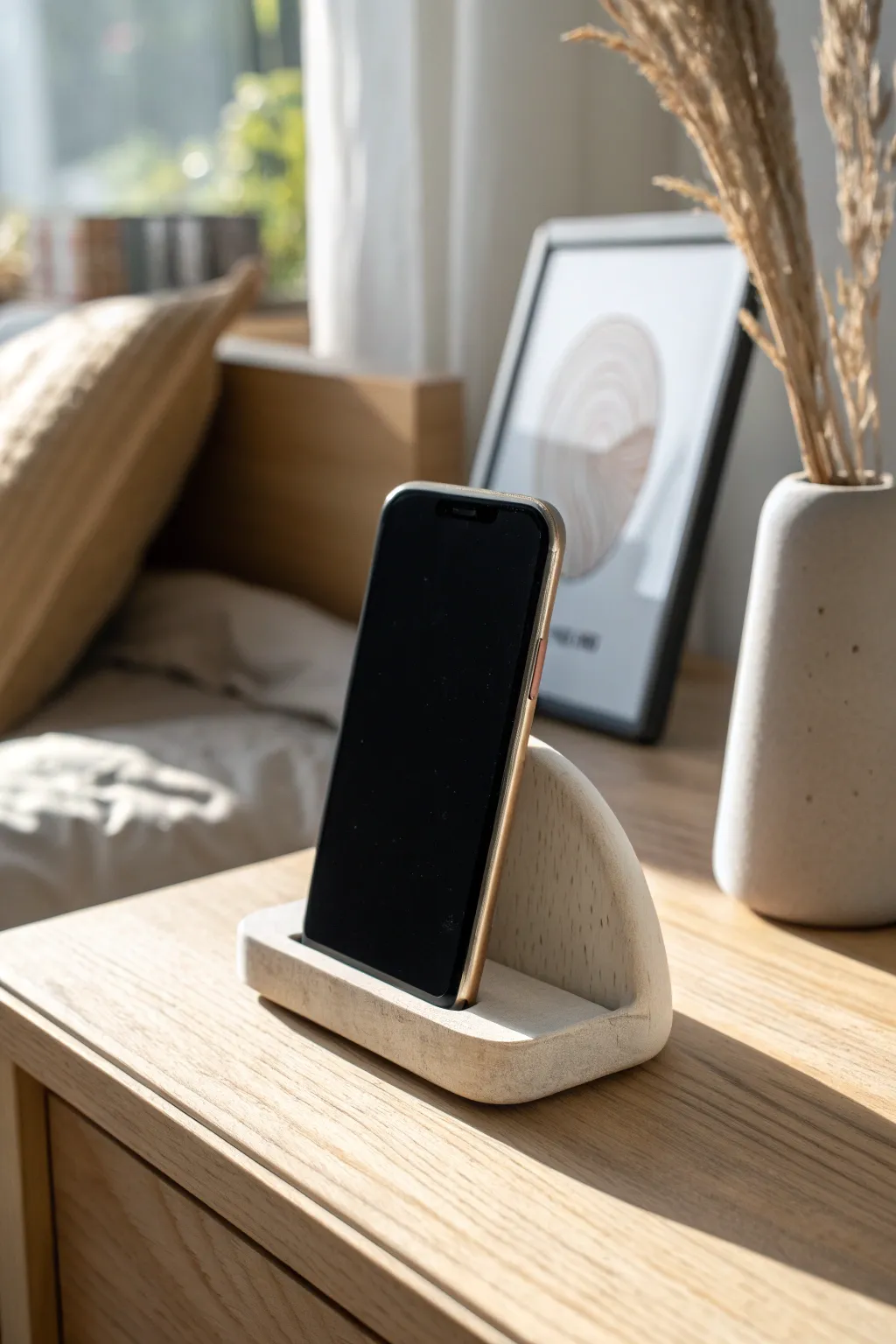
Bring modern gallery vibes to your nightstand with this chic, architectural phone holder. Crafted to look like honed stone, its clean arch and weighted base provide a stylish and functional home for your device.
Step-by-Step Tutorial
Materials
- Stone-effect polymer clay (e.g., granite or limestone finish)
- Rolling pin or acrylic roller
- Sharp clay blade or craft knife
- Cardboard or stiff paper for templates
- Ruler
- Sandpaper (various grits from 400 to 1200)
- Baking sheet and parchment paper
- Oven (for baking)
- Strong craft glue (e.g., E6000) or liquid polymer clay
Step 1: Design & Preparation
-
Create your templates:
Before touching the clay, draft your shapes on cardboard. You will need two pieces: a rectangular base (approx. 3 inches by 4 inches) and an arch shape for the back support (approx. 3 inches wide at the bottom and 3.5 inches tall). -
Condition the clay:
Take your stone-effect polymer clay and knead it thoroughly in your hands until it becomes soft and pliable. This prevents cracking later on. -
Roll the base slab:
Roll out a portion of the clay to a consistent thickness of about 1/2 inch. You want a chunky, substantial look for the base so it has enough weight to hold the phone. -
Cut the base:
Place your rectangular template onto the rolled slab. Use your sharp blade to cut cleanly around the edges. Set the excess clay aside.
Step 2: Forming the Structure
-
Roll the arch slab:
Roll out another slab of clay, aiming for slightly thinner than the base but still sturdy—around 3/8 inch thick is ideal. -
Cut the arch:
Lay your arch template on this second slab and cut it out carefully. Smooth the curved edge with your finger to remove any sharp cut marks. -
Create the front lip:
Roll a small snake of clay or cut a thin strip from your leftovers. This will act as the stopper to keep your phone from sliding forward. -
Attach the lip:
Score the front edge of your base piece lightly. Press the strip onto the front edge, blending the clay seams together with a modeling tool or your finger until it looks like one solid piece. -
Test the fit:
Without attaching anything yet, gently prop the arch piece against the base to ensure the proportions look right. Check that your phone will sit comfortably at the angle you desire.
Slumping Arch?
If your clay is too soft to hold shape, pop the raw pieces in the fridge for 20 minutes before baking to firm them up.
Step 3: Baking & Assembly
-
Bake the pieces separate:
Place your base and your arch flat on a parchment-lined baking sheet. Baking them flat ensures they don’t warp or slump. -
Oven time:
Bake according to your clay package instructions (usually around 275°F for 15–30 minutes per 1/4 inch of thickness). Let them cool completely in the oven to prevent thermal shock. -
Sand for finish:
Once cool, use wet/dry sandpaper under running water. Start with 400 grit to even out edges and progress to 1200 grit for that super-smooth, stone-like feel. -
Adhere the pieces:
Apply a line of strong craft glue or liquid clay along the bottom straight edge of the arch piece. I prefer liquid clay for a seamless bond, but it requires a second bake. -
Position the arch:
Press the arch onto the base, leaving enough room in front for the phone to rest. Use a ruler to ensure it is centered and straight. -
Secure and set:
If using glue, clamp lightly or prop it up until dry. If using liquid clay, return the assembled piece to the oven for another 20 minutes to fuse the bond permanently.
Terrazzo Twist
Mix contrasting colored clay chips into your main block before rolling to create a trendy terrazzo pattern.
Now you have a functional piece of art that keeps your desk organized and stylish
Terrazzo-Style Coasters
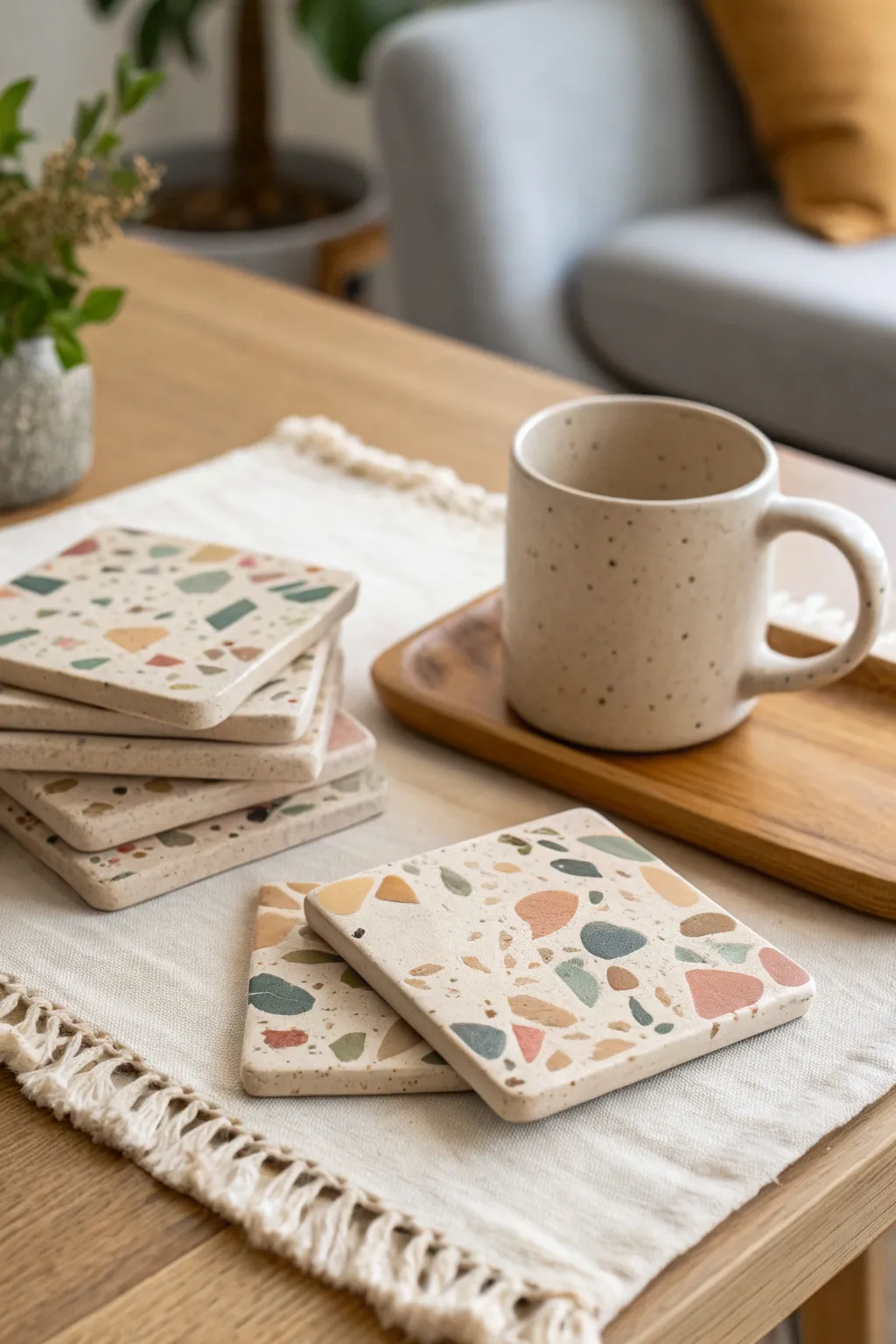
Bring a touch of modern, artisanal charm to your coffee table with these stunning terrazzo-style coasters. By embedding colorful clay fragments into a neutral base, you can achieve that high-end stone look right at home.
Step-by-Step
Materials
- White or cream polymer clay (1 large block)
- Assorted colored polymer clay (muted blues, terracotta, sage green, mustard)
- Acrylic roller or pasta machine
- Square cookie cutter (approx. 4 inches) or craft knife
- Fine grit sandpaper (400, 600, and 1000 grit)
- Parchment paper
- Ceramic tile or glass work surface
- Matte polyurethane varnish or resin (optional for sealing)
Step 1: Making the ‘Chips’
-
Condition the colors:
Start by conditioning your colored clays individually. Knead them until they are soft and pliable, ensuring there are no air bubbles. -
Flatten the colors:
Roll out each colored clay piece into a thin, uneven sheet. It doesn’t need to be perfect since you’ll be chopping it up; aim for about 1-2mm thickness. -
Bake the sheets:
Place your thin colored sheets on a parchment-lined baking tray. Bake them for about 10-15 minutes at the manufacturer’s recommended temperature. This partial bake hardens them just enough to cut cleanly. -
Create the fragments:
Once the sheets have cooled completely, chop them into small, irregular angular pieces using your craft knife. Vary the sizes—some tiny specks and some larger chunks—to mimic real stone aggregate.
Uneven Chips?
If chips are smearing instead of looking sharp during the second roll, your base clay might be too soft. Pop the slab in the fridge for 10 mins before rolling.
Step 2: Forming the Base
-
Prepare the base clay:
Condition your large block of white or cream clay thoroughly. This will form the main body of your coasters. -
Incorporate the chips:
Flatten the white clay slightly and sprinkle a generous amount of your baked colored chips onto the surface. Fold the clay over, trapping the chips inside. -
Mix and repeat:
Gently roll and fold the clay a few times to distribute the chips throughout the block, but avoid over-mixing or the colors might become hidden too deep. -
Roll out the slab:
Roll the chip-filled clay into a thick slab, approximately 1/4 inch thick. I like to use depth guides or rulers on either side to ensure an even thickness across the whole slab. -
Add surface chips:
Check the surface. If it looks too plain, press more leftover colored chips directly onto the top of the slab to ensure the pattern is visible. -
Final roll:
Give the slab one final gentle roll to embed those surface chips flat into the clay so the top is level.
Add Some Sparkle
Mix in small dried gold leaf flakes or glitter into the white base clay along with the colored chips for a glamorous, high-end twist on the terrazzo look.
Step 3: Shaping and Finishing
-
Cut the shapes:
Use your square cutter to punch out the coaster shapes. If using a knife and template, cut carefully to keep the edges straight. -
Soften the edges:
Gently tap the sides and round the corners with your finger to remove sharp cutting lines and achieve that soft, stone-like aesthetic. -
Final Bake:
Bake the finished coasters according to the clay package directions (usually 30 minutes per 1/4 inch of thickness). Let them cool completely on the tray. -
Sanding for stone effect:
Place your sandpaper on a flat surface and wet it slightly. Rub the coaster face-down in circular motions, starting with 400 grit to reveal the chips clearly, then moving to 600 and 1000 for a smooth finish. -
Wash and dry:
Rinse off the milky residue from sanding and dry the coasters thoroughly with a lint-free cloth. -
Seal (Optional):
For extra durability against moisture, apply a thin coat of matte varnish or UV resin. This step is optional if you prefer the raw stone texture of the bare clay.
Stack your new set of coasters on the table and enjoy their sophisticated, handmade style

What Really Happens Inside the Kiln
Learn how time and temperature work together inside the kiln to transform clay into durable ceramic.
Marble-Effect Vanity Tray
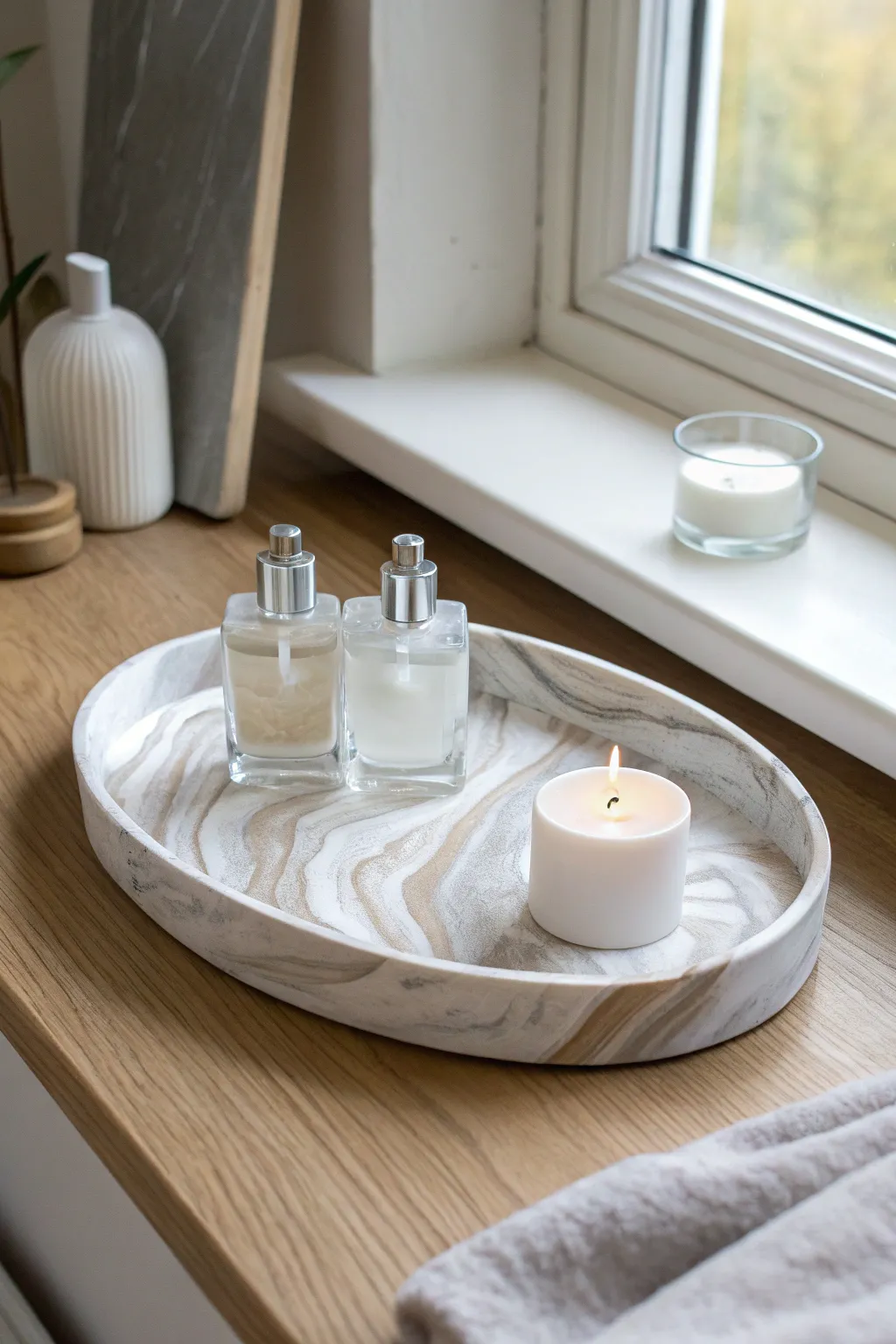
Elevate your bathroom counter or bedside table with this sophisticated faux-marble tray. Using polymer clay to blend soft whites, beiges, and subtle greys, you will create a high-end organizational piece that looks heavy and expensive but is surprisingly easy to sculpt.
How-To Guide
Materials
- White polymer clay (approx. 4 blocks)
- Beige or translucent tan polymer clay (1 block)
- Grey or granite-effect polymer clay (1/2 block)
- Rolling pin (acrylic preferred)
- Oval paper template (approx. 9×6 inches)
- Sharp craft knife or clay blade
- Sandpaper (various grits from 400 to 1200)
- Gloss or satin polyurethane varnish
- Soft paintbrush
- Oven and baking sheet
- Parchment paper
Step 1: Marbling the Clay
-
Condition the white clay:
Begin by warming up your white clay in your hands until it is soft and malleable. Roll it into three thick logs of equal length, roughly 5 inches long each. -
Prepare accent colors:
Condition the beige and grey clays separately. Roll these into much thinner ‘snakes’ or strands, as these colors need to be accents rather than dominant shades. -
Combine the colors:
Lay the thin beige and grey strands alongside the thick white logs. Twist them all together into one large rope. Fold this rope in half and twist again to encourage the colors to mingle. -
Create the marble pattern:
Roll the twisted rope into a smooth ball. Then, roll it back out into a log and twist it one more time. Be careful not to over-mix, or the colors will turn muddy instead of distinct swirls. -
Roll out the slab:
Place the clay on parchment paper. Using your rolling pin, flatten the log into a large, even slab about 1/4 inch thick. I like to roll in different directions to stretch the marble pattern organically.
Rim Separation?
If the rim separates during baking, apply a small amount of liquid polymer clay (or ‘Bake & Bond’) to the crack and rebake for 10-15 minutes to seal the gap.
Step 2: Shaping the Tray
-
Cut the base:
Place your oval paper template onto the rolled clay. Use your craft knife to trace around the template carefully, cutting out the base shape. Save the excess cutoff clay. -
Smooth the edges:
Gently run your finger along the cut edge of the oval base to soften any sharp corners left by the blade. This ensures a professional finish later. -
Form the rim coil:
Gather the excess marble clay scraps you saved. Roll these into a long, continuous snake about 1/2 inch thick over the length of your oval’s circumference. -
Attach the rim:
Lay the coil on top of the oval base, aligning it flush with the outer edge. Gently press it down so it makes good contact with the base layer. -
Blend the seams:
Using your thumb or a clay modeling tool, drag the clay from the inside of the rim down onto the base to merge them. Do this on the outside seam as well until the join is invisible. -
Refine the wall shape:
Pinch the wall gently to shape it upwards. It should stand about 3/4 inch high. Ensure it is vertical and not leaning outward too much. -
Level the top edge:
Use your craft knife to slice horizontally across the top of the rim if it looks uneven. Smooth this cut edge with a little water on your fingertip.
Gold Leaf Glamour
Before varnishing, dab bits of gold leaf onto the rim edge or specifically along the beige veins for a chic, expensive-looking gilded detail.
Step 3: Finishing Touches
-
Bake the tray:
Transfer the parchment paper with the tray to a baking sheet. Bake according to your clay manufacturer’s instructions, usually at 275°F (130°C) for 30 minutes per 1/4 inch of thickness. -
Cool down:
Allow the tray to cool completely in the oven with the door slightly ajar. Removing it while hot can cause warpage or cracking. -
Wet sand for smoothness:
Once cool, dip the tray in water and sand the entire surface, starting with 400 grit and working up to 1200 grit. This removes fingerprints and creates a stone-like feel. -
Wash and dry:
Rinse off all sanding residue and dry the tray thoroughly with a lint-free cloth. -
Apply varnish:
Brush on a thin coat of gloss or satin polyurethane varnish to protect the clay and make the marble colors pop. Let it dry completely before use.
Place your favorite perfumes or a candle on your new tray and admire the luxury vibe you’ve added to the room
Arch Taper Candle Holders
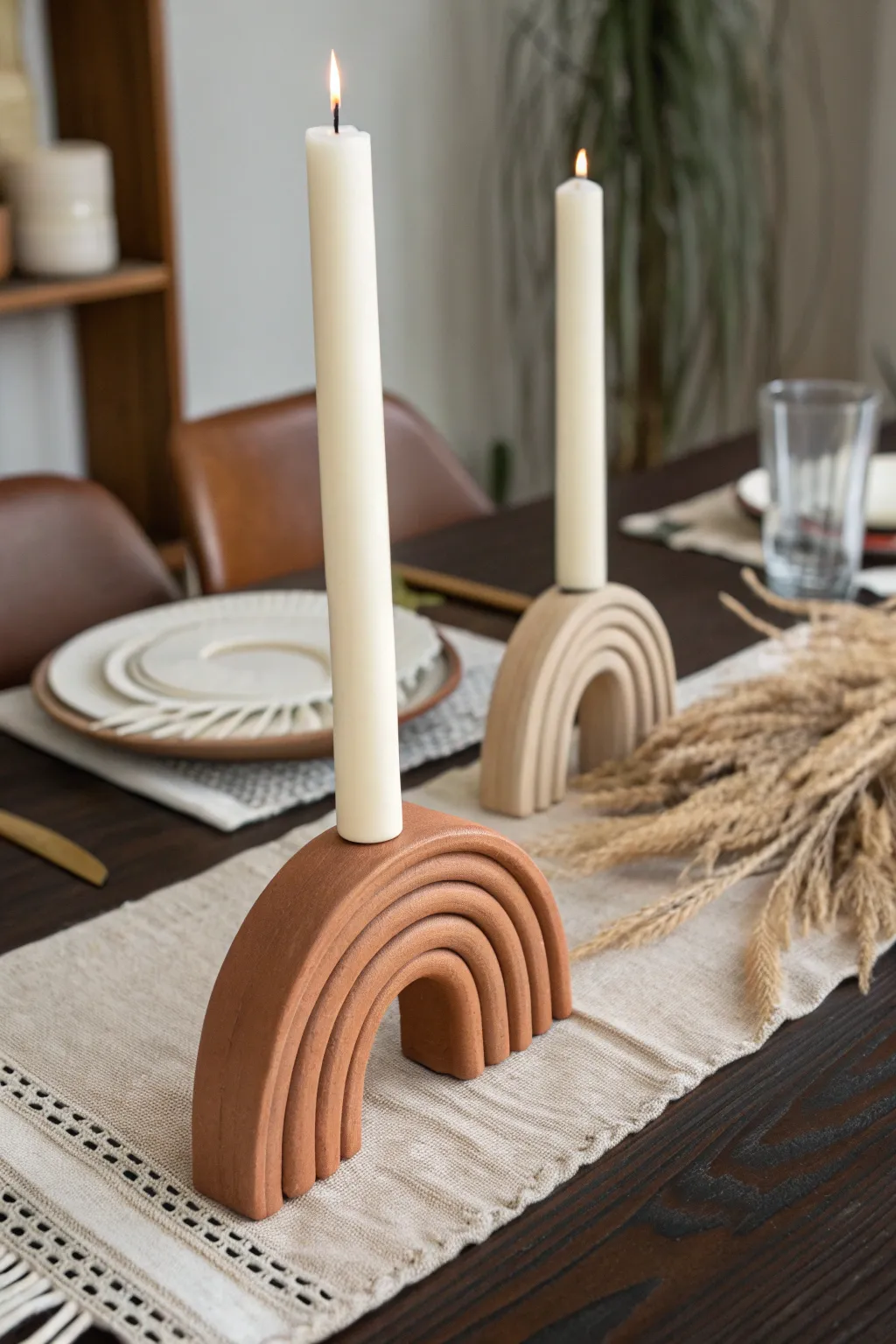
Bring warmth and structure to your table setting with these stunning architectural candle holders. Replicating the look of carved stone or fired ceramic, these polymer clay rainbows offer a high-end aesthetic without needing a kiln.
Detailed Instructions
Materials
- Polymer clay (terracotta and beige colors)
- Acrylic rolling pin
- Sharp clay blade or X-Acto knife
- Circle cutters (various nesting sizes)
- Standard taper candle (for sizing)
- Aluminum foil
- Oven-bake adhesive (like Bake & Bond)
- Sandpaper (fine grit)
- Baking sheet
Step 1: Prepping the Core
-
Condition the clay:
Begin by thoroughly conditioning your polymer clay until it is soft and malleable. You will need a significant amount for the base structure, so take your time to warm it up in your hands. -
Form the foil armature:
To save clay and reduce weight, create a tight arches out of aluminum foil. Compress the foil firmly so it creates a dense, solid core in a rough arch shape. -
Cover the core:
Roll out a sheet of clay to about 1/4 inch thickness. Wrap this sheet around your foil armature, smoothing the seams together with your fingers until the foil is completely hidden. -
Shape the base arch:
Press the clay-covered form against your work surface to flatten the bottom feet. Use your fingers to refine the arch shape, ensuring it stands upright without wobbling. -
Create the candle socket:
Take your taper candle and press it firmly into the top center of the arch to create an indentation. Wiggle it slightly to ensure the hole is wide enough, then remove the candle.
Uneven Arches?
If your layers look lumpy, try freezing the clay for 5 mins before applying. Firmer clay holds the ‘squared’ shape better than soft, warm clay during handling.
Step 2: Building the Rainbow Layers
-
Roll decorative snakes:
Roll out long, even snakes of clay. I find that using the acrylic block to roll them against the table helps keep the thickness consistent. -
Flatten the strips:
Gently flatten these snakes into long rectangular strips using your rolling pin. These will become the distinct layers of your rainbow design. -
Apply the first layer:
Apply a thin line of oven-bake adhesive to the inner underside of your main arch. Press the first clay strip along this curve, trimming any excess at the feet. -
Build outward:
Continue adding strips to the face of the arch. Apply a small amount of adhesive, place a strip over the top of the arch, and smooth it down the sides. Repeat this to create the stepped, rainbow-like reliefs seen in the image. -
Refine the edges:
Use your clay blade to trim the bottom of the feet so all layers are flush with the table. This is crucial for stability.
Styling Upgrade
Mix black pepper or dried coffee grounds into your beige clay before rolling. This creates a speckled, faux-ceramic pottery look that mimics real stoneware.
Step 3: Refining and Baking
-
Create the socket collar:
Roll a small strip of clay and wrap it around the top hole where the candle will sit. Blend the edges downward into the main body to reinforce the opening. -
Texture check:
Inspect the piece for fingerprints. If you want a more stone-like texture, lightly tap the surface with a toothbrush or crumpled foil. -
Final sizing:
Do one last test fit with your candle to ensure the hole hasn’t distorted during the layering process. The fit should be snug. -
Bake carefully:
Place the holders on a baking sheet. Follow the manufacturer’s instructions for your specific brand of clay, usually baking at around 275°F (135°C). Because these are thick, they may need 45-60 minutes. -
Cool down:
Turn off the oven and let the pieces cool completely inside with the door slightly ajar. This prevents thermal shock and cracking. -
Sand and finish:
Once fully cool, use fine-grit sandpaper to smooth out any rough edges on the bottom or along the seams for a professional matte finish.
Place your finished holders on a linen runner and light the candles for an instant cozy atmosphere

TRACK YOUR CERAMIC JOURNEY
Capture glaze tests, firing details, and creative progress—all in one simple printable. Make your projects easier to repeat and improve.
Mini Succulent Planters
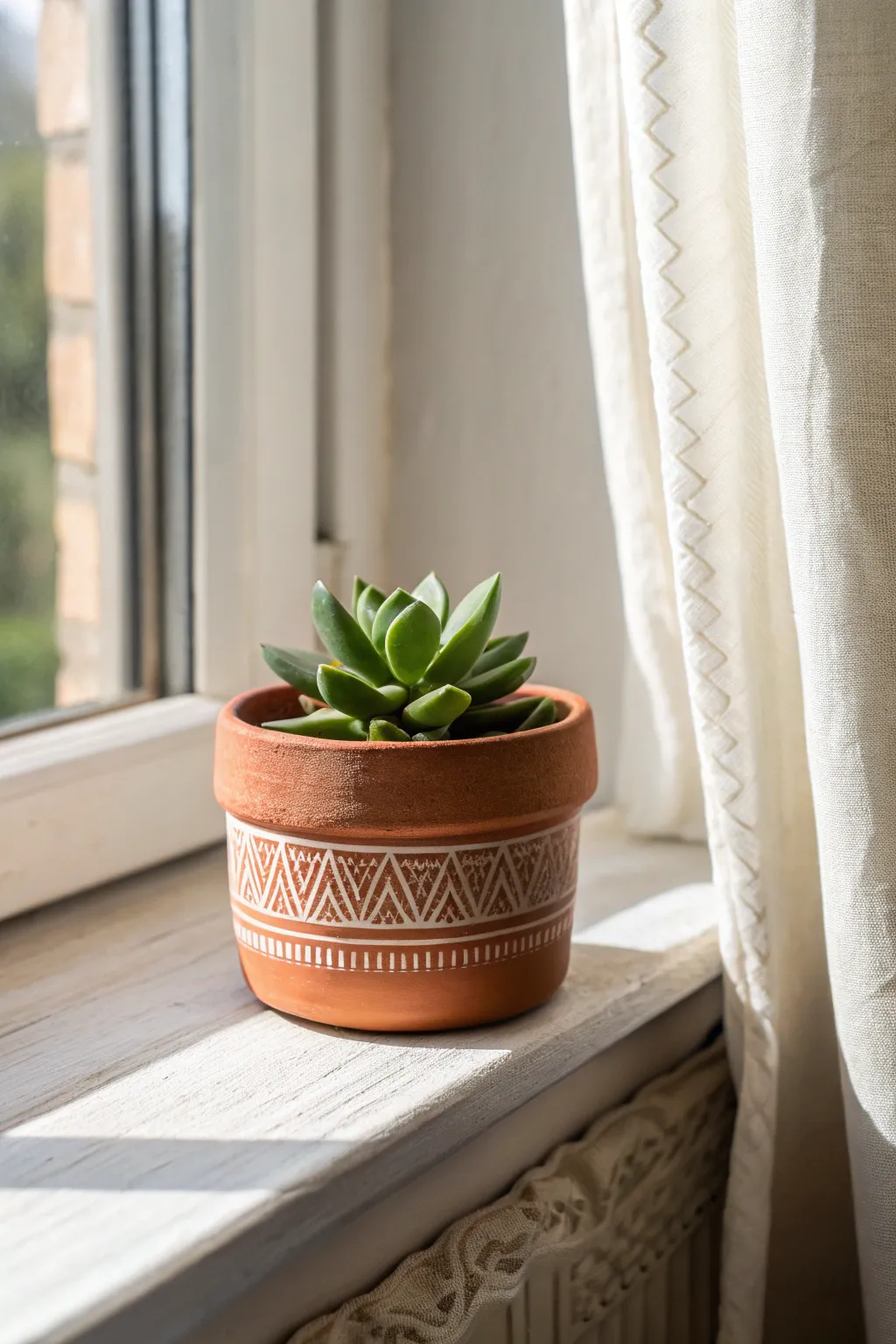
Transform a plain terracotta pot into a chic accent piece for your windowsill with nothing but a white paint marker. This simple geometric design adds instant character and looks deceivingly intricate, making it a perfect project for beginners.
Detailed Instructions
Materials
- Small terracotta pot (clean and dry)
- White oil-based paint marker (medium tip)
- White oil-based paint marker (fine tip)
- Pencil
- Eraser
- Measuring tape (flexible) or string
- Clear matte sealer spray (optional)
- Succulent and potting soil (for finishing)
Step 1: Preparation & Planning
-
Clean surface:
Before you begin, ensure your terracotta pot is completely clean and bone dry. Wipe away any dust with a damp cloth and let it sit in the sun for an hour if needed, as moisture can prevent the paint from sticking. -
Define the design area:
Decide where your main pattern band will sit. For this look, we are leaving the chunky rim unpainted and focusing on the upper half of the main body. -
Mark horizontal guides:
Using a pencil, lightly draw two parallel lines around the circumference of the pot to define the top and bottom of your main decorative band. I find spinning the pot on a lazy susan helps keep the line steady. -
Divide the band:
To ensure your triangles are even, use a flexible measuring tape to find the circumference. Mark small vertical ticks along the top guideline at equal intervals (about 1 inch apart works well for small pots).
Step 2: Drawing the Base Geometry
-
Create the zig-zag:
Connect your tick marks to create a continuous zig-zag pattern between your top and bottom pencil guidelines. This forms the large triangles that anchor the design. -
Double the lines:
Using your medium tip white paint marker, trace over your pencil zig-zags. Once dry, draw a second line just inside each triangle to create a double-outlined frame. -
Add horizontal borders:
Draw a solid white line covering your top and bottom pencil guidelines. This ‘sandwiches’ the triangle pattern and gives it a finished border.
Uneven Lines?
If your paint marker lines look shaky or uneven, don’t worry. You can gently scrape away mistakes on terracotta with a craft knife once the paint is fully dry, or embrace the hand-drawn charm.
Step 3: Adding Intricate Elements
-
Detail the upward triangles:
Switch to your fine tip marker. Inside the triangles pointing upwards, draw a series of small, nested ‘carrot’ shapes or Vs, getting smaller as you reach the peak. -
Fill downward triangles:
For the triangles pointing down, draw three or four vertical straight lines inside them to create a striped effect. Keep your hand loose but controlled. -
Create the lower border:
About half an inch below your main pattern band, draw another horizontal line around the pot. -
Add the vertical hash marks:
Fill the space between the main band and this new lower line with short, evenly spaced vertical dashes. This creates the ‘fringe’ look at the bottom. -
Final border line:
Draw one last horizontal line underneath the vertical dashes to close off the bottom design section.
Add Some Color
Instead of just white, try alternating colors for the inner triangle details. A soft sage green or a muted terra cotta orange paint pen can add subtle depth without overpowering the look.
Step 4: Finishing Touches
-
Let it cure:
Allow the paint marker to dry completely. Oil-based markers usually take a few hours to fully set on porous clay. -
Clean up:
Once the paint is rock hard, gently erase any visible pencil guidelines. Be careful not to scrub too hard over the paint itself. -
Seal (Optional):
If you plan to keep this pot outdoors, give it a light coat of clear matte sealer spray to protect the design from the elements. -
Plant:
Fill your new decorative pot with cactus mix and place your succulent inside, pressing the soil down firmly around the edges.
Enjoy the fresh, handcrafted vibe this little planter brings to your space
Petite Bud Vases for Shelves
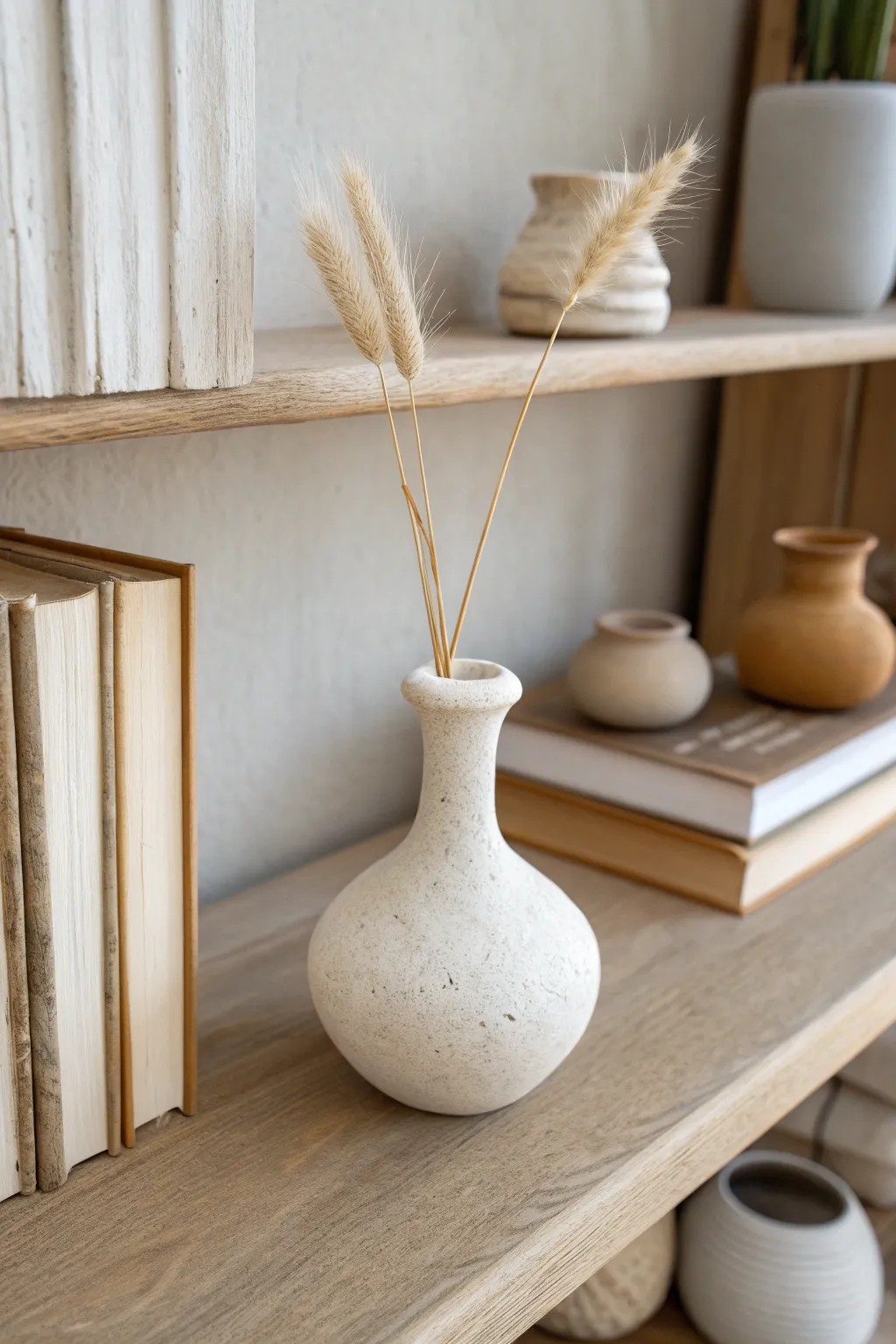
Bring an organic, minimalist touch to your shelves with this charming petite bud vase crafted from air-dry clay. Its speckled, stone-like texture and gentle curves make it the perfect vessel for displaying delicate dried grasses.
Step-by-Step
Materials
- White or natural air-dry clay (approx. 1 lb)
- Small rolling pin
- Pottery sponge
- Clay sculpting tools (needle tool, rib tool)
- Water in a small dish
- Sandpaper (fine and medium grit)
- Acrylic paints (white, beige, warm grey)
- Old toothbrush
- Matte sealant spray or varnish
- Dried bunny tails or wheat grass for display
Step 1: Shaping the Base Form
-
Prepare the Clay:
Start by taking a generous handful of air-dry clay and kneading it thoroughly to remove air bubbles and make it pliable. -
Form the Pinch Pot:
Roll the clay into a smooth ball about the size of a tennis ball. Gently press your thumb into the center, stopping about a half-inch from the bottom. -
Pinch the Walls:
Using your thumb and fingers, slowly rotate the ball while pinching the clay walls upwards and outwards to create a hollow sphere shape. -
Smooth the Surface:
As you shape, use a slightly damp sponge to smooth out any cracks or fingerprints on the exterior. Keep the walls roughly even in thickness. -
Create the Neck:
Begin to narrow the opening at the top by gently collaring the clay inward. Add a small coil of clay to the rim if you need more height. -
Refine the Neck Shape:
Smooth the added coil downwards to merge it seamlessly with the body. Use your fingers to pull the neck upward, creating a slender, vertical tunnel.
Natural Speckles
Mix dried coffee grounds or black pepper directly into your wet clay before sculpting for authentic, embedded texture.
Step 2: Refining and Texturing
-
Flare the Rim:
At the very top of the neck, gently press your thumb outward to create a slight flare or lip, giving it that classic vase silhouette. -
Final Smoothing:
Use a rib tool or a damp sponge to do a final pass over the entire form, ensuring curves are organic and the surface is free of deep gouges. -
Drying Phase:
Set your vase aside in a dry area away from direct sunlight. I like to let this dry for at least 24-48 hours, rotating it occasionally for even drying. -
Sanding:
Once bone dry, use medium grit sandpaper to level out any bumps, followed by fine grit sandpaper for a smooth finish. Wipe away dust with a dry cloth.
Liquid Proofing
Air-dry clay isn’t waterproof. To hold fresh flowers, hide a small glass vial or test tube inside the clay neck.
Step 3: Creating the Faux Stone Look
-
Base Coat:
Mix white acrylic paint with a tiny drop of beige to create an off-white, creamy base color. Paint the entire vase, inside the rim and out. -
Adding Texture:
While the paint is still tacky, dab a dry sponge or crumpled paper towel gently over the surface to create a subtle, uneven texture. -
Creating the Speckles:
Mix a small amount of warm grey or diluted black paint with a little water. Dip an old toothbrush into this mixture. -
Splatter Technique:
Hold the toothbrush near the vase and run your thumb across the bristles to flick tiny specks of paint onto the surface. Rotate the vase to cover all sides. -
Soften the Effect:
If any speckles are too large or dark, immediately dab them with a clean paper towel to soften them into the background. -
Sealing:
Allow the paint to dry completely. Apply a coat of matte spray sealant to protect the finish and lock in that dusty, stone-like appearance. -
Final Touch:
Insert a few stems of dried grass or bunny tails to complete the rustic look.
Enjoy styling your new handmade vessel on a bookshelf alongside your favorite reads
Moon Phase Wall Hanging
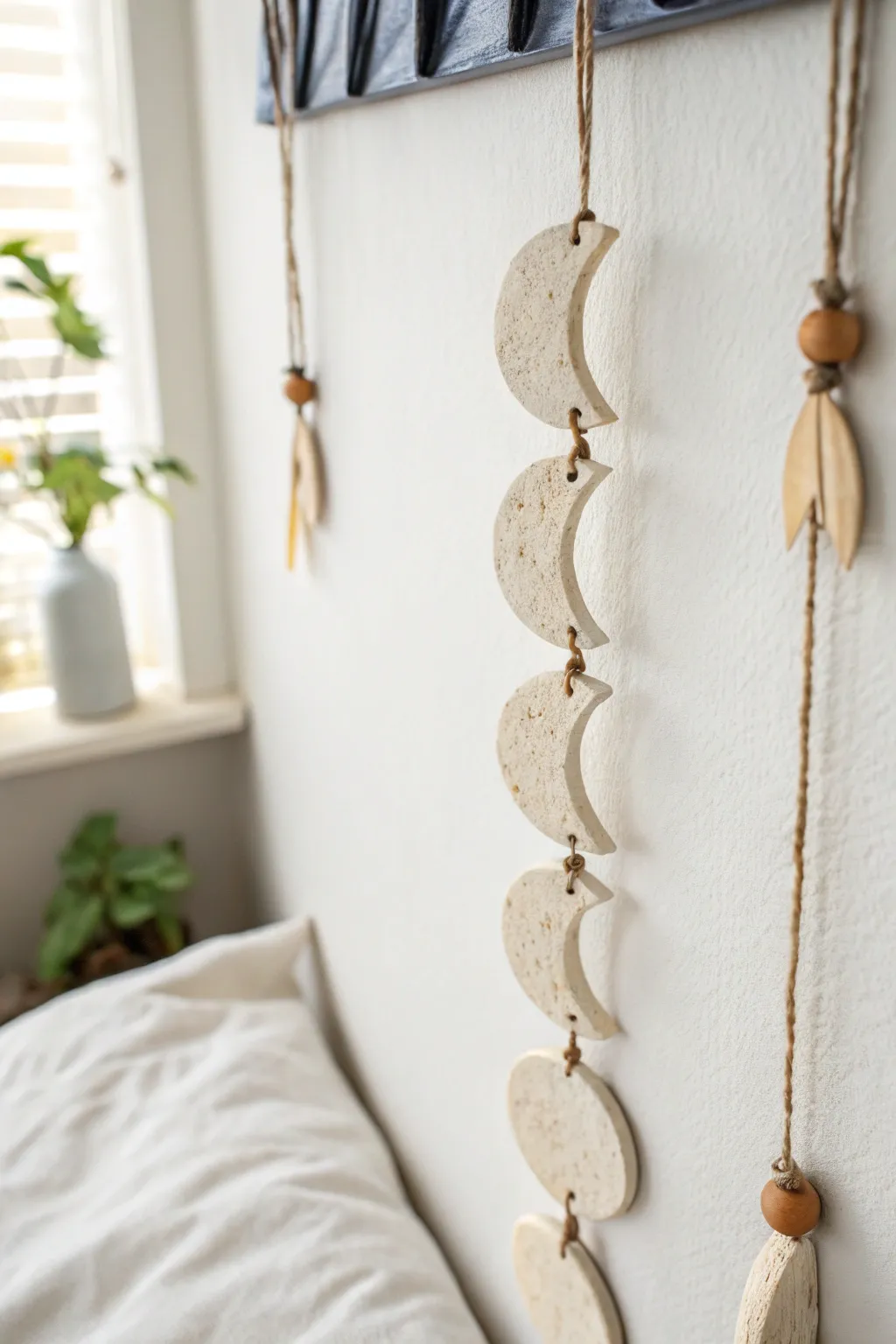
Bring the calming cycle of the moon into your home with this textured, vertical wall hanging. This project uses specked air-dry or polymer clay to create a raw, earthy aesthetic that perfectly captures the celestial rhythm.
How-To Guide
Materials
- Speckled air-dry clay or stone-effect polymer clay
- Jute twine or hemp cord
- Rolling pin
- Circular cookie cutter (approx. 2.5 – 3 inches)
- Small straw or bamboo skewer (for holes)
- Wooden beads (natural finish)
- Sandpaper (fine grit)
- Parchment paper
- Measuring tape
- Optional: Craft stick or driftwood for hanging
Step 1: Shaping the Moons
-
Condition and Roll:
Begin by conditioning your clay until it is soft and malleable. Roll it out on a sheet of parchment paper to an even thickness of about 1/4 inch. -
Cut the Base Circles:
Using your circular cookie cutter, punch out seven full circles. Keep the excess clay nearby, as you will need it for the smaller side accents. -
Create the Crescents:
To make the crescent moons, take your cookie cutter again. Place the edge of the cutter over one of your freshly cut circles, shifting it slightly off-center to slice away a portion, leaving a crescent shape. Repeat this to create varying phases: waxing, waning, and full. -
Smooth the Edges:
Dip your finger in a little water (for air-dry clay) or baby oil (for polymer) and gently run it along the cut edges of each moon to soften any sharpness or burrs.
Step 2: Creating Accents & Holes
-
Make the Leaf Pendants:
With your leftover clay, cut two small, elongated leaf or teardrop shapes roughly 2 inches long. These will hang at the bottom of the side strands. -
Add Texture (Optional):
If your clay is too smooth, you can gently press a real stone or a piece of coarse sandpaper onto the surface to add that natural, cratered look found in the photo. -
Piercing the Holes:
Using a straw or skewer, poke a hole at the very top and very bottom of every moon piece. Ensure the hole is large enough for your jute twine to pass through comfortably. -
Holes for Leaves:
Poke a single hole at the top of your two leaf-shaped accent pieces. -
Dry or Bake:
Follow the instructions for your specific clay. If baking polymer clay, place the parchment paper directly on a baking sheet. If air-drying, let them sit flat for 24-48 hours, flipping halfway through.
Clean Cuts
If your clay drags when lifting the cutter, let the rolled slab sit for 10-15 minutes before cutting. This firms it up slightly for sharper edges.
Step 3: Assembly
-
Sand for Finish:
Once fully cured, lightly sand the edges of your moons and leaves to ensure a professional, clean finish. -
Cut the Main Cord:
Cut a long piece of jute twine, measuring about 4 feet. This will be the central spine of your hanging. -
Threading the Top Moon:
Thread the twine through the top hole of your first moon (usually a crescent). Tie a knot securely just above the hole so the moon rests on it, or loop it through if you prefer the knot hidden. -
Connecting the Pieces:
Run the twine down the back of the moon and through the bottom hole. Tie a knot immediately below the hole to keep the moon in place. -
Spacing:
Leave about 1 inch of empty twine, tie a new knot, and then thread on the next moon phase. I like to lay the whole arrangement out on a table first to ensure the spacing looks balanced before committing to knots. -
Finish the Center Strand:
Continue this process until all vertical moons are attached. -
Create Side Strands:
Cut two shorter lengths of twine. Thread a leaf pendant onto the bottom of each, securing it with a knot. -
Add Wooden Beads:
Slide a wooden bead down onto the twine so it rests just above the clay leaf. -
Final Mounting:
Tie the top of your main moon strand and the two side strands to a piece of driftwood, a dowel, or a decorative hook bar as shown in the inspiration image.
Mix It Up
Knead in some dried tea leaves, coarse sand, or black pepper into plain white clay to create your own custom speckled stone effect.
Hang your moons near a window where natural light can highlight the textures as they slowly turn
Clay Bead Garland for Mirrors
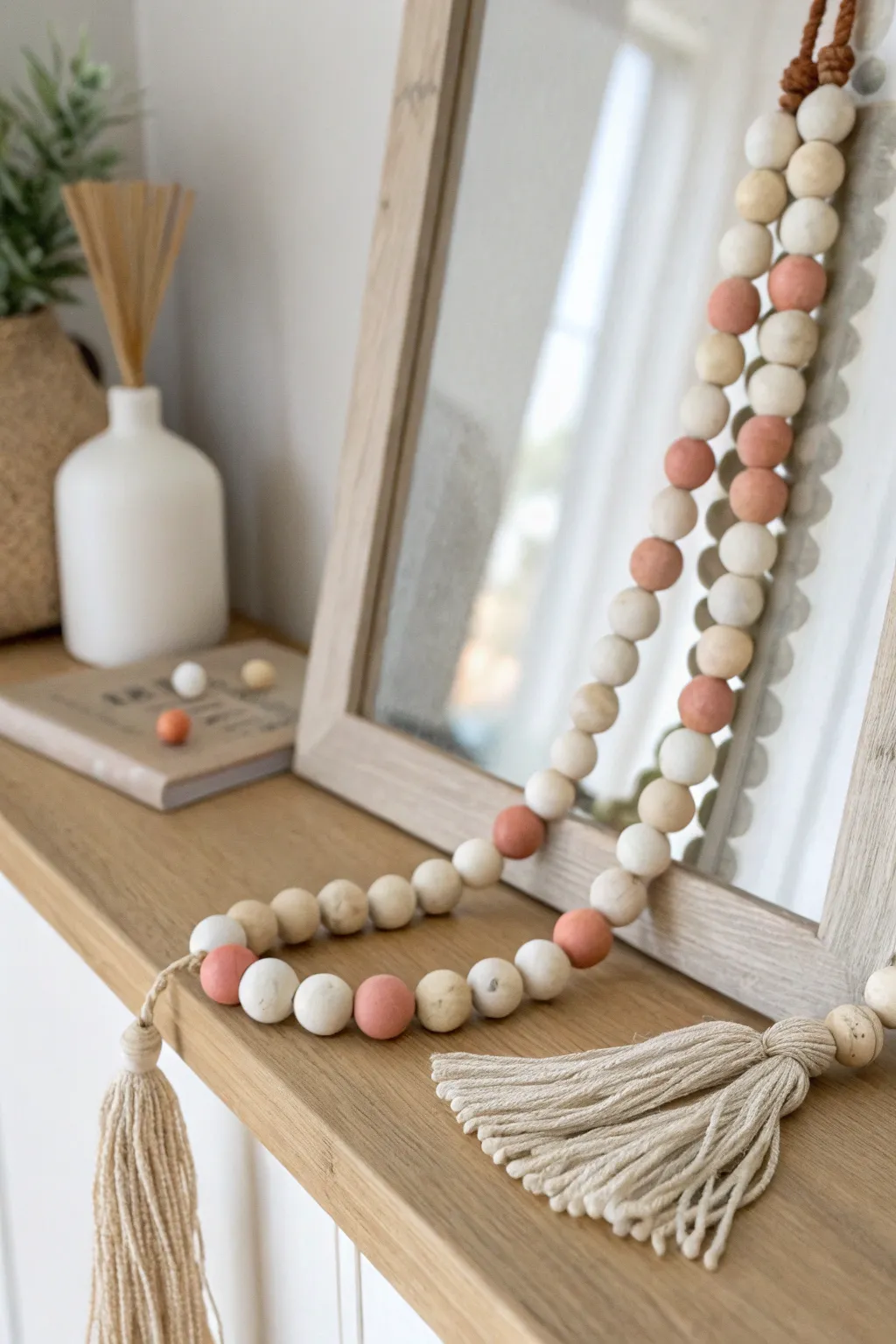
Add a touch of earthy, bohemian charm to your space with this simple yet stunning clay bead garland draped elegantly over a mirror frame. The mix of natural white and terracotta tones creates a warm, inviting accent that looks high-end but is surprisingly easy to craft at home.
Step-by-Step Guide
Materials
- White polymer clay or air-dry clay (approx. 1lb)
- Terracotta or peach-colored polymer clay (or acrylic paint)
- Thick cotton cord or jute twine (at least 3mm thickness)
- Basic clay tools (roller, cutter)
- Skewer or toothpick (for piercing)
- Parchment paper or baking tray (if using polymer clay)
- Sandpaper (fine grit)
- Scissors
- Ruler
Step 1: Prepping the Clay
-
Condition your clay:
Start by warming up your white clay in your hands. Knead it thoroughly until it’s soft, pliable, and free of any cracks. Do the same for your colored clay if you’re using pre-colored blocks. -
Portioning out:
Roll the clay into long snakes about 1 inch in diameter. Using a blade or knife, slice the snake into equal segments. This ensures your beads will be roughly the same size without needing to weigh each one. -
Planning the pattern:
Decide on your color ratio. The image shows a pattern primarily of white beads with terracotta accents dispersed throughout. A ratio of about 3 white beads to 1 colored bead works well.
Step 2: Forming the Beads
-
Rolling spheres:
Take a clay segment and roll it between your palms. Apply gentle pressure initially, then lighten your touch to smooth out the surface into a perfect sphere. Repeat for all segments. -
Creating the variation:
For a more organic, handmade look like in the photo, don’t worry if they aren’t factory-perfect spheres. Slight irregularities add character to the finished garland. -
Piercing the holes:
Using a skewer or a thick toothpick, gently pierce the center of each bead. I find it helpful to twist the skewer as I push through to prevent the bead from squashing. -
Widening the path:
Ensure the hole is wide enough for your thick cord to pass through easily—remember, the hole might shrink slightly during baking or drying. Wiggle the skewer a bit to widen it.
Hole Distortion?
If your beads squash into ovals while piercing, let the clay sit for about 20 minutes to firm up slightly before piercing, or pierce halfway from one side and meet in the middle from the other.
Step 3: Curing and Finishing
-
Baking or drying:
If using polymer clay, arrange beads on a parchment-lined baking sheet and bake according to package instructions (usually 275°F for 15-30 minutes). If using air-dry clay, let them sit in a dry spot for 24-48 hours, turning occasionally. -
Cooling down:
Allow the beads to cool completely before handling. They will harden fully as they return to room temperature. -
Sanding for smoothness:
Once hard, take a piece of fine-grit sandpaper and lightly buff any fingerprints or rough spots, especially around the bead holes. -
Optional painting:
If you used plain white air-dry clay, now is the time to paint your accent beads using terracotta or peach acrylic paint. Let them dry completely.
Marbled Effect
Mix a tiny amount of terracotta clay into a white ball but stop kneading before it’s fully blended. This creates a beautiful, subtle marble swirl that looks like natural stone.
Step 4: Assembly
-
Creating the first tassel:
Cut a bundle of cord about 10 inches long. Fold it in half over your main stringing cord. Wrap a separate piece of string around the ‘neck’ of the folded bundle to secure it, creating a tassel. Trim the ends evenly. -
Stringing the beads:
Thread the other end of your main cord through your beads. Follow the pattern shown: groups of 2-3 white beads separated by single terracotta beads, or create your own rhythm. -
Securing the end:
Once you reach your desired length (usually long enough to drape substantially), tie a knot securely after the last bead to keep them tight. -
Second tassel:
Create a second tassel using the remaining tail of the cord, repeating the wrapping method used for the first tassel. Trim the fringe so both tassels match in length. -
Final fluff:
Comb through the tassel strands with your fingers or a wide-tooth comb to separate the fibers and give them that full, fluffy appearance.
Now you have a stylish, custom-made garland ready to bring warmth to your mirror or mantle
Postcard and Photo Stands
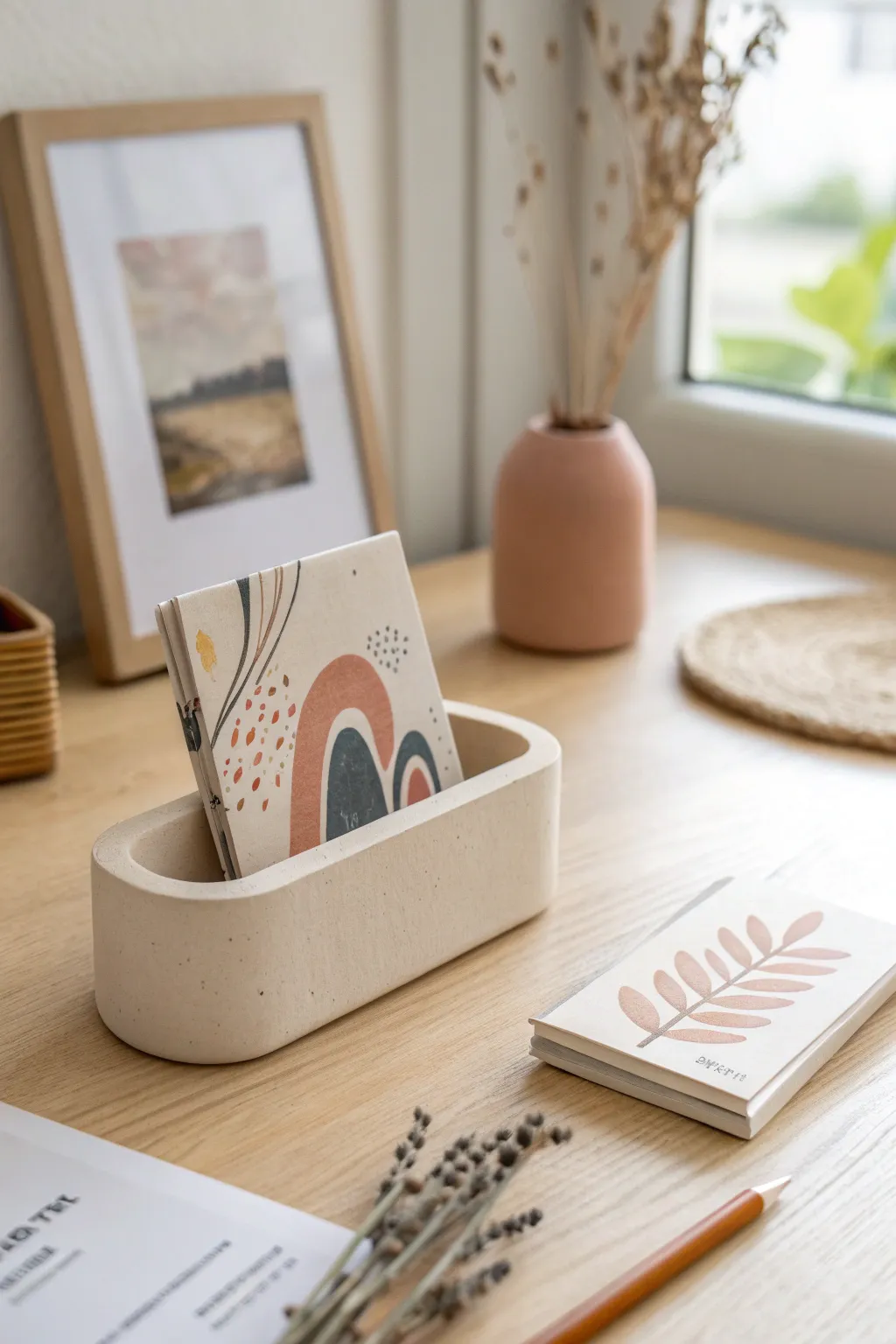
This sleek, pill-shaped card holder brings a touch of modern calmness to any desk or shelf. Its thick, rounded walls and stone-like texture provide substantial weight, making it perfect for displaying your favorite postcards, photos, or small art prints without tipping over.
Step-by-Step Tutorial
Materials
- White crafting concrete or air-dry clay (stone effect)
- Cardboard or foam core (for the mold)
- Packing tape
- Cooking oil or petroleum jelly (release agent)
- Fine-grit sandpaper (220-400 grit)
- Mixing bowl and stir stick
- Craft knife
- Ruler
- Pencil
- Water
Step 1: Designing the Mold
-
Draft the base shape:
Start by drawing a pill shape (two parallel lines connected by semi-circles at the ends) on your foam core or cardboard. Aim for a length of about 6-7 inches and a width of 3 inches to match the proportions in the image. -
Cut the base:
Carefully cut out this oval shape using your craft knife. This piece will serve as the bottom of your mold. -
Determine the height:
Cut a long strip of flexible cardboard that is roughly 2.5 inches wide. This will form the outer wall of your mold, defining the height of the stand. -
Create the inner void:
Cut a second, smaller oval shape from foam core that matches the specific size of the center hole you want. It should be slightly smaller than the base oval to leave thick, uniform walls around the edge.
Clean Edges Pro-Tip
Vibrate the mold vigorously after pouring! Tapping it on the table forces air bubbles up, preventing pockmarks and ensuring that smooth, high-end finish.
Step 2: Assembling the Form
-
Tape the walls:
Cover one side of your long cardboard strip with packing tape to make it waterproof and smooth. Wrap this strip around the edge of your base oval, tape-side facing in, and secure it tightly on the outside with plenty of tape. -
Prepare the inner block:
The inner oval piece needs thickness to create the deep slot seen in the photo. Stack and glue layers of foam core together until this block is roughly 1.5 inches thick. Cover the edges smoothly with packing tape. -
Position the void:
Glue the inner block exactly in the center of your mold’s base. This creates the negative space where the cards will eventually sit. -
Apply release agent:
Before pouring any material, brush a thin layer of cooking oil or petroleum jelly over the entire inside of the mold and the outer edges of the inner block. This crucial step ensures your casting pops out easily later.
Fixing Rough Spots
If you have small holes from air bubbles after demolding, mix a tiny amount of fresh concrete paste and rub it into the holes, then sand flush once dry.
Step 3: Casting and Finishing
-
Mix the concrete:
Mix your white crafting concrete or plaster with water according to package directions. Aim for a consistency similar to pancake batter—pourable but not watery. I find using distilled water helps keep the white color pure. -
Pour the mixture:
Slowly pour the mixture into the space between the outer wall and the inner block. Fill it to the top brim. -
Release trapped air:
Gently tap the mold against the table repeatedly for about a minute. Watch for bubbles rising to the surface; this vibration settles the concrete and ensures a smooth outer finish. -
Let it cure:
Allow the mold to sit undisturbed for at least 24 hours. The curing time will depend on humidity and the specific brand of concrete used. -
Demold the piece:
Carefully peel away the cardboard walls. If the inner foam block is stuck, gently slide a knife edge around it or pry it out in sections. -
Sand the surfaces:
Once fully dry, the surface might feel slightly rough. Use fine-grit sandpaper to smooth down any sharp edges and the top rim, giving it that soft, matte look shown in the photo. -
Dust and display:
Wipe away any sanding dust with a damp cloth. Your stand is now ready to hold your treasured photos or postcard collection.
Now you have a stylish, functional piece of decor that looks like it came straight from a boutique design shop