
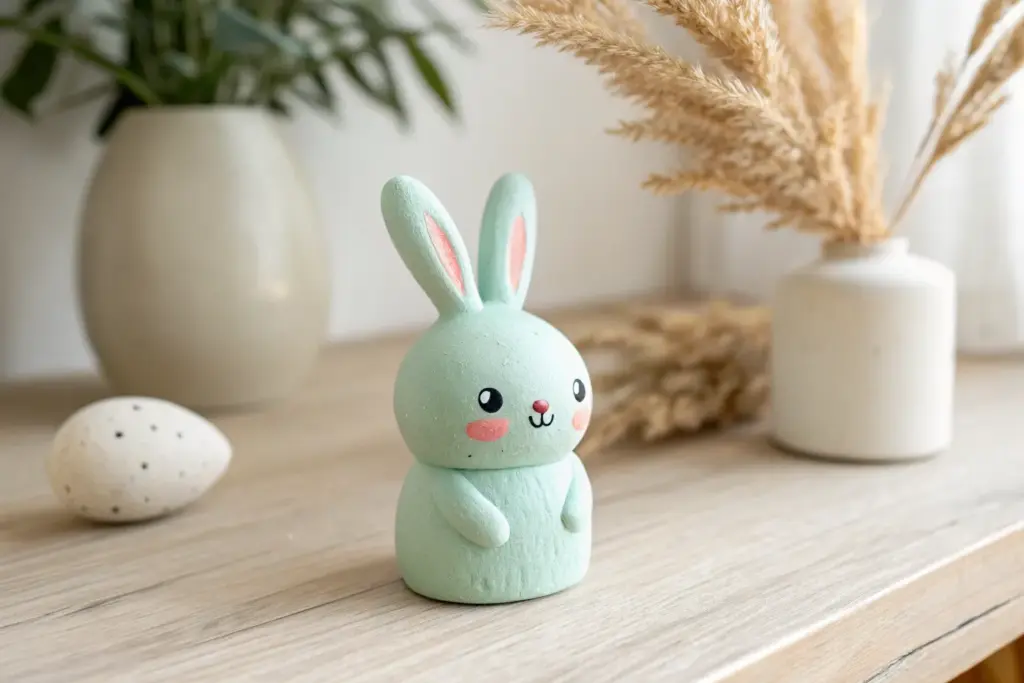
When I’m craving a quick creative pick-me-up, I roll a few simple shapes and suddenly I’ve got the sweetest little critter staring back at me. These cute clay sculpture ideas stay intentionally easy—think rounded bodies, tiny dot eyes, and charm-level details that you can totally pull off in one sitting.
Chubby Bunny With Tiny Ears
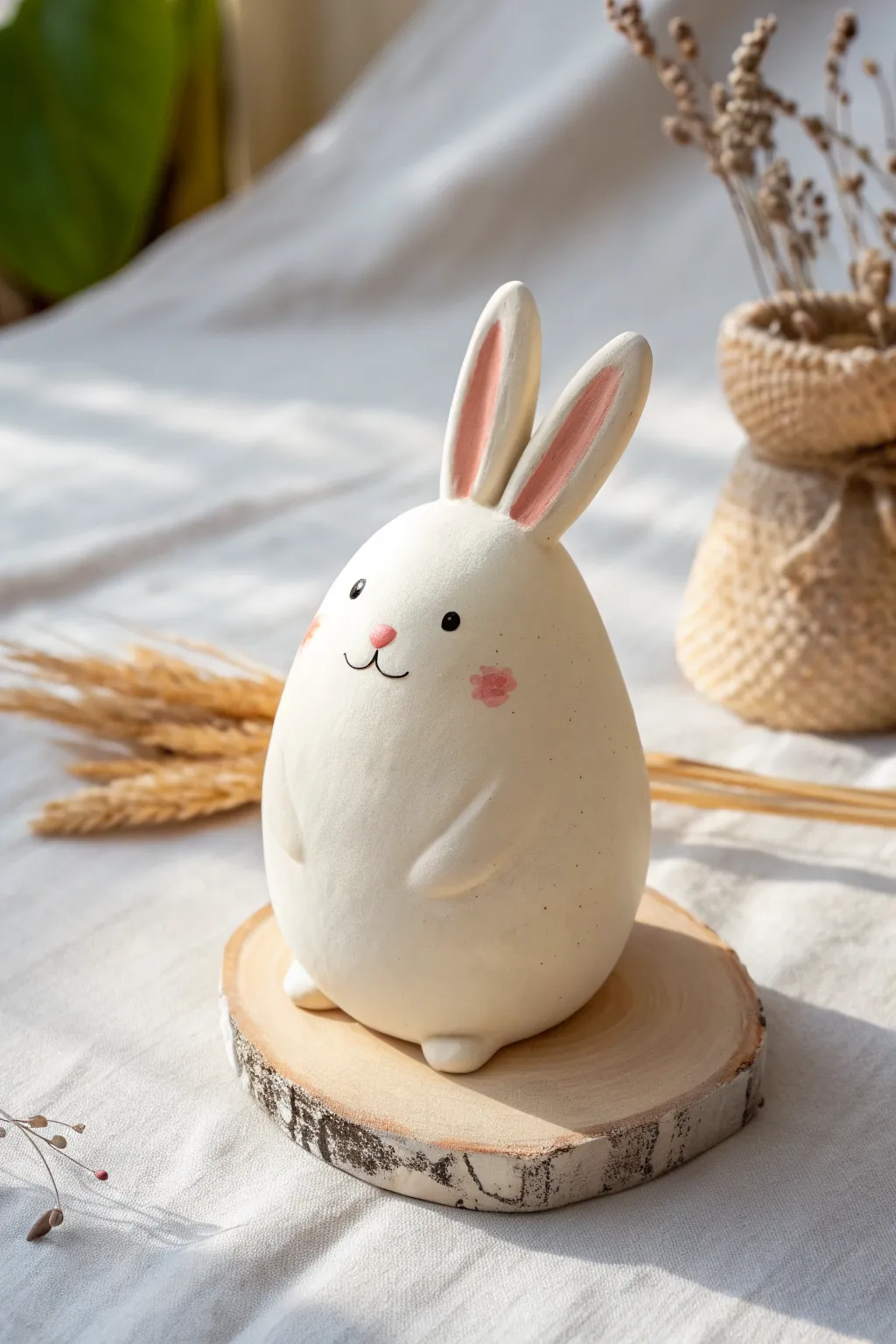
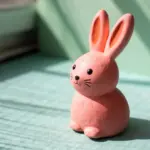
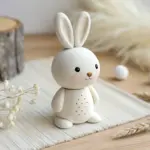
This minimal and incredibly charming bunny sculpture is defined by its smooth, egg-like silhouette and sweet expression. Perfect for beginners, this project focuses on shape and subtle details to create a serene piece of décor.
Detailed Instructions
Materials
- White polymer clay or air-dry clay (approx. 200g)
- Acrylic paints (pink, black)
- Fine detail paintbrush
- Dotting tool or toothpick
- Smoothing tools or a soft damp sponge
- Rolling pin
- Blade or craft knife
- Clear matte varnish (optional)
Step 1: Shaping the Base
-
Prepare the Clay:
Start by conditioning your clay thoroughly. Knead it in your hands until it is warm, pliable, and free of cracks. This ensures a smooth finish later on. -
Form the Body:
Roll the clay into a large, smooth ball. Then, gently roll it on your work surface while applying slightly more pressure to the top half to create a tapered egg shape. The bottom should be wide and heavy for stability. -
Flatten the Base:
Tap the bottom of your egg shape firmly against your table to create a flat surface. This ensures your bunny will stand upright without tipping over. -
Create the Feet:
Take two very small balls of clay and flatten them slightly into ovals. Attach these to the bottom front of the body to peek out as tiny feet. Blend the seams at the back of the feet into the body so they are secure.
Step 2: Adding Details
-
Form the Ears:
Roll two medium-sized sausage shapes of clay, tapering them at the top. Flatten them slightly to create the ear shape. They should be relatively thick to stay upright. -
Attach the Ears:
Score the top of the head slightly where the ears will go. Press the base of the ears onto the head and use a modeling tool to smooth the clay downward, blending the ear clay seamlessly into the head clay. -
Create Arm Indentations:
Instead of adding separate arms, use a curved modeling tool or the handle of a spoon to press gentle, curved indentations into the sides of the belly. This suggests the shape of arms resting against the round body. -
Refine the Surface:
Before the clay hardens, inspect your bunny for fingerprints. I like to dip my finger in a tiny bit of water (for air-dry clay) or baby oil (for polymer clay) and gently buff out any imperfections.
Ears Drooping?
If the long ears won’t stay up while the clay is soft, insert a small piece of toothpick or wire inside each ear and push it into the head for internal support.
Step 3: Finishing Touches
-
Drying or Baking:
Follow your clay’s specific instructions. If baking, place the bunny on a piece of parchment paper. If air-drying, let it sit in a dry, room-temperature spot for 24-48 hours. -
Painting the Ears:
Once hardened, use a small brush to paint the inner part of the ears with a soft pink acrylic paint. Keep the edges feather-light for a natural look. -
Adding the Face:
Using a dotting tool or the back of a paintbrush dipped in black paint, place two small dots for the eyes. Keep them widely spaced for that cute ‘kawaii’ look. -
Nose and Mouth:
Paint a tiny, soft pink triangle for the nose centered between the eyes. Use a very fine liner brush and black paint (or a fine-tip permanent marker) to draw a delicate ‘w’ shape for the mouth connected to the nose. -
Blushing Cheeks:
Mix a very watery pink wash or use a dry-brush technique with a tiny amount of pink paint. Dab extremely lightly on the cheeks to create rosy blushing spots. -
Seal the Work:
To protect your paint job, apply a thin coat of matte varnish over the entire sculpture. This gives it a professional, finished ceramic look.
Texture Time
Before the clay dries, gently press a clean toothbrush against shape of the body to give it a soft, stone-like texture instead of a perfectly smooth finish.
Place your finished bunny on a wooden slice or shelf for an instant touch of springtime cheer

Pocket Bear With a Sleepy Face
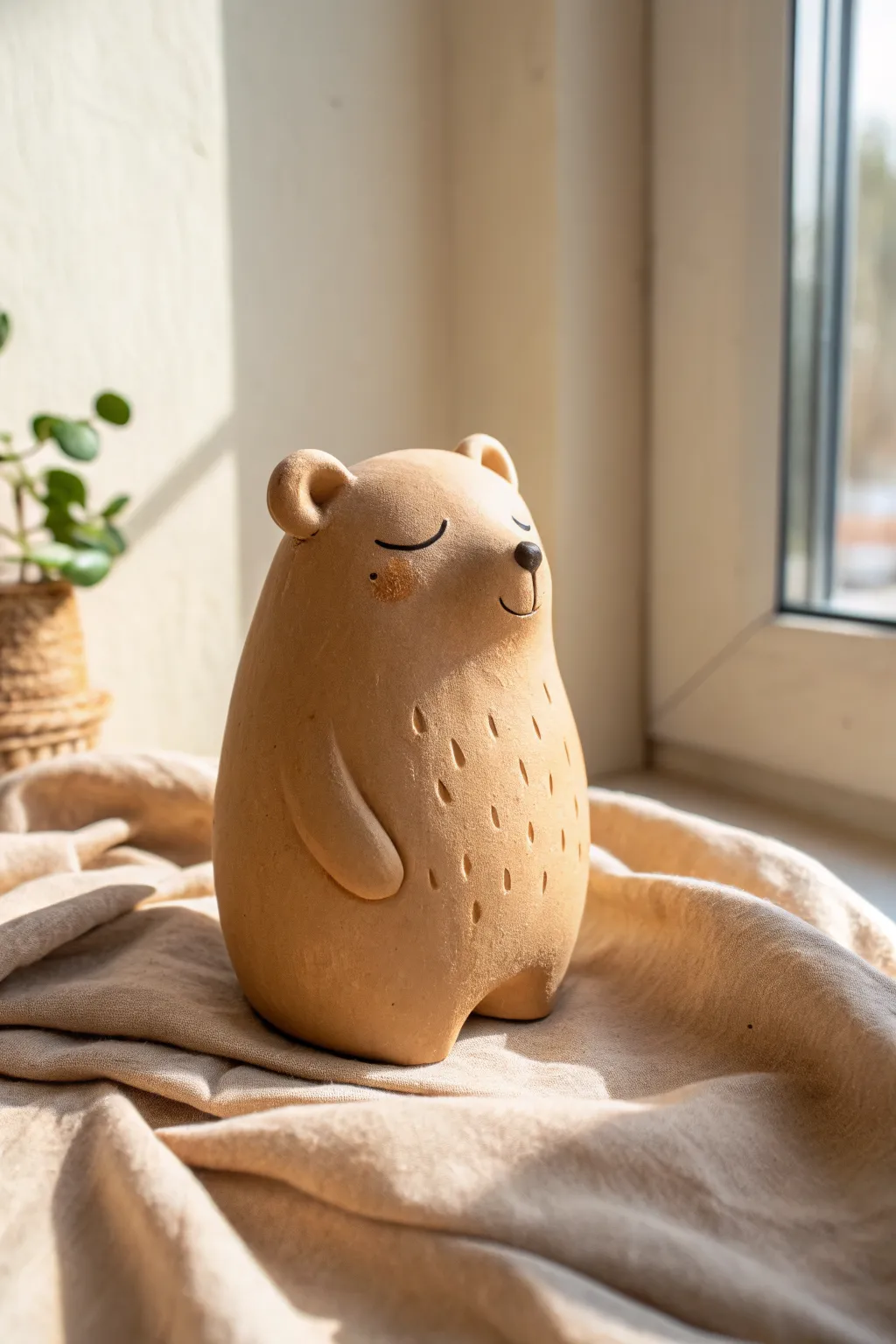
This adorable little bear sculpture captures a moment of gentle serenity, perfectly sized to sit on a windowsill or fit in your palm. With its smooth, unglazed finish and minimalist details, it brings a peaceful, earthy charm to any space.
Step-by-Step Guide
Materials
- Light brown/terracotta air-dry clay or polymer clay
- Basic sculpting tools (or a toothpick)
- Small cup of water (for smoothing)
- Black fine-tip acrylic paint marker or fine paintbrush
- White or light brown pastel powder (optional, for cheeks)
- Sandpaper (fine grit)
- Matte varnish (optional)
Step 1: Shaping the Base Form
-
Condition the clay:
Begin by kneading a ball of light brown natural clay until it is warm, pliable, and free of air bubbles. -
Form the body:
Roll the clay into a smooth egg shape about the size of a large lemon. The wider part will be the base of the bear. -
Flatten the bottom:
Gently tap the wider end of the egg on your work surface to create a flat stable base so the bear stands upright without wobbling. -
Refine the silhouette:
Smooth out the top of the egg shape to slightly taper it for the head area, but keep the transition very subtle—this bear has no visible neck.
Seamless Blending
When attaching the ears or arm, use the back of a spoon or a silicone sculpting tool to drag clay across the seam. This merges the pieces stronger than just pressing.
Step 2: Adding Features and Limbs
-
Create the ears:
Pinch off two tiny, pea-sized balls of clay. Flatten them slightly and use your finger or a rounded tool to create a small indentation in the center of each. -
Attach the ears:
Score the top of the head slightly and press the ears into place. Blend the seams downward into the head using a touch of water or clay softener so they look seamless. -
Form the snout:
Roll a very small ball of clay and press it onto the face area. Flatten it gently so it creates a subtle protrusion, smoothing the edges into the main body. -
Make the arm:
Roll a small coil of clay, roughly the shape of a kidney bean. Attach it to the side of the body, angling it slightly forward so the bear looks like it’s resting its hands on its belly. -
Sculpt the legs:
Instead of adding separate legs, use a round tool to push an arch shape into the bottom front of the sculpture. This negative space creates the illusion of two standing legs. -
Final smoothing:
Dip your finger in water and gently rub the entire surface to remove fingerprints and ensure the transitions between added parts are completely invisible.
Cracks while drying?
If you see hairline cracks appearing as your air-dry clay cures, mix a tiny bit of fresh clay with water to make a ‘slip’ paste and fill the cracks, then smooth over.
Step 3: Texturing and Drying
-
Add fur texture:
Using a needle tool or toothpick, gently press small, shallow dashes into the clay on the bear’s belly area. Vary the angles slightly to look like natural fur tufts. -
Initial drying:
Let the sculpture sit undisturbed. If using air-dry clay, allow 24-48 hours. If using polymer clay, bake according to the package instructions. -
Sand the surface:
Once fully cured or dry, take a fine-grit sandpaper and very gently buff the surface to achieve that soft, matte ceramic look.
Step 4: Painting the Details
-
Draw the eyes:
Using a fine-tip black marker or paint, draw two downward-curving crescents for sleepy eyes. Ensure they are level with the top of the snout. -
Add the nose:
Paint a small, soft triangle or oval on the tip of the snout protrusion you created earlier. -
Create the mouth:
Draw a small vertical line down from the nose, connecting to a tiny curved smile. -
Apply blush:
I find that using a dry paintbrush to dust a little shaved pastel powder or diluted acrylic paint on the cheeks gives the sweetest rosy effect. -
Protect the piece:
Finish with a spray of matte varnish if you want to protect the paint, though leaving it raw preserves the natural texture best.
Place your little sleepy bear near a window to enjoy the sunlight
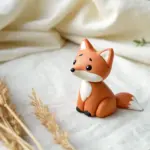
Cat Loaf Mini Sculpture
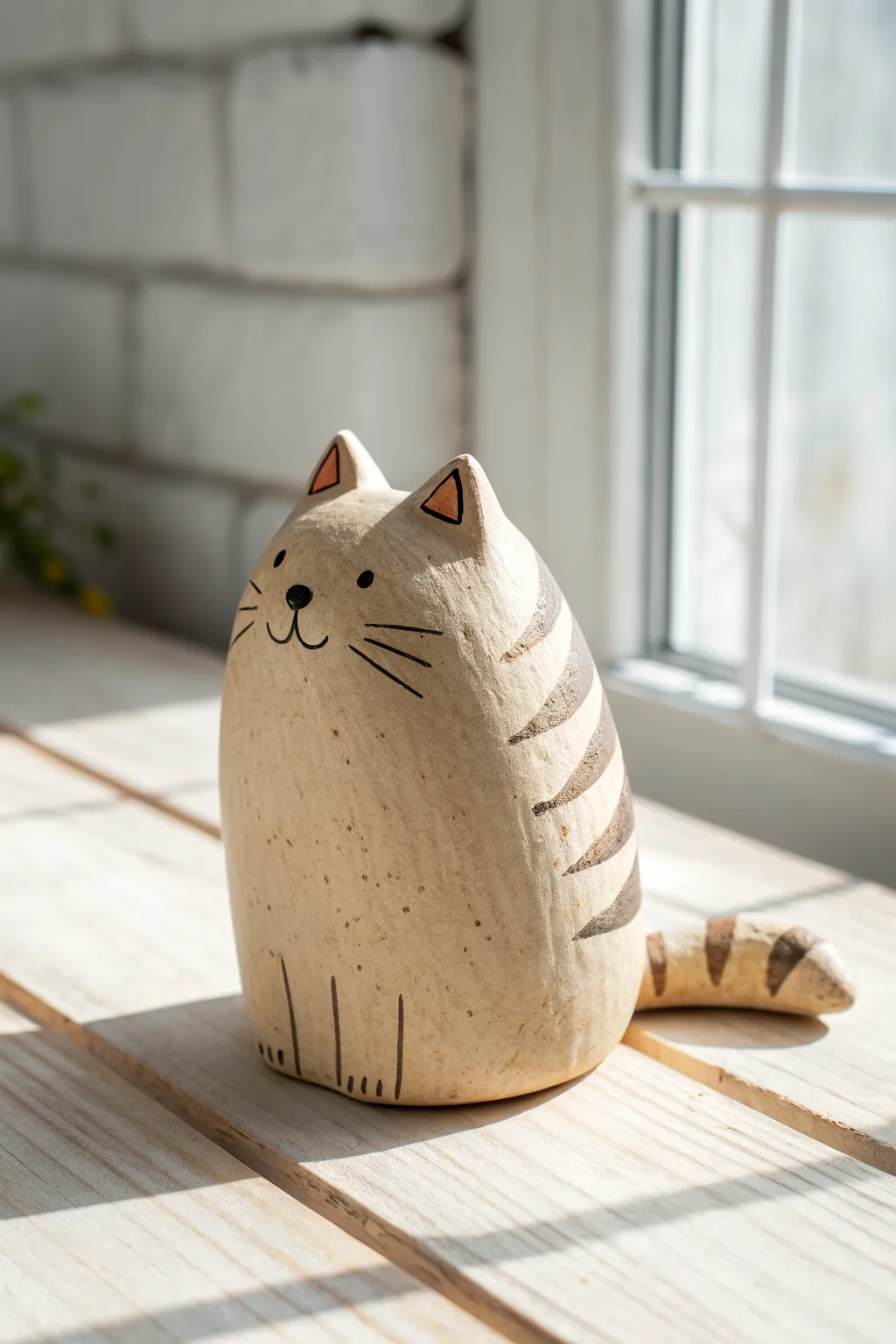
This endearing cat sculpture captures the essence of a relaxed feline with its smooth, rounded ‘loaf’ shape and minimalist features. Perfect for beginners, this project combines simple hand-building techniques with charming painted details to create a cozy shelf companion.
Step-by-Step
Materials
- Speckled buff stoneware clay (or air-dry clay with speckles)
- Small rolling pin
- Pin tool or toothpick
- Slip and scoring tool (if using ceramic clay)
- Sponge
- Black underglaze or fine-tip black marker
- Brown underglaze or acrylic paint
- Clear matte glaze or sealant
- Small round paintbrush
- Fine liner brush
Step 1: Shaping the Loaf Body
-
Prepare the clay:
Start with a ball of clay about the size of a large orange. Wedge it thoroughly to remove air bubbles, ensuring the consistency is smooth and pliable. -
Form the base cylinder:
Gently roll the ball between your palms to elongate it slightly into a thick cylinder. You aren’t aiming for a perfect tube, but rather a soft, oblong shape. -
Create the taper:
Set the clay upright on your work surface. Gently pat the top half to taper it slightly inward, creating a narrower top for the head and a wider base for stability. -
Smooth the form:
Using a slightly damp sponge or your fingers, smooth out any bumps or fingerprints. The silhouette should be continuous and fluid from the base to the top of the head.
Uneven Surface?
If your clay is lumpy, let it dry until it’s ‘leather hard’ (stiff cheese consistency). Then, use a metal rib tool or the back of a spoon to burnish and smooth the surface.
Step 2: Adding Ears and Tail
-
Shape the ears:
Pinch off two small, pea-sized pieces of clay. Flatten them into triangles with your fingers. -
Attach the ears:
Score the top of the head where the ears will go and apply a dab of slip. Press the triangles firmly onto the head, smoothing the seams down the back so they integrate fully with the body. -
Make the tail:
Roll a coil of clay about the thickness of your pinky finger. Taper one end to a rounded point. -
Attach the tail:
Position the tail so it curves around the side of the body. Score and slip the contact points, then press it securely against the lower back flank of the cat. -
Final smoothing:
Do a final pass with your damp sponge. The surface needs to be very smooth for the painted details to look crisp later.
Step 3: Painting and Finishing
-
Bisque fire or dry:
If using ceramic clay, bisque fire the piece to cone 04. If using air-dry clay, allow it to dry completely for at least 48 hours. -
Paint the stripes:
Using diluted brown underglaze or acrylic paint and a round brush, paint thick, tapered triangle stripes along the cat’s back and sides. Add bands of brown to the tail as well. -
Add ear details:
Paint the insides of the triangle ears with a touch of orange or reddish-brown to give them depth. -
Draw facial features:
Load a fine liner brush with black underglaze (or use a marker). Paint two small dots for eyes, a small oval nose, and a simple ‘w’ mouth. -
Add whiskers and paws:
With the same fine tool, draw three long whiskers on each cheek. At the base, draw simple vertical lines to suggest front paws tucked under the body. -
Glaze or Seal:
If firing, apply a clear matte glaze and fire to cone 5/6 (or your clay’s temperature). If using air-dry clay, seal the piece with a matte varnish to protect the paint.
Use Speckled Clay
The charm of this piece comes significantly from the speckled clay body. If you only have white clay, flick watered-down brown paint onto the surface with a toothbrush.
Give your new clay friend a spot on a sunny windowsill where it can nap all day long
Round Penguin With Flipper Wings
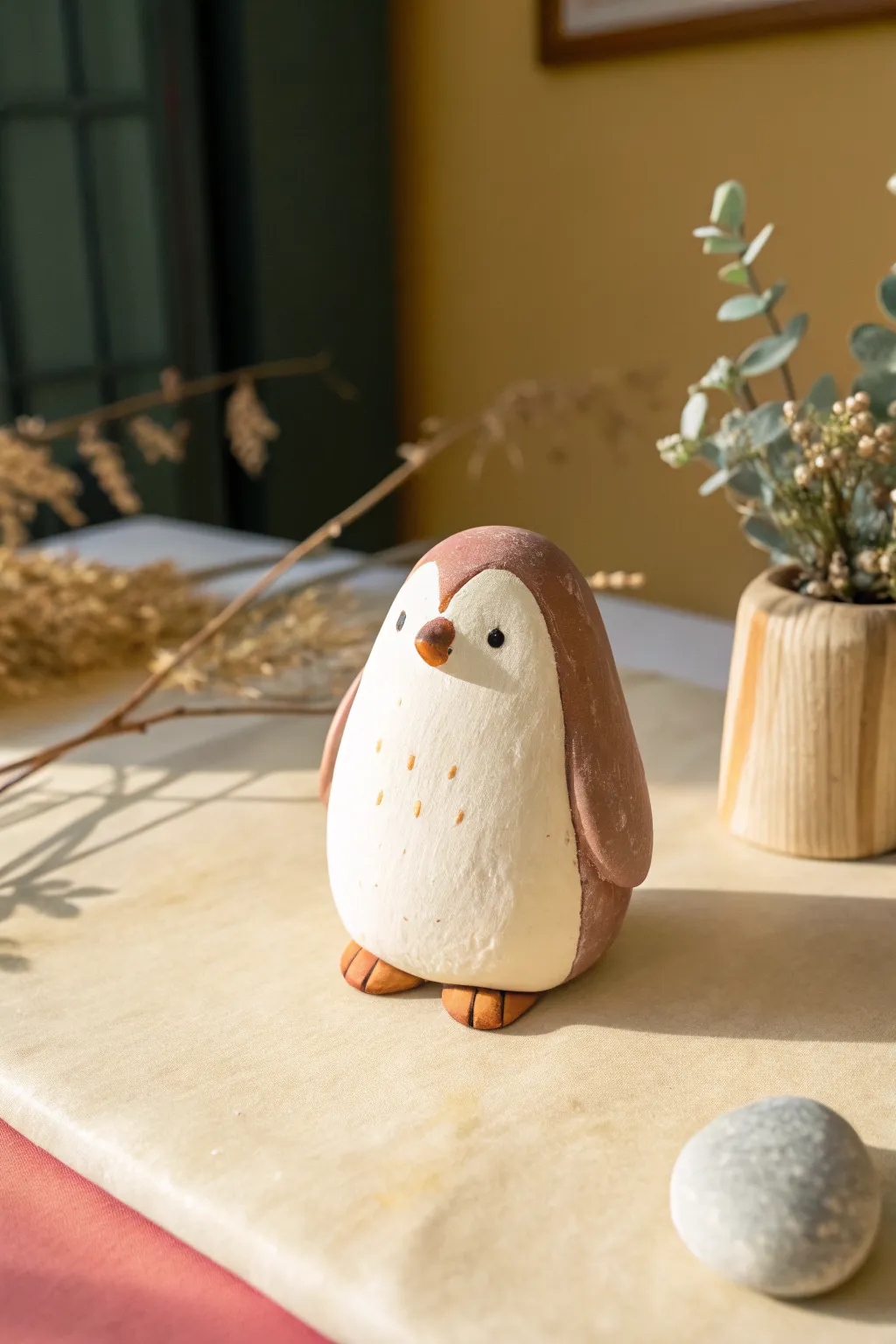
This charming, minimalist penguin brings a warm, earthy quality to a classic winter animal with its muted brown and cream palette. Its simple, teardrop shape and textured belly make it the perfect beginner project to practice clean lines and subtle speckling.
Detailed Instructions
Materials
- Polymer clay or air-dry clay (terra cotta/brown and off-white/cream)
- Small rolling pin
- Modeling tools (or a toothpick and a plastic knife)
- Small dotting tool
- Black acrylic paint
- Orange acrylic paint
- Fine detail paintbrush
- Clear matte varnish (optional)
- Old toothbrush (optional for texture)
Step 1: Shaping the body
-
Form the base:
Start by conditioning a sphere of terra cotta-colored clay about the size of a tangerine until it is soft and pliable. -
Create the teardrop:
Roll the sphere between your palms, applying slightly more pressure at the top to create a smooth, rounded teardrop or egg shape. The bottom needs to be wide enough for stability. -
Flatten the base:
Gently tap the wider bottom of your egg shape against your work surface so the penguin stands up straight on its own.
Fixing Cracks
If you see cracks forming where the white belly meets the brown body, smooth a tiny bit of water (for air-dry) or liquid clay (for polymer) over the seam to bond it.
Step 2: Adding the belly
-
Prepare the cream clay:
Take a smaller portion of the off-white or cream clay and roll it into an oval shape. -
Flatten the overlay:
Use your rolling pin to flatten this oval into a thin sheet, approximately 2-3mm thick. -
Apply the belly:
Place the cream sheet onto the front of the brown body. Gently press it down, curving the top edge to resemble a heart shape where the forehead meets the brown clay. -
Smooth the seams:
With your fingers or a smoothing tool, blend the edges of the cream clay onto the body so it looks like one cohesive piece rather than a sticker. -
Add texture:
I like to gently tap the cream area with an old toothbrush or a stipple sponge to give it a soft, feathery texture.
Step 3: Wings and Feet
-
Make the wings:
Create two long, flattened teardrop shapes from the brown clay. They should be slightly curved to hug the body. -
Attach the flippers:
Press one wing onto each side of the body, starting just below the ‘shoulder’ area. Curve the tips slightly inward. -
Create the feet:
Form two small, flat semicircles from orange or light brown clay. Use a knife tool to press two small indents into each one for toes. -
Attach the feet:
Slip the feet under the front edge of the belly, pressing firmly so they adhere to the base.
Baby Penguin
Make a smaller version using gray clay instead of brown to create a fluffy baby chick to stand next to the adult.
Step 4: Face and Finishing Details
-
Add the beak:
Roll a very tiny cone of orange clay and attach it to the center of the face, right where the cream forehead dips down. -
Make the eyes:
Use a dotting tool to create two small indentations on either side of the beak. Fill these with tiny balls of black clay, or wait until after baking/drying to paint them. -
Bake or dry:
Follow the instructions on your clay package to bake or air-dry the sculpture completely. -
Paint the details:
Once dry, use a fine brush with thinned orange paint to add tiny vertical dashes on the belly for a speckled feather effect. -
Seal:
Finish with a clear matte varnish to protect your new friend.
Place your little penguin on a shelf near a plant for a sweet decorative touch

The Complete Guide to Pottery Troubleshooting
Uncover the most common ceramic mistakes—from cracking clay to failed glazes—and learn how to fix them fast.
Happy Frog With Wide-Set Eyes
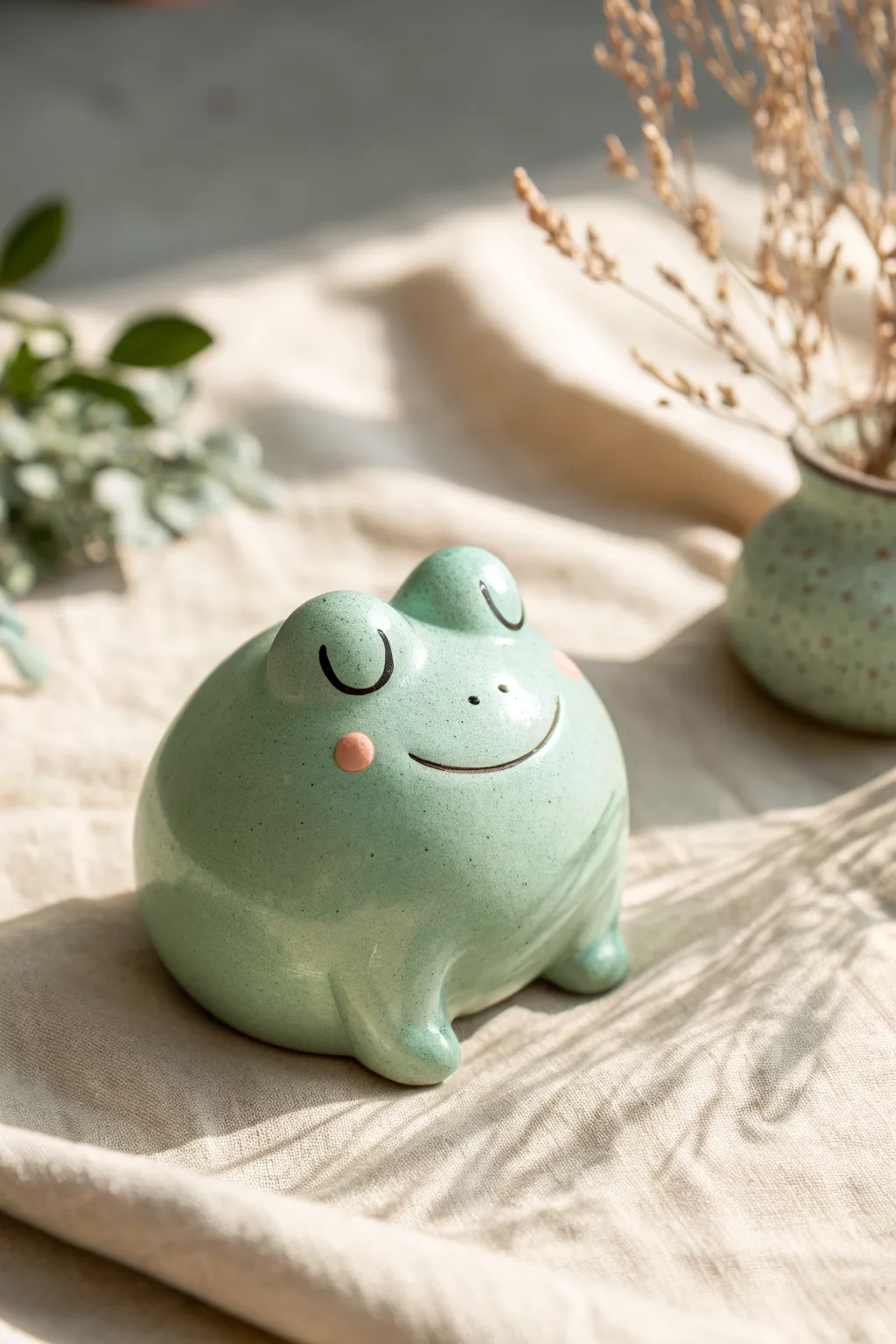
This delightful little amphibian is all about round shapes and a serene expression. With its smooth, speckled green glaze and minimalist features, it makes for a perfect desk companion or garden accent that radiates calm vibes.
How-To Guide
Materials
- Light-colored stoneware or earthenware clay
- Pottery tools (sponge, needle tool, rib tool)
- Small rolling pin
- Slip and scoring tool
- Underglaze (black for eyes/mouth, pink for cheeks)
- Speckled celadon or light green glossy glaze
- Kiln access (or suitable air-dry alternatives if not firing)
Step 1: Forming the Body
-
Prepare the Clay:
Start by wedging a ball of clay about the size of a large orange to remove air bubbles. This ensures your frog won’t crack during firing. -
Roll the Basic Shape:
Roll the clay between your palms or on a table to create a smooth, solid sphere. -
Flatten the Base:
Gently tap the sphere onto your work surface to create a flat bottom so the frog sits stably without rolling away. -
Shape the Dome:
Using your cupped hands, gently press and smooth the sphere into a slightly lower dome shape, keeping the overall form very round and plump.
Glaze Hack
If you don’t have speckled clay or glaze, flick a toothbrush loaded with brown iron oxide over the green glaze before firing for spots.
Step 2: Adding Features
-
Create Eye Mounds:
Roll two smaller balls of clay, roughly the size of large marbles or grapes. -
Attach the Eyes:
Score the top of the head in two spots and score the bottom of your eye balls. Apply slip to both surfaces and press them firmly onto the head, spacing them wide apart for that cute look. -
Blend the Seams:
Use a modeling tool or your finger to smooth the clay where the eyes meet the head, blending the seam completely so the eyes look like bumps rising naturally from the body. -
Form the Legs:
Roll two small sausage shapes for the front legs. Flatten slightly. -
Attach Front Legs:
Score and slip the front area of the body. Attach the legs so they appear to be tucked under the belly, blending the upper seam into the body while leaving the little foot bumps defining the bottom. -
Smooth Everything:
Take a damp sponge and go over the entire piece to remove fingerprints and ensure a super smooth surface.
Step 3: Face & Finishing
-
Draft the Face:
Lightly trace the smile and closed eyelids with a needle tool first to ensure you like the placement. The smile should be wide and curve up near the cheeks. -
Paint the Details:
Using a fine brush, paint over your traced lines with black underglaze. Paint two small pink circles for the blush cheeks. -
Bisque Fire:
Allow the clay to bone dry completely, then bisque fire it in the kiln according to your clay’s specifications. -
Apply Glaze:
Dip or brush the entire frog (avoiding the painted eyes/mouth if your glaze is opaque, or apply over them if using a translucent celadon) in a speckled light green glaze. I prefer a translucent glaze so the underglaze details show through. -
Wipe the Bottom:
Use a sponge to wipe all glaze off the flat bottom of the frog to prevent it from sticking to the kiln shelf. -
Final Fire:
Fire the piece again at the temperature required for your specific glaze to achieve that glossy, finished look.
Go Big
Turn this into a planter! Hollow out the center of the body using the pinch pot method before attaching the eyes and legs.
Once cooled, your shiny new friend is ready to bring a touch of peace to your shelf
Mini Piglet With a Button Snout
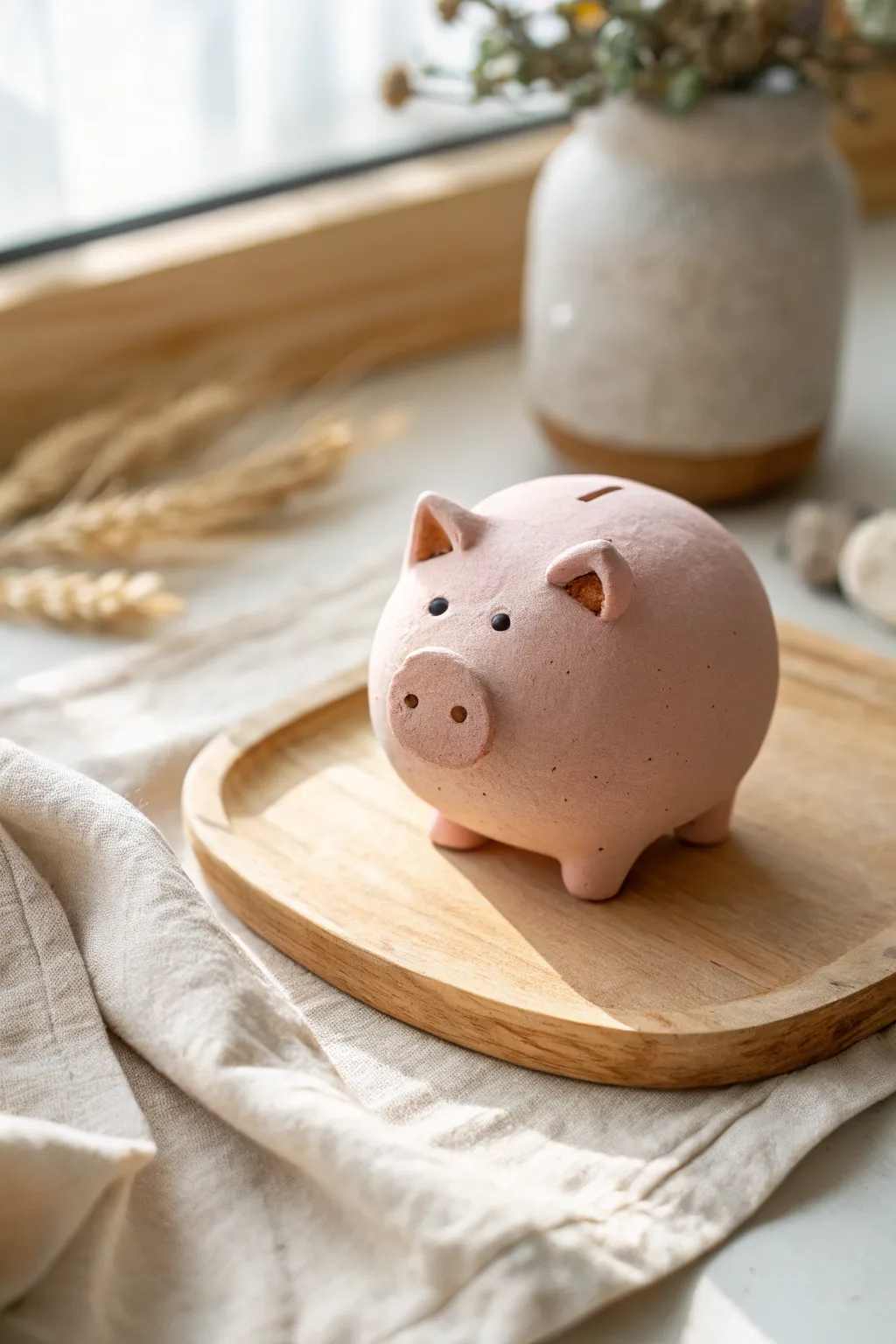
This charming little piglet brings a minimalist touch to your space with its soft pink hue and delightfully textured, matte finish. It’s an ideal beginner project that focuses on simple shapes to create a characterful, round friend.
Step-by-Step
Materials
- Pink air-dry clay (or polymer clay)
- Small amount of brown or black clay (for eyes)
- Modelling tools (needle tool, small ball tool)
- Rolling pin
- Water (for smoothing air-dry clay) or baby oil (for polymer)
- Craft knife
- Soft sponge or texture brush
Step 1: Shaping the Base
-
Prepare the main body:
Start by taking a large handful of pink clay. Knead it well until it’s pliable and smooth, removing any air bubbles. -
Roll a sphere:
Roll the clay between your palms to create a perfect, smooth sphere. This piglet is quite round, so aim for a tennis ball size or slightly smaller. -
Elongate slightly:
Gently press the sphere on your work surface and roll it back and forth just a tiny bit to make it slightly oval-shaped rather than perfectly round. This sets the horizontal posture.
Cracks Appelloing?
If you see cracks forming while drying, dampen your finger with water (for air-dry clay) and smooth a tiny bit of fresh clay paste into the fissure immediately.
Step 2: Legs and Snout
-
Create the legs:
Roll four small, equal-sized balls of pink clay, each about the size of a marble. Flatten the tops slightly so they can attach flush to the body. -
Attach the legs:
Position the four legs on the underside of the body. Press them firmly to adhere. If using air-dry clay, score the joining surfaces and add a dab of water first. -
Check stability:
Flip the pig upright and gently press down to ensure it stands flat and sturdy on your work surface. -
Form the snout:
Roll a medium-sized ball of pink clay and flatten it into a thick oval disc. This is the signature button nose. -
Attach the snout:
Place the snout on the front center of the face. Press it on securely, blending the back edges slightly into the face so it doesn’t look like it’s just floating. -
Add nostrils:
Using a small ball tool or the end of a paintbrush, make two distinct indentations in the center of the snout.
Texture Master
For that grainy, stone-like texture visible in the image, try mixing a teaspoon of fine decorative sand or used coffee grounds directly into your clay before sculpting.
Step 3: Ears and Details
-
Shape the ears:
Form two small triangles of pink clay. They should be thick enough to stand up but small enough to look cute. -
Curve the ears:
Gently curve the triangles slightly to give them a natural, cupped ear shape. -
Attach ears:
Attach the ears to the top of the head, spacing them widely apart. Smooth the clay at the base of the ears into the head for a seamless join. -
Create the coin slot:
If you want this to look like a piggy bank (even if it’s solid), use a crafting knife or needle tool to carve a neat, rectangular slot on the very top of the back. -
Add eyes:
Roll two extremely tiny balls of black or dark brown clay. Press them into the face above the snout, spacing them wide apart for that innocent expression.
Step 4: Texture and Finishing
-
Texturize the surface:
To mimic the stone-like finish in the photo, take a dry sponge or a toothbrush and gently dab it all over the surface of the pig. This removes fingerprints and adds a matte, organic texture. -
Refine the surface:
I usually go back over the eyes and snout gently with my finger to keep those areas slightly smoother than the body for contrast. -
Add faux speckles (optional):
Create the speckled look by gently poking the surface randomly with a needle tool, or flicking a tiny bit of brown paint on it once dried. -
Final drying:
Let your piglet dry completely according to your clay type’s instructions. A slow dry away from direct heat prevents cracks.
Your adorable clay piglet is now ready to sit on your desk and keep you company while you work



What Really Happens Inside the Kiln
Learn how time and temperature work together inside the kiln to transform clay into durable ceramic.
Baby Turtle With a Dome Shell
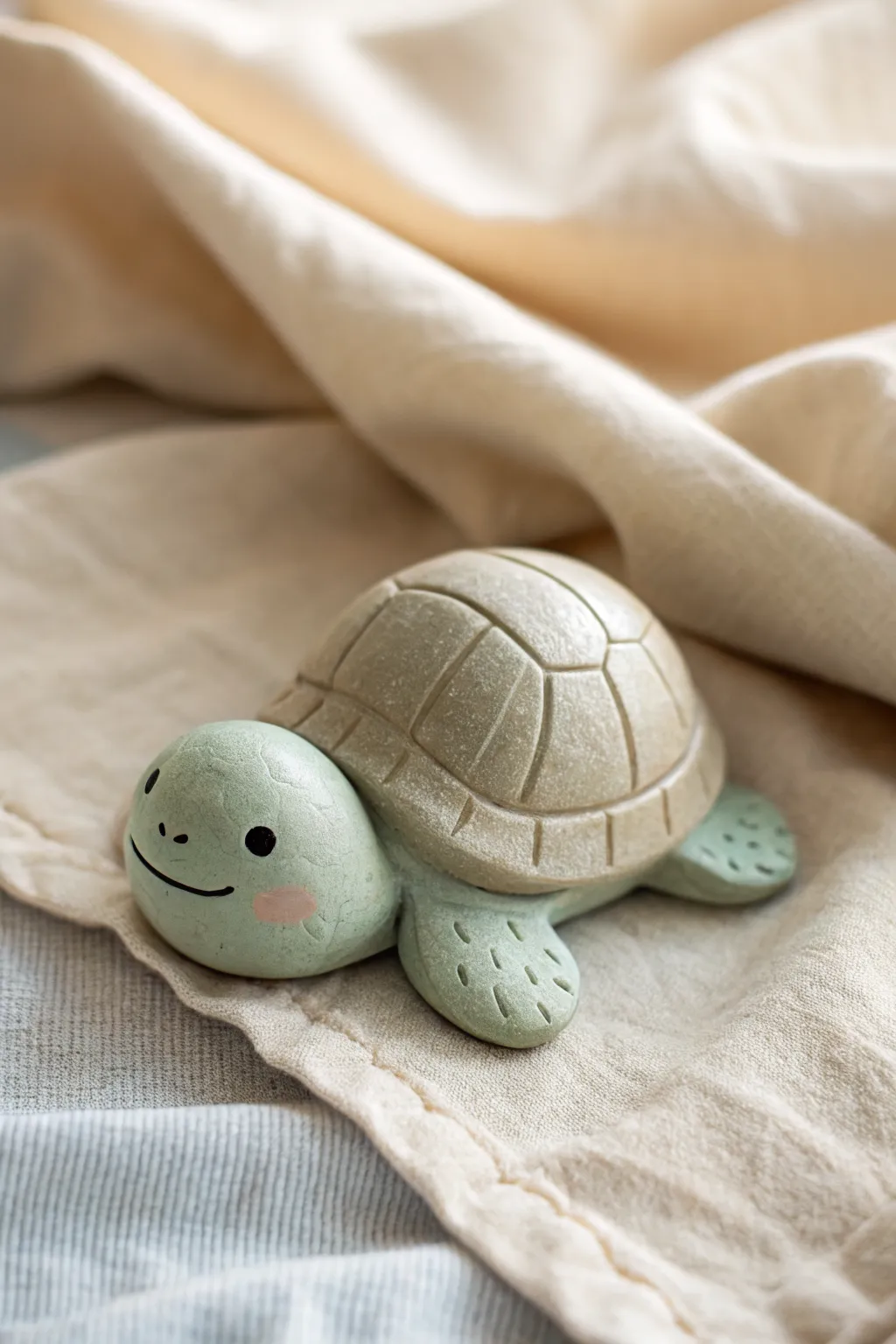
Sculpt your very own palm-sized companion with this charming turtle project. Using simple rolling techniques and a clever texturing method, you’ll create a piece with a lovely, smooth stone-like finish and an endearing expression.
How-To Guide
Materials
- Polymer clay or air-dry clay (sage green or light grey)
- Polymer clay (cream or beige)
- Acrylic paint (black, pink)
- Small ball tool or stylus
- Sculpting needle tool or toothpick
- Old toothbrush or sponge for texture
- Fine detail paintbrush
- Rolling pin
- Baking sheet and oven (if using polymer clay)
Step 1: Shaping the Base
-
Form the head:
Begin by rolling a piece of sage green clay into a smooth sphere, roughly the size of a large grape. Gently flatten the bottom so it sits stable without rolling away. -
Shape the body:
Roll a slightly larger, flattened oval shape from the same green clay. This will serve as the hidden connection point for the legs and head, sitting underneath the shell. -
Connect head and body:
Press the head firmyl against the front of the body oval. If you are using polymer clay, blending the clay slightly on the underside ensures a strong bond.
Step 2: Creating the Limbs
-
Roll the flippers:
Divide more green clay into four equal portions. Roll each into a teardrop shape, flattening them gently to create the front and back flippers. -
Attach the flippers:
Position the flippers underneath the body oval—two angling forward near the head and two angling backward. Press them securely into place. -
Add texture details:
Using a needle tool or toothpick, press small, shallow dashes or dots onto the tips of the flippers to mimic toes or skin texture.
Pro Tip: Seamless Blending
For a smoother look, use baby oil or clay softener on your fingertip to lightly buff away any harsh fingerprints before texturing the surface.
Step 3: Sculpting the Shell
-
Form the dome:
Take a large ball of cream or beige clay and roll it into a clean, smooth sphere. Slice off the bottom third to create a perfect dome shape. -
Shape the rim:
Gently pinch and flatten the bottom edge of the dome all the way around to create a slight lip or rim where the shell meets the turtle’s body. -
Mount the shell:
Place the beige dome on top of the green body base. Press down gently but firmly to adhere it without distorting the shape of the flippers below. -
Draw shell plates:
Use your needle tool to lightly score a hexagon in the very center top of the shell. -
Connect the pattern:
Draw lines extending from the corners of the hexagon down toward the rim of the shell. Add a horizontal line near the bottom rim to create the border plates. -
Deepen the lines:
Once you are happy with the pattern, go over the lines again with a bit more pressure to create distinct separation between the scutes. -
Add stone texture:
I like to take a soft toothbrush or a coarser sphone at this stage and gently tap it all over the shell and skin. This removes fingerprints and gives that realistic stone effect seen in the photo.
Troubleshooting: Shell Slumping
If the dome shell sags while working, create an internal armature by balling up a small piece of aluminum foil and building the clay dome over it.
Step 4: Finishing Touches
-
Bake or dry:
Follow the manufacturer instructions for your specific clay. If baking polymer clay, ensure you don’t overcook it to maintain the colours. -
Paint the eyes:
Dip a fine stylus or the back of a paintbrush into black acrylic paint. Dot two wide-set eyes onto the face. -
Add the smile:
Using a very fine liner brush and black paint (or a fine-tip permanent marker), draw a wide, shallow ‘U’ shape connecting the cheeks for a sweet smile. -
Apply blush:
Mix a tiny amount of pink paint with water to make a glaze, or use pink chalk pastel dust. Dab a soft circle of pink on the cheek area just below the eye. -
Seal (optional):
If you want a matte finish that protects the paint, apply a thin layer of matte varnish over the eyes and cheeks once the paint is fully dry.
Now your little turtle is ready to bring a sense of calm and slowness to your desk or shelf
Chibi Dino With a Big Head
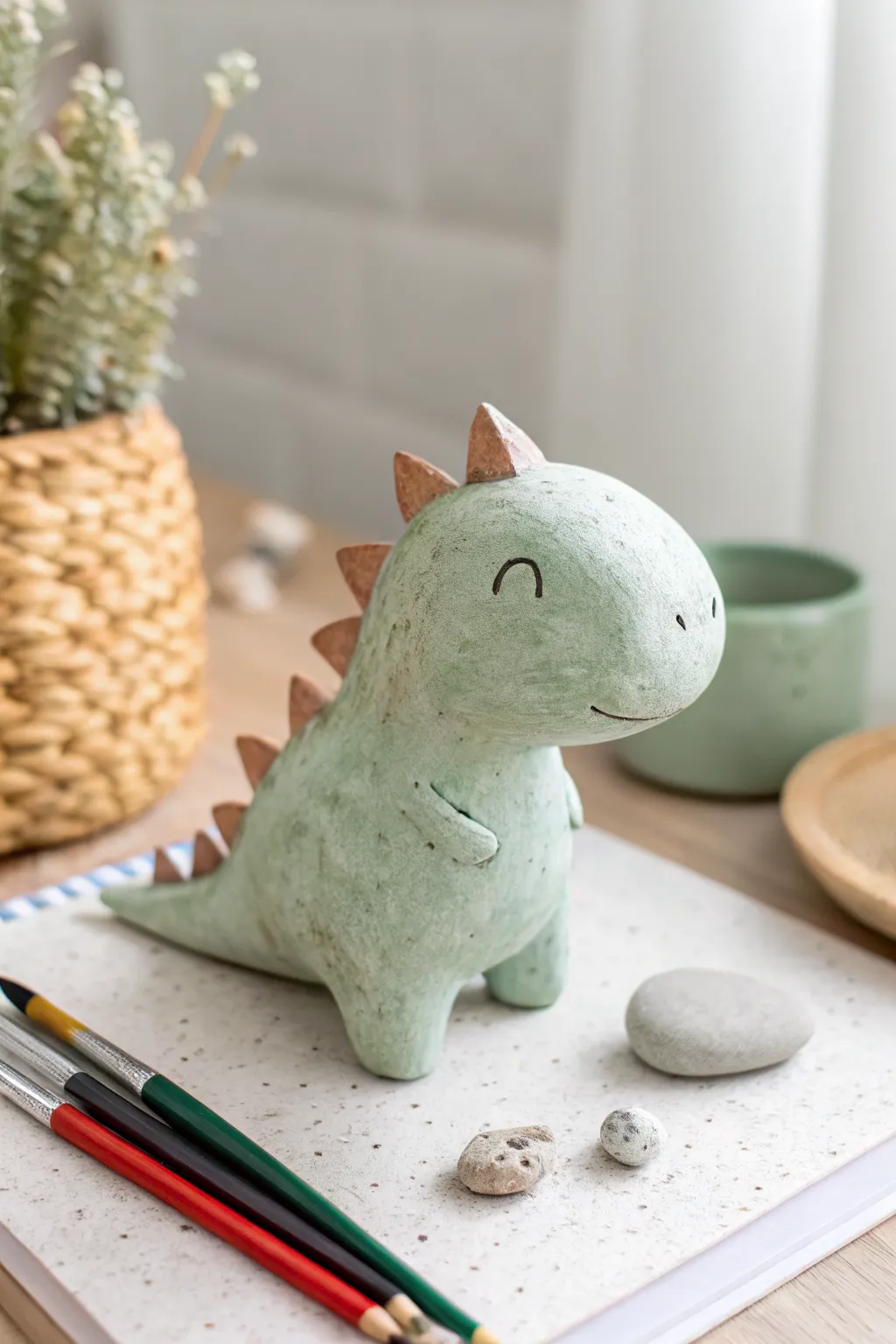
This adorable little dinosaur features a soft, textured finish and an exaggerated head size that gives it maximum cuteness factor. Its simple, rounded shapes make it a perfect project for beginners looking to create a charming desk companion.
Step-by-Step
Materials
- Air-dry clay (white or light grey)
- Acrylic paints (mint green, rust/terracotta, black)
- Small paintbrush
- Fine-grit sandpaper
- Sculpting tool or toothpick
- Sponge or textured cloth
- Water cup
- Matte varnish (optional)
Step 1: Forming the Base Body
-
Roll the head:
Start with a generous amount of clay and roll it into a large, smooth ball. This will be the head, so aim for a size slightly larger than a golf ball to get that ‘chibi’ look. -
Shape the snout:
Gently pinch and pull one side of the ball to elongate it slightly into a rounded snout shape. It shouldn’t be too pointy; keep it chubby and soft. -
Create the body:
Take a slightly smaller piece of clay and roll it into a teardrop or pear shape. This will be the body. The top should be narrower to connect to the head, and the bottom wider for stability. -
Form the tail:
Before attaching anything, gently pull the wider bottom of your pear shape outwards to form a thick, tapering tail. Curve it slightly to the side so it looks natural when the dino sits. -
Attach head to body:
Join the head to the top of the body. You may need to score the clay (scratching crisscross lines) and add a dab of water at the join point to ensure a strong bond. Blend the seam at the neck until smooth.
Step 2: Adding Feet and Details
-
Make the legs:
Roll two small balls of clay for the legs. Press them firmly onto the bottom front of the body so the dino sits securely. Flatten the bottoms slightly against your work surface. -
Shape the arms:
Create two tiny, tick-tack-shaped sausages for the arms. Attach them high up on the chest, blending the shoulder area so they look integrated rather than just stuck on. -
Craft the spikes:
Flatten a small strip of clay and cut out 5-7 distinct triangles. Alternatively, you can hand-shape small cones. -
Attach the spine:
Starting from the top of the head down to the tail, attach your triangular spikes in a row. Press them down firmly to adhere them to the back. -
Smooth the surface:
Dip your finger in a little water and smooth out any fingerprints or cracks. I like to perform a final check here to make sure the silhouette looks balanced.
Smoother Joins
If your clay cracks while joining pieces, use a ‘slip’ mixture. Mix a tiny chunk of clay with water until it’s a toothpaste consistency, then use it as glue.
Step 3: Texturing and Drying
-
Add surface texture:
Before the clay dries, gently dab the entire surface (except the eyes) with a slightly damp sponge or a crumpled piece of texture cloth. This gives it that organic, stone-like feel. -
Let it dry:
Allow the sculpture to dry thoroughly according to your clay package instructions. This usually takes 24-48 hours. Turn it occasionally so the bottom dries too. -
Sand imperfections:
Once fully dry, use fine-grit sandpaper to gently smooth out any rough patches or sharp edges that formed during drying.
Give it a Setting
Sculpt a few simple grey pebbles or a tiny flat base to sit underneath your dino so it looks like part of a prehistoric diorama.
Step 4: Painting the Character
-
Apply the base coat:
Mix a soft, uneven wash of mint green paint. Apply it loosely over the body. It’s okay if it’s streaky or transparent in places; this enhances the vintage, handmade look. -
Paint the spikes:
Use a rust or terracotta color to paint the triangular spikes on the back. Keep a steady hand to avoid getting orange paint on the green body. -
Add washing effects:
Dilute a tiny bit of darker green or grey paint with lots of water. Brush this wash over the textured areas and wipe the excess off immediately with a paper towel to highlight the crevices. -
Draw the face:
Using a very fine brush and black paint, paint two small arches for the smiling eyes. Place them wide apart for maximum cuteness. -
Add final details:
Paint a small, thin curve for the mouth and two tiny dots for nostrils near the end of the snout.
Place your finished dino on your desk for a prehistoric pop of cheer

TRACK YOUR CERAMIC JOURNEY
Capture glaze tests, firing details, and creative progress—all in one simple printable. Make your projects easier to repeat and improve.
Smiley Mushroom Buddy
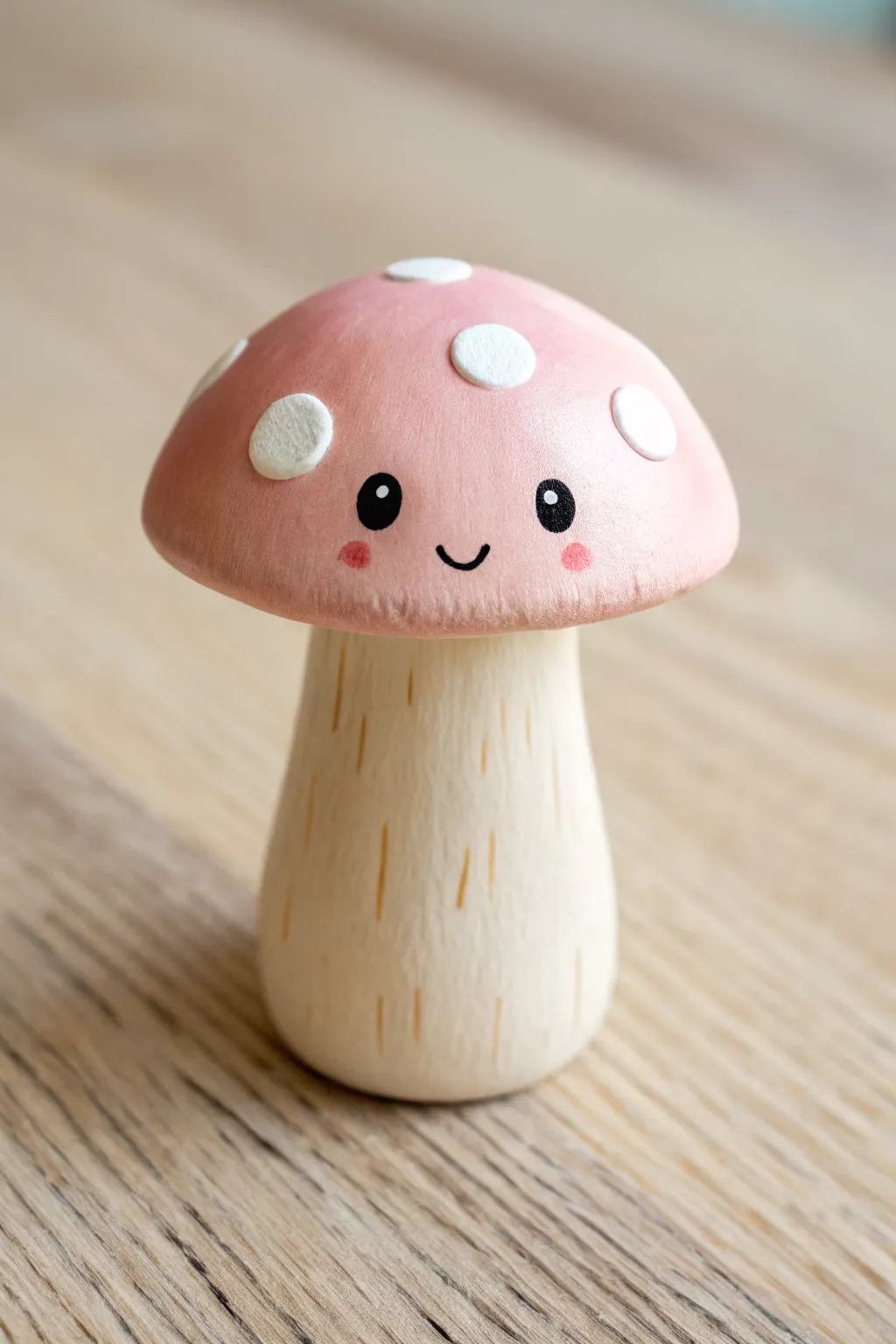
Create an adorable desk companion with this sweet pink mushroom figurine. Its gentle pastel tones and perfectly simple expression make it a charming beginner sculpting project that radiates happiness.
Step-by-Step Guide
Materials
- Polymer clay (white, beige/light tan)
- Acrylic paints (pastel pink, black, white, light brown)
- Fine-grit sandpaper
- Small ball Stylus tool
- Fine detail paintbrush
- Matte sculpting varnish or sealant
- Foil (for armature)
- X-acto knife or clay blade
- Needle tool
Step 1: Sculpting the Base Form
-
Core prep:
Start by crumpling a small piece of aluminum foil into a cone shape. This saves clay and keeps the mushroom lightweight, while also helping it bake evenly. -
Stem formation:
Condition your beige or light tan clay until it is soft and pliable. Roll it into a thick cylinder that is slightly wider at the base than at the top. -
Inserting the core:
Press your foil cone into the center of the cylinder or wrap the clay sheet around it, smoothing the seams until invisible. The stem should stand sturdily on its own. -
Shaping the stem:
Gently gently taper the top of the stem where the cap will sit. Use your fingers to smooth out any fingerprints or bumps along the sides. -
Cap creation:
Take a larger ball of plain white clay (we will paint it pink later for a smoother finish) and flatten the bottom. Shape the top into a smooth, rounded dome. -
Cap fitting:
Place the dome onto the stem. Press down firmly but gently to adhere them together. You can use a small amount of liquid clay or ‘bake and bond’ if you have it, though simple pressure usually works well. -
Smoothing:
Check the underside of the cap where it meets the stem. Use a modeling tool or your finger to smooth the transition slightly, though a slight overhang is desirable for that classic mushroom look.
Smoother Surfaces
Before baking, lightly brush the unbaked clay with a little baby oil or clay softener. It melts away fingerprints like magic for a porcelain-like finish.
Step 2: Adding Texture and Details
-
Stem texture:
To mimic the organic look in the photo, take a needle tool or a stiff craft knife. Gently scratch short, vertical lines up and down the stem. Vary the lengths and pressure so it doesn’t look too uniform. -
Cap dots:
Roll out five or six very small, flat discs of white clay. Press these randomly onto the cap. I find flattening them slightly before applying prevents them from looking like bumps. -
Baking:
Bake the sculpture according to your specific clay package’s instructions (usually 275°F/135°C for 15-30 minutes). Let it cool completely before painting.
Make it a Garden Marker
Before baking, insert a long, straightened paperclip or heavy wire into the bottom of the stem. Now you can stick your happy fungus into a plant pot.
Step 3: Painting and Finishing
-
Base coat:
Paint the stem a creamy beige if you used white clay, or leave it natural if you used beige clay. Paint the cap area (avoiding the white dots) with a soft pastel pink acrylic. -
Refining the dots:
Use a small brush to paint the raised clay dots pure white to make them pop against the pink. Two thin coats are better than one thick one here. -
Stem accents:
Mix a very watery light brown paint (a ‘wash’). Brush it over the stem’s texture lines and immediately wipe it off with a paper towel. The darker color will stay in the grooves, highlighting the texture. -
Face placement:
Using a very fine detail brush or a toothpick, paint two small black ovals for eyes about halfway down the cap. Add a tiny ‘u’ shape between them for the smile. -
Sparkle and cheeks:
Dip a toothpick in white paint to add a tiny catchlight dot in the top corner of each eye. Then, use a dry brush with a tiny bit of red paint to dab soft rosy cheeks. -
Sealing:
Once the paint is fully dry, coat the entire mushroom with a matte varnish. This protects the paint and gives it that smooth, professional finish seen in the photo.
Place your little fungus friend on a shelf or windowsill to bring a spot of cheer to your room
Tiny Donut Friend With Sprinkles
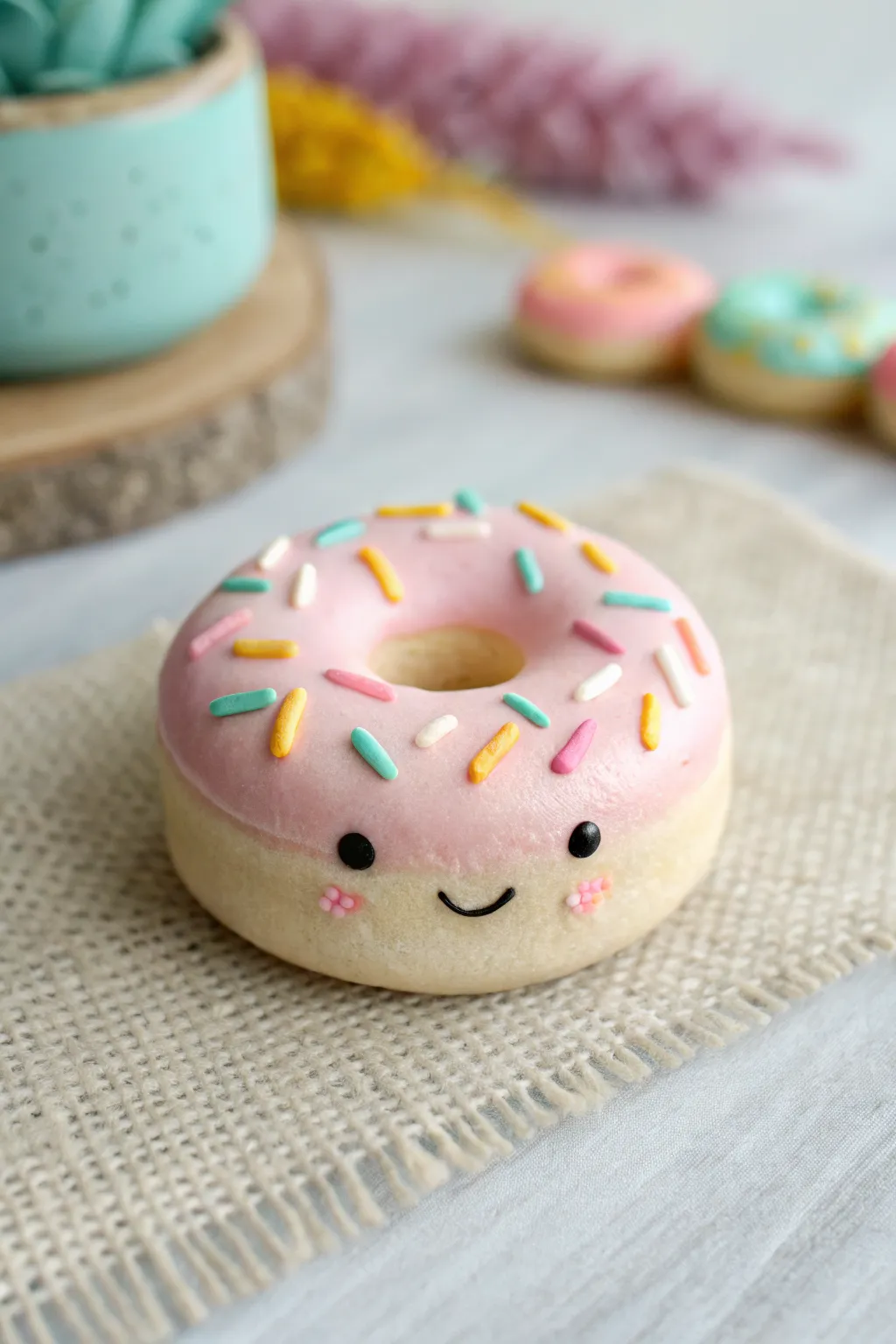
This adorable little pastry pal is the perfect beginner project for anyone looking to get into clay modeling. With its cheerful smile, pastel pink frosting, and colorful sprinkles, this tiny donut brings a dash of sweetness to any desk or shelf.
Step-by-Step Tutorial
Materials
- Beige or tan polymer clay
- Light pink polymer clay
- Assorted polymer clay scraps (yellow, teal, white, orange) for sprinkles
- Black clay or black acrylic paint
- Pink chalk pastel or pink acrylic paint
- Rolling pin or smooth acrylic roller
- Small circle cutter (approx. 2 inches) and a tiny circle cutter
- Needle tool or toothpick
- Dotting tool or small paintbrush
- Glaze (optional, satin or gloss)
Step 1: Shaping the Base
-
Condition the dough:
Start by taking a chunk of beige polymer clay and kneading it in your hands until it is soft, warm, and pliable. This prevents cracks later on. -
Form the donut shape:
Roll the beige clay into a smooth ball free of any seams. Gently flatten it between your palms to create a thick, rounded disc reminiscent of a fluffy yeast donut. -
Create the center hole:
Using a tiny circle cutter or the back of a paintbrush, punch a hole directly in the center of your beige disc. Smooth the inner edges with your finger so the hole looks soft and natural, not sharp. -
Texture the dough (optional):
For added realism, you can gently tap the surface with a toothbrush to mimic the texture of baked dough, though leaving it smooth works perfectly for a kawaii look.
Keep it Clean
White and light pink clay pick up dust easily! Keep baby wipes handy to clean your hands and tools before switching to lighter colors.
Step 2: Adding the Frosting
-
Prepare the pink frosting:
Condition a piece of light pink clay and roll it out into a thin sheet, about 2-3mm thick. -
Cut the frosting shape:
Use a circle cutter slightly larger than your donut base to cut a round piece of pink clay. Alternatively, hand-cut a wavy, irregular circle for a more drippy look. -
Apply the frosting:
Place the pink sheet over your beige donut base being careful to center it. Gently press the edges down, smoothing them onto the beige clay to make it look like glaze poured over the top. -
Open the center:
Locate the hole in the base through the pink clay and pierce it again. Smooth the pink clay down into the hole to cover the beige interior completely.
Smudged Face?
If the black clay eyes or mouth smudge onto the beige dough, use a q-tip dipped in a tiny bit of rubbing alcohol to wipe the stain away cleanly.
Step 3: Sprinkles and Details
-
Make the sprinkles:
Take tiny scraps of yellow, teal, white, and orange clay. Roll them into very thin snakes (logs) that resemble thin spaghetti noodles. -
Bake the sprinkle logs (optional tip):
I find it easier to slice the sprinkles cleanly if I bake these thin logs for just 5 minutes first, but raw clay works too if you have a sharp blade. -
Cut and place sprinkles:
Cut the thin logs into tiny segments. Gently press these colorful bits onto the pink frosting in a random pattern, ensuring they stick well. -
Create the eyes:
Roll two tiny balls of black clay. Press them onto the side of the donut, below the frosting line but high enough to be seen. Flatten them slightly. -
Add the smile:
Roll an extremely thin thread of black clay for the mouth. Shape it into a gentle ‘U’ curve and press it centrally between the eyes. -
Blush those cheeks:
Scrape a little pink chalk pastel into dust. Use a dry brush or your finger to gently dab two rosy spots on the beige dough right next to the mouth. -
Add cheek accents:
For extra cuteness, press three tiny pink clay dots or paint small flowers over the blushed area.
Step 4: Finishing Touches
-
Final smooth:
Give the entire piece a once-over, smoothing out any accidental fingerprints with a drop of baby oil on your finger if needed. -
Bake the sculpture:
Bake your donut friend according to the instructions on your specific package of polymer clay (usually 275°F/135°C for 15-30 minutes). -
Cool and glaze:
Let the donut cool completely before handling. If you want a shiny glazed look, apply a coat of polymer clay gloss varnish to just the pink frosting area.
Now you have a sweet, permanent treat that will never go stale
Star and Moon Besties
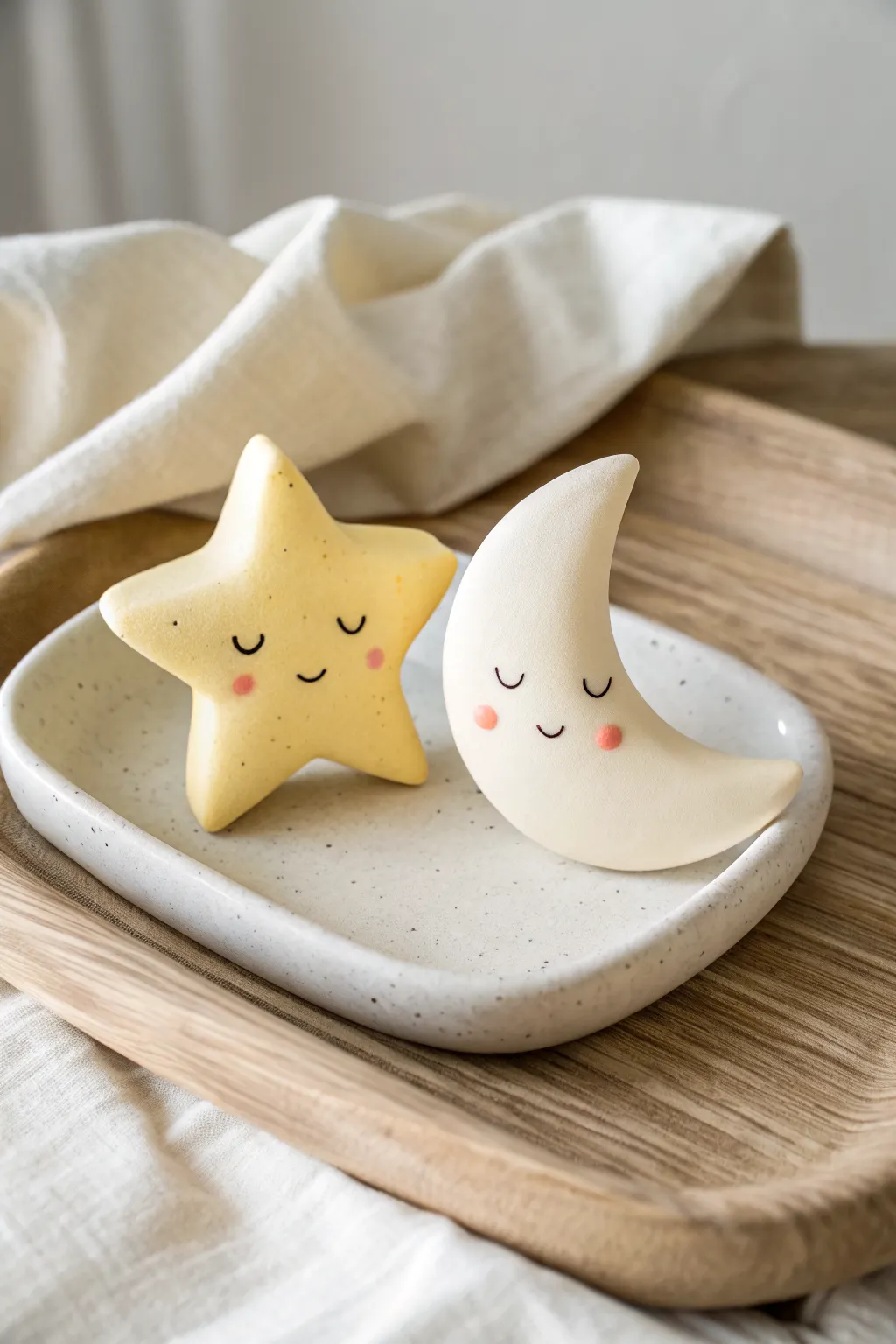
Bring the night sky down to earth with these incredibly sweet star and moon figurines. With their soft matte finish, sleepy expressions, and gentle pastel cheeks, this pair makes for a soothing desk accessory or a heartfelt handmade gift.
How-To Guide
Materials
- White polymer clay (air-dry or oven-bake)
- Yellow polymer clay (pastel shade)
- Rolling pin
- Star cookie cutter (optional, but helpful)
- Circular cookie cutter (for the moon)
- Small detail tool or toothpick
- Soft pink pastel chalk or blush
- Fine-grit sandpaper
- Black fine-tip acrylic paint marker or detail brush
- Mod Podge or matte varnish (optional)
- Cotton swab or small soft brush
Step 1: Shaping the Star
-
Condition the yellow clay:
Start by warming the pale yellow clay in your hands. Knead it thoroughly until it’s pliable and smooth, ensuring there are no air bubbles trapped inside. -
Form the base shape:
Roll the clay into a smooth ball, then flatten it slightly with your palm to create a thick disc about half an inch thick. -
Cut or mold points:
If you have a rounded star cookie cutter, press it firmly into the clay. If sculpting by hand, gently pull five points outwards from the center, keeping them soft and rounded rather than sharp. -
Soften the edges:
Use your finger to gently tap and smooth the edges of the star. You want a puffy, marshmallow-like look, so eliminate any sharp angles or cutter marks. -
Add texture (optional):
For that speckled, organic look seen in the photo, you can lightly mix in a tiny pinch of darker yellow clay or ground pepper before rolling, though painting speckles later works too.
Clean Clay Trick
Keep separate baby wipes nearby. When switching from yellow star to white moon, scrub hands thoroughly to keep the white clay pristine.
Step 2: Crafting the Moon
-
Prepare the white clay:
Clean your hands to avoid transferring yellow pigment, then condition a ball of white clay until soft and smooth. -
Create the crescent:
Flatten the ball into a thick disc similar to the star. Use a large circular cutter to remove a ‘bite’ from one side, leaving you with a perfect crescent shape. -
Refine the curve:
Gently pinch the top and bottom tips of the crescent to taper them slightly, curving the entire shape inwards just a bit to give it a hugging posture. -
Smooth the surface:
Run your thumb over the surface to erase fingerprints. I find dipping my finger in a tiny bit of water (for air-dry clay) or baby oil (for polymer) helps get it glass-smooth. -
Flatten the bottom:
To ensure your moon stands upright like the photo, gently tap the bottom curve against your work surface to create a small, flat standing area.
Make Them Ornaments
Insert a small metal eye pin into the top of the star and moon before baking to turn these into adorable hanging decorations or keychains.
Step 3: Bringing Them to Life
-
Pre-bake shading:
Use a craft knife to scrape a little powder from a pink pastel chalk. Dip a cotton swab or soft brush into the powder and gently dab two spots for cheeks on both figures. -
Cure the clay:
Bake your pieces according to the clay manufacturer’s instructions (usually 275°F for polymer) or let them air dry completely for 24-48 hours. -
Cool and sand:
Once fully cured and cooled, lightly sand any rough spots with fine-grit sandpaper for that matte, bisque-like finish. -
Draw the faces:
Using a fine-tip black paint pen, carefully draw two ‘U’ shapes for closed, sleeping eyes. Add a tiny, upward-curved smile centered between the rosy cheeks. -
Add speckles:
If you didn’t mix texture into the clay earlier, dilute a tiny drop of brown paint with water and flick it off a toothbrush onto the figures for subtle speckling. -
Seal (optional):
To protect the face paint, apply a very thin coat of matte varnish. Avoid glossy finishes to maintain the soft, dreamy aesthetic shown in the image.
Place your little celestial friends together on a shelf and enjoy their peaceful vibe
Heart Pocket Pal With Blush Cheeks
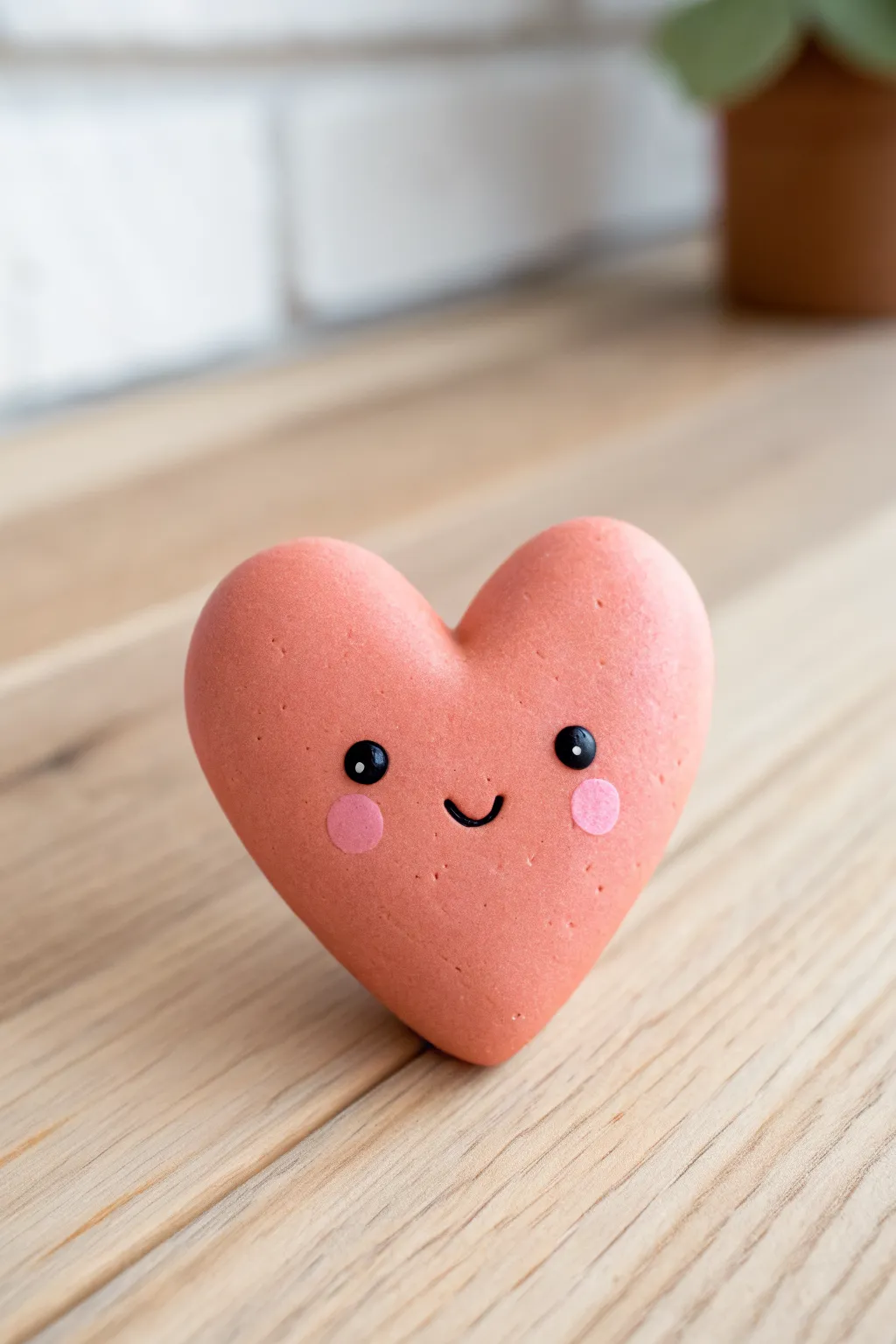
This adorable little heart fits perfectly in your pocket or sits sweetly on a desk to brighten your day. With its soft peach color, tiny smile, and rosy cheeks, it’s a simple project that radiates happiness.
Step-by-Step Tutorial
Materials
- Polymer clay (peach/coral color)
- Polymer clay (pale pink)
- Black acrylic paint
- Small dotting tool or toothpick
- Fine detail paintbrush
- Modeling tool or smooth butter knife
- Gloss glaze (optional)
- Oven (for baking)
- Parchment paper
Step 1: Shaping the Heart
-
Condition the clay:
Start by taking a chunk of your peach or coral polymer clay. Knead it thoroughly in your warm hands until it becomes soft, pliable, and easy to work with. -
Roll a sphere:
Roll the conditioned clay into a smooth, crack-free ball between your palms. It should be about the size of a walnut or a little larger. -
Form a teardrop:
Gently roll one side of the ball slightly more to taper one end, creating a fat teardrop shape. This tapered end will become the bottom point of the heart. -
Flatten it slightly:
Place the teardrop on your work surface and gently press down with your palm. You want it to be a thick, puffy cushion rather than a flat pancake. -
Create the center dip:
Using a modeling tool or the side of a smooth knife, press an indention into the center of the rounded, wide top part to start forming the heart shape. -
Refine the lobes:
Use your fingers to round out the two lobes created by the indentation. Smooth the clay so the transition into the center dip is soft and curved, not sharp. -
Perfect the silhouette:
Pick up the heart and inspect it from all angles. Soften the bottom point slightly so it isn’t too sharp, and ensure the surface is free of fingerprints.
Smooth Surface Secret
Before baking, lightly brush the unbaked clay with a little baby oil or cornstarch. This removes fingerprints and creates a professional finish.
Step 2: Adding the Face
-
Prepare the cheek clay:
Take a very tiny amount of the pale pink clay. You need two pieces that are equal in size and extremely small—think the size of a pinhead. -
Apply the cheeks:
Roll these pink bits into tiny balls and flatten them into thin discs. Press them gently onto the heart where you want the cheeks to be, spacing them wide apart. -
Smooth the cheeks:
Gently rub the edges of the pink circles with your finger so they adhere completely to the main body without sticking out too much. -
Check symmetry:
Ensure the pink circles are level with each other. This establishes the cuteness of the face before we even add the eyes. -
Bake the clay:
Place your heart on parchment paper and bake it according to your clay package instructions. Let it cool completely before painting.
Step 3: Painting and Finishing
-
Paint the eyes:
Dip a large dotting tool or the back end of a paintbrush into black acrylic paint. Stamp two solid black circles just above the inner corners of the pink cheeks. -
The highlight trick:
Wait for the black paint to dry almost completely. Then, use a toothpick or a very fine needle tool dipped in white paint to add a tiny white reflection dot in the upper corner of each eye. -
Draw the smile:
I usually switch to my finest detail brush for this part. Paint a tiny, u-shaped smile directly between the cheeks. Keep the line thin and delicate. -
Create texture (optional):
If you want the speckled look seen in the photo, you can flick a tiny amount of diluted brown paint from a toothbrush onto the back or sides, or gently stipple it with a semi-dry brush. -
Seal the piece:
Once all paint is fully dry, apply a coat of glaze if desired. A matte varnish keeps it looking natural, while a gloss glaze makes it look like ceramic.
Turn it into a Charm
Before baking, insert a metal screw eye into the top center of the heart. Add a jump ring later to make a keychain or necklace pendant.
Now you have a charming little companion ready to share a smile wherever it goes
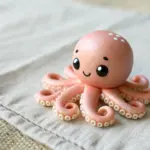
Easy Octopus With Curled Tentacles
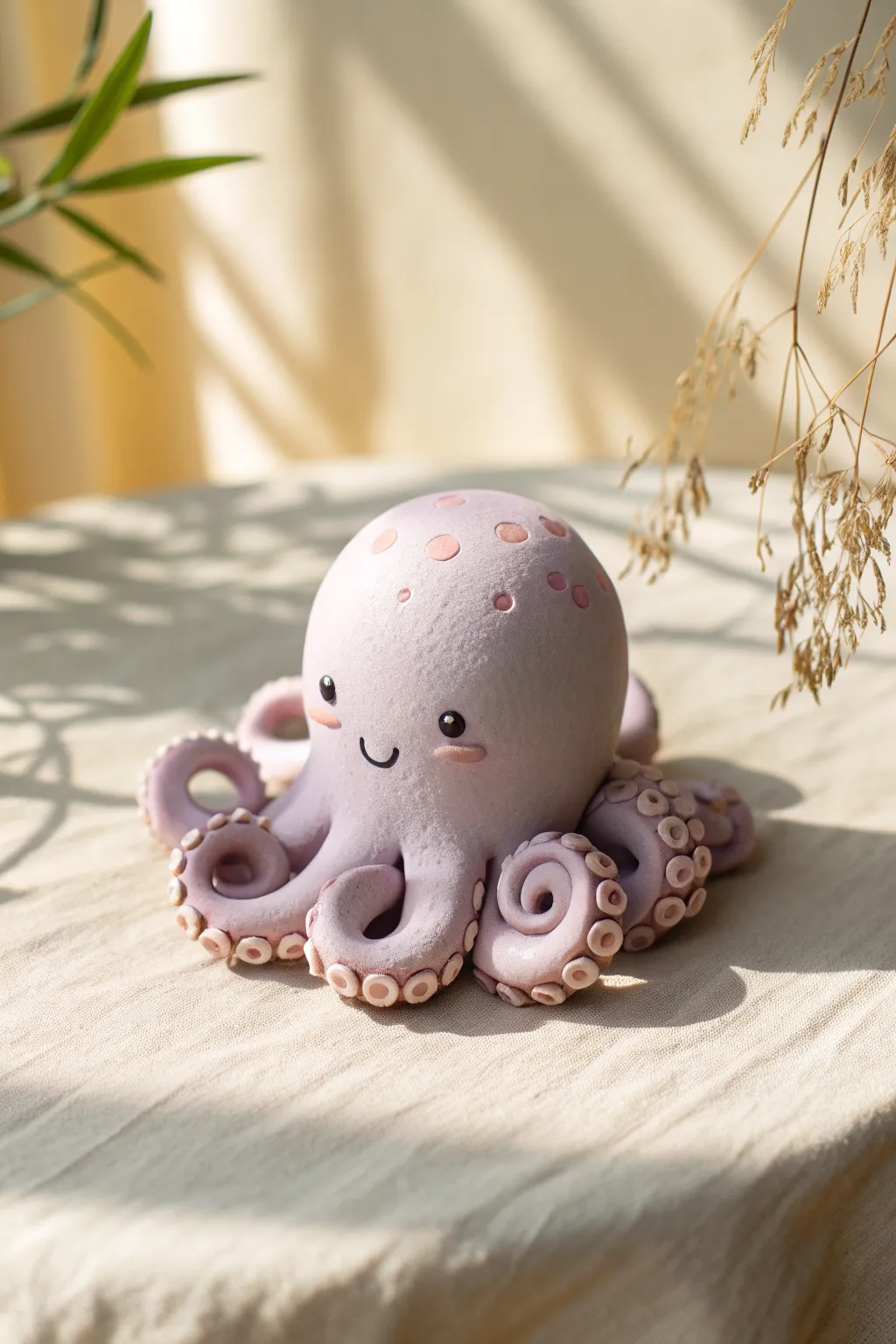
This charming little sea creature features neatly curled tentacles and a friendly, minimalist face. Its dusty lilac hue and subtle texture give it a sophisticated feel, making it perfect for a desk buddy or a sweet handcrafted gift.
Step-by-Step
Materials
- Polymer clay (pale lavender or mix purple with white)
- Polymer clay (pale pink for spots and cheeks)
- Polymer clay (black for eyes)
- Small ball stylus tool
- Needle tool or toothpick
- Soft texture sponge or sandpaper (optional)
- Oven for baking
- Baking sheet and parchment paper
- Gloss glaze (optional for eyes)
Step 1: Forming the Body
-
Mix the Base Color:
If you don’t have pre-mixed lavender clay, condition white clay with a very small amount of purple until you achieve a consistent, pale lilac shade. -
Shape the Head:
Roll a large portion of your lavender clay into a smooth ball about the size of a tangerine. Gently elongate it vertically so it forms an egg-like shape, slightly wider at the bottom. -
Create Tentacle Logs:
Take the remaining lavender clay and roll out eight distinct ‘snakes’ or logs. These should be thicker at one end (where they attach to the body) and taper gently to a point at the other end. -
Attach Tentacles:
Turn the head upside down. Press the thicker ends of the eight tentacles onto the bottom center of the head, blending the seams smooth with your finger or a clay tool so they look like part of the main body.
Step 2: Detailing the Tentacles
-
Curl the Ends:
Flip the octopus back over. Take each tentacle tip and roll it inward into a tight spiral. Vary the tightness slightly for a natural look, ensuring all spirals face upwards or outwards. -
Make Suction Cups:
Roll many tiny balls of the same lavender clay (or slightly lighter if you prefer contrast). You will need about 5-6 per tentacle. -
Apply Suction Cups:
Press the tiny balls onto the undersides of the curled tentacles. Use a small ball stylus tool to press into the center of each ball, creating a cup shape. -
Texturize:
Using a soft sponge or a brush with stiff bristles, gently tap over the surface of the head and tentacles to remove fingerprints and give the clay a subtle, matte texture.
Clay Texture Secret
To get that soft, velvety texture seen in the photo, gently pat the raw clay with an old, clean toothbrush or a piece of denim before baking.
Step 3: Adding the Face & Finish
-
Add Spots:
Roll very small, flat discs of pale pink clay. Press these randomly onto the top of the octopus’s head to create a dappled pattern. -
Secure the Spots:
Gently roll the head in your palm or press lightly so the pink spots sit flush with the surface of the head. -
Create Eyes:
Roll two small spheres of black clay. Position them wide apart on the face and press them flat against the head. -
Add Eye Highlights:
Place a minuscule dot of white clay on the upper right of each black eye to bring the expression to life. -
Sculpt the Mouth:
Roll a tiny, thin thread of black clay and curve it into a ‘U’ shape. Press this gently between the eyes for the smile. -
Apply Cheeks:
Flatten two small ovals of pink clay and place them directly under the eyes for a blushing effect. -
Bake:
Bake the sculpture according to your clay manufacturer’s instructions (usually 275°F/135°C for 15-30 minutes). Let it cool completely. -
Optional Glaze:
Once cool, I usually like to dab a tiny drop of gloss glaze just on the black eyes to make them shine, leaving the rest of the body matte.
Make it a Planter
Before baking, press a hollow into the top of the head deep enough to hold a tiny air plant or succulent later.
Enjoy your adorable new desk companion and the peaceful process of creating it
Animal Planter With a Sweet Face
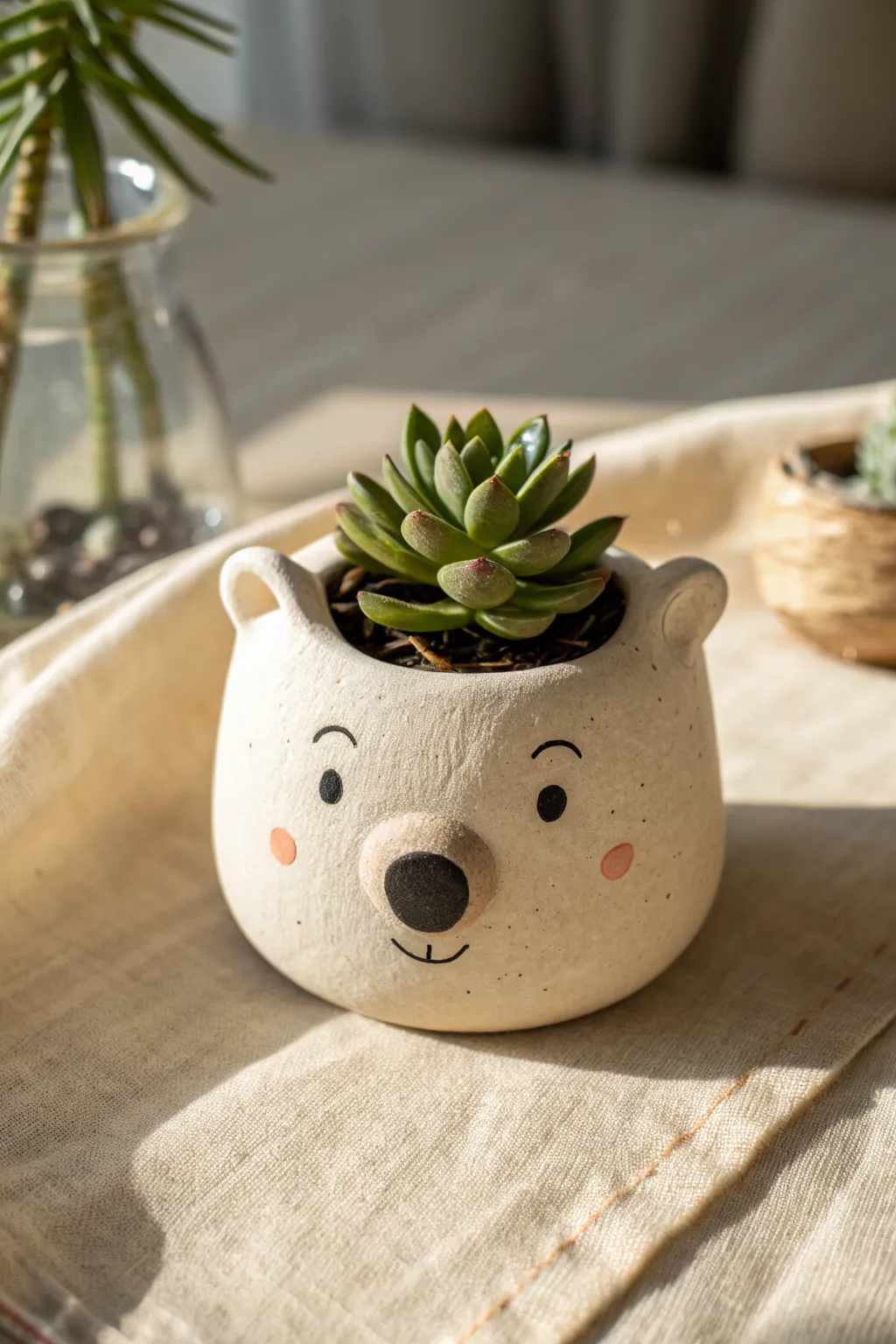
Bring a touch of whimsy to your windowsill with this adorable bear-faced planter. With its textured finish, simple painted details, and tiny ears, this pot is the perfect cozy home for a small succulent.
Step-by-Step Guide
Materials
- White air-dry clay or polymer clay
- Rolling pin
- Clay carving tools (needle tool, sponge)
- Small bowl (to use as a mold, optional)
- Fine-grit sandpaper
- Acrylic paints (black, pink/peach)
- Fine detail paintbrush
- Clear matte sealant or varnish
- Small succulent and potting soil
Step 1: Forming the Pot Base
-
Prepare the Clay:
Start by kneading a large ball of white clay until it is soft, pliable, and free of cracks. Aim for a ball slightly larger than a tennis ball for a standard succulent size. -
Create the Pinch Pot:
Push your thumb deep into the center of the ball, stopping about a half-inch from the bottom. Gently pinch and rotate the clay between your thumb and fingers to widen the opening. -
Shape the Walls:
Continue pinching upwards to pull the walls of the pot up. Aim for an even thickness of about 1/4 inch all around. I like to keep the bottom slightly wider than the top to give it that chubby, rounded bear look. -
Smooth the Surface:
Dip a small sponge or your finger in a little water and smooth out any fingerprints or major cracks on the exterior. It doesn’t need to be perfectly porcelain-smooth; a little texture adds character. -
Flatten the Bottom:
Gently tap the pot onto your work surface to create a flat, stable base so it won’t tip over.
Cracking Clay?
If you see tiny cracks forming while air-drying, mix a tiny bit of clay with water to make a paste and fill them in immediately. Smooth with a damp finger.
Step 2: Adding the Bear Features
-
Shape the Ears:
Roll two small marble-sized balls of clay. Flatten slightly and pinch one side of each to create a small attachment point. -
Attach the Ears:
Score (scratch) the top rim of the pot where the ears will go, and score the bottom of the ears. Apply a dab of water or liquid clay (slip) and press the ears firmly onto the rim. -
Create the Ear Indentations:
Using the rounded end of a paintbrush handle or a ball tool, gently meaningful press into the center of each ear to create the inner cupped shape. -
Blend the Seams:
Use a modeling tool or your finger to smooth the clay where the ears meet the pot, blending the seams so they look like one continuous piece. -
Make the Snout:
Roll a small ball of clay about the size of a grape. Flatten it slightly into a thick disk to form the bear’s muzzle. -
Attach the Muzzle:
Score the back of the disk and the center-front of the pot. Press the muzzle onto the face, positioned fairly low, and smooth the edges just slightly so it looks attached but still distinct. -
Dry Based on Clay Type:
If using air-dry clay, let it dry for 24-48 hours until completely white and hard. If using polymer clay, bake according to the package instructions.
Make it Functional
Before drying, use a straw to punch a drainage hole in the bottom center. This is crucial for succulents to prevent root rot.
Step 3: Painting and Finishing
-
Sand for Texture:
Once fully cured, use fine-grit sandpaper to gently smooth any rough potential sharp edges from the molding process, though leaving the main surface slightly rough enhances the stone-like look. -
Paint the Nose:
Using black acrylic paint and a small brush, paint a rounded oval shape directly in the center of the protruding muzzle. -
Add the Mouth:
With a very fine liner brush or a black paint pen, draw a small vertical line down from the nose, connecting to a shallow ‘U’ shape for the smile. -
Draw the Eyes:
Paint two small black vertical ovals for eyes. Place them wide apart, roughly level with the top of the muzzle, to create that sweet, innocent expression. -
Add Eyebrows:
Paint tiny, curved arches floating high above the eyes for eyebrows. This simple step adds a surprising amount of personality. -
Apply Rosy Cheeks:
Dip a round brush or a cotton swab into pink or peach paint. Dab off the excess, then stamp two soft circles on the cheeks. -
Seal the Project:
Apply a coat of clear matte varnish or sealant to protect the paint and clay from moisture when watering your plant.
Pop in your favorite little succulent and enjoy your new desk companion
Mini Charm Critters With Loop Tops
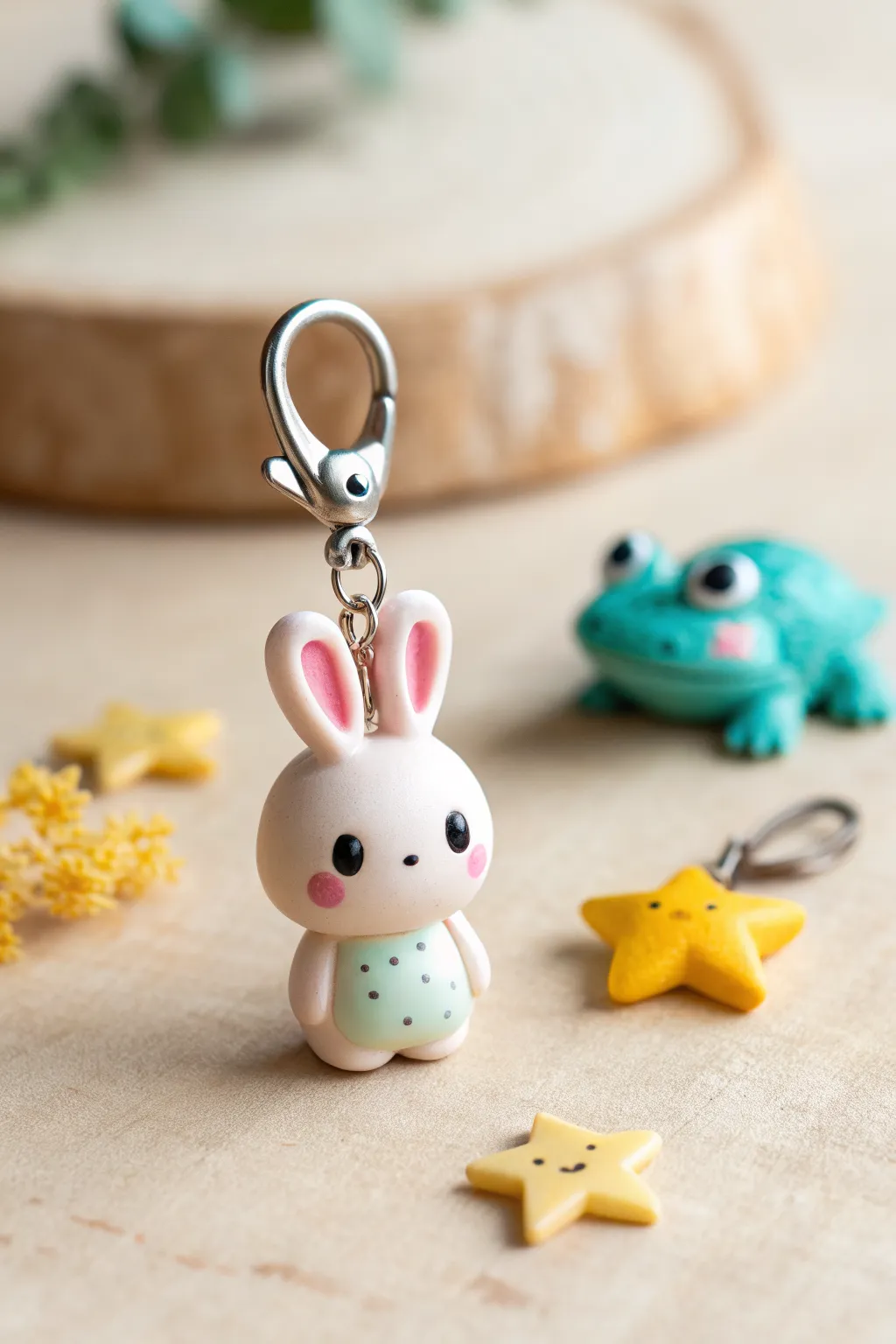
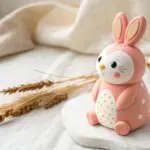
This adorable mini bunny charm features an irresistible face with rosy cheeks and a soft pastel tummy. It’s perfect for clipping onto zipper pulls or keychains as a sweet handmade companion.
Step-by-Step Tutorial
Materials
- Polymer clay (white, pastel pink, pastel mint green, black)
- Eye pin (silver)
- Lobster clasp keychain attachment
- Small ball stylus tool
- Needle tool or toothpick
- Gloss varnish (optional)
- Toaster oven (for baking)
- Super glue (gel type recommended)
Step 1: Shaping the Body
-
Mix the Base Color:
Condition a chunk of white polymer clay until it is soft and pliable. Mix in just a minuscule crumb of pink or beige if you want a warmer off-white tone, otherwise, bright white works perfectly. -
Form the Head:
Roll a ball of the white clay about the size of a large marble (approximately 0.75 inches). Roll it between your palms until it is perfectly smooth with no cracks. -
Flatten Slightly:
Gently press the ball onto your work surface to create a slight base so the head isn’t perfectly round, but rather a soft oval shape similar to a marshmallow. -
Create the Torso:
Roll a second, smaller ball of white clay, about half the size of the head. Press this gently against your work surface to flatten the bottom, creating a sturdy base for your bunny to sit. -
Connect Head and Body:
Place the head securely onto the smaller body piece. You can insert a small piece of toothpick or wire between them for extra stability if you like.
Clean Clay Tip
Keep baby wipes or hand sanitizer nearby. Clean your hands thoroughly before handling white clay to prevent lint and dust from ruining the pristine finish.
Step 2: Adding Details
-
Make the Ears:
Roll two small logs of white clay with tapered ends. Flatten them slightly with your finger to create the long ear shapes. -
Add Inner Ears:
Take tiny amounts of pink clay and roll them into smaller, thinner logs. Press these into the center of the white ear pieces to create the pink inner ear detail. -
Attach the Ears:
Press the ears firmly onto the top of the head. Use your needle tool or a silicone shaper to smooth the seam where the clay meets the head so they don’t pop off later. -
The Pastel Tummy:
Flatten a very small ball of mint green clay into a thin oval. Press this onto the front of the bunny’s lower body to create its colorful belly patch. -
Polka Dots:
Using the tip of a needle tool or a very fine dotting tool, dip into black acrylic paint or add absolutely tiny specks of black clay onto the green tummy patch for a patterned look. -
Limbs:
Roll two tiny white sausages for arms and two small ovals for feet. Attach the arms to the sides of the body and the feet to the bottom front.
Make it Matte
Instead of gloss varnish, try using a dusting of cornstarch before baking to eliminate fingerprints, giving the bunny a velvety, soft-matte profession finish.
Step 3: Face & Finishing
-
Eye Sockets:
Use a medium-sized ball stylus to press two indentations into the face where the eyes will go. Spacing them slightly far apart adds to the ‘kawaii’ look. -
Insert Eyes:
Roll two small balls of black clay and press them into the sockets. Add a minuscule speck of white clay to the top right of each eye for a reflective highlight. -
Cheeks:
Roll two tiny dots of pink clay and flatten them onto the cheeks, just below and outside the eyes. -
Nose:
Place a microscopic dot of black clay between the eyes for the nose. -
Hardware Prep:
Trim an eye pin to about half an inch. Insert it into the center top of the bunny’s head, pushing down until the loop touches the clay. -
Bake:
Bake the charm according to your clay manufacturer’s instructions (usually 275°F for 15-30 minutes). Let it cool completely. -
Secure Hardware:
Once cool, gently pull the eye pin out. Add a drop of super glue to the stem and re-insert it for a permanent hold. -
Attach Clasp:
Using jump rings or pliers, attach your lobster clasp to the eye pin loop so it’s ready to hang.
You now have a charming little rabbit friend ready to accompany you on your adventures
Stacked Totem of Tiny Faces
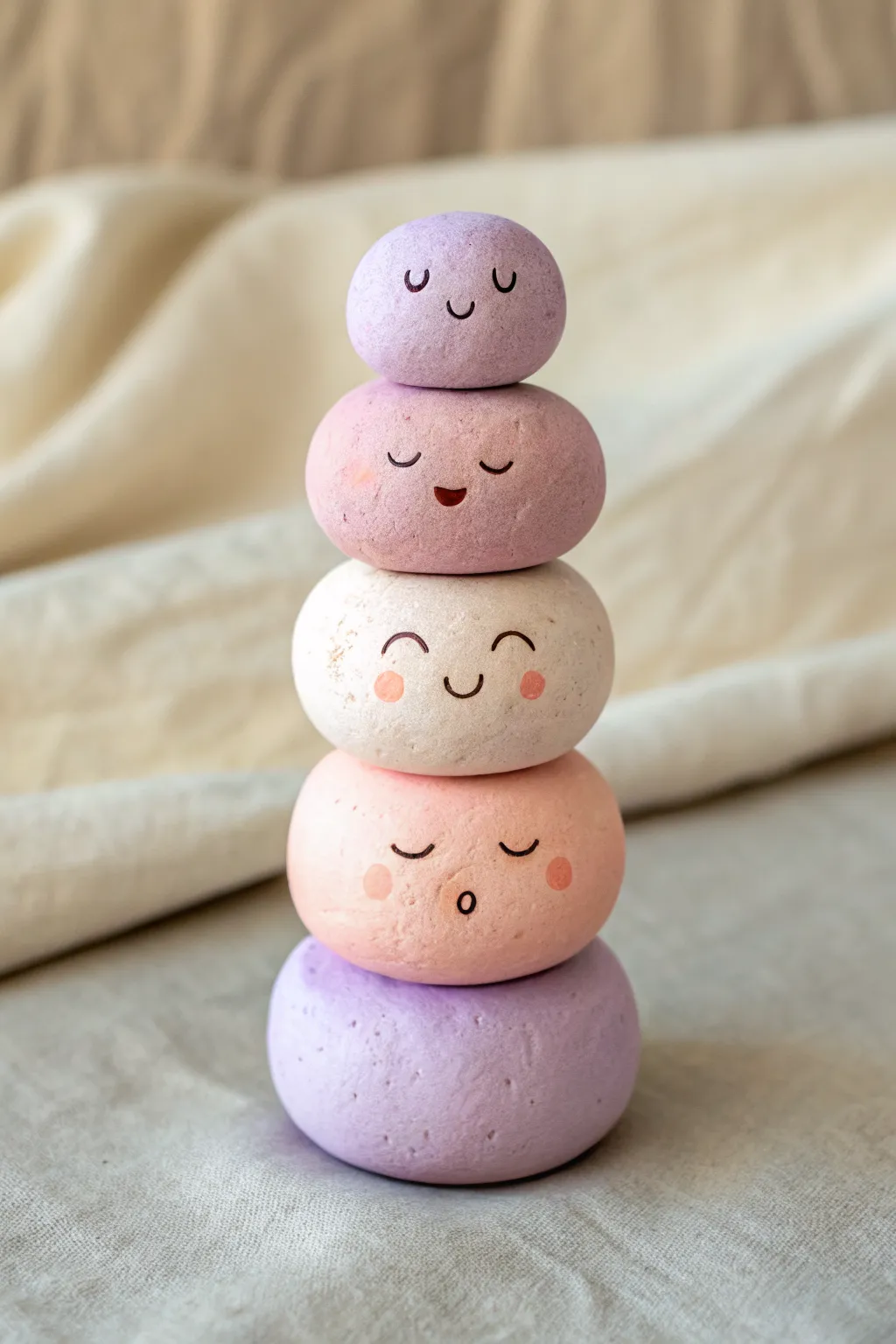
Bring a little zen and a lot of cuteness to your desk with this adorable totem of stacked clay characters. Mimicking the soft, organic look of river stones, these pastel friends feature simple, expressive faces that are bound to make you smile.
Step-by-Step Guide
Materials
- Air-dry clay or polymer clay (white)
- Acrylic paints (lavender, soft pink, cream/off-white, dusty rose)
- Fine grit sandpaper
- Fine-point black permanent marker or detail paint brush
- Matte sealant or varnish
- Water used for smoothing
- Rolling tool (optional)
Step 1: Shaping the Stones
-
Portion the Clay:
Start by dividing your white clay into five portions. You want a graduation in size, so create one large ball for the base, three slightly smaller medium ones for the middle, and one tiny ball for the very top. -
Form Smooth Rounds:
Roll each portion of clay firmly between your palms. Aim for a smooth, spherical shape, but don’t worry about perfection; a slightly organic, pebble-like form adds to the charm. -
Flatten Slightly:
Gently press each ball down onto your work surface to create flat bottoms and tops. This mimics the look of a river stone and, crucially, provides stability for stacking later. -
Refine the Edges:
Dip your finger in a little water and rub away any cracks or fingerprints. Rounded, soft edges are key to the ‘stone’ aesthetic. -
Test the Stack:
Before drying or baking, stack your raw clay pieces to ensure they balance well. Adjust the flatness of the contact points if the tower feels wobbly. -
Cure the Clay:
Follow the instructions for your specific clay type. If using air-dry clay, let them sit for 24-48 hours until fully hard; if using polymer, bake according to the package directions.
Wobbly Tower?
If your stones won’t stack straight, use a nail file to gently flatten the contact points even after the clay has dried. A flatter surface equals a sturdier totem.
Step 2: Adding Color and Character
-
Sand for Texture:
Once cured, lightly sand the surface of each ‘stone’ with fine grit sandpaper. This gives a matte, stone-like texture and helps the paint adhere better. -
Mix Your Palette:
Prepare your acrylics. You’ll need a gradient of soft pastels. Mix a light lavender for the top and bottom stones, a dusty pink and a peach for the second and fourth stones, and a creamy off-white for the middle one. -
Paint the Base Coats:
Paint each stone its designated color. I find using a sponge brush here helps avoid harsh brush strokes, keeping that powdery, soft look. Apply 2-3 thin coats for opacity. -
Add Rosy Cheeks:
On the peach, cream, and pink stones, dip a cotton swab or a small round brush into thinned pink paint. Dab gentle circles to create blushing cheeks. -
Draw the Faces:
Using a fine-point black marker or a very thin liner brush with black paint, add the facial features. Keep it simple: U-shaped eyes for sleeping faces, arched eyes for happy ones, and tiny mouths. -
Detail Work:
Vary the expressions to give them personality. Give one a singing ‘O’ mouth, another a simple smile, and perhaps a tiny open mouth for a laughing face. -
Seal the Finish:
Coat each individual stone with a matte varnish. Avoid glossy finishes, as the matte look is essential for the realistic stone effect.
Step 3: Final Assembly
-
Arrange the Order:
Line up your dried, painted stones in the correct stacking order: large purple at the bottom, followed by peach, cream, pink, and tiny purple on top. -
Glue the Stack:
Apply a strong adhesive (like super glue or E6000) between each layer. Press firmly for a moment to set the bond. -
Final Cure:
Let the glue cure completely before moving your new totem to its display spot.
Natural Stone Look
To make the ‘stones’ look even more realistic, speckle the wet paint by flicking a toothbrush loaded with slightly darker, watered-down paint over them.
Place your finished totem on a shelf or windowsill to add a peaceful, handmade touch to your room.
Mini “Tiny Planet” Character With Clouds
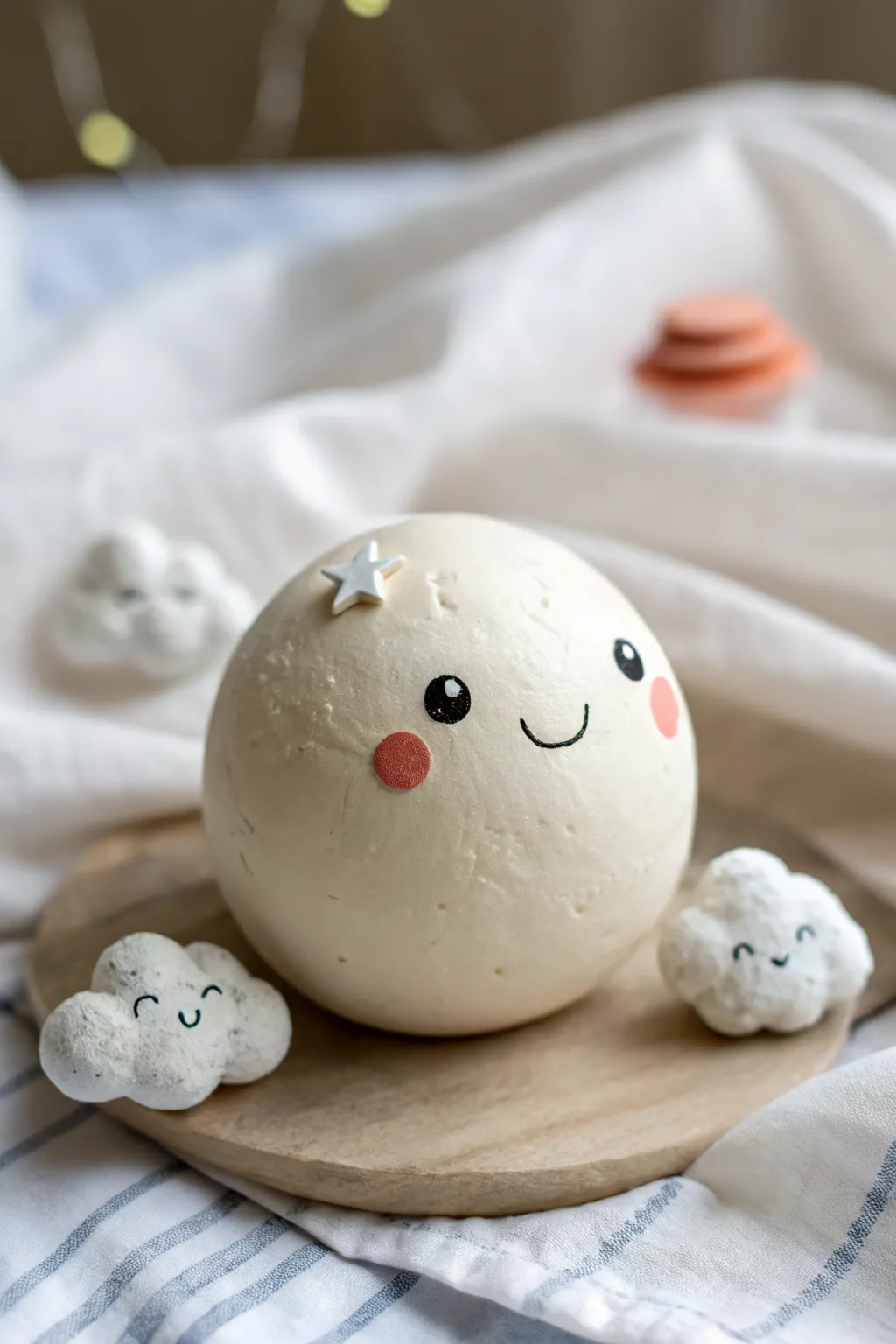
This adorable spherical figurine brings a gentle celestial charm to your desk or shelf, featuring a smooth, creamy finish and a sweet, hand-painted face. Surrounded by fluffy little cloud companions, this easy-to-make clay project captures the peaceful magic of the night sky.
Step-by-Step Tutorial
Materials
- White air-dry clay or polymer clay
- Aluminum foil (for the core)
- Acrylic paints (black, pink, white, soft grey)
- Small star embellishment (wood, clay, or sticker)
- Fine-grit sandpaper
- Fine detail paintbrush
- Dotting tool or toothpick
- Small wooden display coaster
Step 1: Forming the Base
-
Create a foil core:
Crumple a piece of aluminum foil into a tight ball about the size of a tangerine. This saves clay and makes the finished piece lighter. -
Cover with clay:
Roll out a sheet of white clay just thick enough to cover the foil without tearing. Wrap it around your foil ball, pinching the seams together to seal it completely. -
Smooth the sphere:
Roll the clay ball gently between your palms to smooth out any seams or lumps. If using water-based clay, a damp finger can perform miracles on cracks. -
Add texture (optional):
For a realistic moon look, you can gently tap the surface with a toothbrush or lightly press small indentations to mimic craters, but keep it subtle for that cute, cartoony finish. -
Make the clouds:
Pinch off three smaller pieces of clay. Roughly shape them into ovals, then use a tool or your fingers to press ‘bumps’ into the perimeter, creating that pillowy, cumulus shape.
Pro Tip: Seamless Spheres
Keep a small bowl of water nearby while rolling the sphere. Wet hands help dissolve surface cracks instantly on air-dry clay.
Step 2: Refining and Drying
-
Initial dry time:
Let your planet and clouds sit undisturbed. If using air-dry clay, rotate them every few hours so the bottom doesn’t stay soggy or get flat. -
Sand for smoothness:
Once fully cured, take your fine-grit sandpaper and very gently buff the surface of the main sphere. You want a pristine, matte canvas for the face. -
Prep the surface:
Wipe away any clay dust with a slightly damp cloth or paper towel before you start painting.
Step 3: Bringing it to Life
-
Paint the rosy cheeks:
Mix a soft coral-pink acrylic paint. Using a round brush or a large dotting tool, dab two perfect circles onto the cheeks. I like to do this first to frame where the eyes will go. -
Add the eyes:
With black acrylic paint and a detail brush, paint two small ovals between the cheeks. Add a tiny white highlight dot in the upper corner of each eye for sparkle. -
Draw the smile:
Using your finest brush with slightly watered-down black paint (ink consistency helps here), paint a simple ‘U’ shape centered between the eyes. -
Detail the clouds:
Give your little cloud friends personalities too. Paint simple winking or smiling faces low on their shapes using the same fine black lines. -
Dust with grey:
To make the clouds pop, dry-brush a tiny amount of grey paint onto the textured ‘bumps’ of the clouds. This adds shadow and dimension. -
Attach the star:
Glue a small star embellishment near the top left of the moon’s face. If you made a clay star, attach it now. -
Final assembly:
Arrange the main sphere in the center of a wooden coaster, placing the cloud friends around the base to stabilize your round character.
Level Up: Glow in the Dark
Mix glow-in-the-dark powder into your white paint for the finish, or use glow-in-the-dark polymer clay for a magical night-light effect.
Now you have a serene little companion to keep you company during your creative hours