
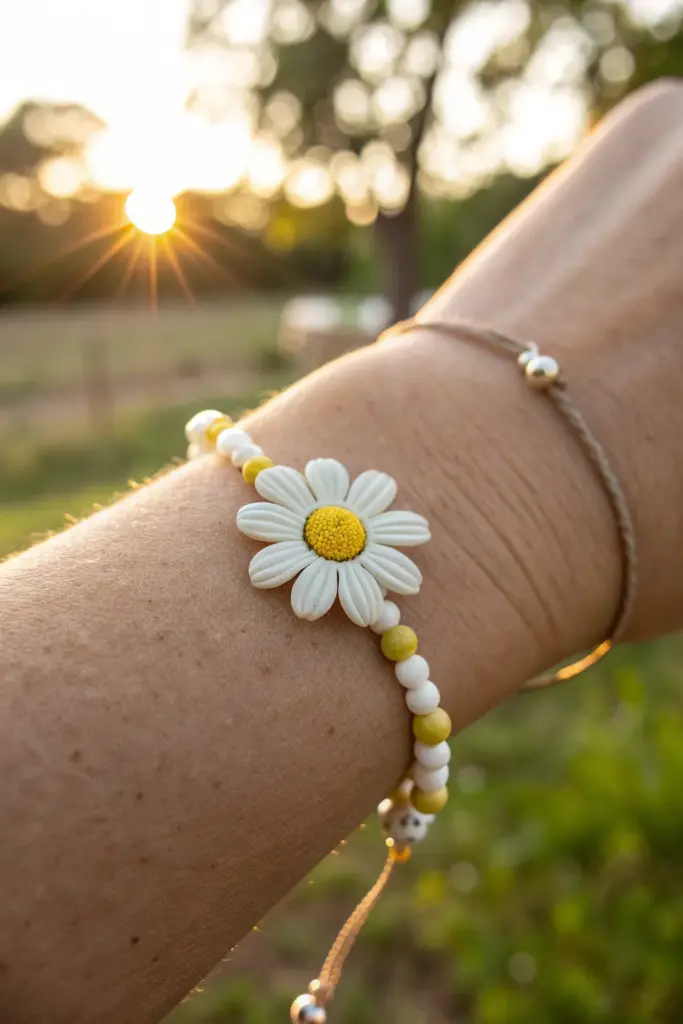
Summer is basically the perfect excuse to make extra-colorful clay bracelets you can stack, mix, and wear nonstop. Here are my favorite cute ideas that feel like sunshine, saltwater, and vacation days—whether you’re into bold heishi beads or tiny clay charms.
Classic Rainbow Heishi Stack
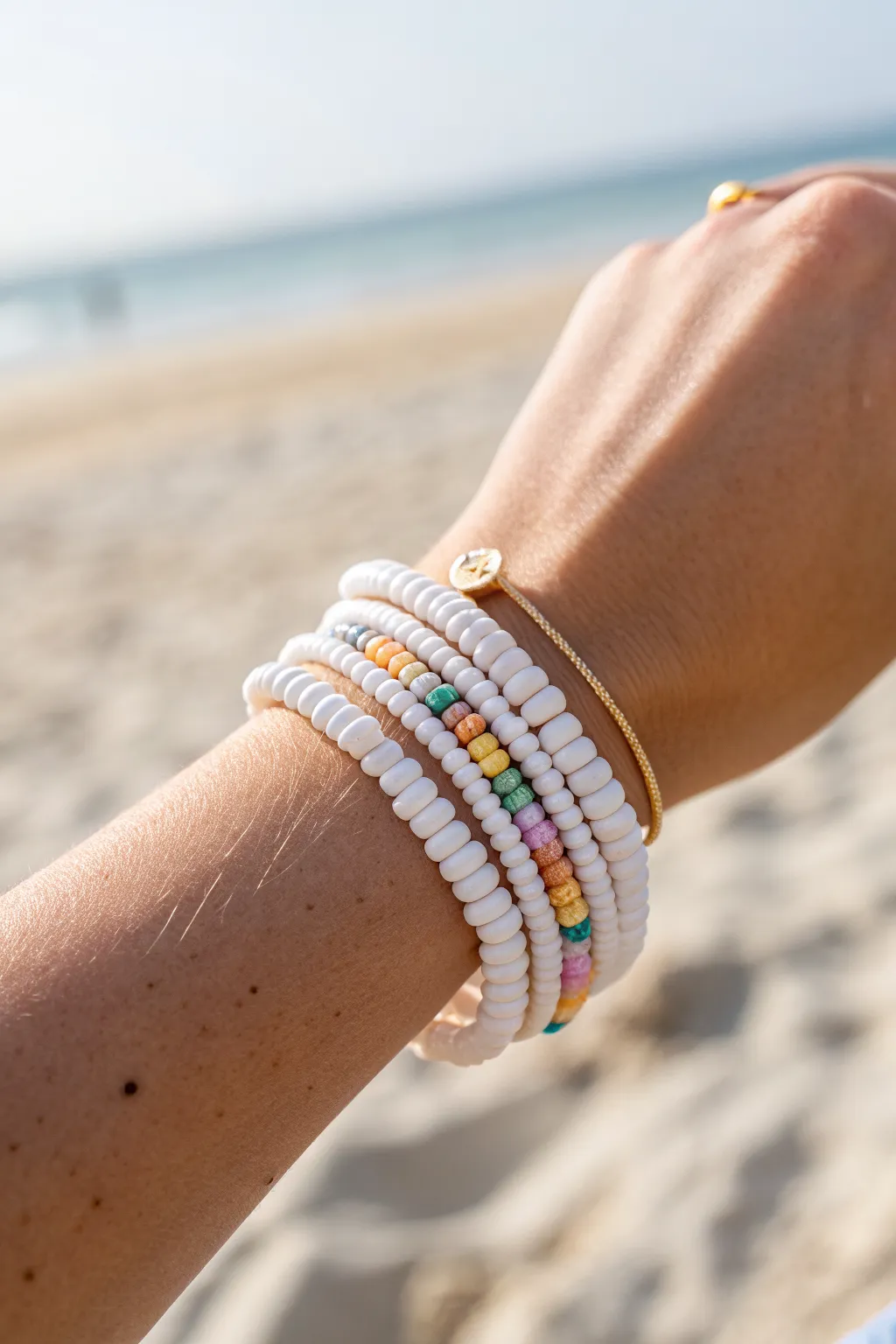
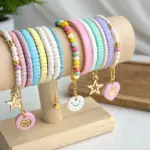
Capture the essence of summer with this crisp white and rainbow beaded bracelet stack. The combination of bright white heishi beads with pops of colorful accents creates a fresh, beach-ready look that pairs perfectly with sun-kissed skin.
Detailed Instructions
Materials
- 6mm White polymer clay heishi beads (disc beads)
- 6mm Polymer clay heishi beads in assorted rainbow colors (yellow, orange, teal, pink, purple)
- 0.8mm clear elastic stretch cord
- Jewelry glue or clear nail polish
- Scissors
- Tape or bead stopper
- Optional: Gold spacer beads or a gold focal bead
Step 1: Preparation
-
Measure your wrist:
Wrap a piece of string or a flexible measuring tape around your wrist where you want the bracelets to sit. Add about half an inch to this measurement to ensure a comfortable fit that isn’t too tight. -
Cut the elastic:
Cut three separate lengths of elastic cord, each measuring about 10-12 inches. I always cut extra length because it makes tying the final knots much easier without fumbling. -
Secure the ends:
Attach a piece of tape or a bead stopper to one end of each elastic cord. This prevents your beads from sliding right off as you work.
Seamless Finish
Use a toothpick to guide the glue precisely into the knot. This prevents excess glue from stiffening the surrounding beads.
Step 2: Creating the Solid White Layers
-
String the first bracelet:
Begin threading the white heishi beads onto your first piece of elastic. Since these beads are thin discs, you’ll need quite a few to cover the length. -
Check the length:
Periodically wrap the strand around your wrist to check the fit. Aim for a solid white strand that encircles your wrist comfortably. -
String the second bracelet:
Repeat the process for the second piece of elastic, creating another identical all-white strand. These two will frame the colorful center piece.
Metallic Mix-Up
Add 2-3 gold disc beads between every color change on the middle strand to give the bracelet a luxe, high-end jewelry feel.
Step 3: Designing the Rainbow Accent Strand
-
Start the third strand:
For the middle bracelet, begin by stringing about 1.5 to 2 inches of solid white heishi beads. -
Begin the color pattern:
Add your first pop of color. String 3-4 colored beads of the same hue (e.g., orange) followed by a single contrasting bead (like teal) or a small gold spacer. -
Continue the pattern:
Switch to a new color block. Add another 3-4 beads of a different color (like yellow), followed by a separator bead. Continue varying the colors to create a random, playful rainbow effect. -
Finish the color section:
Keep adding these small color blocks until you have covered the central portion of the bracelet, leaving enough room for white beads at the end. -
Complete with white:
Finish the strand by adding white heishi beads until it matches the length of your first two bracelets. This creates a design where the color sits primarily on top of the wrist.
Step 4: Finishing Touches
-
Pre-stretch the cords:
Before tying, give each bracelet a gentle tug. This pre-stretching step helps prevent the elastic from loosening up later while you’re wearing it. -
Tie the surgeon’s knot:
Remove the tape. Cross the ends, loop one side under twice, and pull tight. Repeat with a standard overhand knot on top to secure it. -
Apply adhesive:
Dab a tiny drop of jewelry glue or clear nail polish onto the knot. This is crucial for longevity, especially if you plan to wear these at the beach. -
Hide the knot:
Once the glue is tacky but not fully dry, try to slide the knot inside the hole of the nearest heishi bead to conceal it. -
Let it dry:
Allow the glue to cure completely according to the package instructions before trimming off the excess elastic tail.
Slide on your new stack and enjoy the effortless summer vibe they bring to any outfit
Pastel Color-Block Bracelets
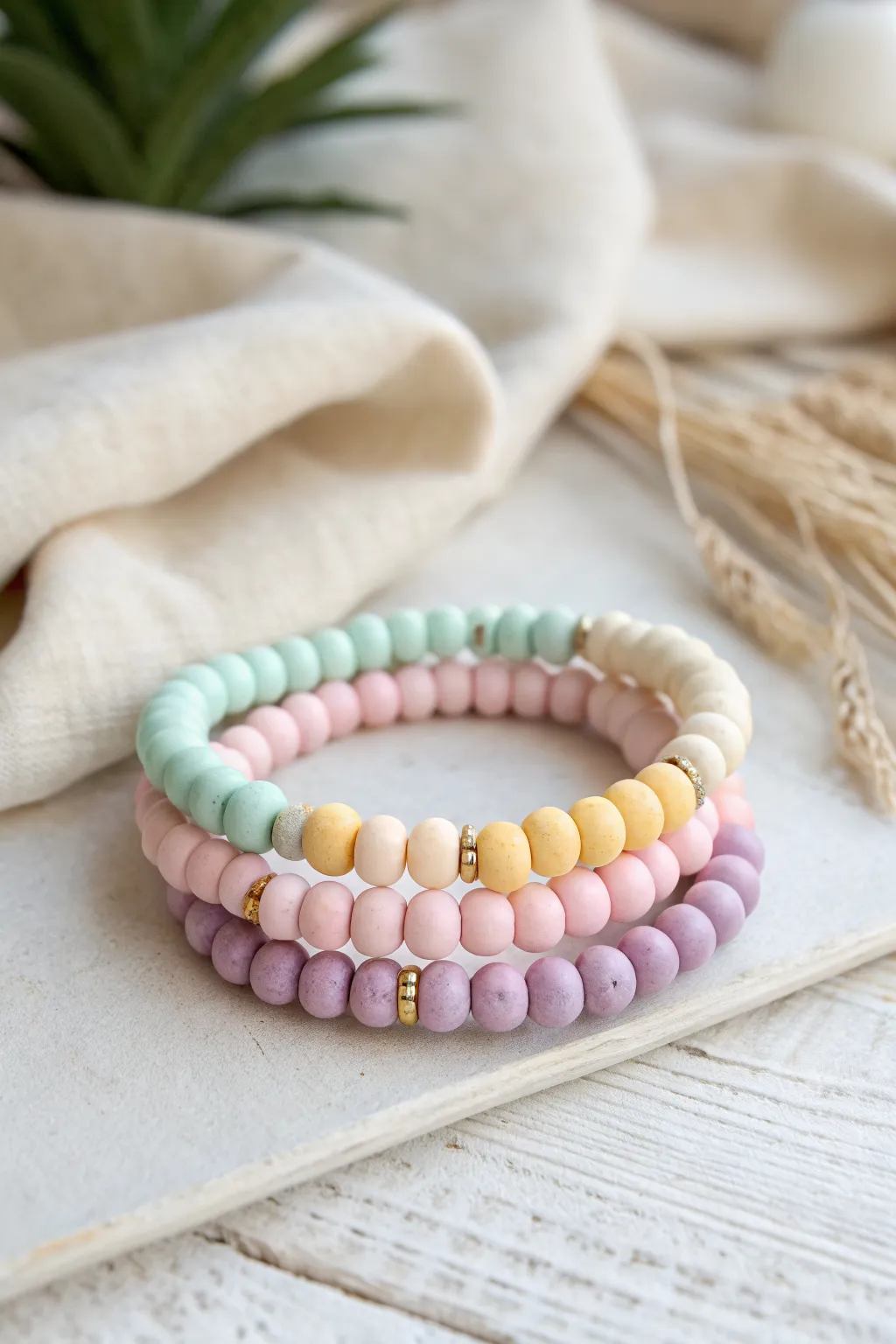
These color-blocked bracelets combine the soft, matte texture of polymer clay with subtle golden accents for a dreamy summer aesthetic. The mix of muted mint, pale rose, sunny yellow, and lavender creates a soothing palette that looks beautiful stacked together or worn individually.
Step-by-Step Guide
Materials
- Polymer clay in pastel mint, pale pink, lavender/purple, butter yellow, and cream/white
- Elastic beading cord (0.8mm or 1mm)
- Small gold spacer beads or heishi beads
- Gold seed beads (optional, for accents)
- Bead roller tool (optional, but helpful for uniformity)
- Needle tool or toothpick
- Baking sheet with parchment paper
- Super glue or jewelry cement
- Scissors
Step 1: Creating the Clay Beads
-
Condition the Clay:
Start by warming up your polymer clay in your hands. Knead each color separately until it is soft and malleable, ensuring there are no air bubbles trapped inside. -
Portion the Clay:
Roll each color into a long, even snake about 1/2 inch in diameter. Using a blade, slice the snake into equal-sized segments to ensure all your finished beads are roughly the same size. -
Roll Spheres:
Take each segment and roll it between your palms or using a bead roller to create smooth, round spheres. Don’t worry if they aren’t factory-perfect; a slight organic texture adds to the charm. -
Pierce the Holes:
Using a needle tool or toothpick, carefully poke a hole through the center of each sphere. I find it helps to poke halfway through, then flip the bead and poke from the other side to avoid distorting the shape. -
Refine the Shape:
After piercing, gently roll the bead between your fingers again to smooth out any fingerprints or distortion caused by the needle tool. -
Bake the Beads:
Arrange your beads on a baking sheet lined with parchment paper. Follow the baking temperature and time instructions specific to your brand of polymer clay (usually around 275°F/135°C for 15-30 minutes). -
Cool Down:
Once baked, remove the tray from the oven and let the beads cool completely before handling them to ensure they harden properly.
Clean Bead Hack
To prevent fingerprints on your clay while rolling, lightly dust your hands with cornstarch or baby powder before handling the raw clay spheres.
Step 2: Designing the Pattern
-
Plan the Mint Bracelet:
For the top bracelet, layout a majority of mint green beads. Create a focal section using cream/white beads, separated by a gold spacer for elegance. -
Plan the Pink & Yellow Bracelet:
For the middle stack, alternate sections of soft pink and butter yellow. Use gold spacers as transition points between the color shifts to create that distinct ‘color-block’ effect. -
Plan the Purple Bracelet:
For the bottom strand, use predominantly lavender beads. Intersperse darker purple or mauve beads randomly or in small sections, adding gold accents sporadically for sparkle. -
Measure Fit:
Wrap a piece of cord around your wrist to find your size, then add about 3 inches for tying knots. Arrange your bead layouts to match this length.
Step 3: Assembly
-
Pre-stretch Cord:
Cut your elastic cord lengths. Give each piece a few firm tugs to pre-stretch it; this prevents the bracelet from drooping or stretching out permanently later. -
String the Beads:
Thread your beads onto the elastic according to your planned designs. If certain holes are tight, twisting the cord as you push it through can help. -
Check Consistency:
Hold the ends of the cord together to form a circle and check the size on your wrist one last time. Add or remove beads if necessary. -
Tie the Knot:
Tie a surgeon’s knot (right over left, left over right, and loop through an extra time). Pull the elastic tight so the beads sit snugly against each other. -
Secure and Hide:
Apply a tiny drop of super glue or jewelry cement to the knot. Let it dry for a few seconds, then trim the excess cord ends. -
Final Polish:
If possible, gently tug the knot inside one of the larger clay beads or a gold spacer to hide it from view.
Design Twist
Replace the gold spacers with tiny freshwater pearls or wooden rondelles for an even more organic, beachy vibe that matches the matte clay perfectly.
Now you have a gorgeous set of custom pastel bracelets perfect for accessorizing any summer outfit either individually or as a complete stack
Bold Neon Summer Mix
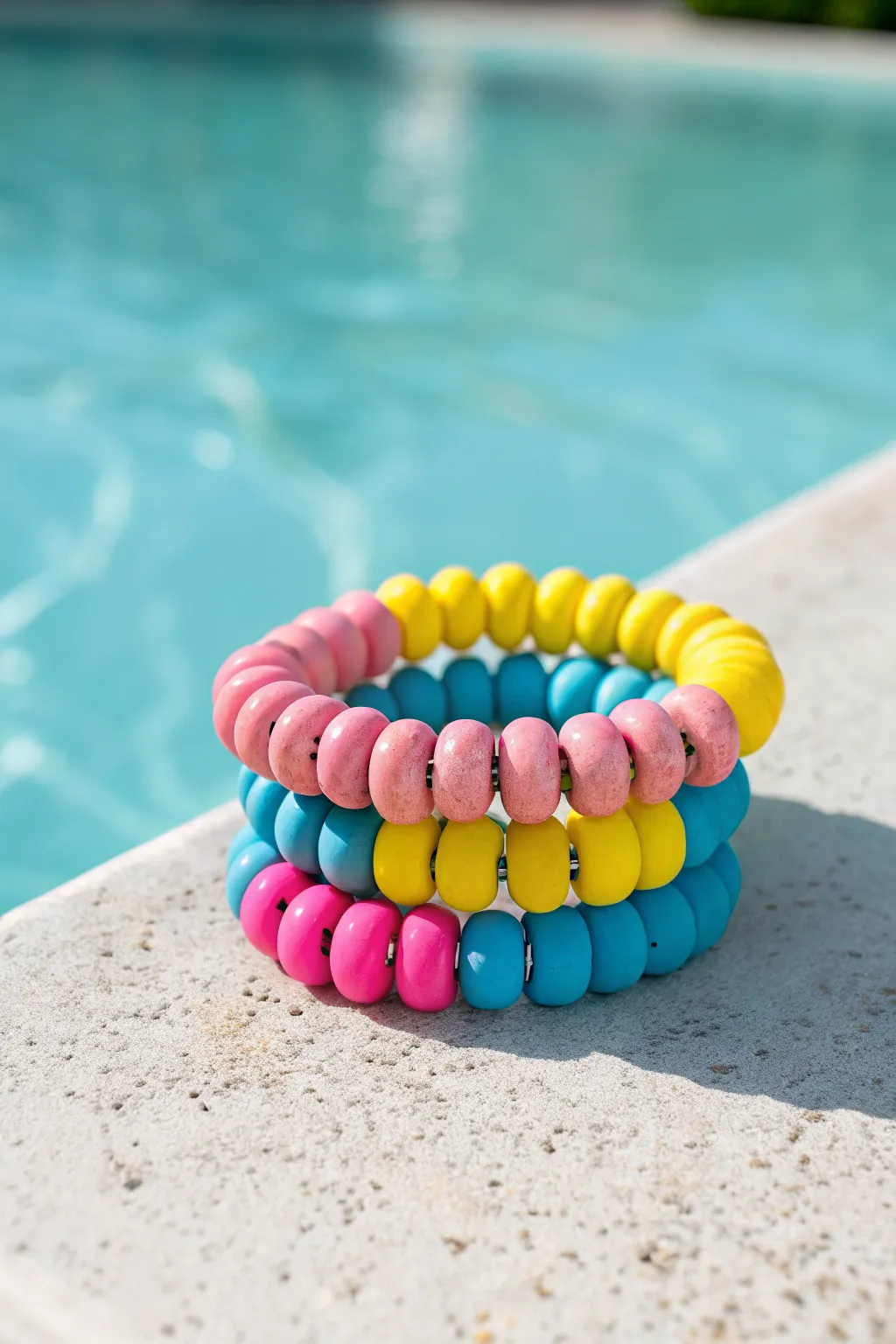
Capture the vibrant energy of summer with these bold, color-blocked disc bead bracelets. Featuring a trendy mix of hot pink, sunshine yellow, and pool blue, this stack is the perfect accessory for your next swim.
How-To Guide
Materials
- Polymer clay in hot pink, sunshine yellow, and bright blue
- Rolling pin or pasta machine
- Small round clay cutter (8-10mm)
- Small straw or toothpick (for piercing holes)
- Baking sheet and parchment paper
- Strong elastic cord (0.7mm or 0.8mm)
- Super glue or jewelry glue
- Scissors
- Ruler
- Oven
Step 1: Creating the Clay Beads
-
Condition the Clay:
Begin by warming up your polymer clay in your hands. Knead the pink, yellow, and blue clays separately until they are soft and pliable to prevent cracking. -
Roll Out Sheets:
Using a rolling pin or a pasta machine on a thick setting, roll each color of clay into a flat, even sheet. Aim for a thickness of about 4-5mm so the beads are chunky and durable. -
Cut the Shapes:
Take your small round cutter and press firmly into the clay sheets to cut out your circles. You will need approximately 25-30 discs per bracelet, depending on your wrist size. -
Smooth the Edges:
Gently pick up each clay circle and run your finger around the circumference to smooth out any rough edges or stray bits of clay. -
Pierce the Centers:
Use a small straw or a toothpick to poke a hole directly in the center of each disc. I prefer using a straw because it removes a clean core of clay rather than just pushing it aside. -
Shape the Beads:
After piercing, the pressure might have flattened the bead slightly. Gently reshape it with your fingers to ensure it maintains a nice, rounded doughnut shape.
Smooth Moves
Use a little cornstarch on your finger when smoothing the raw clay to prevent fingerprints from sticking to the surface.
Step 2: Baking and Assembly
-
Prepare for Baking:
Arrange all your pierced beads on a parchment-lined baking sheet. Make sure they aren’t touching each other to prevent them from fusing together. -
Bake the Clay:
Bake the beads in the oven according to the manufacturer’s instructions on your clay package. For most polymer clays, this is around 275°F (135°C) for 15-30 minutes. -
Cool Down:
Once baked, turn off the oven and let the beads cool completely before handling. They are fragile when hot but harden as they cool. -
Plan Your Pattern:
Lay out your cooled beads on a table to design your color blocking. For the top bracelet, try a half-and-half split of pink and yellow. -
Mix Up the Middle:
For the middle bracelet, create a more complex pattern, such as alternating sections of blue, yellow, and pink to tie the stack together. -
Design the Bottom:
Finish the set with a bold contrast for the third bracelet, utilizing large sections of hot pink and bright blue. -
Measure the Cord:
Cut a piece of elastic cord about 10 inches long for each bracelet. This extra length makes tying the knot much easier later. -
String the Beads:
Thread the beads onto the elastic cord following the patterns you laid out. Check the length against your wrist periodically to ensure a comfortable fit. -
Tie the Knot:
Once strung, tie the ends of the elastic together using a surgeon’s knot (looping the cord through twice before pulling tight) for extra security. -
Secure and Trim:
Apply a tiny dab of super glue directly onto the knot. Allow it to dry completely, then trim the excess cord close to the knot. -
Hide the Knot:
Gently pull adjacent beads over the knot to hide it inside one of the bead holes, giving your bracelet a seamless, professional finish.
Texture Twist
Before baking, lightly press a piece of coarse sandpaper onto the clay surface to give your beads a matte, stone-like texture.
Stack them up and head out into the sun to show off your new accessories
Ocean Blues Ombre Bracelet
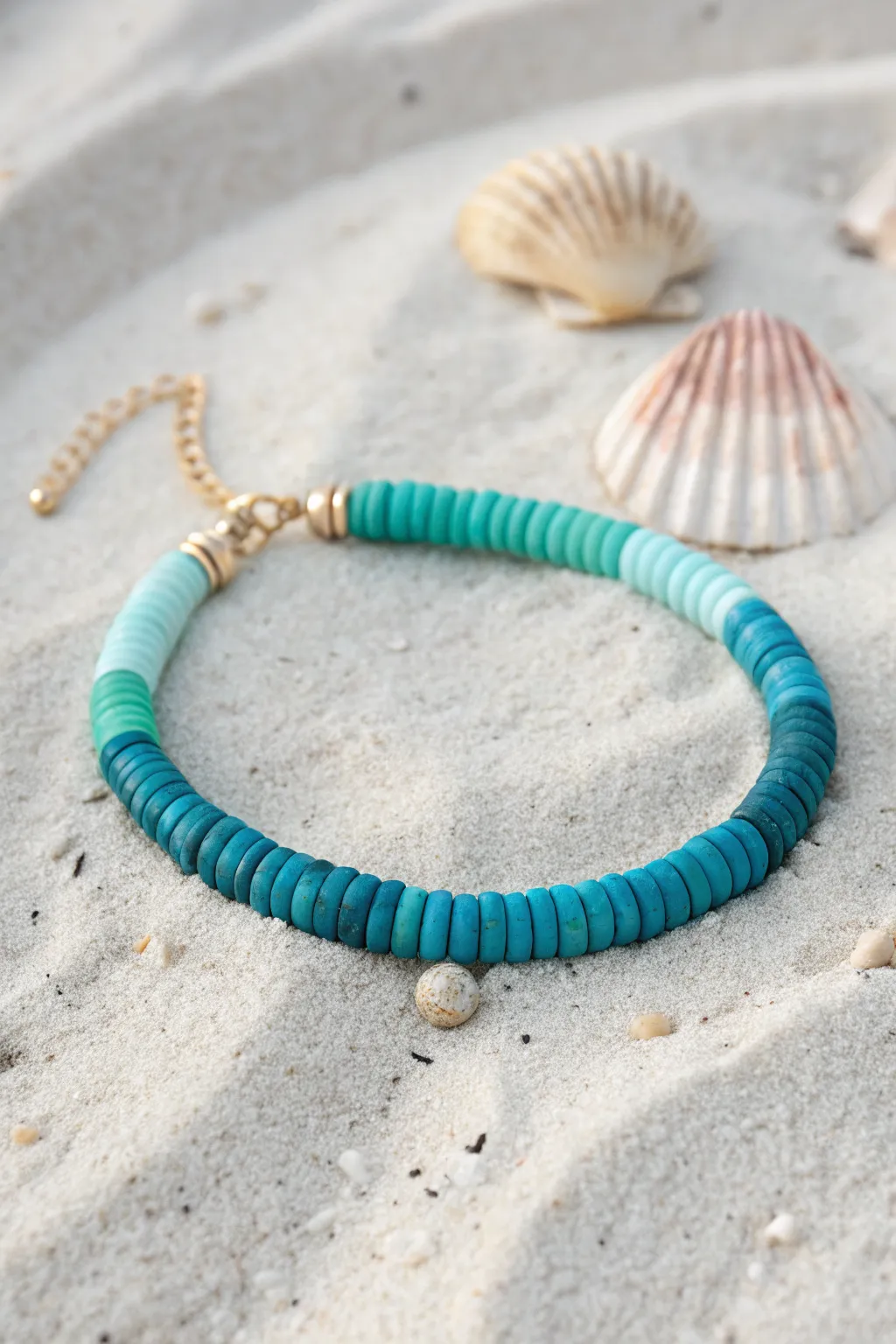
Capture the serene hues of seaside waves with this beautiful clay bead bracelet. Featuring a soothing gradient of turquoise, teal, and soft mint, this beach-ready accessory uses flat heishi beads to create a sleek, textured look perfect for summer styling.
Detailed Instructions
Materials
- 6mm flat clay heishi beads (Dark Turquoise)
- 6mm flat clay heishi beads (Medium Teal)
- 6mm flat clay heishi beads (Light Mint/Aqua)
- 1 small round accent bead (textured stone or ceramic, approx. 4mm)
- Gold tone crimp covers (2)
- Gold tone jump rings (2)
- Gold tone lobster clasp
- Gold tone extender chain
- Clear elastic beading cord or strong beading wire (0.5mm)
- Crimp beads
- Jewelry pliers (chain nose and flat nose)
- Scissors or wire cutters
Step 1: Planning the Pattern
-
Measure your wrist:
Before cutting any cord, measure your wrist to determine the total length needed. A standard bracelet is about 7 inches, but aiming for 6.5 inches of beads plus the clasp assembly usually works well. -
Sort your gradient:
Lay out your bead colors on a bead board or soft cloth. This design relies on distinct color blocking: a long section of dark turquoise, followed by medium teal, then a lighter mint. -
Determine the accent point:
Locate where you want your small stone accent bead to sit. In the reference image, it’s placed centrally within the darkest turquoise section, creating a subtle focal point.
Smooth Transitions
To soften the lines between color blocks, mix 2-3 beads of the new color in with the last few beads of the previous color.
Step 2: Stringing the Ombre
-
Prepare the cord:
Cut a piece of beading wire or elastic cord about 10 inches long to give yourself plenty of room to work with the ends. -
Start the dark section:
Begin stringing your Dark Turquoise heishi beads. Thread on approximately 1.5 inches of these beads. -
Add the accent bead:
Slide on your single small round stone accent bead. This breaks up the texture nicely. -
Continue the dark section:
Add another 1.5 inches of the same Dark Turquoise beads to mirror the first section. -
Transition to teal:
Switch to your Medium Teal beads. Thread on about 1.5 to 2 inches of this color. Grouping them solidly creates that bold color-blocked effect rather than a mixed pattern. -
Finish with mint:
Complete the beading pattern with the Light Mint/Aqua beads for the final remaining inches needed to reach your desired length.
Step 3: Attaching the Hardware
-
Secure the first end:
Slide a crimp bead onto one end of the wire, followed by a jump ring or the loop of your extender chain. Thread the wire back through the crimp bead. -
Crimp firmly:
Use your pliers to flatten the crimp bead securely against the wire, locking the loop in place. Trim the excess wire tail close to the crimp. -
Cover the crimps:
Place a gold crimp cover over the flattened crimp bead. Gently squeeze it shut with pliers so it looks like a round gold bead, hiding the mechanical connection. -
Secure the second end:
Repeat the crimping process on the other end of the bracelet. Slide on a crimp bead, then your lobster clasp. Thread back through, pull tight so there are no gaps in the beads, and flatten the crimp. -
Add the final cover:
Apply the second crimp cover over this end’s crimp bead. I like to double-check that the beads aren’t too stiff before fully tightening this side; a little wiggle room helps the bracelet drape comfortably.
Make It a Set
Create a matching necklace using the same color blocking, or make stackable bracelets in single solid colors to wear alongside.
Now you have a stunning piece of jewelry that captures the essence of a beach day

The Complete Guide to Pottery Troubleshooting
Uncover the most common ceramic mistakes—from cracking clay to failed glazes—and learn how to fix them fast.
Sunset Gradient Stack
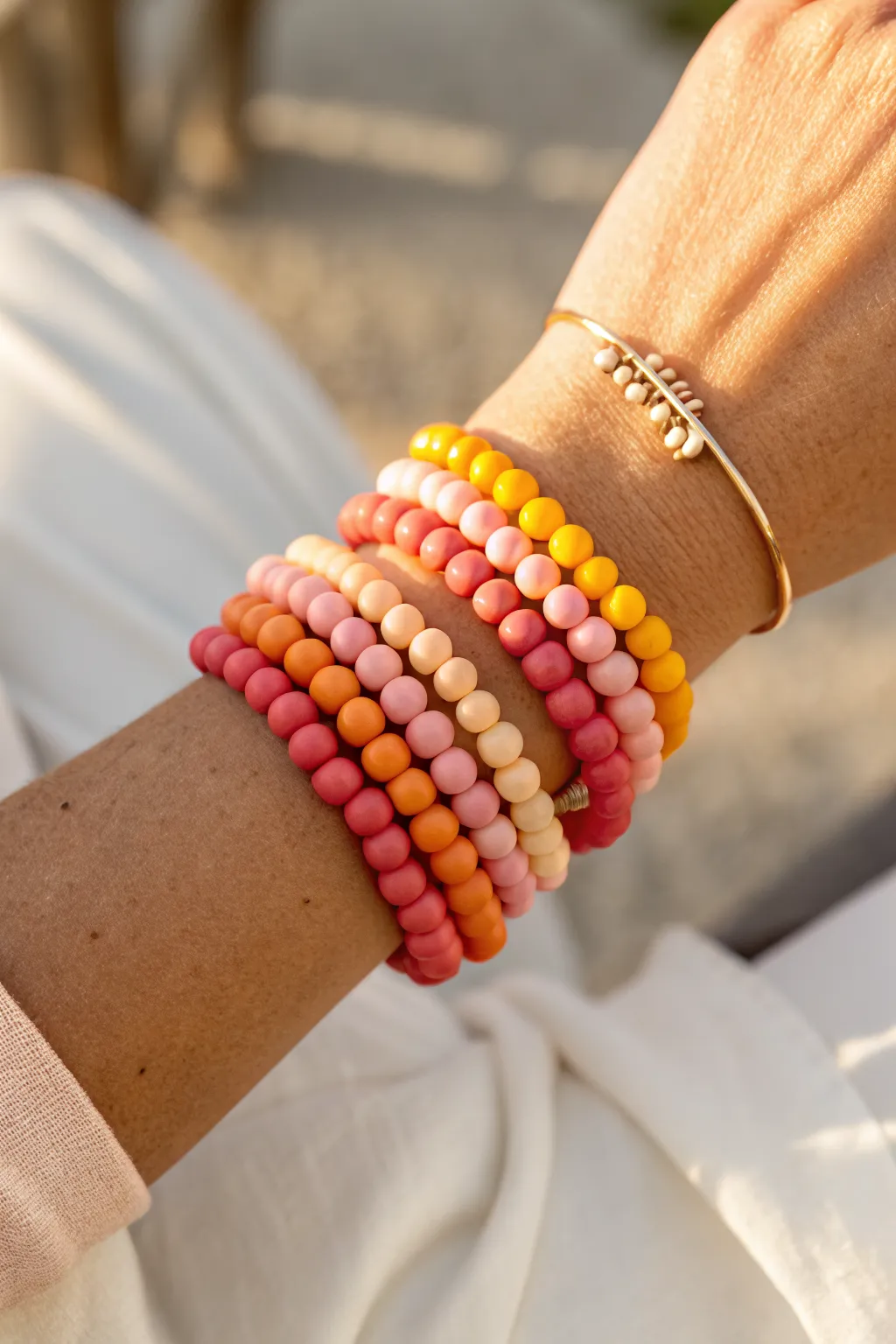
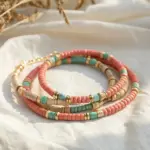
Capture the golden hour on your wrist with this stunning set of beaded bracelets featuring a warm, ombre palette. The combination of matte clay beads in graduated citrus and berry tones creates a cheerful, summery accessory that looks great stacked or worn singly.
Step-by-Step Tutorial
Materials
- 6mm round polymer clay beads in: deep magenta, coral pink, light peach, cream/off-white, bright orange, and sunshine yellow
- 0.8mm clear elastic cord (stretchy string)
- Gold wire bangle blank (optional, to mimic the metal accent bracelet)
- Small white seed beads and gold wire (if engaging in the bangle creation)
- Super glue or jewelry cement
- Scissors
- Bead stopper or masking tape
- Ruler or measuring tape
Step 1: Planning the Gradient
-
Measure your wrist:
Wrap a measuring tape comfortably around your wrist where you want the bracelets to sit. Add about half an inch to this measurement to ensure the fit isn’t too tight. -
Sort your palette:
Lay out your bead strands on a flat surface or bead mat. Arrange them in a color order that mimics a sunset: deep magenta, coral, orange, yellow, and cream. Seeing them side-by-side helps visualize the final stack. -
Group your designs:
Decide on the pattern for each individual bracelet. The photo shows four distinct beaded strands: one mostly magenta/pink, one orange/coral mix, one ombre striping, and one yellow/cream mix.
Step 2: Stringing the Solid & Mixed Strands
-
Cut the elastic:
Cut five lengths of elastic cord, each about 10-12 inches long. This extra length makes tying the knots much easier later. Secure one end of each cord with a bead stopper or a piece of tape. -
Create the magenta base:
For the darkest bracelet at the bottom of the stack, string your deep magenta beads. Thread enough beads to match your wrist measurement. -
Build the coral strand:
Start the second bracelet using bright orange beads. To soften the look, I like to intersperse a few lighter peach beads every inch or so to create texture. -
Design the ombre stripe:
This middle bracelet connects the colors. Alternate between your light pink, cream, and yellow beads. You can do a pattern like ‘two pink, one cream, two yellow’ to blend the transition. -
Finish with sunshine:
For the top clay bracelet, string primarily yellow beads. Add small clusters of cream or white beads to mimic light reflecting off the sun. -
Check the lengths:
Hold all four strung cords up to your wrist to ensure they are the same length and fit comfortably before knotting.
Knot Slipping?
If the elastic feels too slick to hold a knot, dab the cord ends with a little clear nail polish or glue before you start tying. The tackiness helps grip.
Step 3: Securing the Knots
-
Pre-stretch the cord:
Gently pull on the ends of your elastic for each bracelet. This pre-stretching prevents the bracelets from sagging or stretching out permanently after the first wear. -
Tie a surgeon’s knot:
Remove the tape. Cross the ends like a normal overhand knot, but loop the tail through twice instead of once. Pull tight. -
Reinforce the knot:
Tie a second standard overhand knot on top of the surgeon’s knot for extra security. -
Apply adhesive:
Place a tiny dot of super glue or jewelry cement directly onto the knot. Let it dry completely for a few minutes. -
Trim the excess:
Once dry, use your scissors to snip the excess elastic ends close to the knot. If the beads comprise large enough holes, try to slide a bead over the knot to hide it.
Make it Luxe
Swap out random clay beads for gold spacers or gold-filled balls throughout the stack. It adds a high-end sparkle that elevates the casual clay look.
Step 4: Bonus: The Gold Accent Bangle
-
Prepare the bangle:
Take your gold open bangle wire. If it has a clasp, open it up. -
Wrap the charm:
Cut a 3-inch piece of thin gold crafting wire. Wrap it tightly around the bangle wire three times to anchor it. -
Add tiny beads:
Thread 5-7 tiny white seed beads onto the crafting wire. Bend the wire into a small arch and wrap the end tightly around the main bangle again to secure the loop.
Slide on your new stack of bracelets and enjoy the warm, golden vibes all year round
Shell Charm Centerpiece
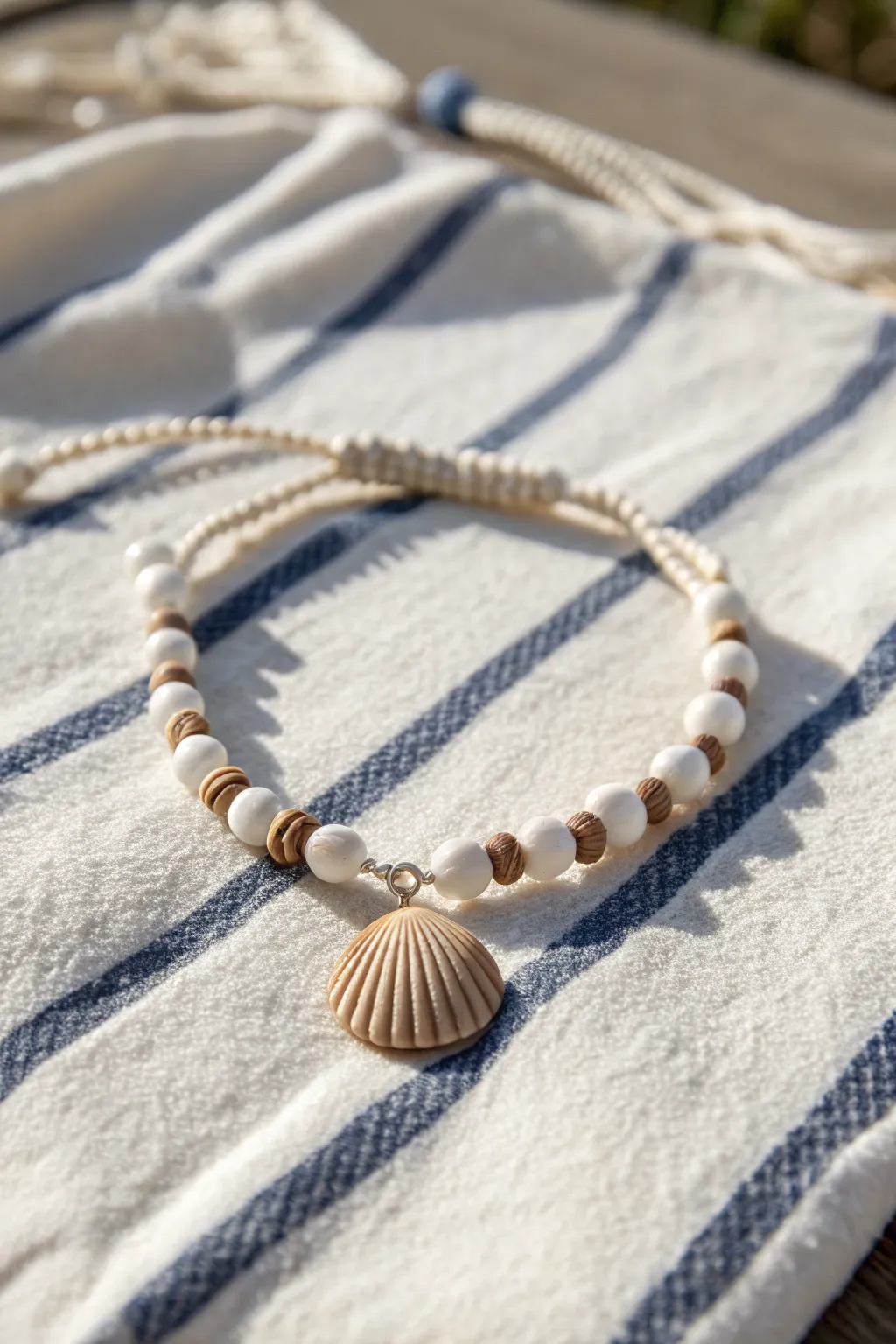
Capture the essence of a tranquil beach day with this beautiful handmade bracelet featuring a central shell charm. Its alternating pattern of crisp white beads and rustic brown spacers creates a classic nautical look perfect for any summer outfit.
Step-by-Step Guide
Materials
- White nylon or waxed cotton cord (approx. 1mm thick)
- White round beads (6-8mm, ceramic or polymer clay)
- Small textured wood saucer beads or brown heishi beads
- Real or resin scallop shell charm with a loop
- Silver jump ring (6mm)
- Scissors
- Lighter or clear craft glue (for sealing knots)
- Tape or a clipboard
Step 1: Preparation
-
Cut the Cord:
Cut a single length of your white cord, measuring approximately 24 inches. This generous length allows plenty of room for knotting the adjustable closure later. -
Prepare the Charm:
If your shell charm doesn’t have a jump ring attached, open a 6mm silver jump ring using two pliers. Slide the shell’s loop onto it and close it securely. -
Secure Your Workspace:
Tape one end of your cord to a table or secure it in a clipboard. Leave about 4-5 inches of tail creating the first knot to start your beading section.
Step 2: Stringing the Pattern
-
Start the Sequence:
Begin stringing your beads. The pattern starts with one white round bead followed by one flat wooden spacer bead. Repeat this specific sequence until you have about 2-3 inches of beadwork. -
Center the Shell:
Once you reach the middle, slide one final white bead on. Now, thread your cord through the jump ring attached to your shell charm so it hangs freely. -
Mirror the Design:
Immediately follow the shell charm with another white bead to flank it symmetrically. This creates a focal point where the shell sits nestled between two white spheres. -
Finish the Beading:
Continue your pattern in reverse order or simply resume the alternating sequence: wooden spacer, white bead, wooden spacer. Continue until this side matches the length of your first side. -
Check the Fit:
Wrap the beaded section around your wrist to check the size. The beads should cover the top and sides of your wrist, leaving a gap underneath for the closure mechanism. -
Secure the End:
Tie a simple overhand knot snugly against the last bead to lock everything in place. Ensure there is no slack in the strung section.
Knot Slipping?
If your square knots slide too easily, use unwaxed hemp cord instead of satin nylon. The rougher texture grips better, holding the size adjustment in place securely.
Step 3: The Macramé Closure
-
Form the Circle:
Bring the two leftover cord tails together, overlapping them parallel to each other. Temporarily use a small piece of tape or a helping hand to hold them side-by-side. -
Cut a Clasp Cord:
Cut a fresh piece of cord, about 10-12 inches long. This will be used to tie the sliding macramé knot. -
Start the Square Knots:
Slide this new cord under the two overlapped tails. Tie a square knot (macramé technique) around both tails. This acts as the sliding mechanism. -
Build the Slide:
Continue tying square knots until you have a closure section about 0.5 to 1 inch long. I find about 8-10 knots usually provide a sturdy grip. -
Seal the Knot:
Trim the excess ends of the knotting cord (not the bracelet tails!) very close to the knots. Carefully melt the tips with a lighter or use a dab of glue to prevent unraveling.
Level Up: Ombré Effect
Replace the uniform white beads with a gradient of clay beads, fading from deep ocean blue near the clasp to white near the shell for a tide-like effect.
Step 4: Finishing Touches
-
Detail the Tails:
Slide one small bead onto the end of each trailing tail cord. This adds a finished look and prevents the cord from slipping out of the closure. -
Final Knots:
Tie a knot at the very end of each tail to secure those end beads. Make sure the tails are even in length when the bracelet is fully expanded. -
Trim and Clean:
Snip off any final excess cord bits and give your shell charm a quick polish.
Slip on your new beachy accessory and enjoy the summer vibes it brings to your wrist.

What Really Happens Inside the Kiln
Learn how time and temperature work together inside the kiln to transform clay into durable ceramic.
Starfish-Inspired Charm Bracelet
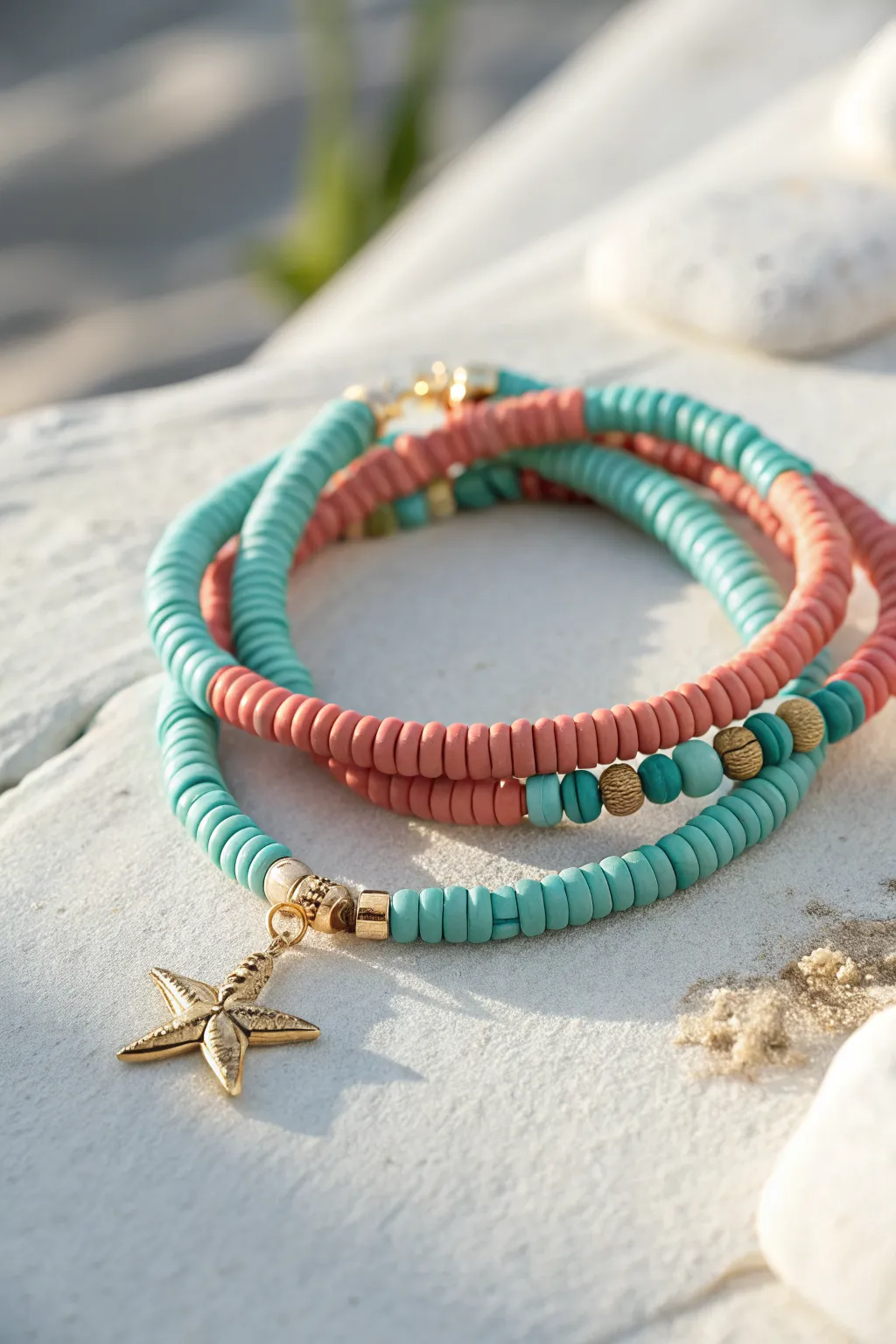
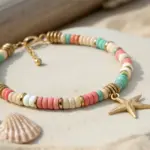
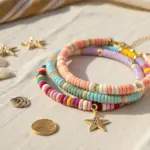
Capture the essence of a beach day with this vibrant multi-strand bracelet featuring clay heishi discs in turquoise and coral. The look is elevated with warm gold accents and a dangling starfish charm that screams summer style.
Detailed Instructions
Materials
- Turquoise polymer clay heishi beads (6mm)
- Coral/salmon pink polymer clay heishi beads (6mm)
- Small gold textured spacer beads (round)
- Gold tube spacer beads or crimp covers
- Gold starfish charm with a jump ring
- Gold bead tips or clam shell covers
- Strong elastic cord (0.8mm Recommended)
- Jewelry glue or clear nail polish
- Small pliers
- Scissors
Step 1: Preparation & Planning
-
Measure your wrist:
Wrap a measuring tape loosely around your wrist to determine the length needed. Add about half an inch to ensure a comfortable fit, especially since this is a layered style. -
Pre-stretch the elastic:
Cut a piece of elastic cord about 10-12 inches long. Before beading, give the elastic a few gentle tugs to pre-stretch it; this prevents the bracelet from loosening up after you wear it a few times. -
Secure the end:
Place a piece of tape or a bead stopper on one end of your elastic cord to keep your beads from sliding off while you work.
Knot Slipping?
If your elastic knot won’t stay tight, try tying the knot while the elastic is stretched taut. The tension helps it grip itself better before gluing.
Step 2: Strand 1: The Turquoise Wave
-
Begin the pattern:
Start threading the turquoise heishi beads onto the elastic. These flat discs nest together perfectly, so you’ll need quite a few to build length. -
Add gold accents:
Every 2 inches or so, interrupt the turquoise flow by adding a gold textured round bead, followed by three turquoise discs, and another gold bead. This adds a nice visual break. -
Focus on the center:
Once you reach the halfway point of your measured length, slide on a gold tube spacer or a larger gold bead with a loop to act as the carrier for your charm later. -
Finish the strand:
Continue the turquoise pattern until you reach your desired length, mirroring the gold accents you placed on the first half.
Creative Twist
Swap the gold starfish for a real seashell with a small hole drilled in it for an authentic, beach-comber vibe.
Step 3: Strand 2: The Coral Reef
-
Start the second cord:
Prepare a second piece of elastic just like the first. This strand will primarily feature the coral-colored beads. -
Create a color block (Optional):
For the look in the image, you can actually create one long wrap bracelet or two separate ones. If making a wrap style, switch from turquoise to coral beads after completing the first full wrist length. -
Mix in turquoise details:
As you bead the coral section, occasionally intersperse a single turquoise bead sandwiched between two gold spacers to tie the color palette together. -
Check fit:
Periodically wrap the strands around your wrist to ensure they sit comfortably together without pinching or drooping.
Step 4: Assembly & Finishing
-
Attach the charm:
Use your pliers to open the jump ring on the starfish charm. Hook it onto the center gold element of your turquoise strand and close the ring securely. -
Tie the knots:
Remove the tape/stopper. Bring the ends of the elastic together and tie a surgeon’s knot (loop it through twice before pulling tight). -
Secure with glue:
Dab a tiny drop of jewelry glue or clear nail polish onto the knot. I usually let this dry for a few minutes before trimming the excess cord. -
Hide the knot:
If possible, gently tug the elastic so the knot slides inside one of the larger gold beads or the bead tip to conceal it for a professional finish.
Slip on your new creation and enjoy the breezy coastal vibes wherever you go
Pearls and Clay Beachy Mix
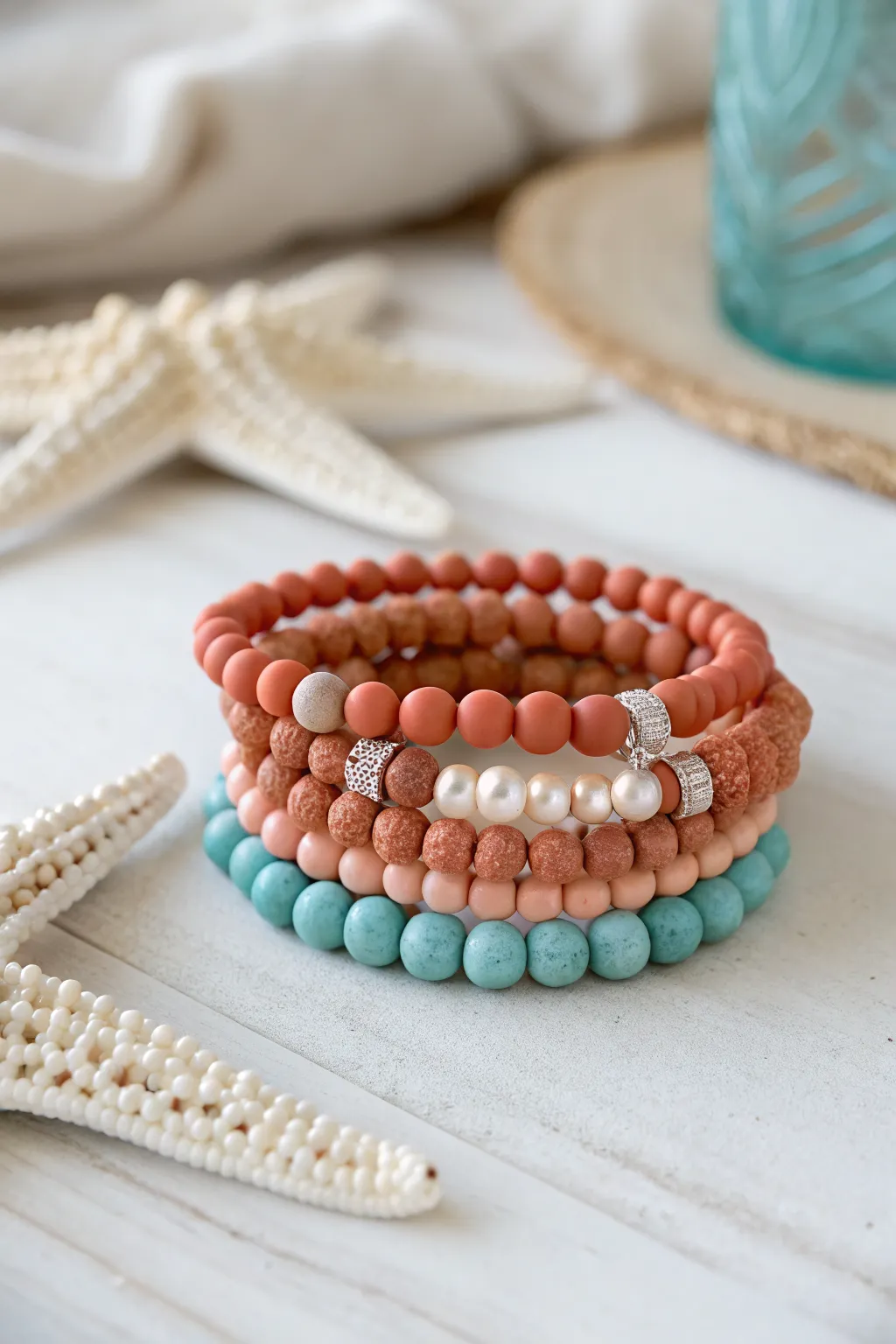
Embrace the effortless vibes of a seaside escape with this stunning mixed-media bracelet stack. Combining the rustic warmth of terracotta polymer clay with the elegance of freshwater pearls and cool turquoise tones creates a perfectly balanced summer accessory.
Step-by-Step
Materials
- Polymer clay in Terracotta/Rust
- Polymer clay in Peach/Light Coral
- Polymer clay in Turquoise/Teal
- Granite or speckled polymer clay (or coarse sand for texture)
- Freshwater pearls (approx. 4-6 beads)
- Elastic jewelers cord (0.8mm or 1mm)
- Silver rhinestone spacer beads (barrel or rondelle style)
- Bead roller tool (optional but helpful for uniform size)
- Toothpick or bead piercing pin
- Superglue or specialized jewelry knot cement
- Baking tile or parchment paper
- Oven
Step 1: Crafting the Clay Beads
-
Condition the Clay:
Begin by thoroughly conditioning your terracotta, peach, and turquoise polymer clays separately until they are soft and pliable. Warm clay prevents cracking during the rolling process. -
Mix the Textured Stone Clay:
For the textured bracelet, mix a small amount of granite-effect clay or actual coarse sand into your terracotta clay. Knead it well until the texture is evenly distributed, giving it that porous, lava-rock appearance. -
Roll the Smooth Terracotta Beads:
Pinch off small, equal-sized pieces of the plain terracotta clay and roll them into smooth spheres between your palms. Aim for a unified size, roughly 6mm to 8mm in diameter. -
Form the Turquoise Beads:
Repeat the rolling process with the turquoise clay. To mimic the look of natural turquoise stone, you can lightly gently press a piece of coarse sandpaper against the surface before baking for a matte finish. -
Create the Peach & Texture Beads:
Roll your peach clay into smooth spheres. Then, roll your textured terracotta mix into slightly larger, rougher spheres to serve as the focal points of the middle bracelet. -
Pierce the Beads:
Using a bead piercing pin or a toothpick, carefully create a hole through the center of each bead. I find twisting the pin gently as you push through prevents the bead from squishing out of shape. -
Bake the Components:
Arrange all your clay beads on a baking tile or parchment-lined tray. Bake according to the manufacturer’s instructions (usually 275°F/135°C for 15-30 minutes) and allow them to cool completely before handling.
Keep Them Round
To stop beads from flattening while baking, bake them on a bed of cornstarch or accordion-folded cardstock. This suspends them slightly.
Step 2: Assembling the Stack
-
Measure Your Cord:
Cut four lengths of elastic cord, making sure each is about 3-4 inches longer than your wrist circumference to allow ample room for tying knots. -
String Bracelet One (Top):
Thread your smooth terracotta beads onto the first cord. In the center, add a single silver rhinestone barrel spacer and perhaps a lighter accent bead to break up the color block. -
String Bracelet Two (The Mix):
This is the star of the show. Thread on your textured terracotta beads, but leave space in the exact center. In that center gap, thread 4-5 freshwater pearls flanked by silver rhinestone spacers. -
String Bracelet Three (Peach):
Create a simple, uniform strand using your peach-colored clay beads. This softer layer helps bridge the gap between the dark rust and the bright turquoise. -
String Bracelet Four (Turquoise):
Thread the turquoise beads onto the final cord. The cool tone provides a necessary pop of contrast against the warm earth tones of the other layers. -
Pre-Stretch the Elastic:
Before tying, give each bracelet a firm but gentle pull. This ‘pre-stretching’ helps prevent the elastic from loosening up the first time you wear it. -
Secure with Knots:
Tie off each bracelet using a surgeon’s knot (right over left, left over right, and loop through an extra time). Pull tight. -
Cement and Hide:
Place a tiny drop of jewelry cement or superglue on the knot. Once dry, trim the excess cord and gently tuck the knot inside one of the adjacent beads if the hole allows.
Make it Scented
Use unglazed terracotta or wood for the textured beads. Add a drop of essential oil to them for a diffuser bracelet that smells like summer.
Slip on your new stack and enjoy the compliments you’ll get on this handmade coastal collection

TRACK YOUR CERAMIC JOURNEY
Capture glaze tests, firing details, and creative progress—all in one simple printable. Make your projects easier to repeat and improve.
Gold Spacer Pop Bracelet
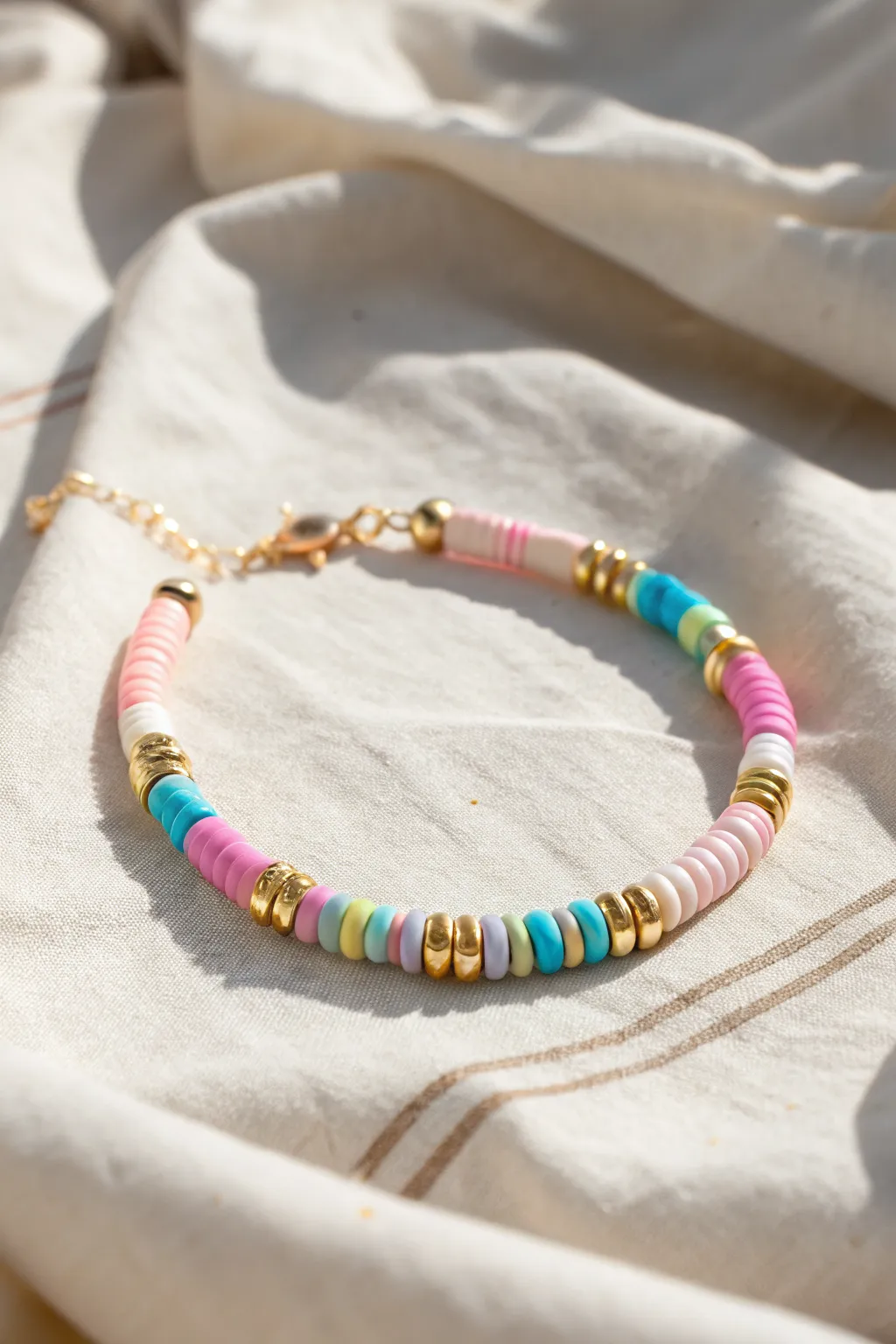
Elevate your summer jewelry collection with this sophisticated yet playful design that mixes soft pastel clay discs with striking gold accents. The repeating gold spacers add a structured rhythm to the colorful bead segments, giving it a polished look perfect for stacking or wearing solo.
Step-by-Step Tutorial
Materials
- 6mm heishi clay beads in assorted pastel colors (light pink, hot pink, turquoise, mint green, lavender, yellow, white)
- 4mm or 6mm gold plated disk spacer beads
- Gold plated crimp beads (2mm)
- Gold plated wire guards (optional but recommended)
- Gold plated lobster clasp
- Gold plated extension chain (50mm)
- Gold plated jump rings (5mm)
- Beading wire (0.38mm or 0.45mm)
- Wire cutters
- Flat nose pliers
- Crimping pliers
Step 1: Preparation and Start
-
Measure and Cut:
Begin by measuring your wrist. Cut a length of beading wire that is roughly 4 inches longer than your wrist measurement to allow plenty of room for crimping and handling. -
Secure the End:
String a crimp bead onto one end of the wire, followed by a wire guard if you are using one. If using a wire guard, loop the wire through it; if not, simply create a loop. -
Finish the Loop:
Feed the tail of the wire back through the crimp bead. Use your crimping pliers to flatten the crimp bead securely, ensuring the loop is tight but still has movement. Trim the excess short tail wire carefully. -
Attach Hardware:
Open a jump ring using your flat nose pliers and attach the extension chain to the loop you just created. Close the jump ring securely.
Step 2: Beading the Pattern
-
First Gold Anchor:
Start your pattern by sliding on one gold disk spacer bead. This will sit right against your crimp bead to hide the wire connection slightly. -
Pink Segment:
Thread on approximately 8-10 light pink heishi beads. I like to visually check the length; this segment should be about 1 centimeter long. -
Gold Transition:
Add a single gold spacer bead, followed by one white heishi bead, then two gold spacer beads stacked together. This creates a chunky metallic focal point. -
Turquoise Accent:
Add a small pop of color with 3-4 turquoise heishi beads, followed immediately by another gold spacer. -
Mixed Pastel Section:
Create a longer, varied section. Thread on a pattern like: 5 hot pink beads, 2 gold spacers, 1 white bead, 1 pink bead, and 2 more gold spacers. -
Central Rhythm:
Now, establish the central visual pattern visible in the photo. String alternating colors separated by varying numbers of gold spacers. Try: 3 yellow, 1 gold, 3 green, 1 gold, 3 blue. -
The Gold Cluster:
Create the signature ‘pop’ by adding a cluster of three gold spacers in a row. Follow this with a single lavender bead, then another cluster of three gold spacers. -
Continuing the Flow:
Resume the color blocking. Add 3 yellow beads, 1 gold spacer, then 3 blue beads. Keep the tension consistent but not too tight so the bracelet stays flexible. -
Symmetry Check:
As you near the end of the wire, try to mirror the weight of the beginning. Finish with a segment of pink or white beads similar in length to your starting section. -
Final Bead:
End the beading process with one final single gold spacer bead to cap off the design.
Stiff Bracelet?
If your bracelet feels rigid or kinks like a stick, you’ve strung the beads too tightly. Before the final crimp, curve the bracelet into a circle to ensure the beads settle with the correct ease.
Step 3: Finishing Touches
-
Crimp the End:
Thread a crimp bead onto the remaining wire tail, followed by a wire guard (or just make a loop). -
Secure the Loop:
Pass the wire back through the crimp bead and pull it tight, ensuring there is no slack in the beads but enough room for them to wiggle. -
Final Trim:
Flatten the crimp bead with your pliers. Thread the excess wire tail back through the last few beads for extra security before trimming it flush with your cutters. -
Clasp Attachment:
Open a jump ring, slide on the lobster clasp, and attach it to your final wire loop. Close the jump ring firmly to complete your bracelet.
Level Up: Texture
Swap the smooth gold spacers for faceted or ‘stardust’ finish metal beads. This catches the sunlight differently and adds a subtle sparkle that looks high-end against the matte clay.
Enjoy the satisfying weight and shine of your new custom accessory
Cute Summer Word Letter Beads
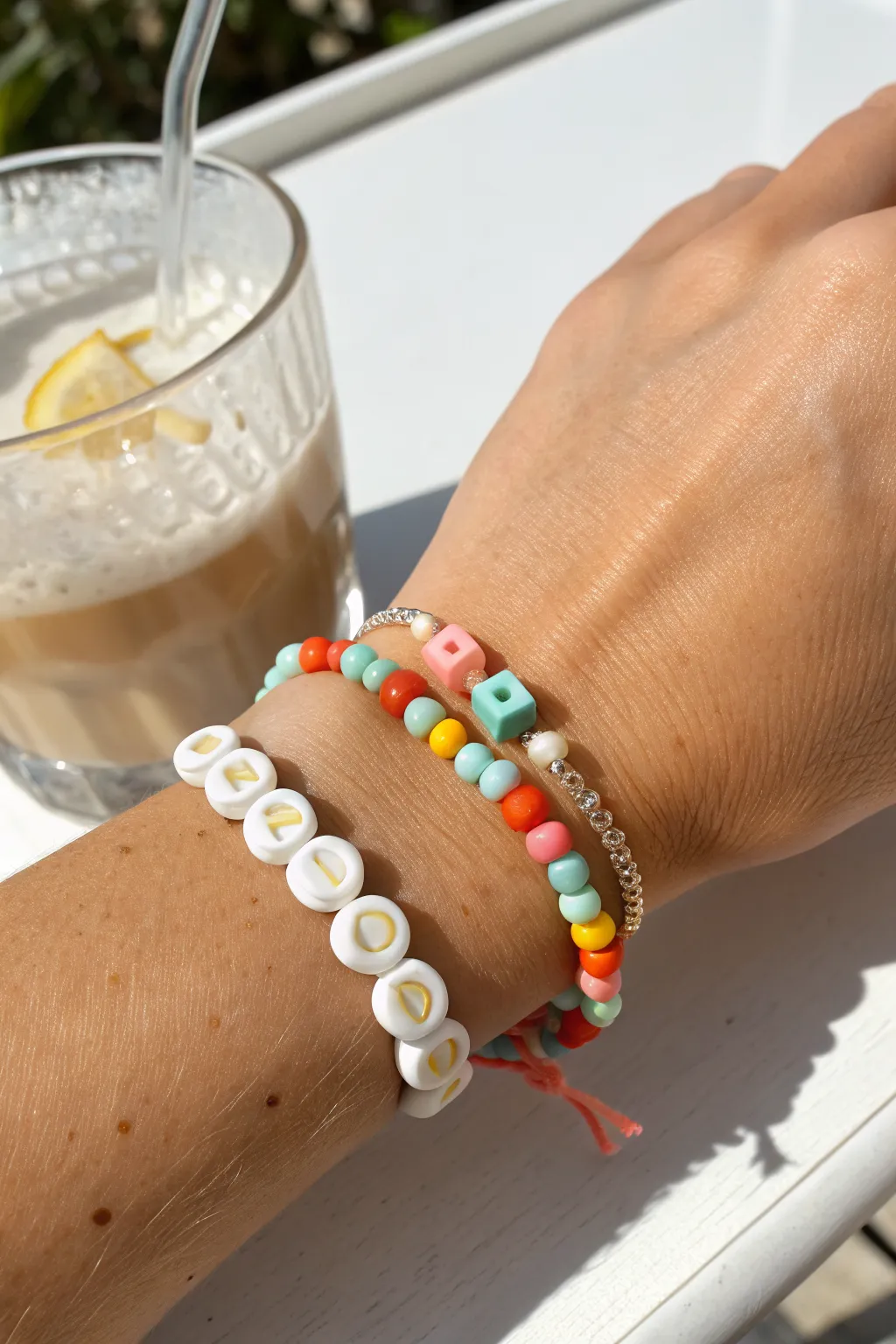
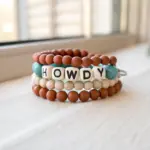
Capture the effortless vibe of summer with this duo of handmade bracelets featuring a playful word bracelet and a colorful beaded strand. The combination of chunky white lettering and bright, candy-colored clay beads creates a personalized stack that looks perfect next to an iced coffee.
Detailed Instructions
Materials
- Elastic stretch cord (0.8mm or 1mm thickness)
- White round alphabet beads (with gold or yellow lettering)
- 6mm Polymer clay heishi or round beads (in coral, sunny yellow, turquoise, mint, and white)
- Two square/cube accent beads (pink and teal)
- Small gold space beads (2-3mm)
- Jewelry glue or clear nail polish
- Scissors
- Bead stopper or masking tape
- Optional: Thin gold chain bracelet for layering
Step 1: Planning Your Stack
-
Measure your wrist:
Before cutting any cord, wrap a measuring tape around your wrist to find your size. Add about 3-4 inches to this measurement to ensure you have plenty of extra room for tying secure knots later. -
Choose your word:
Decide on the word or phrase for your first bracelet. The example uses ‘LEMONADE’ in a subtle yellow-on-white palette, but any summer-inspired word works well here. -
Lay out the design:
Using a bead design board or a soft towel, lay out your letters first. Then, flank them with plain white disc beads or round beads until you reach your desired length.
Step 2: The Monogram Bracelet
-
Secure the cord end:
Cut your elastic cord to size. Attach a bead stopper or simply place a piece of masking tape on one end so your beads don’t slide off while you work. -
String the beads:
Thread your beads onto the elastic, starting with half of the plain white spacer beads. Adding the letter beads in the correct order comes next, followed by the remaining white spacers. -
Check the fit:
Wrap the unfinished strand around your wrist to check the sizing. Because the alphabet beads are chunky, you might need slightly more length than usual for a comfortable fit. -
Tie the knot:
Remove the tape and bring the ends together. Tie a surgeon’s knot (looping the elastic through twice before pulling tight) to secure the bracelet. Pull firmly to ensure the knot holds. -
Secure and trim:
Dab a tiny drop of jewelry glue on the knot. Let it dry completely before trimming the excess elastic tails close to the bead.
Knot Slipping?
If your elastic knots keep slipping undone, stretch the cord firmly *before* stringing beads. Pre-stretching prevents the elastic from relaxing later and loosening your secure knot.
Step 3: The Colorful Accent Bracelet
-
Design the pattern:
For the second bracelet, you’ll want a random, confetti-style mix. Creating an asymmetrical pattern often looks best; try grouping 2-3 beads of the same color (like coral or yellow) before switching to a new shade. -
Center the focal beads:
Identify the center point of your design. Place your two square cube beads (pink and teal) here to act as a modern focal point amidst the round beads. -
Incorporate gold accents:
To elevate the look, slip a small gold spacer bead between sections of color every inch or so. I find this adds just enough shine to make the jewelry look polished rather than childish. -
String the colorful strand:
Thread your mix of turquoise, coral, yellow, and mint beads onto a new piece of elastic cord, following your laid-out pattern. -
Final sizing check:
Test the bracelet against your wrist again. This one should sit comfortably alongside the letter bracelet without feeling too tight or bunching up. -
Finalize the second bracelet:
Tie off this strand using the same surgeon’s knot method. Apply glue to the knot and let it set. -
Hide the knot:
If possible, gently tug the elastic so the knot slides inside the hole of one of the larger beads to hide it from view.
Mix Your Textures
For a pro look, mix bead finishes. Combine matte polymer clay discs with glossy glass seed beads or pearlescent accents to add depth and visual interest to your wrist stack.
Slip on your new stack with a simple gold chain to complete this sunny, personalized look
Lemonade-Inspired Yellow and White
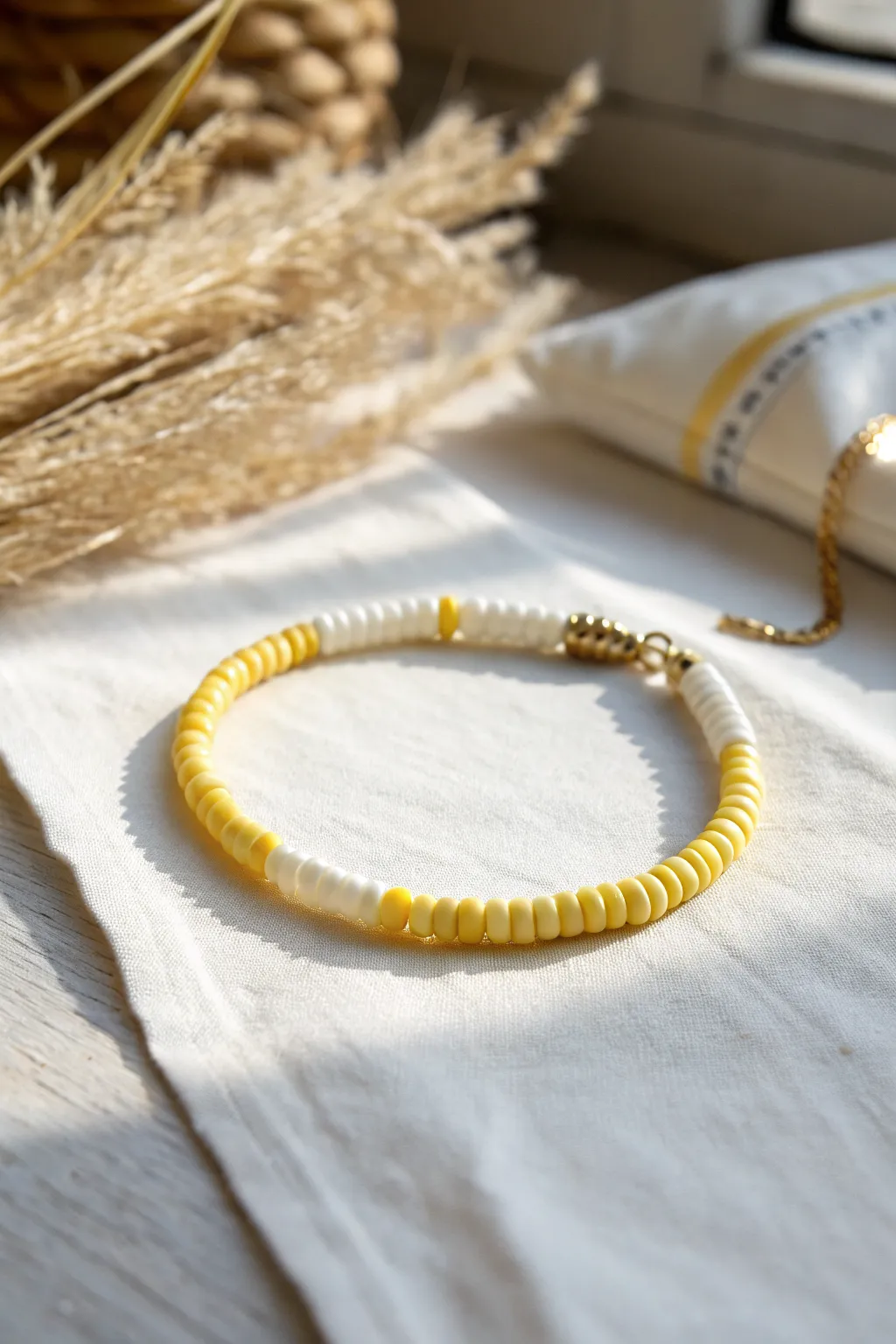
Brighten up your summer wardrobe with this refreshing blend of buttery yellow and crisp white clay beads. The alternating blocks of color mimic the look of fresh lemonade stands and sunny afternoons, creating a stackable accessory that feels both modern and timeless.
Step-by-Step
Materials
- Lemon yellow polymer clay
- White polymer clay
- Elastic stretch cord (0.8mm)
- Clay extruder (optional but helpful)
- Tissue blade or craft knife
- Needle tool or toothpick
- Oven and baking sheet
- Parchment paper
- Super glue or jewelry cement
- Gold crimp bead cover (optional)
- Two jewelry pliers (if using crimp covers)
Step 1: Creating the Clay Canes
-
Condition the Clay:
Start by warming the lemon yellow and white polymer clays in your hands separately. Knead them until they are soft, pliable, and free of any cracks. -
Roll the Logs:
Roll each color into a smooth, even snake. Aim for a diameter of about 4-5mm for chunky, visible beads like the ones in the photo. An acrylic block can help keep the thickness uniform. -
Slice the Beads:
Using your tissue blade, carefully slice the logs into small discs. Try to keep your cuts vertical and consistent, aiming for slices about 2-3mm thick. Don’t worry if they aren’t perfect; slight variations add charm. -
Pierce the Centers:
Take your needle tool or a toothpick and gently pierce a hole through the center of each disc. To avoid distorting the shape, I like to pierce halfway through one side, then flip the bead and finish the hole from the other side. -
Smooth the Edges:
Gently roll the edges of each bead between your thumb and forefinger to soften any sharp cuts from the blade, giving them that smooth, rounded finish seen in the image.
Clean Cuts Only
Chill your clay logs in the fridge for 10 minutes before slicing. Cold clay is firmer and won’t squish under the blade, giving you perfectly round discs.
Step 2: Baking and Assembly
-
Prepare for Baking:
Arrange your raw beads on a baking sheet lined with parchment paper. Ensure they aren’t touching each other so they don’t fuse together during baking. -
Bake the Beads:
Bake according to your polymer clay manufacturer’s instructions—usually around 275°F (135°C) for 15-30 minutes. Let them cool completely before handling. -
Measure the Cord:
Cut a piece of elastic cord about 10-12 inches long. This generous length gives you plenty of room to tie knots without struggling. -
Pre-stretch the Elastic:
Give your elastic cord a few firm tugs. This crucial step prevents the bracelet from stretching out and becoming loose after the first few wears. -
Begin Stringing:
Start threading your cooled beads onto the cord. Begin with a long section of the yellow beads to establish the main color block. -
Create the Pattern:
After about 2 inches of yellow beads, switch to your white beads. Thread on a smaller section, roughly 0.5 to 1 inch long. This asymmetry is key to the design’s modern look. -
Add Accent Sections:
Continue the pattern, alternating large sections of yellow with smaller ‘stripes’ of white. You can add a single yellow bead in the middle of a white section (as seen near the gold clasp area) for a playful detail. -
Check the Fit:
Wrap the strand around your wrist to check the length. Add or remove beads until it sits comfortably—snug but not tight. -
Tie the Knot:
Tie the ends together using a surgeon’s knot (loop the cord through twice before tightening). Pull the knot tight securely. -
Secure with Glue:
Place a tiny drop of super glue or jewelry cement directly onto the knot. Let it dry for a few seconds. -
Hide the Knot:
If the holes in your beads are large enough, gently tug the knot inside one of the adjacent beads to hide it. Alternatively, cover the knot with a gold crimp cover using pliers for a professional finish reminiscent of the gold bead seen in the photo. -
Trim Excess Cord:
Once the glue is fully cured, carefuly trim the excess elastic tails with scissors, getting as close to the knot or bead as possible.
Sticky Situation?
If fingerprints are marring your beads, lightly dust them with cornstarch before baking. It washes off easily afterward and leaves a smooth matte finish.
Slip on your new creation and enjoy a touch of endless summer on your wrist
Watermelon Slice Color Combo
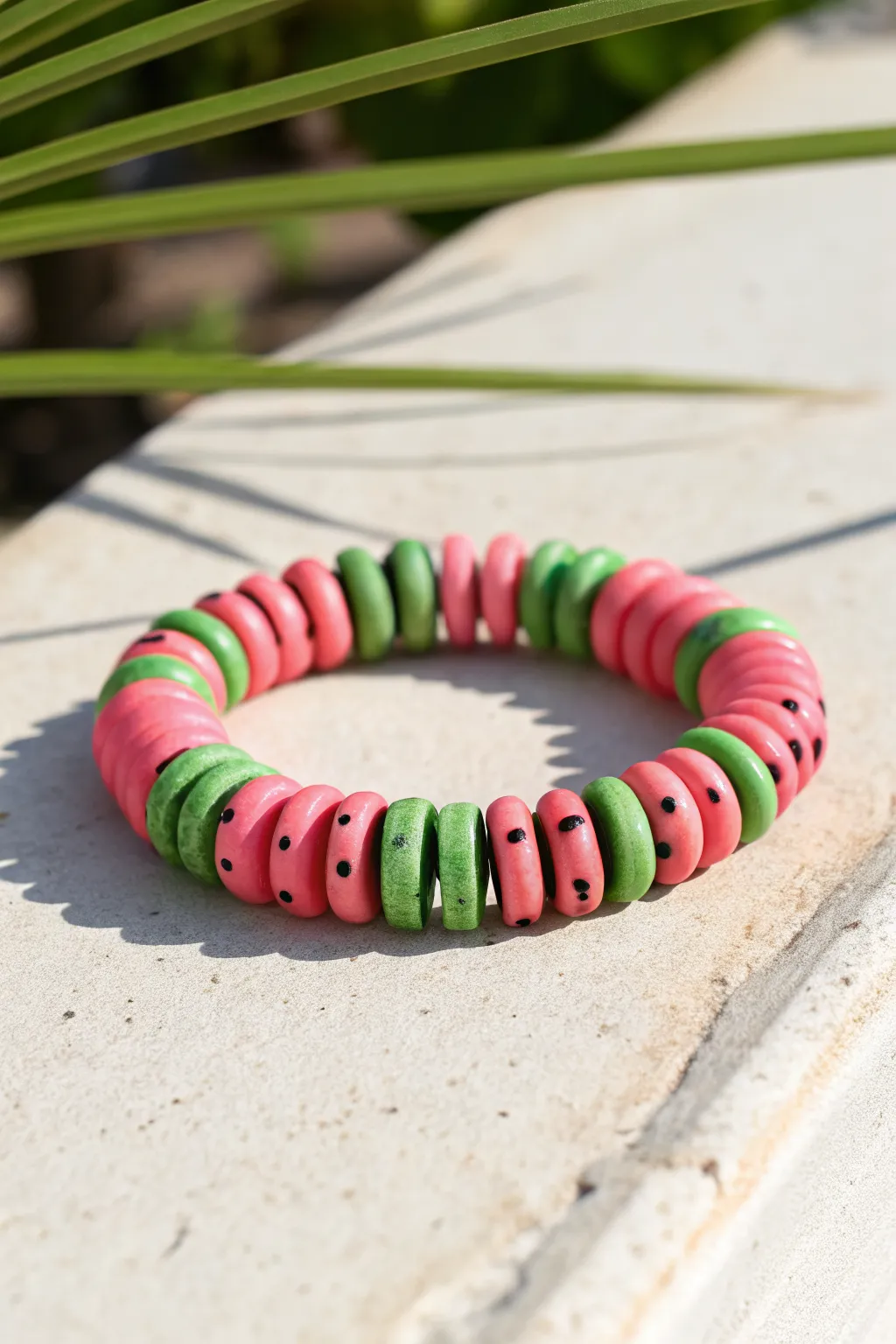
Capture the juicy, refreshing vibes of summer with this delightful polymer clay bracelet. Featuring alternating slices of pink ‘flesh’ speckled with seeds and vibrant green ‘rind,’ this accessory is a sweet treat for your jewelry collection.
Step-by-Step Guide
Materials
- Polymer clay in watermelon pink
- Polymer clay in bright leaf green
- Elastic beading cord (0.8mm or 1mm)
- Black acrylic paint
- Fine detail paintbrush or toothpick
- Rolling pin or clay machine
- Small circular clay cutter (approx. 8-10mm)
- Small straw or toothpick for hole punching
- Parchment paper
- Baking sheet
- Clay oven
- Super Glue or jewelry adhesive
- Gloss glaze (optional)
Step 1: Creating the Clay Canvas
-
Condition the pink clay:
Start by warming up the watermelon pink polymer clay in your hands. Knead and fold it repeatedly until it becomes soft, pliable, and free of any air bubbles. -
Condition the green clay:
Repeat the conditioning process with your green clay. Ensure it is just as soft and workable as the pink to maintain uniform thickness later. -
Roll out the sheets:
Using a rolling pin or a clay pasta machine on a medium setting, roll both colors out into flat, even sheets. Aim for a thickness of about 3-4mm for a chunky, durable bead.
Seed Placement Hack
Paint the black ‘seeds’ onto the SIDES/EDGES of the pink beads, not just face-up. Since the beads stack, side details remain visible.
Step 2: Forming the Beads
-
Cut the pink discs:
Press your small circular cutter firmly into the pink clay sheet to create your base beads. Twist slightly before lifting to ensure a clean cut. -
Cut the green discs:
Do the same with the green clay sheet. You’ll need roughly one green bead for every two or three pink ones, depending on the pattern you want to create. -
Smooth the edges:
Pick up each raw clay disc and gently run your finger around the circumference to smooth out any sharp ridges left by the cutter. This makes the final bracelet much more comfortable to wear. -
Pierce the holes:
Carefully pierce the exact center of each disc using a toothpick or a small straw. Twist the tool as you push through to prevent the bead from distorting into an oval shape. -
Bake the beads:
Arrange your beads on a parchment-lined baking sheet, ensuring they aren’t touching. Bake according to the manufacturer’s instructions for your specific brand of clay (usually 275°F/135°C for 15-30 minutes). -
Cool down:
Once baked, remove the tray from the oven and let the beads cool completely. They naturally harden as they return to room temperature.
Distorted Circles?
If your beads squish into ovals while poking holes, try popping the clay sheet in the fridge for 10 mins before cutting and piercing.
Step 3: Adding the Details
-
Prepare the paint:
Squeeze a tiny dot of black acrylic paint onto a palette or scrap piece of paper. You need very little for this delicate step. -
Paint the seeds:
Dip the very tip of a fine paintbrush or a toothpick into the black paint. Apply three to four tiny dots onto the edge of the pink beads to mimic watermelon seeds. -
Randomize the pattern:
I like to vary the placement of seeds—some near the hole, some near the edge—so the beads look organic and handmade rather than mass-produced. -
Let the paint dry:
Allow the paint to dry fully. If you want extra shine and protection, apply a thin coat of gloss glaze over the beads now and let that dry too.
Step 4: Assembly
-
Measure your cord:
Cut a length of elastic cord about 10-12 inches long. This gives you plenty of extra slack for tying knots later. -
Start stringing:
Thread your beads onto the elastic. Looking at the reference image, try a pattern like: 3 pink beads, 1 green bead, 2 pink beads, 1 green bead. Keep repeating until the strand wraps comfortably around your wrist. -
Check the fit:
Wrap the unfinished strand around your wrist to check the size. Add or remove beads as necessary to ensure a snug but comfortable fit. -
Tie the knot:
Tie a surgeon’s knot (right over left, left over right) and pull tight. Stretch the cord slightly while tightening to pre-stretch the elastic. -
Secure and trim:
Add a tiny drop of super glue to the knot for security. Once dry, snip off the excess cord ends, tucked close to the beads.
Slide this bracelet on alongside your favorite summer watch to add an instant pop of fruity color
Sea Turtle Accent Bracelet
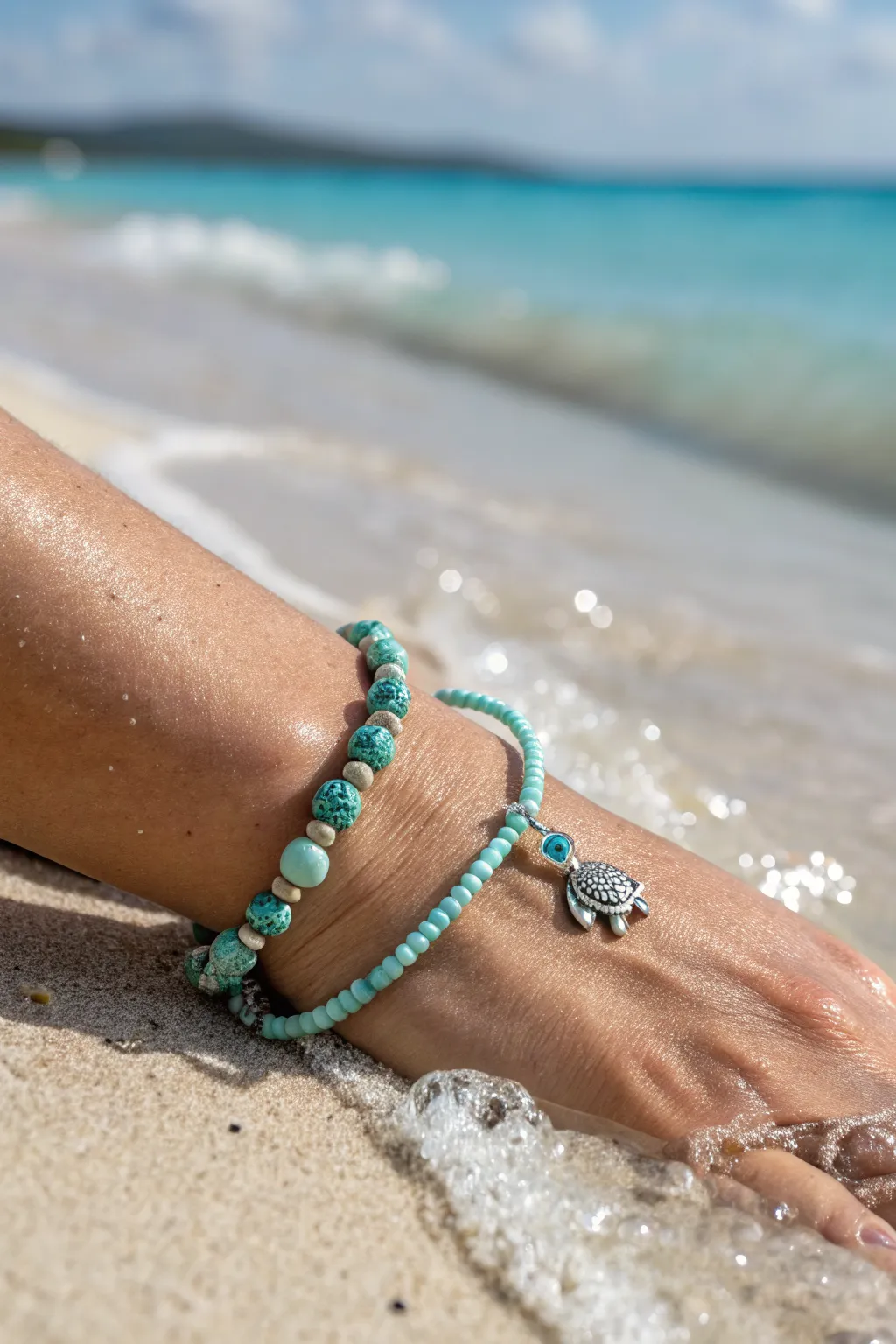
Capture the essence of the shoreline with this stunning double-strand anklet set featuring ocean-inspired tones. The combination of chunky marbled turquoise beads and delicate seed beads creates a textured, layered look perfect for sunny days, anchored by an adorable silver sea turtle charm.
How-To Guide
Materials
- Elastic beading cord (0.8mm or 1mm thickness)
- Chunky round turquoise polymer clay beads (8mm-10mm, marbled finish)
- Small white or cream heishi clay spacer beads (4mm)
- Small turquoise glass seed beads (size 8/0 or 6/0)
- Silver sea turtle charm with a hanging loop
- Silver jump ring (6mm or 8mm)
- Jewelry glue or clear nail polish
- Scissors
- Bead stopper or tape
- Running pliers (optional, for opening jump ring)
Step 1: Planning and Preparation
-
Measure your ankle:
Wrap a flexible measuring tape around your ankle where you want the bracelets to sit. Add about 0.5 to 1 inch to this measurement to ensure a comfortable fit that isn’t too tight. -
Cut the cord:
Cut two lengths of elastic cord based on your measurement, leaving at least 3 extra inches on each side for tying knots easily later. -
Secure the ends:
Attach a bead stopper or a piece of tape to one end of each cord. This prevents your beads from sliding off while you work.
Step 2: Creating the Chunky Strand
-
Establish the pattern:
For the thicker bracelet, lay out your beads first to visualize the design. The pattern shown alternates one large marbled turquoise bead with one small cream spacer bead. -
Begin stringing:
Thread a cream spacer bead onto the cord, followed by a large turquoise marbled bead. Continue this alternating pattern for the entire length. -
Check the length:
Wrap the strand around your ankle periodically. It needs to wrap fully around without stretching the elastic yet. -
Finalize the strand:
Once the strand reaches your desired length, ensure you end with the bead type opposite of what you started with so the pattern flows seamlessly when tied.
Knot Security
Pre-stretch your elastic cord by pulling firmly on it a few times before stringing. This prevents the finished anklet from sagging or loosening after you’ve worn it for a while.
Step 3: Crafting the Turtle Charm Strand
-
String the seed beads:
Take your second cord and begin threading the small turquoise glass seed beads. This strand should be slightly looser or longer than the chunky one so it drapes nicely below it. -
Find the center point:
String beads until you have completed exactly half of the intended length for this anklet. -
Prepare the charm:
Using your pliers or fingers, carefully twist open the silver jump ring. Loop it through the attachment hole on the sea turtle charm. -
Attach the turtle:
Slide the open jump ring (with the turtle attached) onto the elastic cord right next to your last bead. Close the jump ring securely so the cord cannot slip out. -
Finish stringing:
Continue threading the remaining turquoise seed beads onto the other side of the charm until this second half matches the length of the first half.
Ocean Variation
Swap the turquoise seed beads for clear, iridescent beads that look like sea glass, or mix in some real tiny cowrie shells along the chunky strand for extra texture.
Step 4: Finishing Touches
-
Tie the surfer’s knot:
Remove the tape or bead stopper. Bring the two ends of one bracelet together and cross right over left, then left over right to form a secure square knot. -
Tighten securely:
Pull all four strands (the two tails and the bracelet loop sides) firmly to tighten the knot. I always give it a firm tug to test the strength before gluing. -
Seal the deal:
Apply a tiny drop of jewelry glue or clear nail polish directly onto the knot. Let it dry completely according to the glue’s instructions. -
Trim excess cord:
Once the glue is dry, carefully trim the excess cord tails close to the knot, tucking the knot inside a nearby bead if the hole is large enough. -
Repeat for second strand:
Repeat the tying, gluing, and trimming process for the second bracelet.
Slip on your new creations and enjoy the beach vibes wherever you go
Daisy Charm Bracelet for Sunny Days
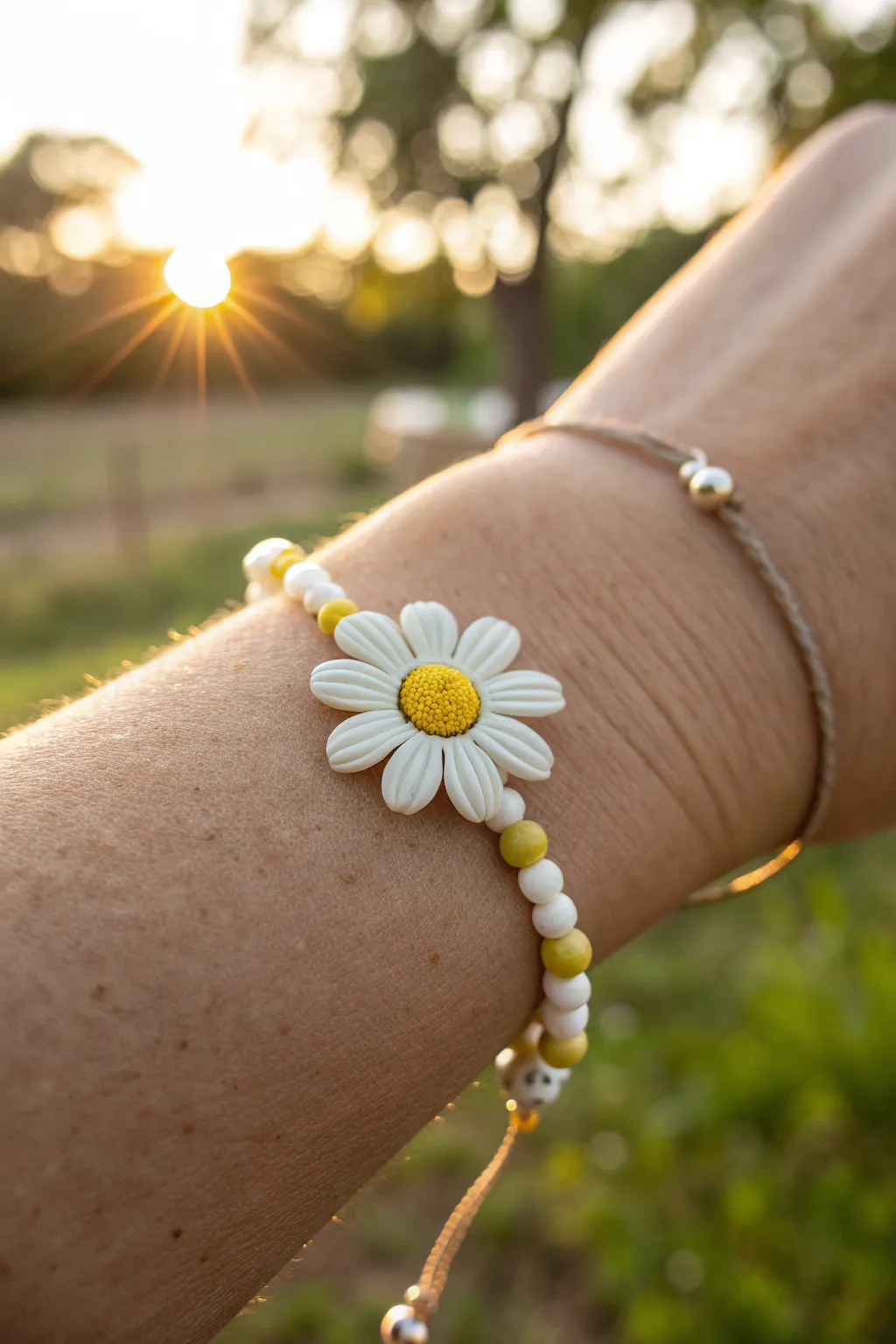
Capture the golden warmth of summer with this cheerful daisy bracelet, featuring a sculpted polymer clay centerpiece. The bright white petals and sunny yellow beads create a fresh, playful accessory perfect for sunny days.
Step-by-Step Guide
Materials
- White polymer clay
- Yellow polymer clay or granite-effect yellow clay
- Sculpting tools (needle tool/dotting tool)
- Small round cutter (approx. 2-3cm)
- Hand roller or pasta machine
- Cornstarch (to prevent sticking)
- Beige or tan waxed cotton cord or nylon macramé cord (0.8mm – 1mm)
- Small white round beads (4mm – 6mm)
- Small yellow round beads (4mm – 6mm)
- Silver crimp end beads/slider bead (optional for closure)
- Eye pin (short) or a thick needle for piercing
- Liquid polymer clay (optional)
- Oven for baking
Step 1: Sculpting the Daisy Centerpiece
-
Prepare the White Clay:
Condition a small block of white polymer clay until it is soft and pliable. Roll it out into a sheet about 3mm thick. -
Cut the Base:
Use your round cutter to stamp out a circle. This will serve as the base for your flower, though much of it will be covered by petals. -
Form the Petals:
Roll small balls of white clay into teardrop shapes. You’ll need about 12-14 petals. Flatten them slightly between your fingers to create an oval, petal-like form. -
Attach the Petals:
Arrange the petals around the edge of your clay circle base. Press the pointed end of the teardrop toward the center. I like to use a small dab of liquid clay here to ensure they stick permanently. -
Detail the Petals:
Use a needle tool or a dull knife to gently press one or two lines down the center of each petal, giving them realistic texture. -
Create the Yellow Center:
Roll a ball of yellow polymer clay. Flatten it into a dome shape and place it firmly in the center of the flower, covering the points where the petals meet. -
Texture the Center:
Using a needle tool or a textured sponge, prick the surface of the yellow dome repeatedly to mimic the fuzzy texture of a real daisy center. -
Pierce the Charm:
Carefully push a thick needle or an eye pin horizontally through the clay flower, behind the petals but through the base, to create a channel for the string. Ensure the hole is wide enough for your cord. -
Bake:
Bake the clay charm according to the manufacturer’s instructions (usually 275°F/135°C for 15-30 minutes). Let it cool completely before handling.
Step 2: Assembling the Bracelet
-
Cut the Cord:
Measure a piece of cord about 12 inches long. This extra length helps with tying the sliding knots later. -
Thread the Centerpiece:
Feed the cord through the channel you created in the baked daisy charm. Center the flower on the string. -
String the Beads:
Thread your beads onto one side of the flower, alternating between yellow and white beads. Repeat the same pattern on the other side to maintain symmetry. -
Secure the Ends:
Once you have the desired length of beads (covering the top of your wrist), make a simple overhand knot on each side immediately after the last bead to keep them in place. -
Create the Closure:
Cross the two loose ends of the cord. You can either attach a metal slider bead here or tie a macramé square knot closure using a separate short piece of cord. -
Finish the Ties:
Add one small metal or seed bead to the very tip of each cord tail and tie a knot so it doesn’t slip through the closure. Trim any excess cord.
Hole Distortion?
If piercing the raw clay deforms your flower, try baking the flower for 5 minutes first to firm it up, then piercing it before finishing the bake.
Clean White Clay
White clay picks up dust easily! Wipe your hands and work surface with a baby wipe or rubbing alcohol before handling the white clay.
Wear your new bracelet alone for a simple statement or stack it with other bands for a fun boho look